🧘♀️ BEGINNER YOGA EXERCISES
1. Tadasana (Mountain Pose)
Stand straight, align spine, relax shoulders.
👉 Improves posture and awareness
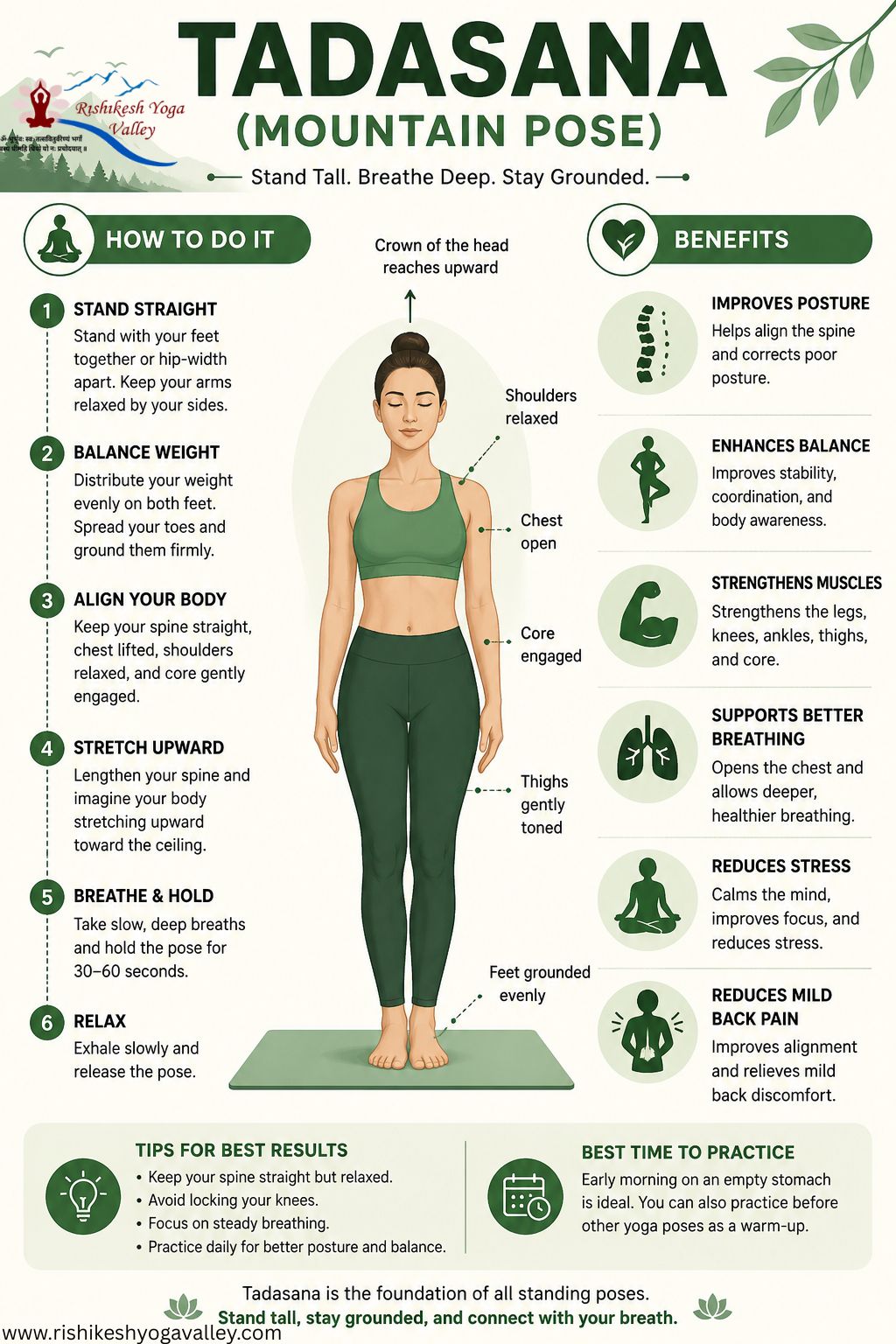
How to Do Tadasana (Mountain Pose)
Stand straight with your feet together or slightly apart and keep your arms relaxed beside your body. Distribute your weight evenly on both feet, keep your spine straight, chest lifted, and shoulders relaxed. Take slow deep breaths while gently stretching your body upward. Hold the pose for 30–60 seconds and maintain steady breathing throughout.
Benefits of Tadasana (Mountain Pose)
Tadasana helps improve posture, balance, and body alignment while strengthening the legs, knees, and core muscles. It also increases focus, improves breathing, and helps reduce stress and mild back pain. Regular practice of Mountain Pose creates stability and awareness in both the body and mind.
2. Balasana (Child’s Pose)
Sit on heels, stretch forward.
👉 Relaxes body and mind
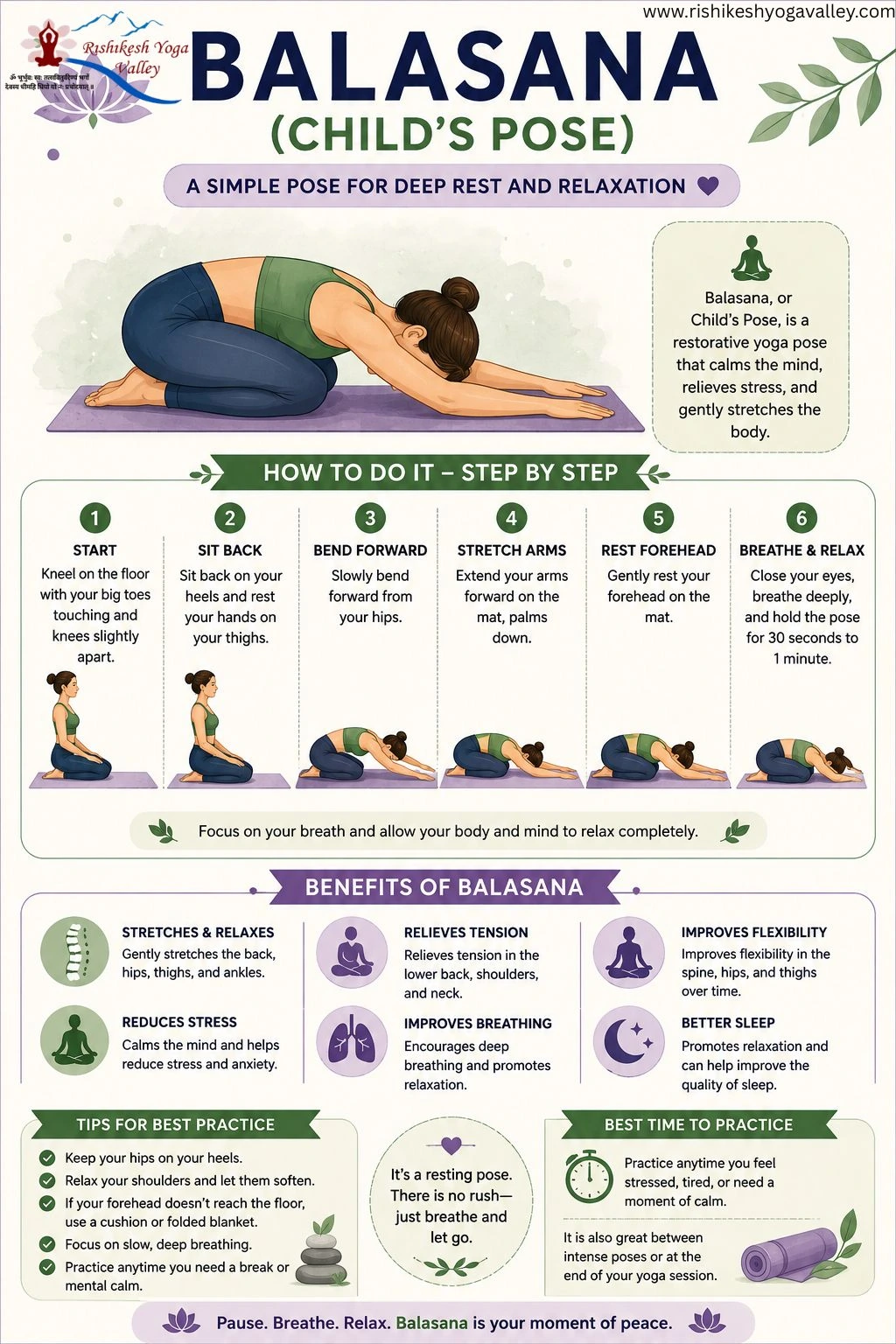
How to Do Balasana (Child’s Pose)
Kneel on the floor with your big toes touching and knees slightly apart. Sit back on your heels and slowly bend forward, stretching your arms in front of you while resting your forehead on the mat. Keep your shoulders relaxed and breathe deeply. Hold the pose for 30 seconds to 1 minute while allowing your body to relax completely.
Benefits of Balasana (Child’s Pose)
Balasana gently stretches the back, hips, thighs, and ankles while helping reduce stress and fatigue. It calms the mind, improves flexibility, and relieves tension in the lower back and shoulders. This resting yoga pose also encourages deep breathing and promotes relaxation for both the body and mind.
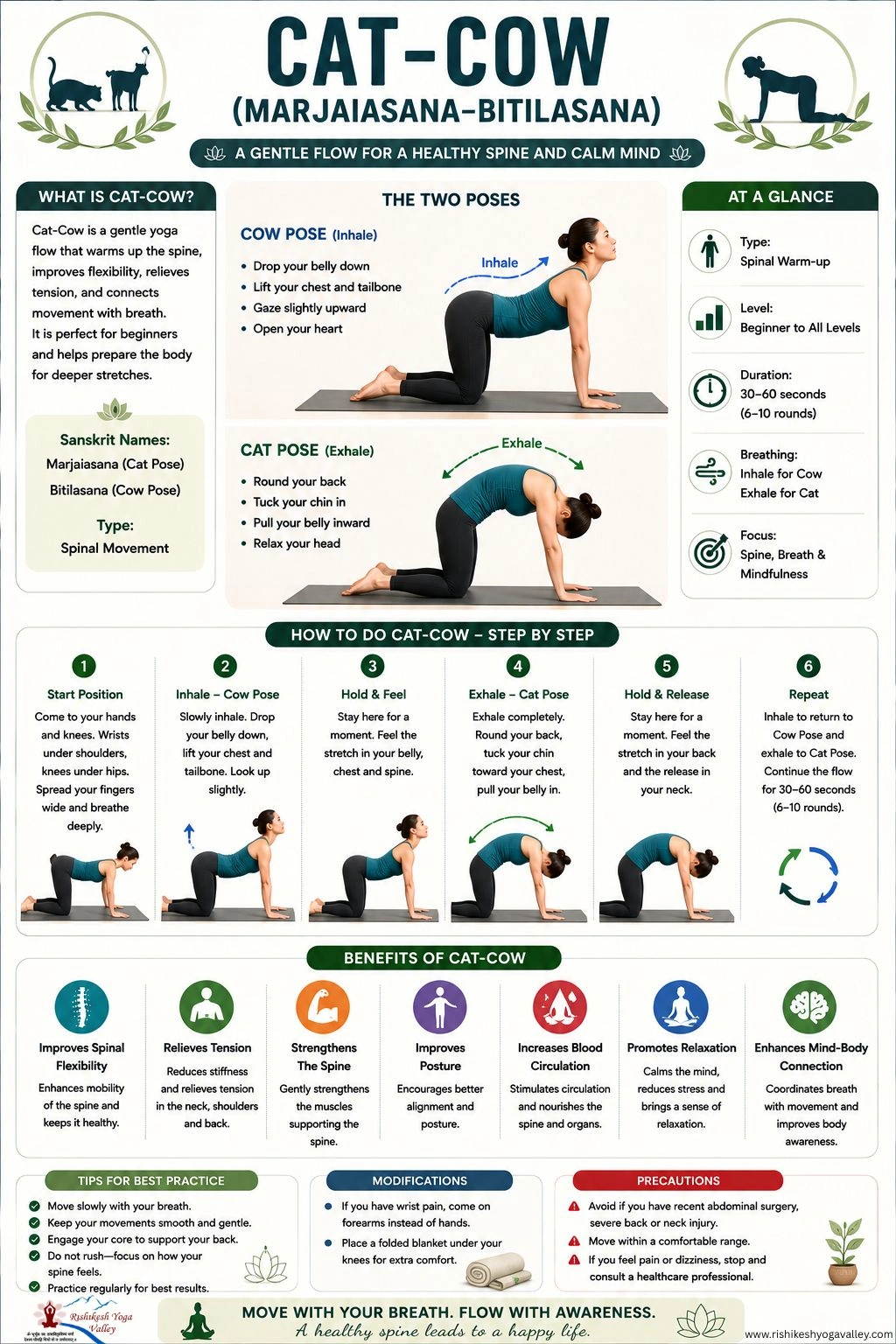
3. Cat-Cow (Marjaryasana)
Alternate arching and rounding back.
👉 Improves spinal flexibility
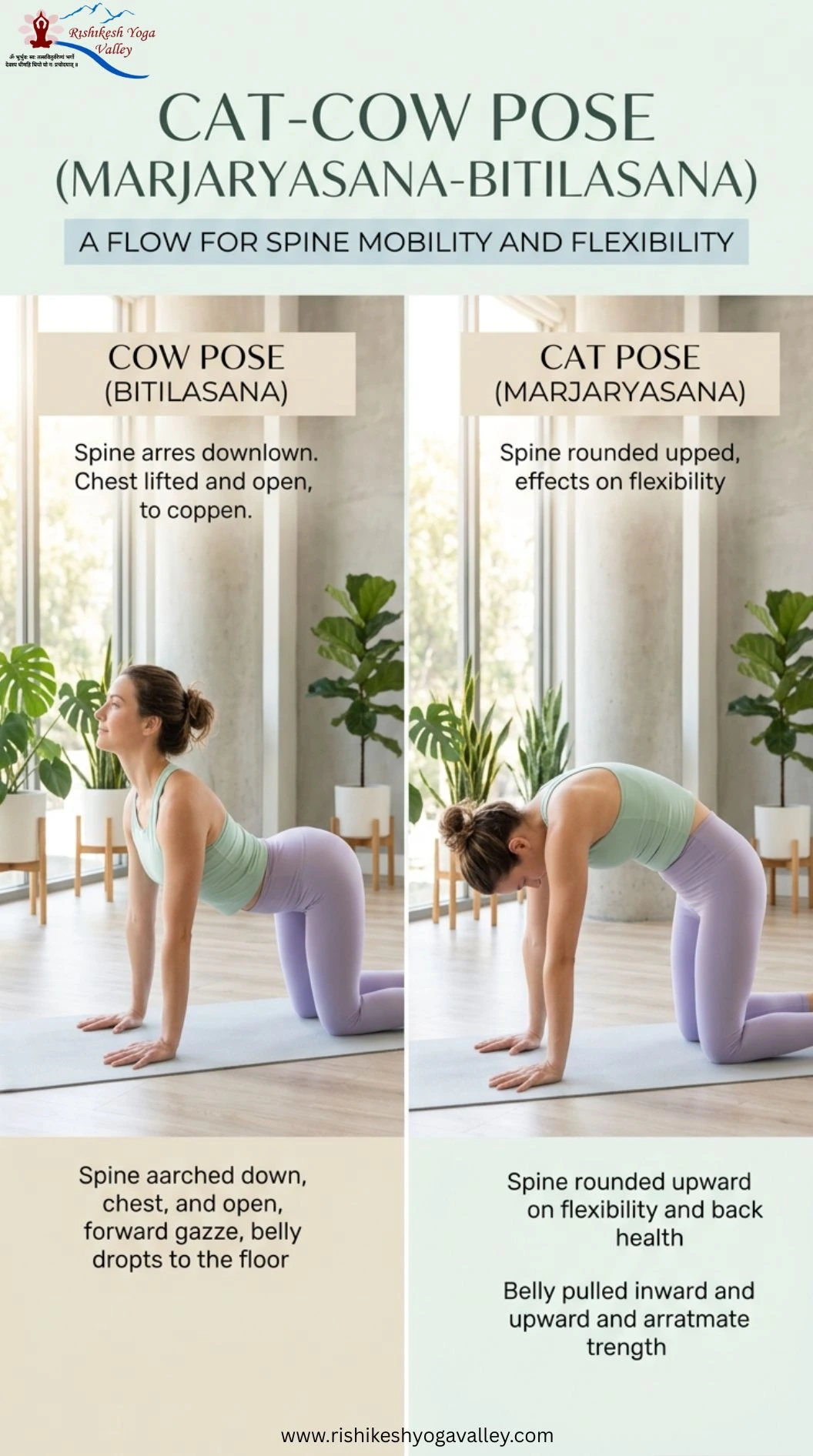
How to Do Cat-Cow (Marjaryasana)
Start on your hands and knees with your wrists under your shoulders and knees under your hips. Inhale as you arch your back, lift your head, and open your chest into Cow Pose. Then exhale as you round your spine, tuck your chin toward your chest, and pull your belly inward into Cat Pose. Continue flowing slowly between these two positions while breathing deeply for 30–60 seconds.
Benefits of Cat-Cow (Marjaryasana)
Cat-Cow Pose improves spinal flexibility and helps relieve tension in the neck, shoulders, and back. It also strengthens the spine, improves posture, and increases blood circulation. This gentle yoga flow helps reduce stress, promotes relaxation, and supports better coordination between movement and breathing.
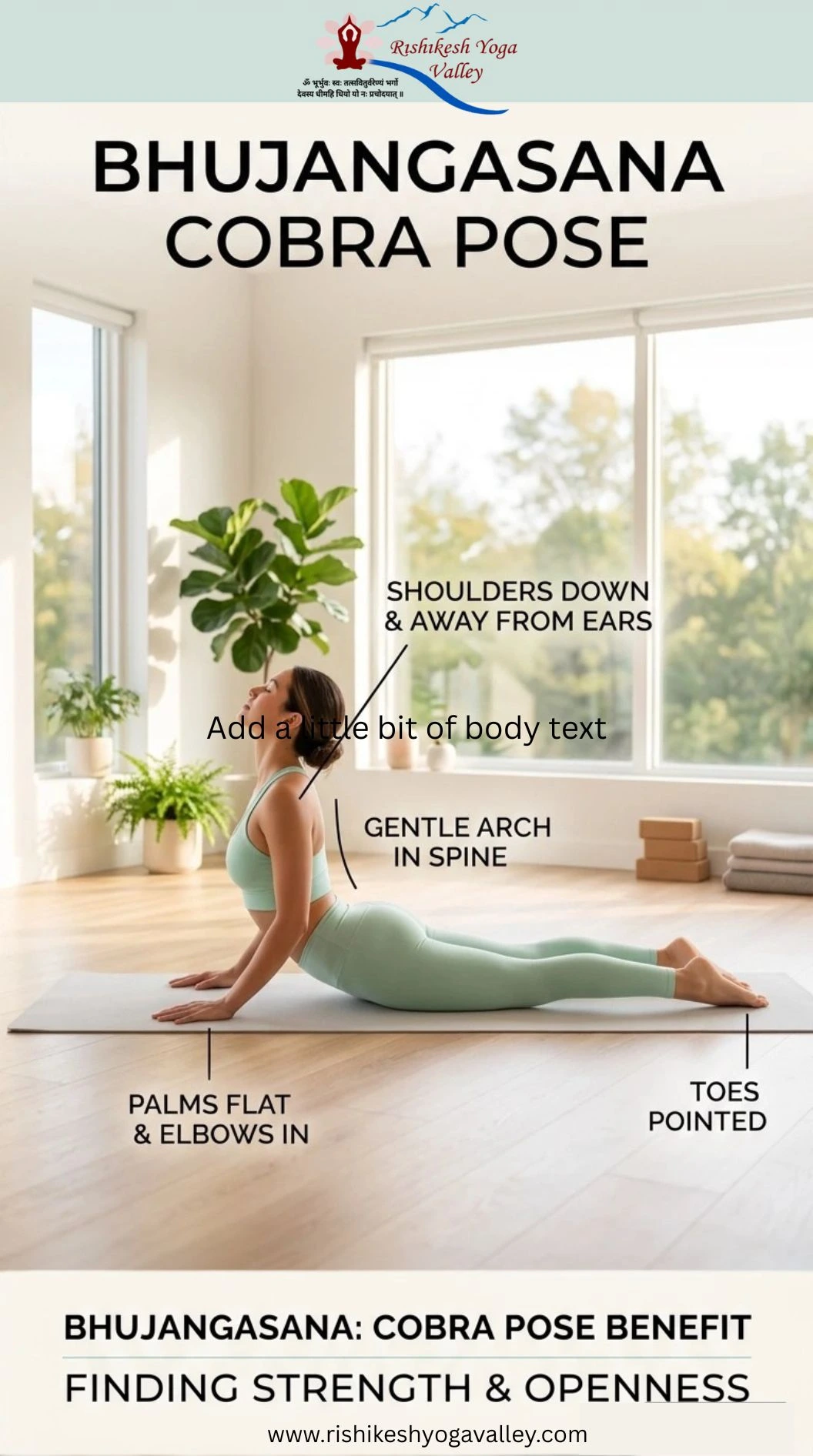
4. Bhujangasana (Cobra Pose)
Lift chest from floor.
👉 Strengthens spine
5. Downward Dog
Form inverted V shape.
👉 Full body stretch
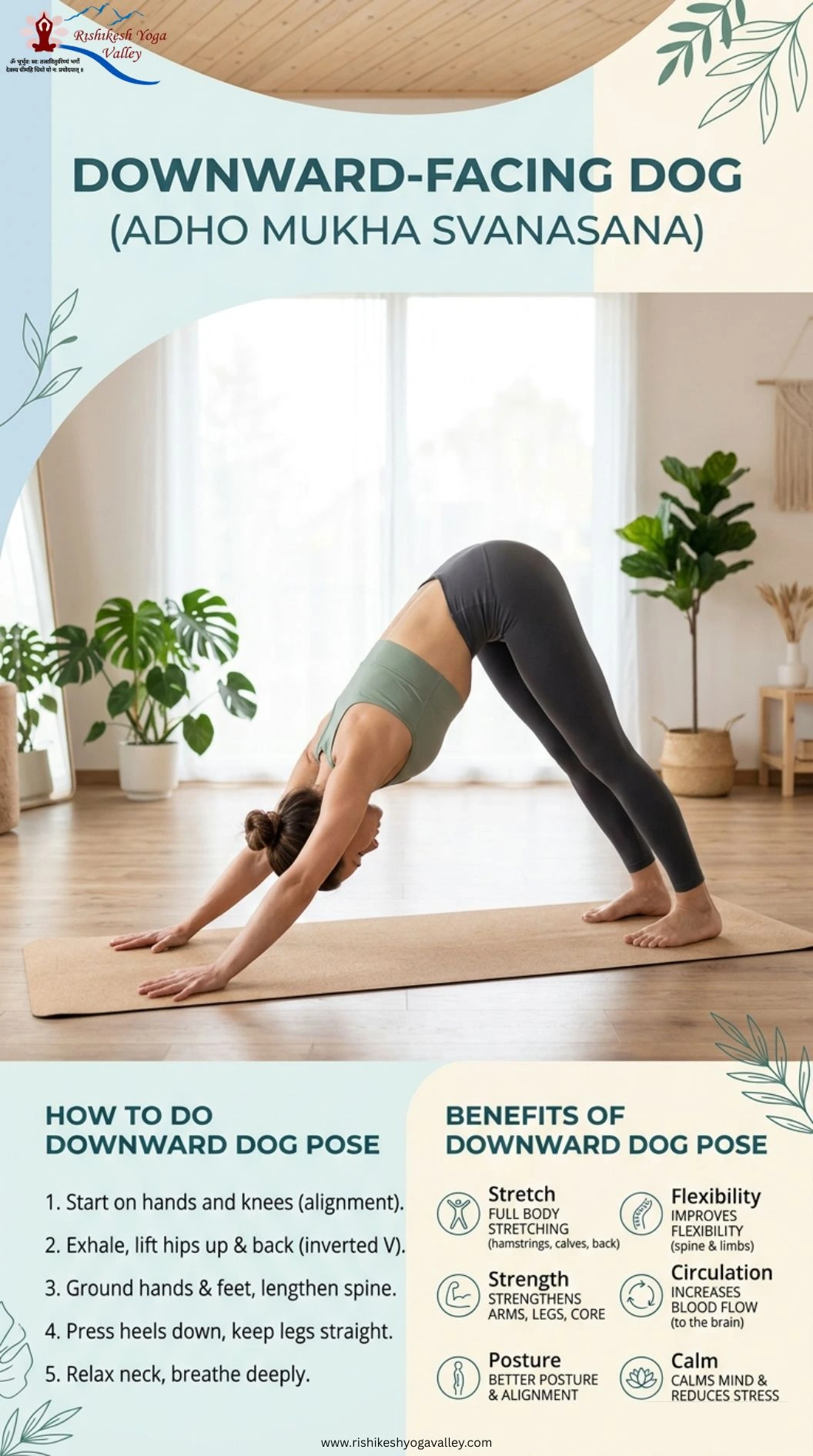
How to Do Downward Dog Pose
Downward-Facing Dog begins on your hands and knees with your wrists under your shoulders and knees under your hips. Press your palms firmly into the mat, lift your hips upward, and straighten your legs as much as comfortable to form an inverted “V” shape. Keep your head relaxed between your arms and hold the pose while taking slow, deep breaths.
Benefits of Downward Dog Pose
Downward Dog helps stretch and strengthen the entire body, especially the shoulders, hamstrings, calves, and spine. This pose improves posture, increases flexibility, boosts blood circulation, and helps relieve tension in the back and neck. Regular practice may also enhance energy levels, balance, and overall body awareness.
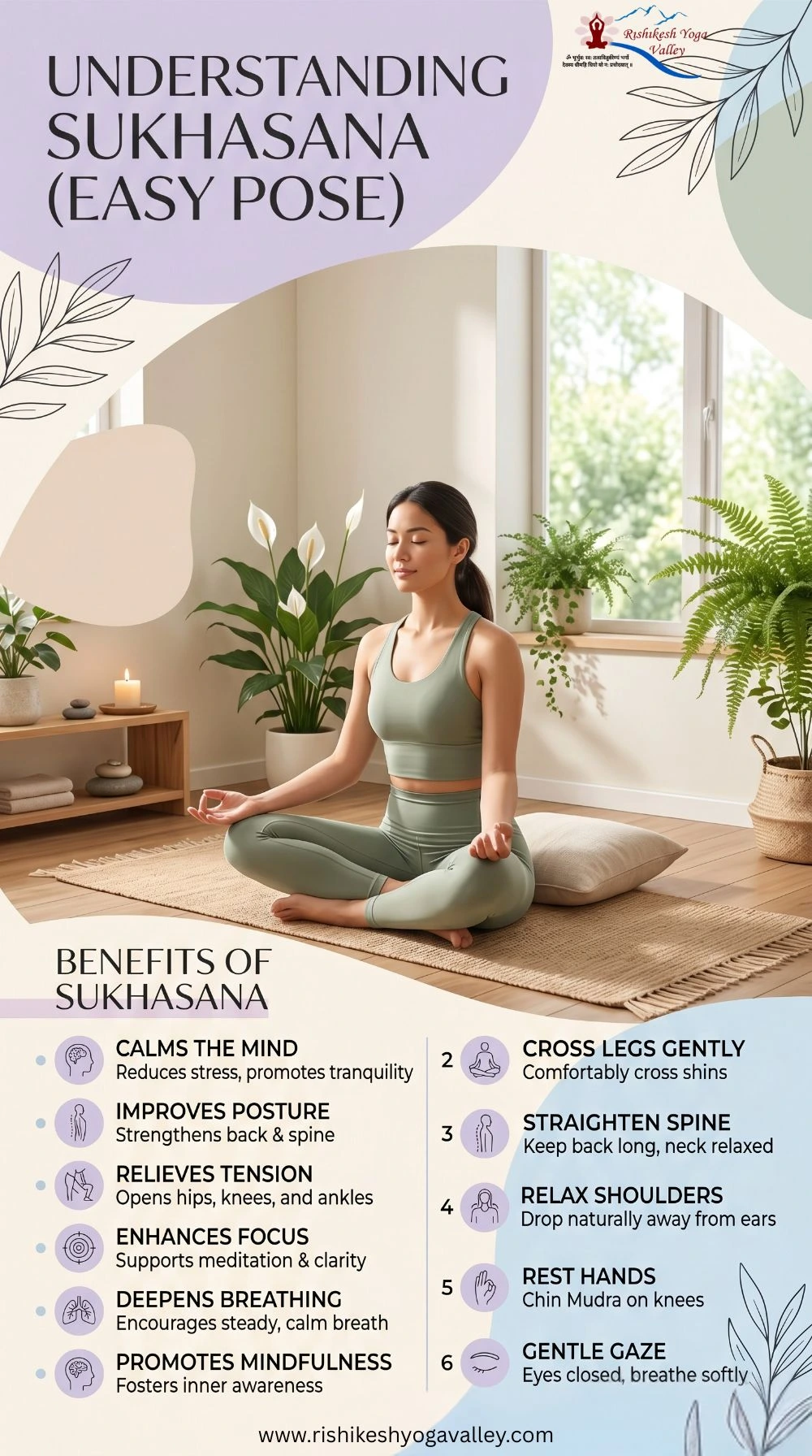
6. Sukhasana
Simple cross-legged sitting.
👉 Good for meditation
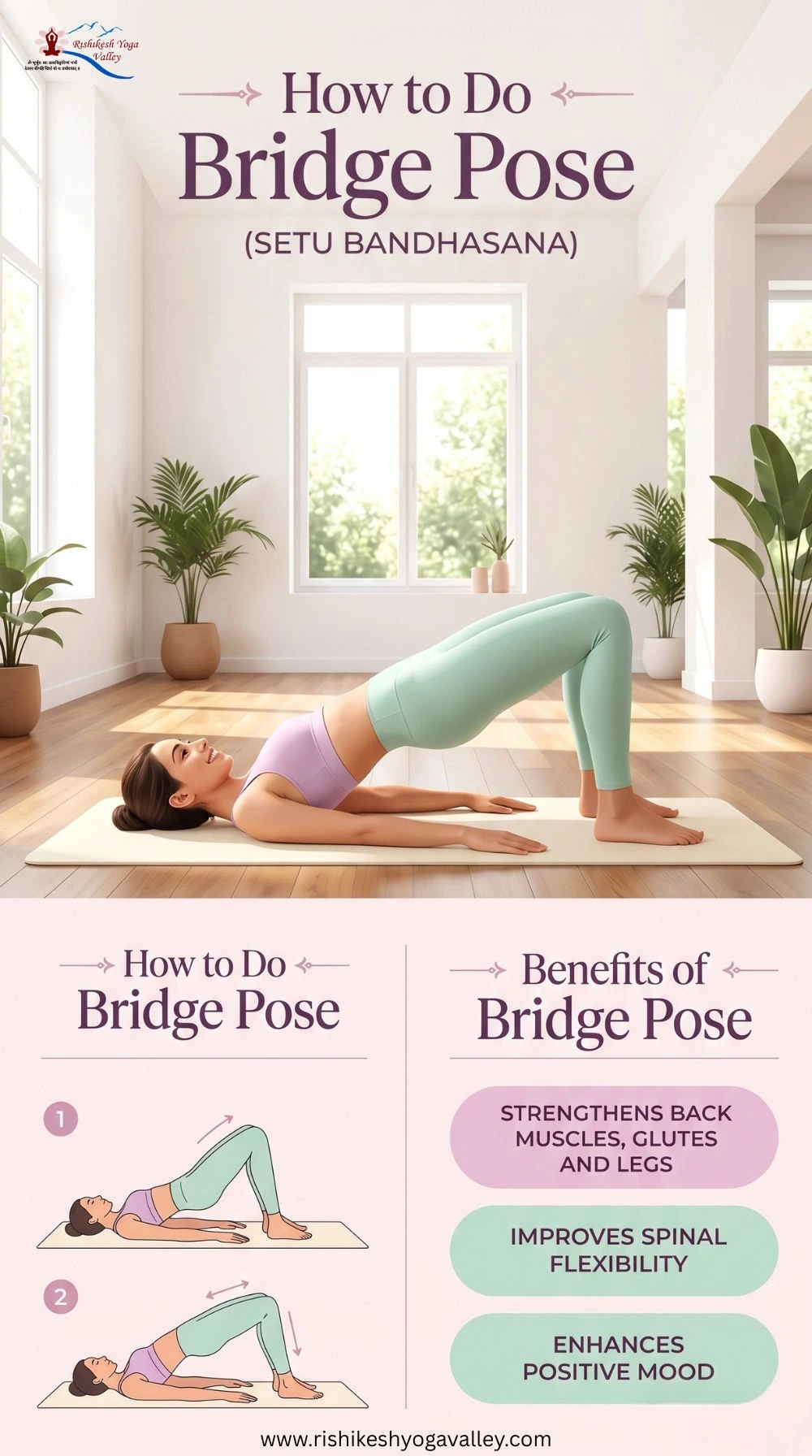
7. Bridge Pose
Lift hips upward.
👉 Strengthens lower body
8. Easy Twist
Gentle seated twist.
👉 Improves digestion
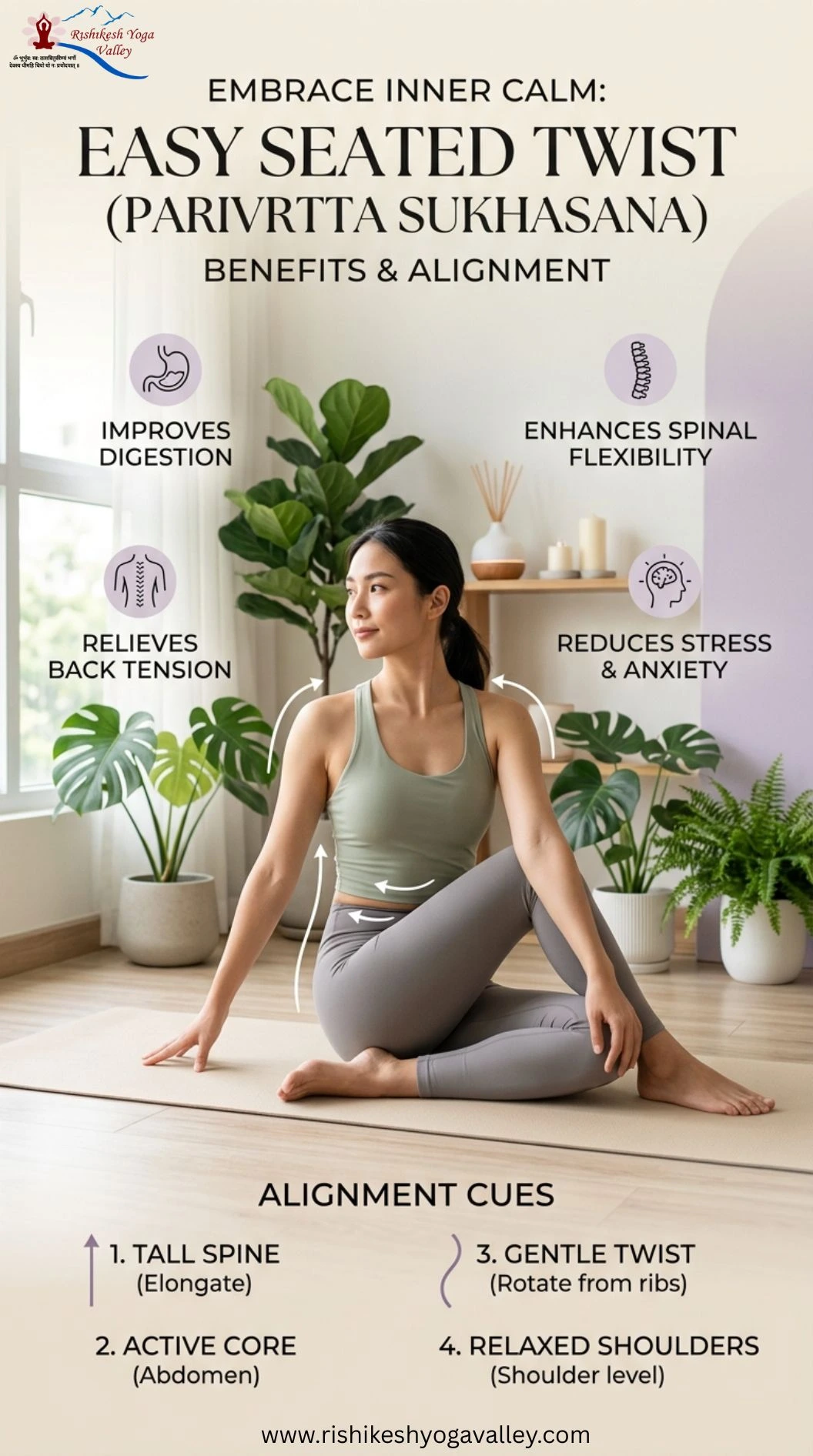
How to Do Easy Twist Pose
Easy Seated Twist is performed by sitting comfortably on the floor with your legs crossed and spine straight. Place your right hand behind you and your left hand on your right knee, then gently twist your upper body to the right while inhaling deeply. Hold the position for a few breaths, return to the center, and repeat on the opposite side.
Benefits of Easy Twist Pose
Easy Twist Pose helps improve spinal flexibility, posture, and body mobility while gently stretching the back, shoulders, and hips. This calming yoga posture may also support better digestion, reduce stiffness caused by prolonged sitting, and promote relaxation by releasing tension from the body and mind.
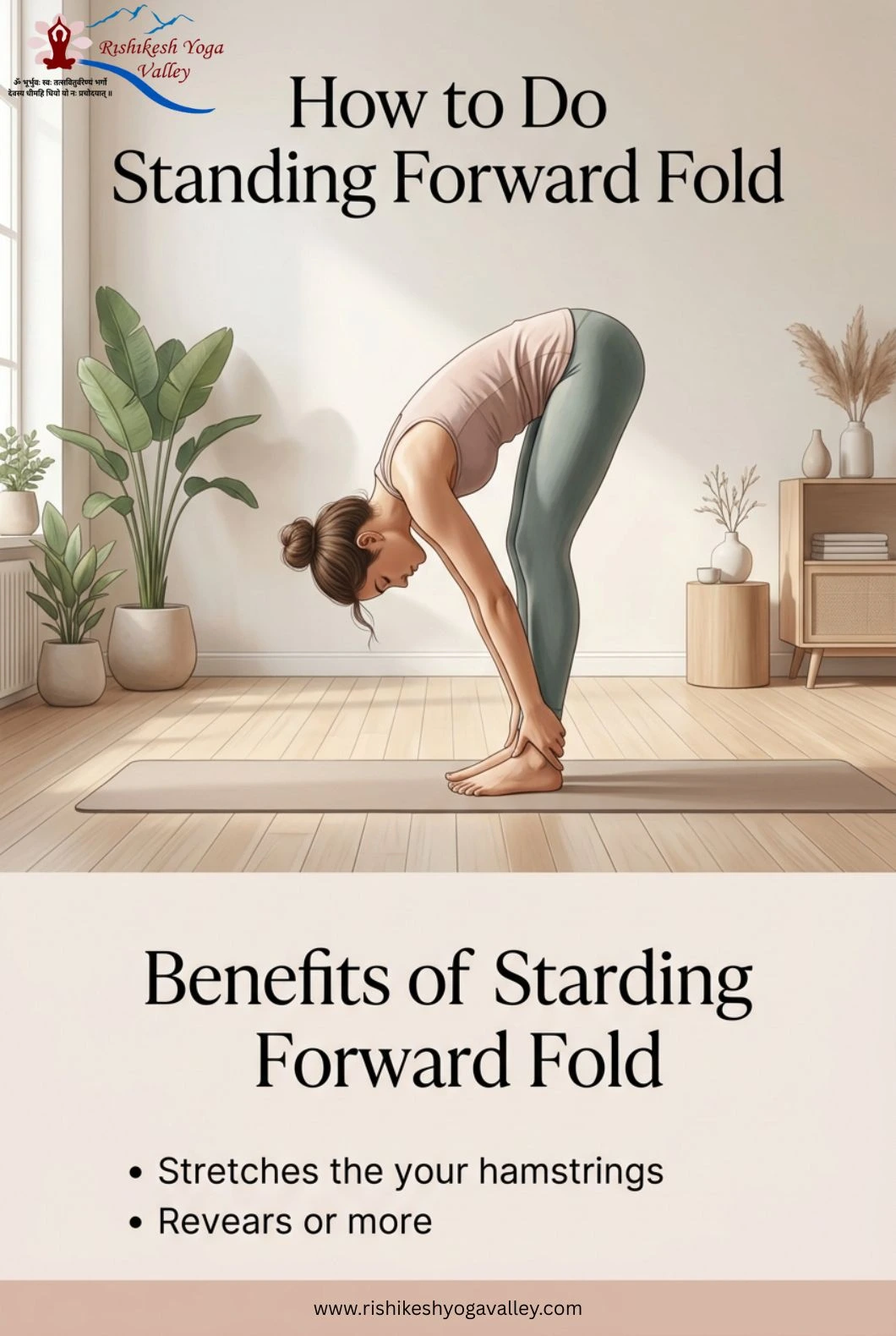
9. Standing Forward Fold
Bend forward fully.
👉 Stretches hamstrings
10. Low Lunge
Step forward, bend knee.
👉 Opens hips
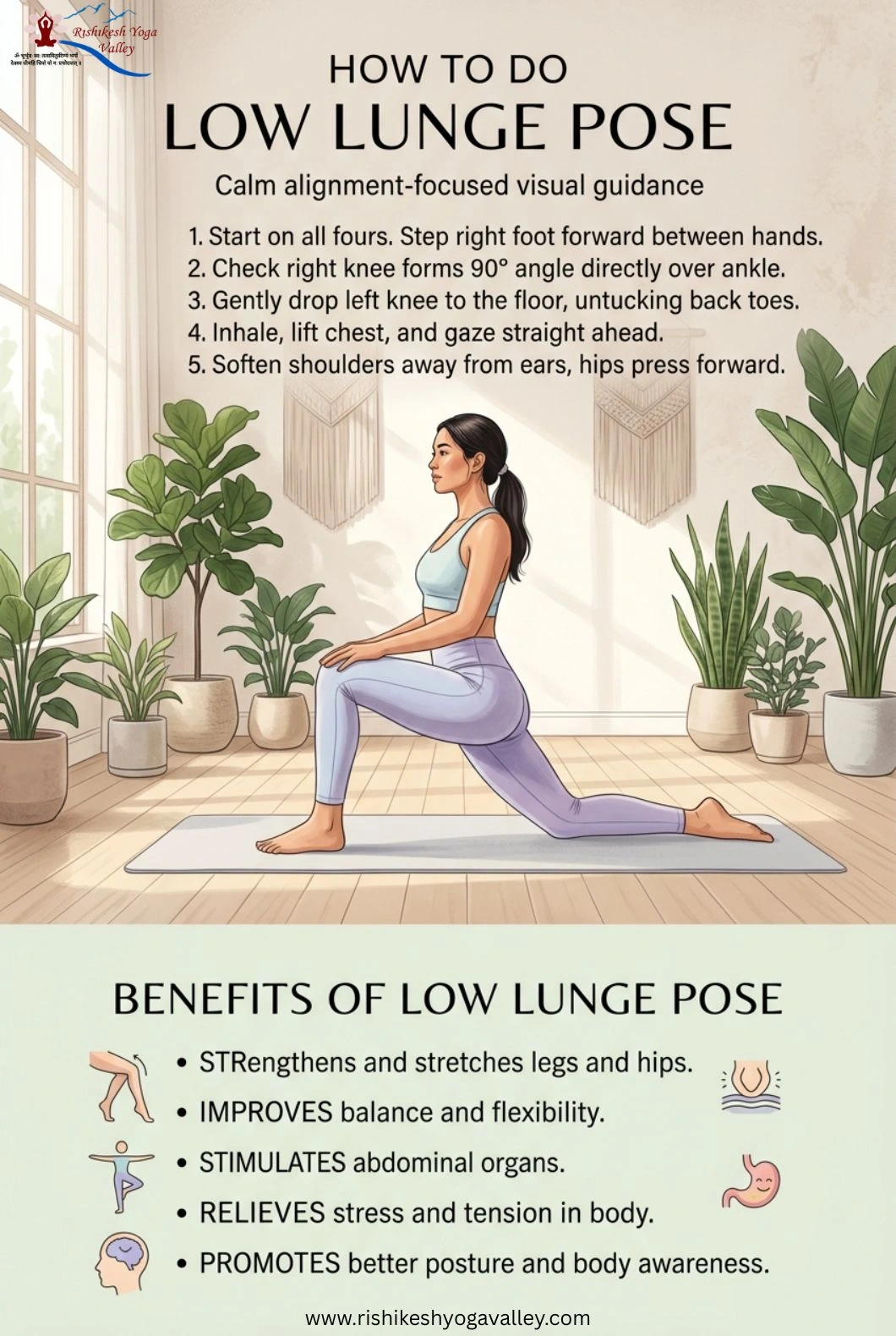
How to Do Low Lunge Pose
Low Lunge starts by stepping one foot forward into a lunge position while lowering the opposite knee to the floor. Keep your front knee aligned above your ankle and gently press your hips forward while lifting your chest and looking ahead. Hold the pose for a few breaths, then switch sides and repeat.
Benefits of Low Lunge Pose
Low Lunge helps stretch the hips, thighs, groin, and legs while improving balance and flexibility. This yoga posture may also strengthen the lower body, support better posture, reduce stiffness from prolonged sitting, and improve overall mobility and body awareness.
⸻
🧠 YOGA EXERCISES FOR DIGESTION
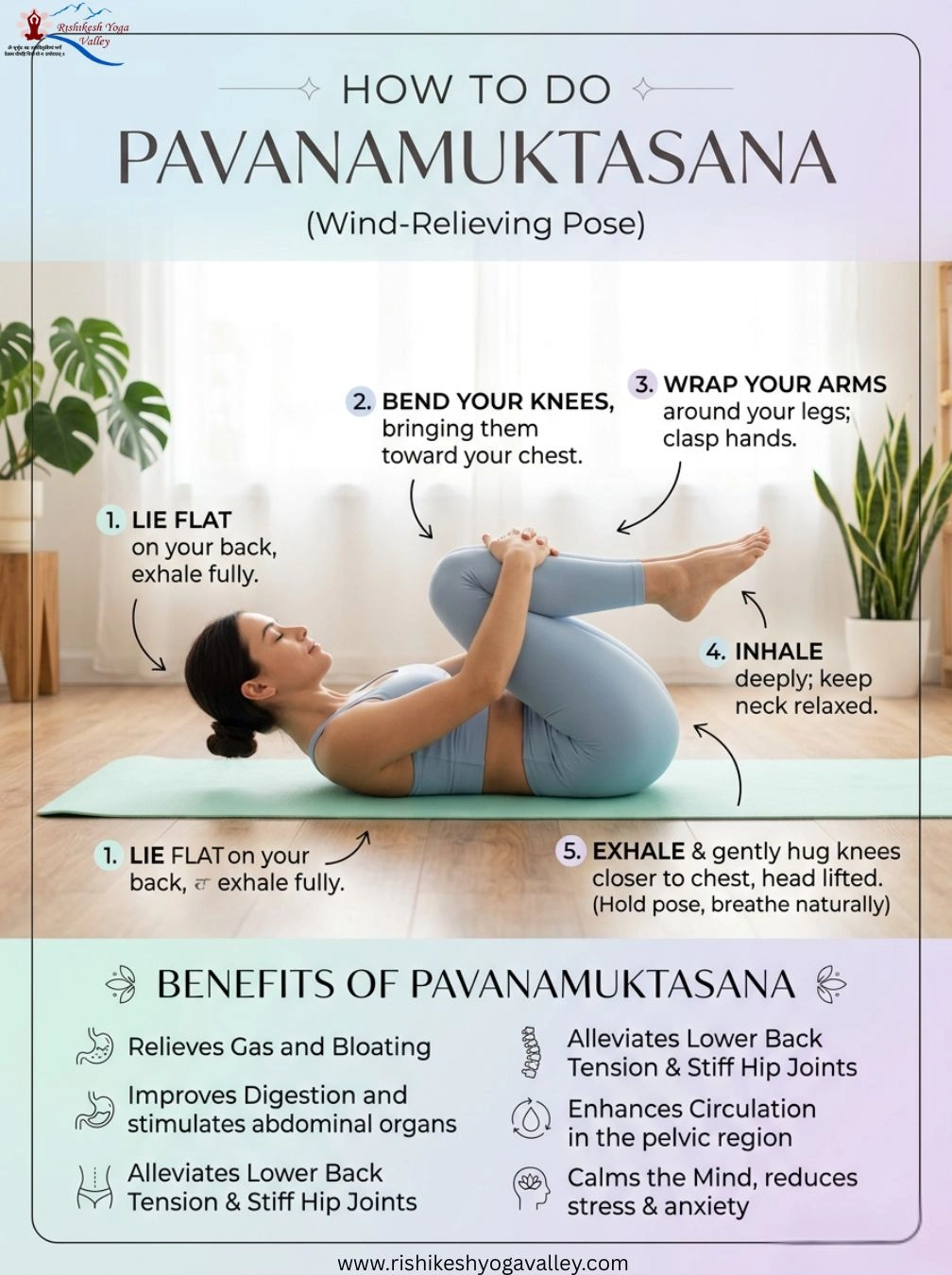
11. Pavanamuktasana
Knees to chest.
👉 Relieves gas
12. Vajrasana
Sit on heels after meals.
👉 Aids digestion
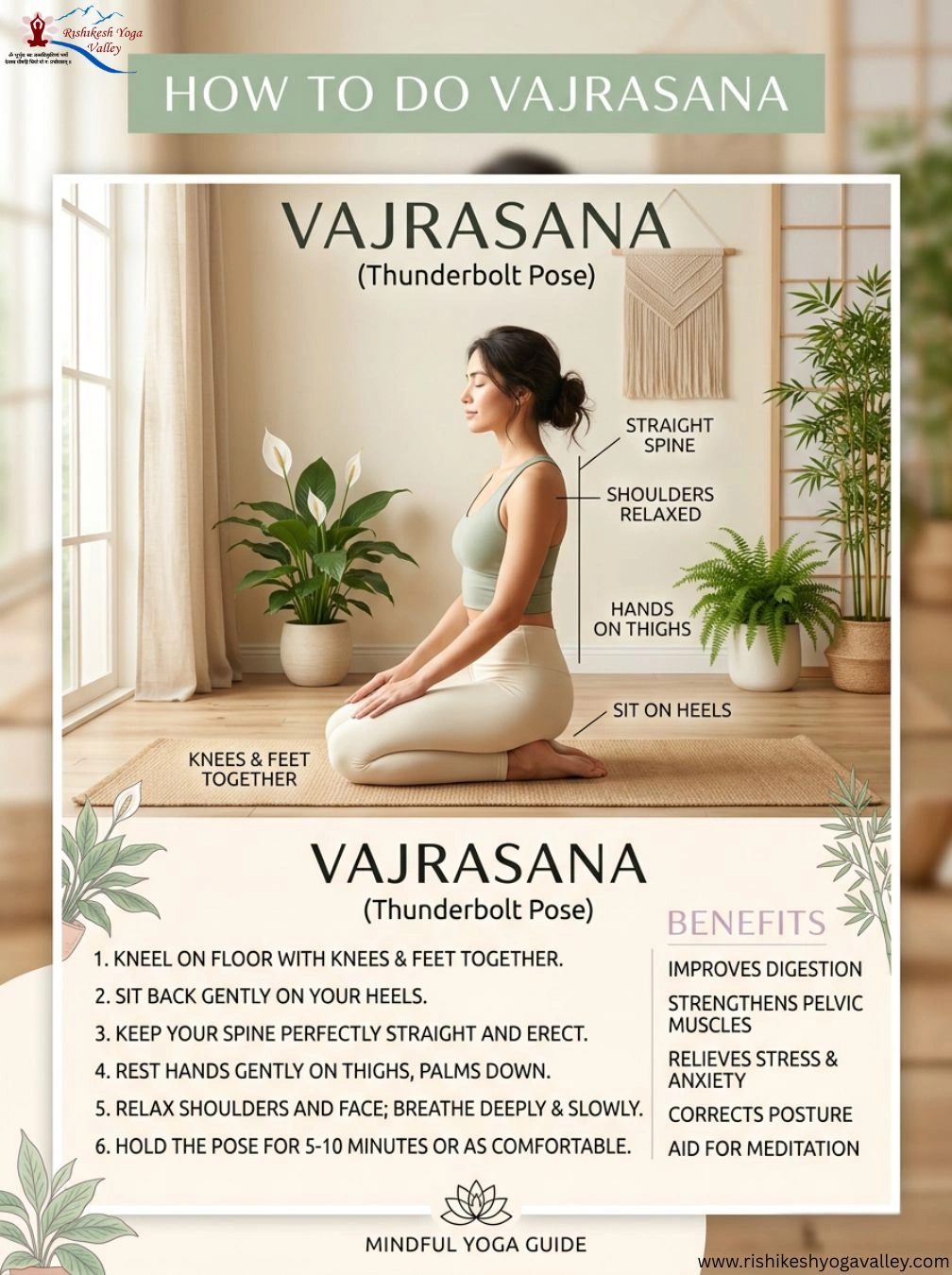
How to Do Vajrasana
Vajrasana is performed by kneeling on the floor with your knees together and sitting back on your heels. Keep your spine straight, hands resting on your thighs, and shoulders relaxed while breathing slowly and deeply. Hold the posture comfortably for a few minutes during meditation, breathing exercises, or after meals.
Benefits of Vajrasana
Vajrasana helps improve digestion, posture, and mental calmness while promoting relaxation and focus. This simple yoga pose may also reduce stress, improve blood circulation, support better breathing, and strengthen the lower back and pelvic muscles. Regular practice can encourage mindfulness and overall physical stability.
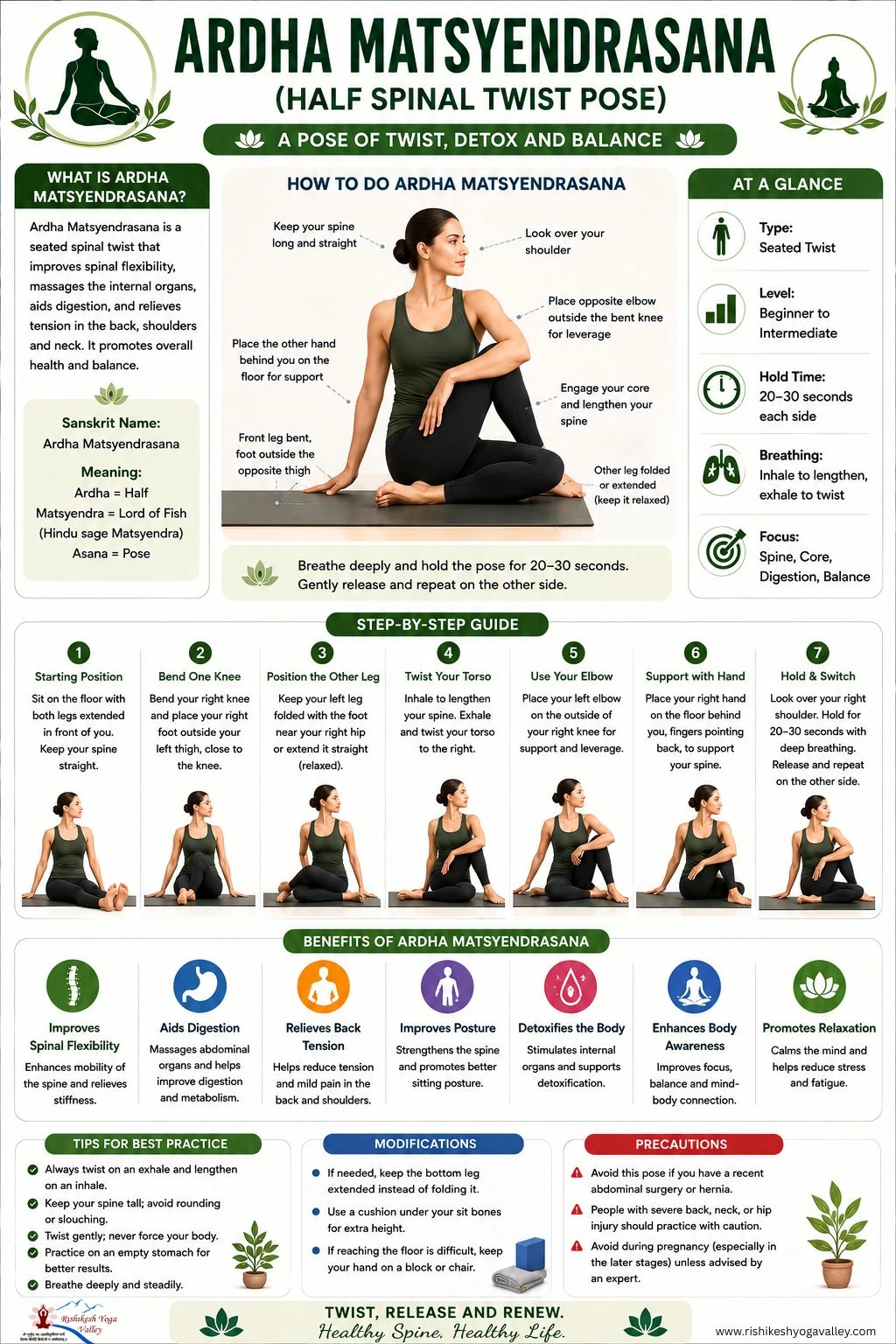
13. Ardha Matsyendrasana
Seated twist.
👉 Stimulates organs
How to Do Ardha Matsyendrasana
Ardha Matsyendrasana is performed by sitting on the floor with your legs extended. Bend one knee and place the foot outside the opposite thigh, then twist your upper body toward the bent knee while keeping your spine straight. Place one hand behind you for support and the opposite elbow near the raised knee, holding the pose for a few breaths before switching sides.
Benefits of Ardha Matsyendrasana
Ardha Matsyendrasana helps improve spinal flexibility, posture, and body mobility while gently stretching the shoulders, hips, and back. This seated twist may also support better digestion, relieve lower back stiffness, improve circulation, and promote relaxation and mental balance.
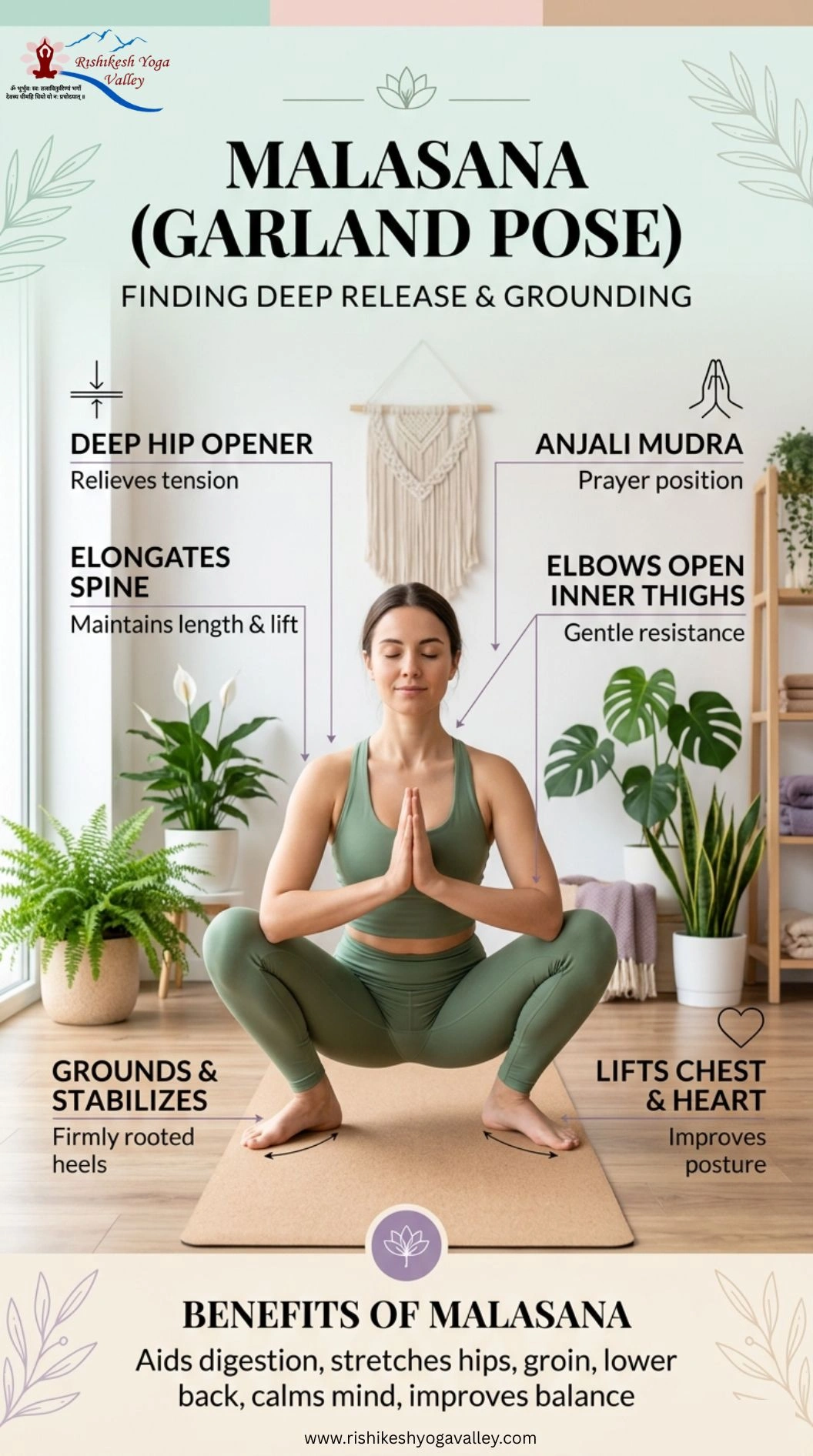
14. Malasana
Deep squat pose.
👉 Helps bowel movement
How to Do Malasana
Malasana is performed by standing with your feet slightly wider than hip-width apart and slowly lowering your hips into a deep squat. Keep your heels grounded if possible and bring your palms together in front of your chest while gently pressing your elbows against your knees. Maintain a straight spine and hold the posture while breathing slowly and deeply.
Benefits of Malasana
Malasana helps stretch the hips, ankles, groin, and lower back while improving flexibility and posture. This grounding yoga pose may also support healthy digestion, strengthen the lower body, improve balance, and relieve tension caused by prolonged sitting. Regular practice can promote better mobility and body awareness.
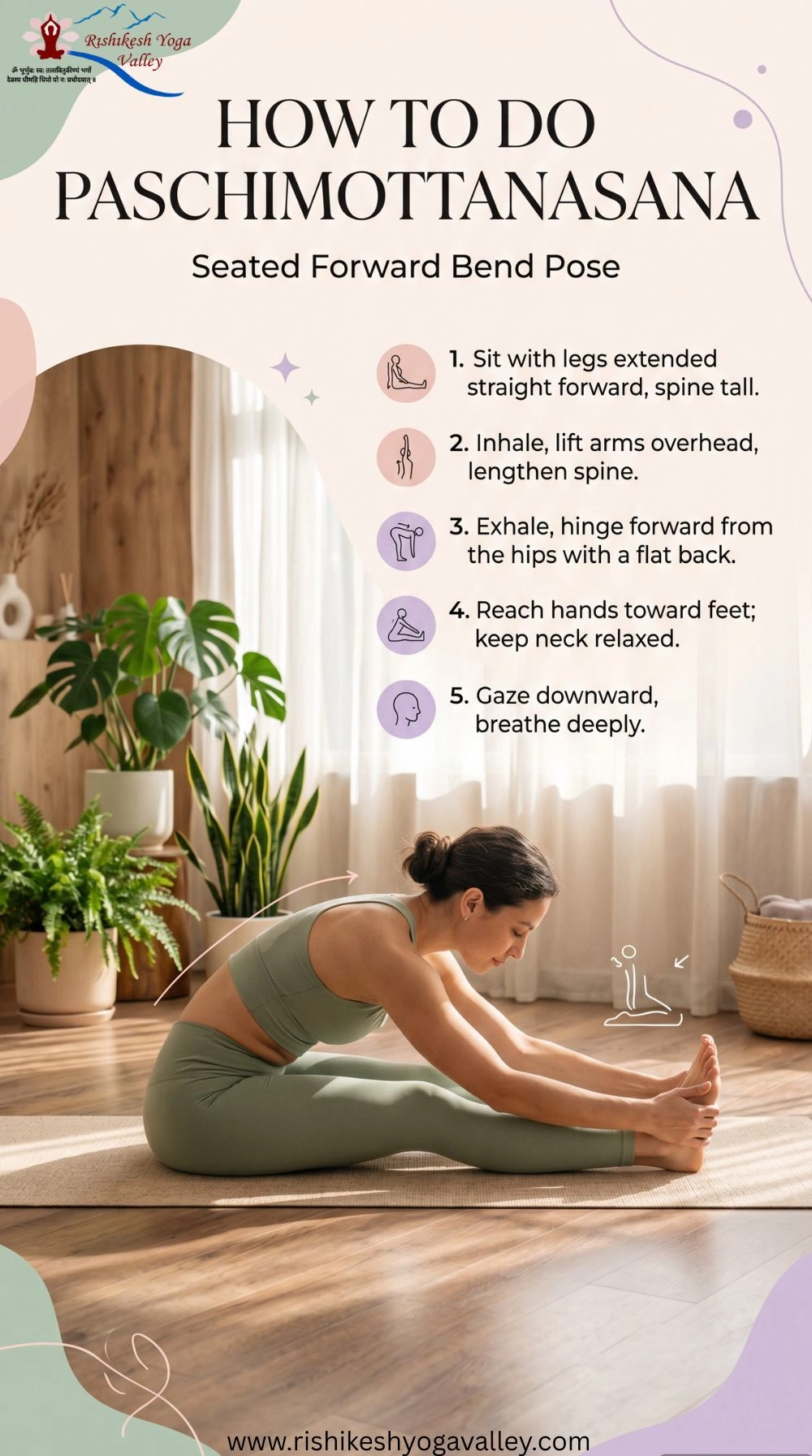
15. Paschimottanasana
Forward bend sitting.
👉 Improves digestion
How to Do Paschimottanasana
Paschimottanasana is performed by sitting on the floor with your legs extended straight in front of you. Inhale deeply to lengthen your spine, then exhale as you slowly bend forward from your hips and reach toward your feet, ankles, or shins. Keep your back as straight as possible and hold the pose while breathing slowly and deeply.
Benefits of Paschimottanasana
Paschimottanasana helps stretch the spine, hamstrings, and lower back while improving flexibility and posture. This calming yoga pose may also support better digestion, reduce stress and fatigue, improve circulation, and promote relaxation and mental clarity. Regular practice can help release tension from the body and mind.
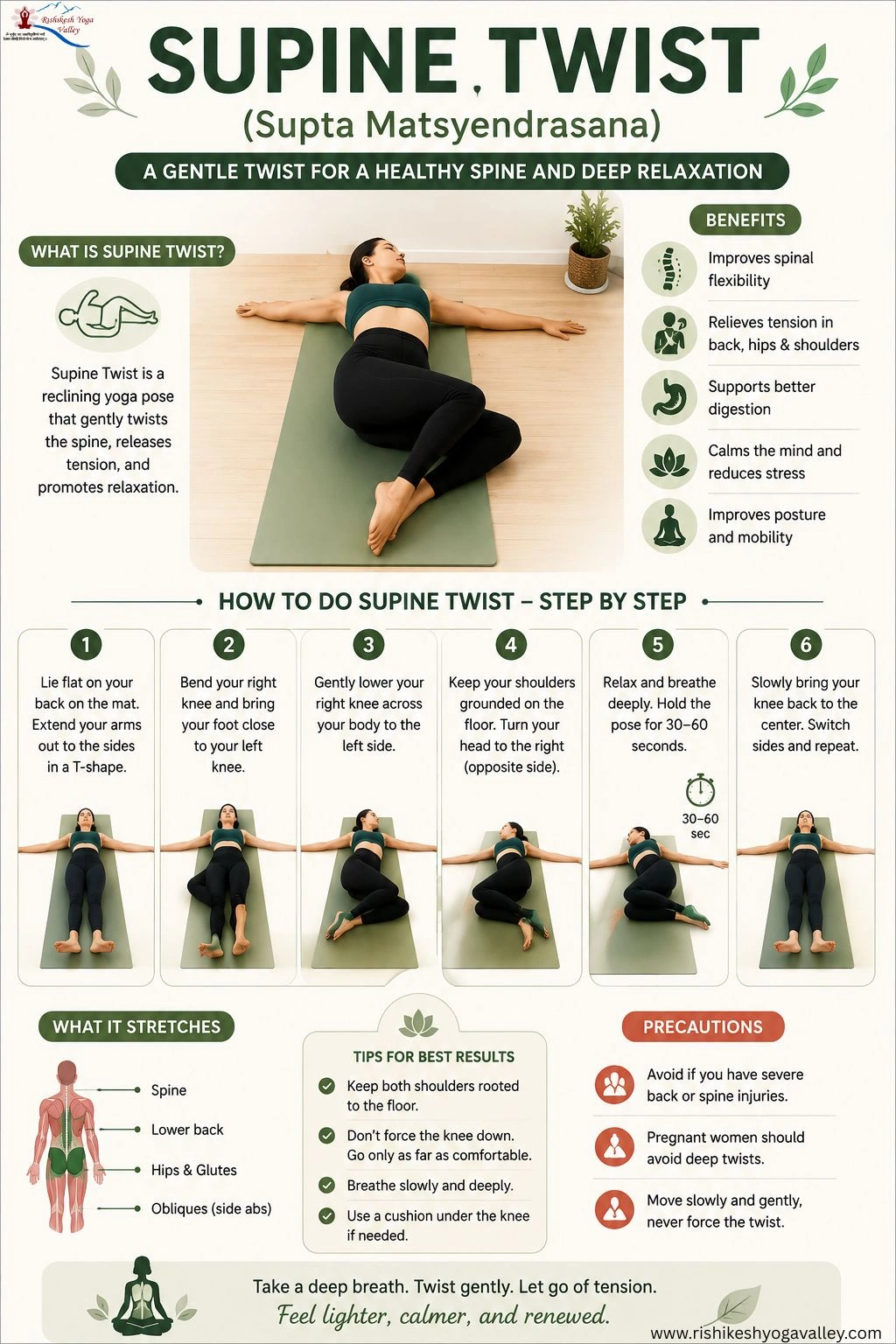
16. Supine Twist
Gentle twist lying down.
👉 Detoxifies body
⸻
😌 YOGA FOR STRESS & ANXIETY
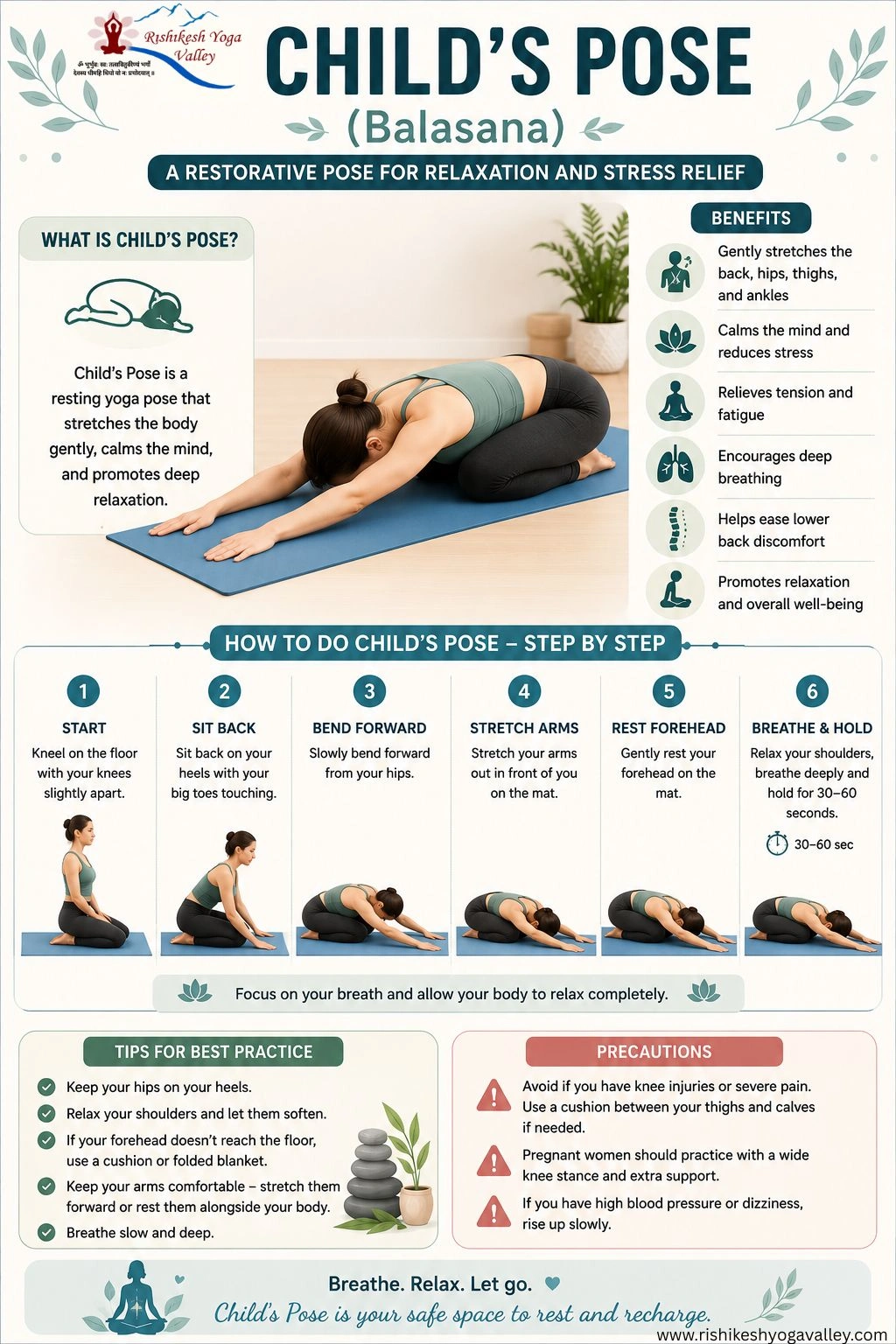
17. Child’s Pose
👉 Calms nervous system
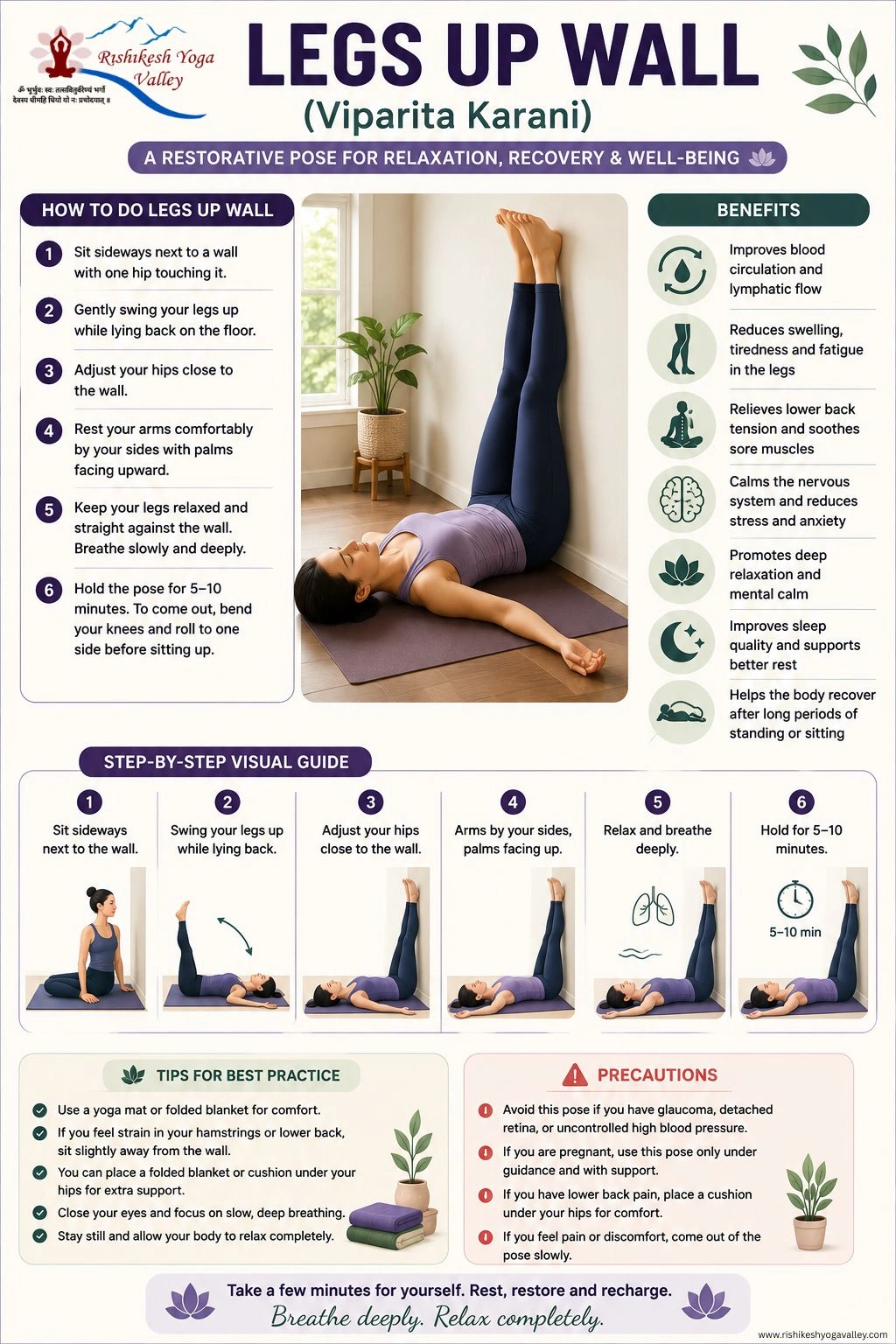
18. Legs Up Wall
👉 Improves circulation
How to Do Legs Up Wall
Sit sideways next to a wall and gently swing your legs up while lying back on the floor. Adjust your hips close to the wall and rest your arms comfortably by your sides with palms facing upward. Keep your legs relaxed and straight against the wall while breathing slowly and deeply. Hold the pose for 5–10 minutes and slowly come out by bending your knees and rolling to one side.
Benefits of Legs Up Wall
Legs Up Wall helps improve blood circulation, reduces swelling and fatigue in the legs, and relieves lower back tension. It calms the nervous system, reduces stress and anxiety, and promotes deep relaxation. This restorative yoga pose can also improve sleep quality and help the body recover after long periods of standing or sitting.
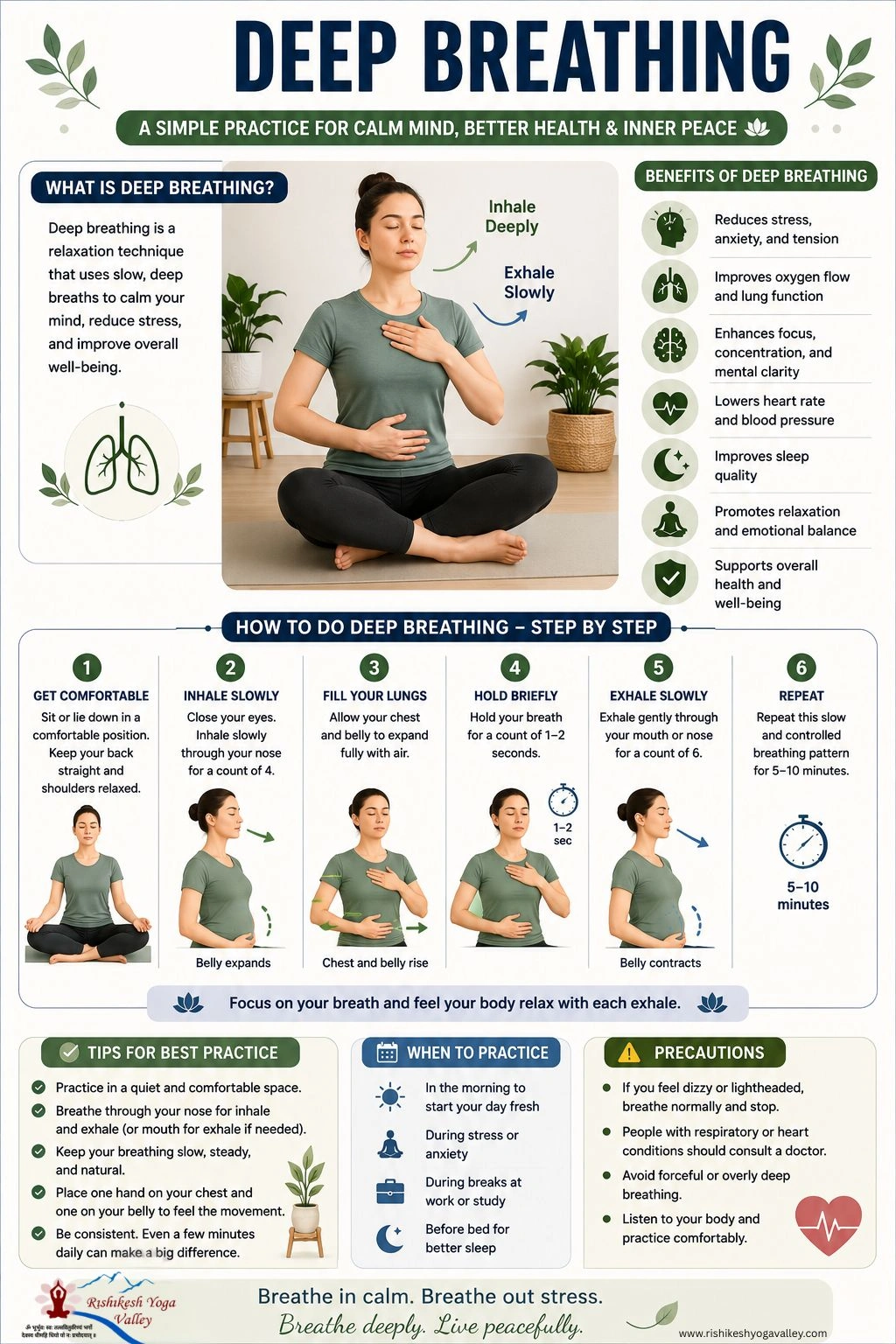
19. Deep Breathing
👉 Reduces stress
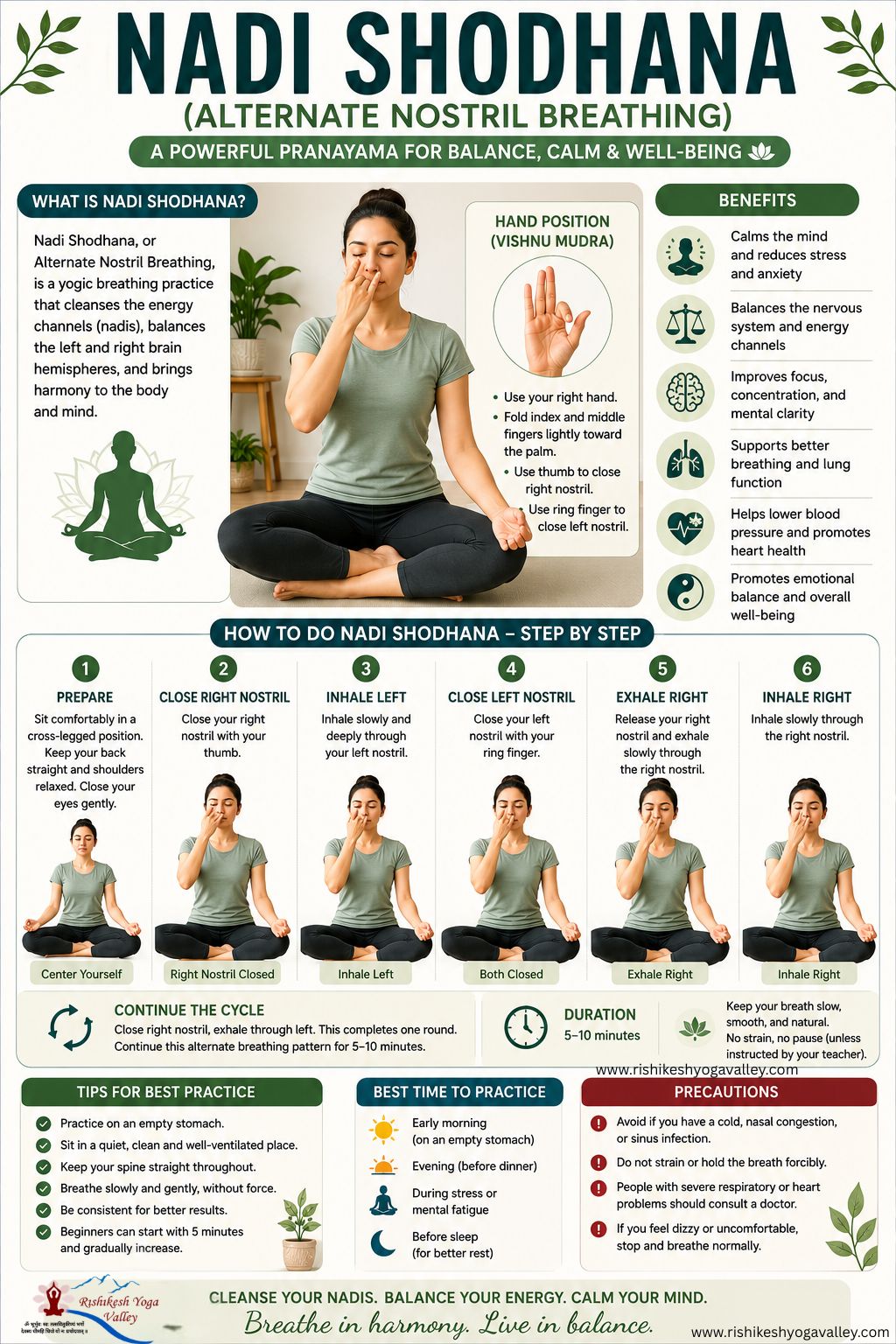
20. Nadi Shodhana
👉 Balances mind
How to Do Nadi Shodhana
Sit comfortably with your back straight and shoulders relaxed. Close your right nostril with your thumb and inhale slowly through your left nostril. Then close your left nostril with your ring finger, release the right nostril, and exhale through the right side. Inhale through the right nostril, switch sides again, and exhale through the left nostril. Continue this alternating breathing pattern slowly and calmly for 5–10 minutes.
Benefits of Nadi Shodhana
Nadi Shodhana helps calm the mind, reduce stress, and improve mental clarity by balancing the nervous system. It supports better breathing, increases focus and concentration, and promotes relaxation. Regular practice may also help lower anxiety, improve emotional balance, and enhance overall well-being.
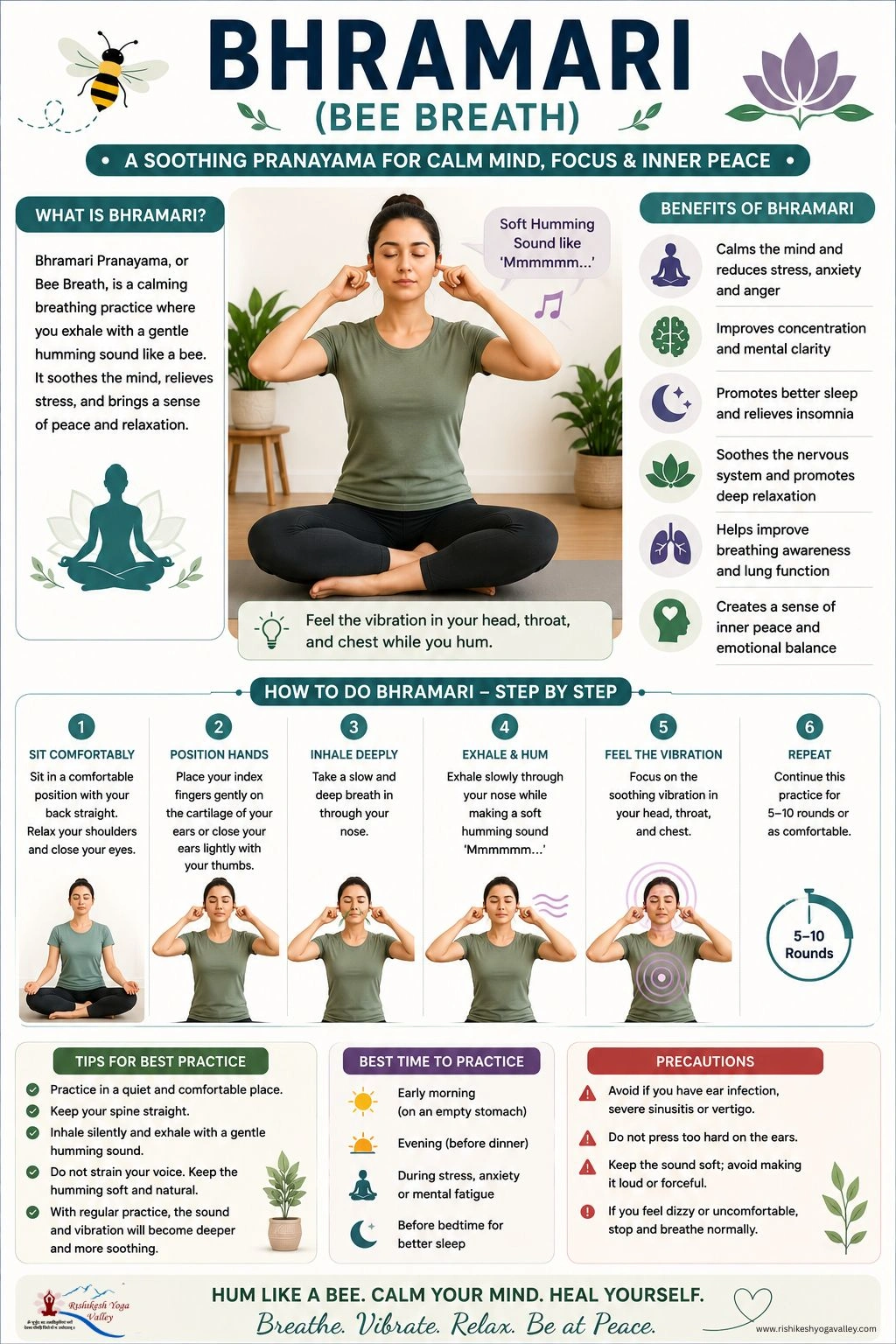
21. Bhramari
👉 Relieves anxiety
⸻
🧘♀️ YOGA FOR FLEXIBILITY
22. Uttanasana
👉 Improves flexibility
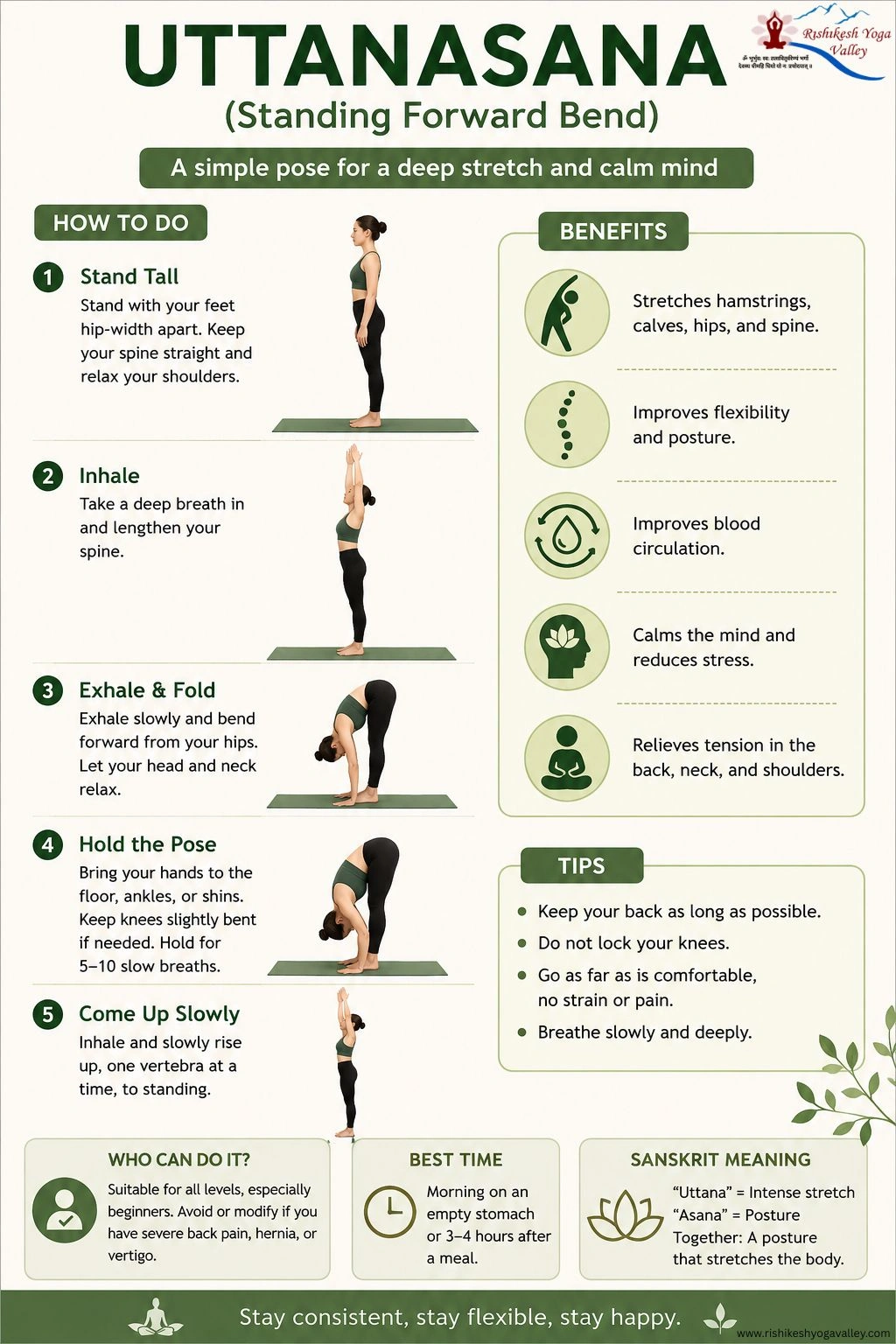
How to Do Uttanasana
Uttanasana is performed by standing tall with your feet hip-width apart. Inhale deeply, then exhale as you bend forward from your hips and bring your hands toward the floor, ankles, or legs. Keep your knees slightly bent if needed and allow your head and neck to relax while holding the stretch for a few slow breaths.
Benefits of Uttanasana
Uttanasana helps stretch the hamstrings, calves, hips, and spine while improving flexibility and posture. This relaxing yoga pose may also help reduce stress, relieve tension in the back and neck, improve blood circulation, and calm the mind. Regular practice can promote relaxation, balance, and overall body mobility.
23. Butterfly Pose
👉 Opens hips
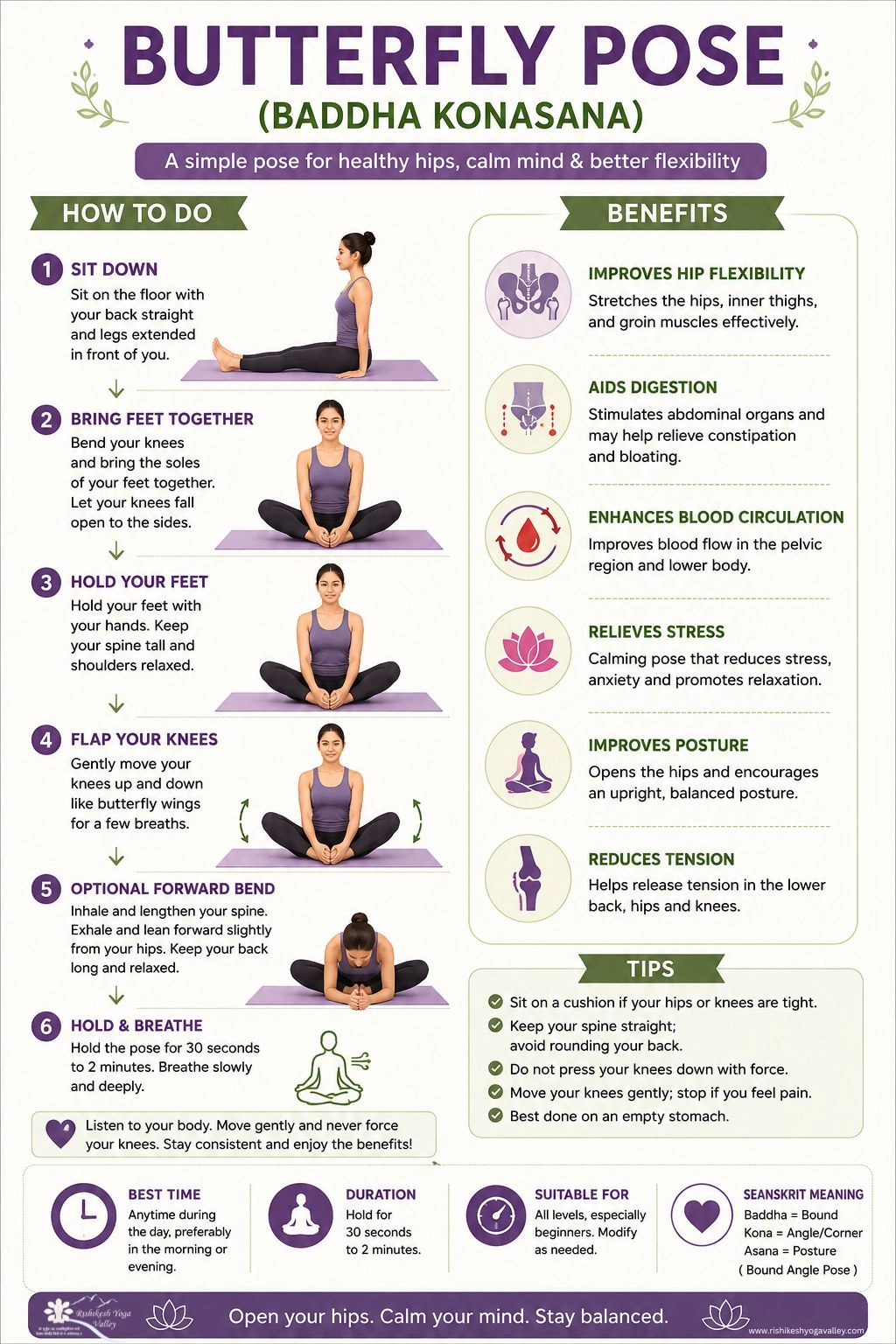
How to Do Butterfly Pose
Butterfly Pose is performed by sitting on the floor with your spine straight and the soles of your feet pressed together. Hold your feet with your hands and gently move your knees up and down like butterfly wings while breathing slowly. You can also lean slightly forward for a deeper stretch while keeping your back relaxed.
Benefits of Butterfly Pose
Butterfly Pose helps stretch the hips, thighs, and groin while improving flexibility and posture. This calming yoga pose may also support better blood circulation, reduce stiffness in the lower body, relieve stress, and promote relaxation and body awareness.
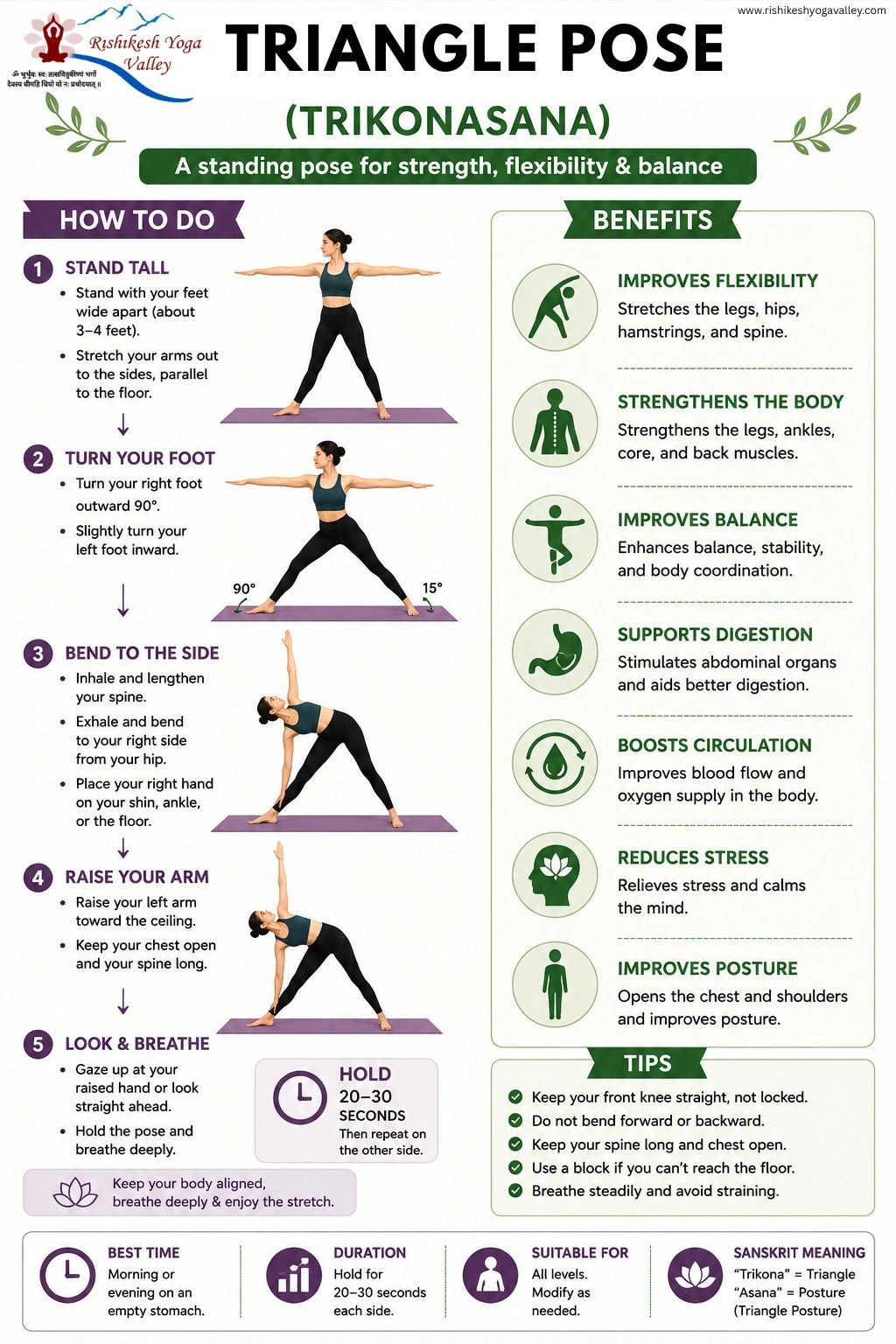
24. Triangle Pose
👉 Stretches whole body
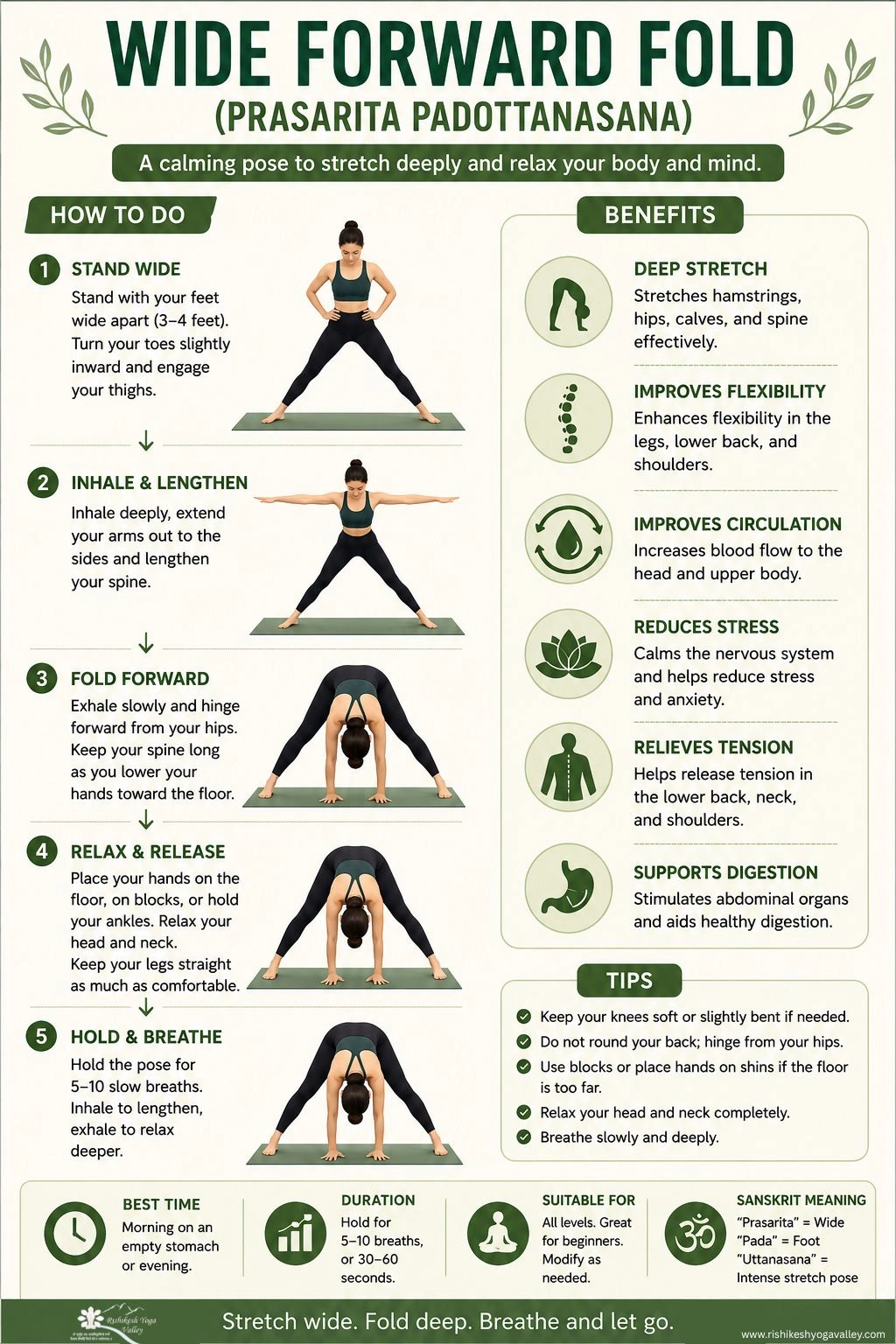
25. Wide Forward Fold
👉 Deep stretch
26. Lizard Pose
👉 Deep hip opener
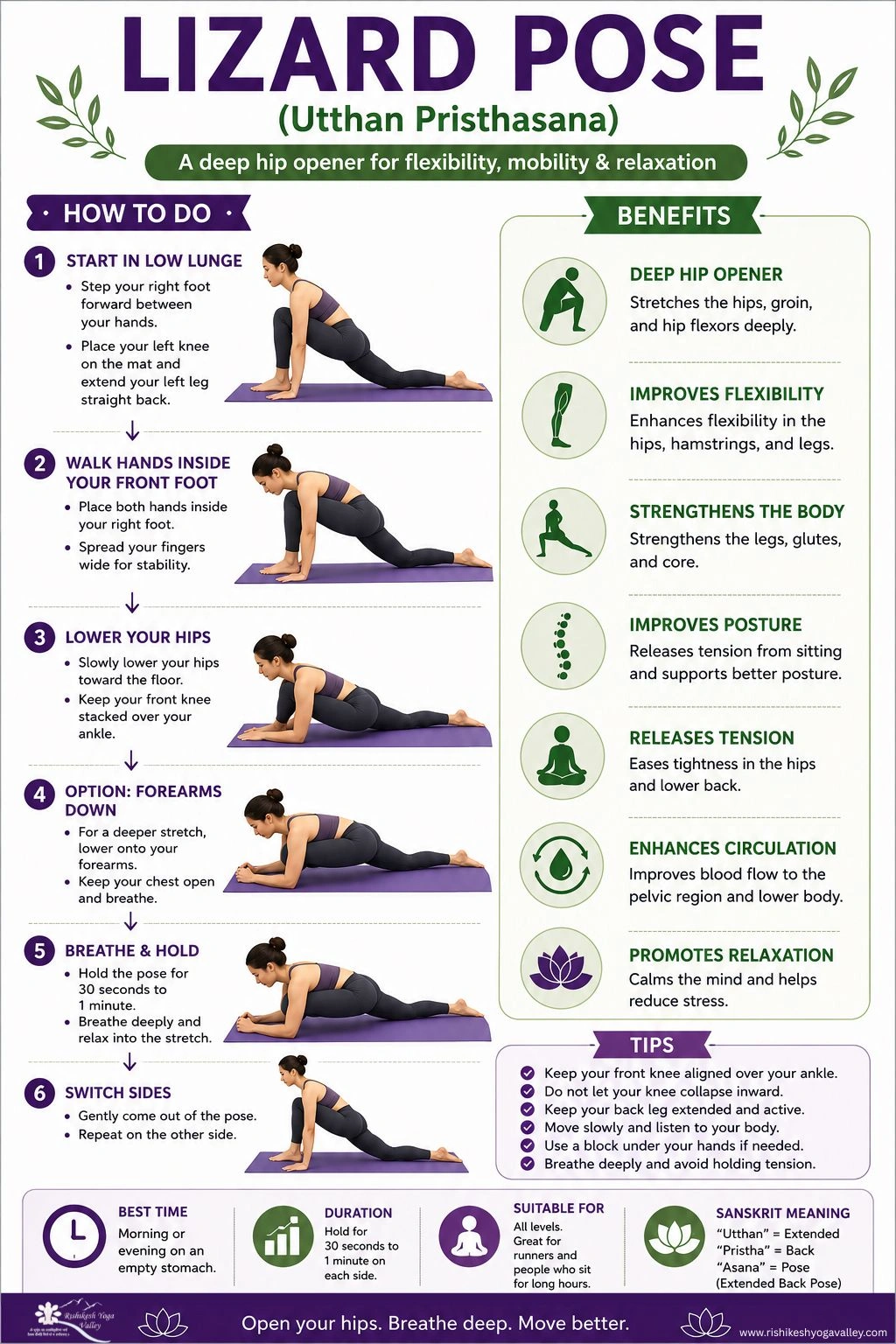
How to Do Lizard Pose
Lizard Pose begins in a low lunge position with one foot forward and the opposite leg extended behind you. Place both hands inside your front foot and slowly lower your hips toward the floor while keeping your chest open. You can stay on your hands or lower onto your forearms for a deeper stretch, then hold the pose for a few breaths before switching sides.
Benefits of Lizard Pose
Lizard Pose helps deeply stretch the hips, groin, hamstrings, and legs while improving flexibility and mobility. This yoga posture may also strengthen the lower body, improve balance, release tension caused by prolonged sitting, and support better posture and body awareness.
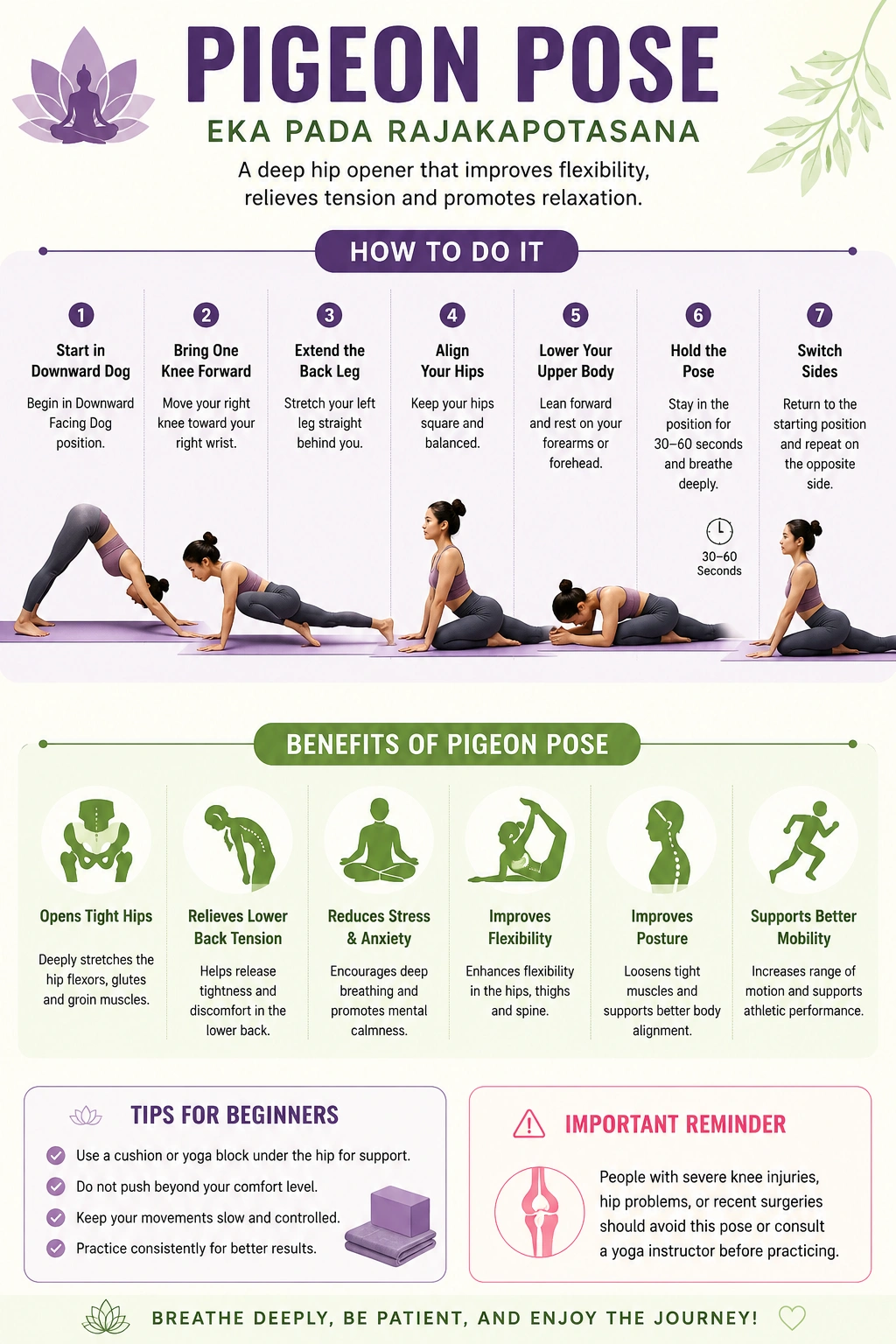
27. Pigeon Pose
👉 Improves mobility
⸻
🌙 YOGA FOR SLEEP
28. Supine Butterfly
👉 Relaxes body
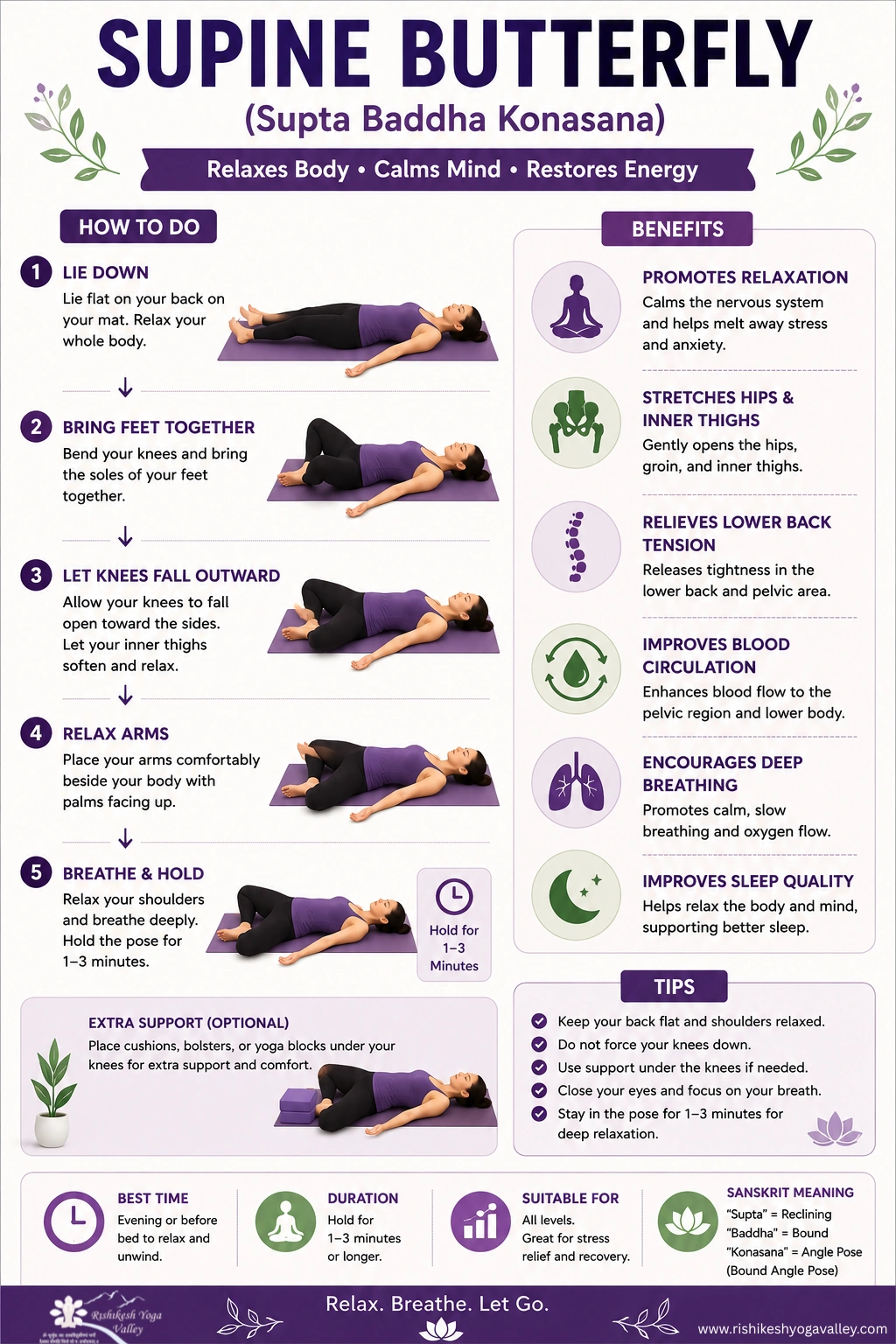
How to Do Supine Butterfly
Lie flat on your back and bring the soles of your feet together while letting your knees fall outward to the sides. Place your arms comfortably beside your body with palms facing up. Relax your shoulders, breathe deeply, and hold the pose for 1–3 minutes. You can place cushions or yoga blocks under your knees for extra support and comfort.
Benefits of Supine Butterfly
Supine Butterfly Pose gently stretches the hips, inner thighs, and lower back while promoting deep relaxation. It helps reduce stress, improve flexibility, and support better blood circulation. This restorative yoga pose also encourages calm breathing, relieves body tension, and can help improve sleep quality and overall mental relaxation.
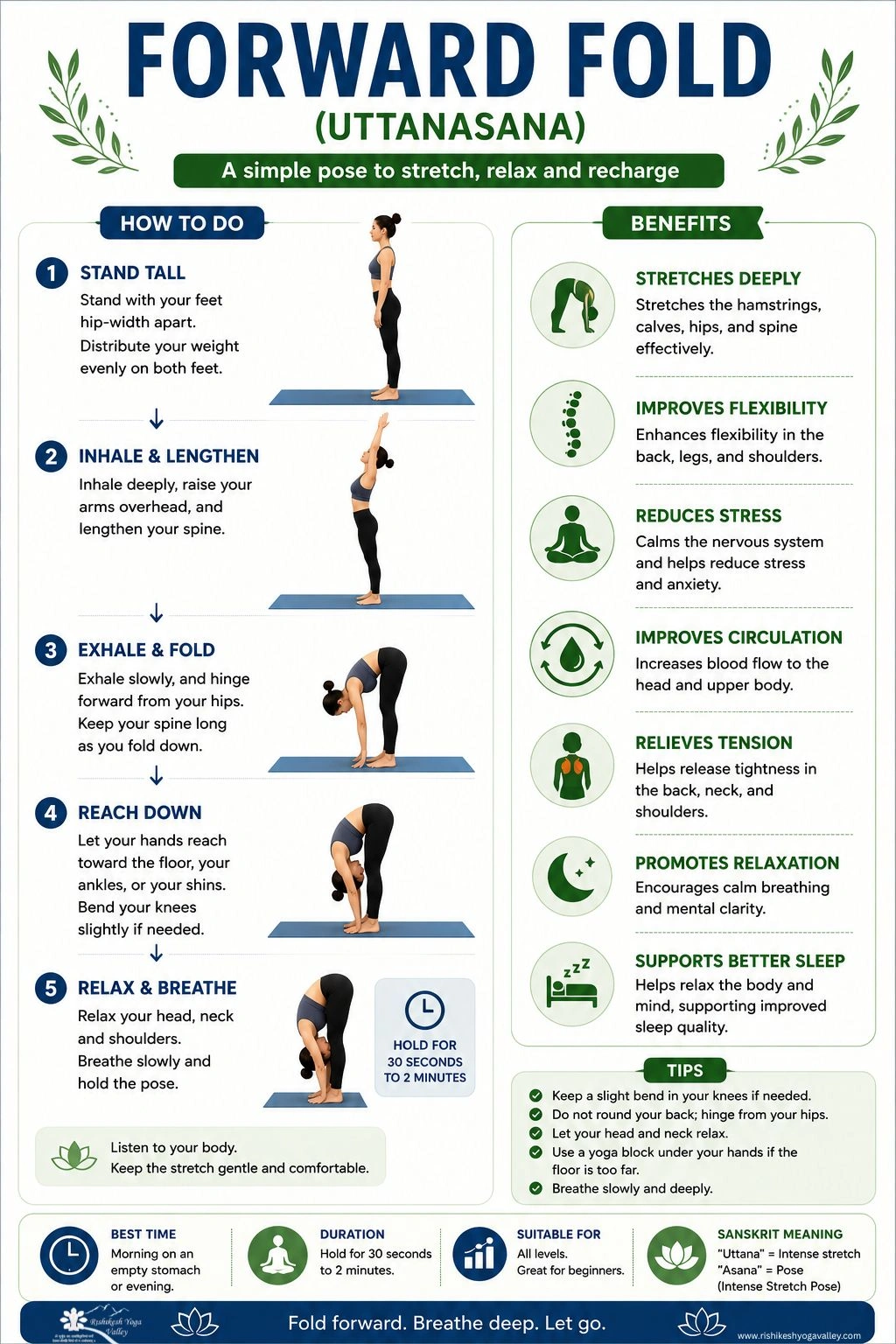
29. Forward Fold
👉 Calms nervous system
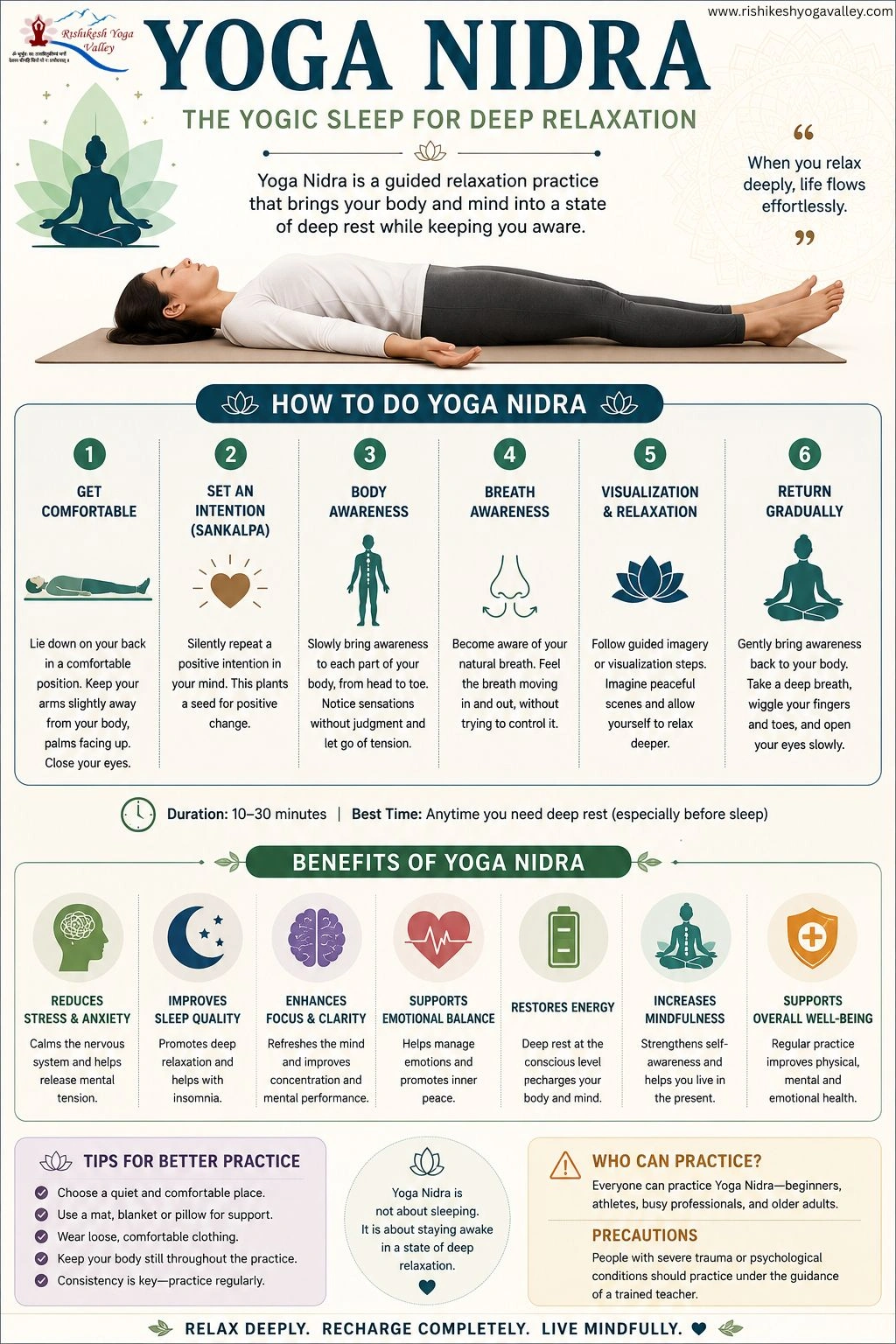
30. Yoga Nidra
👉 Deep relaxation
How to Do Yoga Nidra
Lie down comfortably on your back in a quiet place with your arms relaxed by your sides and palms facing upward. Close your eyes and focus on your breathing while slowly relaxing each part of your body from head to toe. Stay still, follow guided breathing or meditation instructions, and remain aware while allowing your body to enter a deeply restful state for 10–30 minutes.
Benefits of Yoga Nidra
Yoga Nidra helps reduce stress, anxiety, and mental fatigue while promoting deep relaxation and better sleep quality. It calms the nervous system, improves focus, and supports emotional balance. Regular practice can also help refresh the mind, increase mindfulness, and restore energy levels naturally.
⸻
🔥 INTERMEDIATE / ADVANCED YOGA EXERCISES
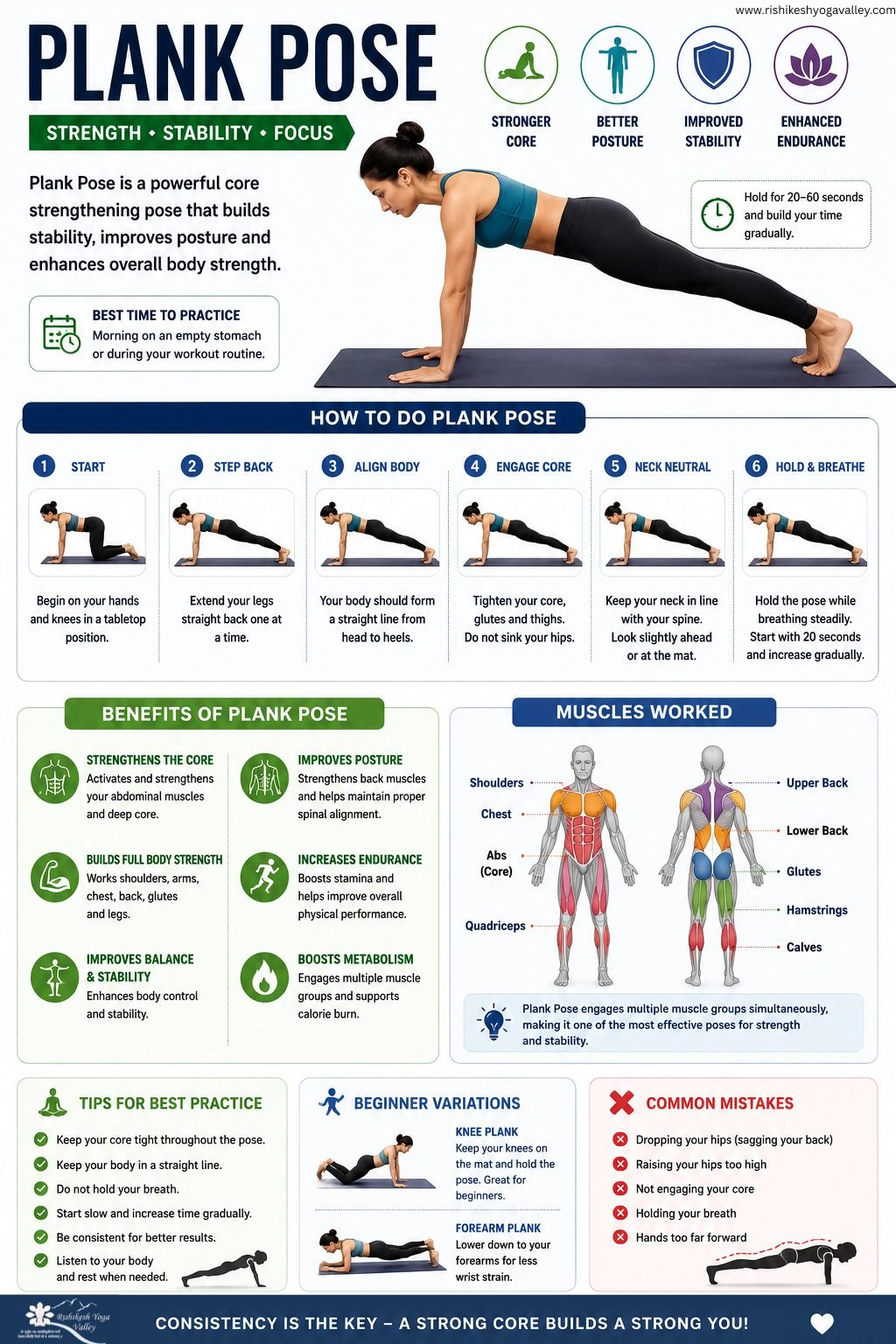
31. Plank Pose
👉 Builds core strength
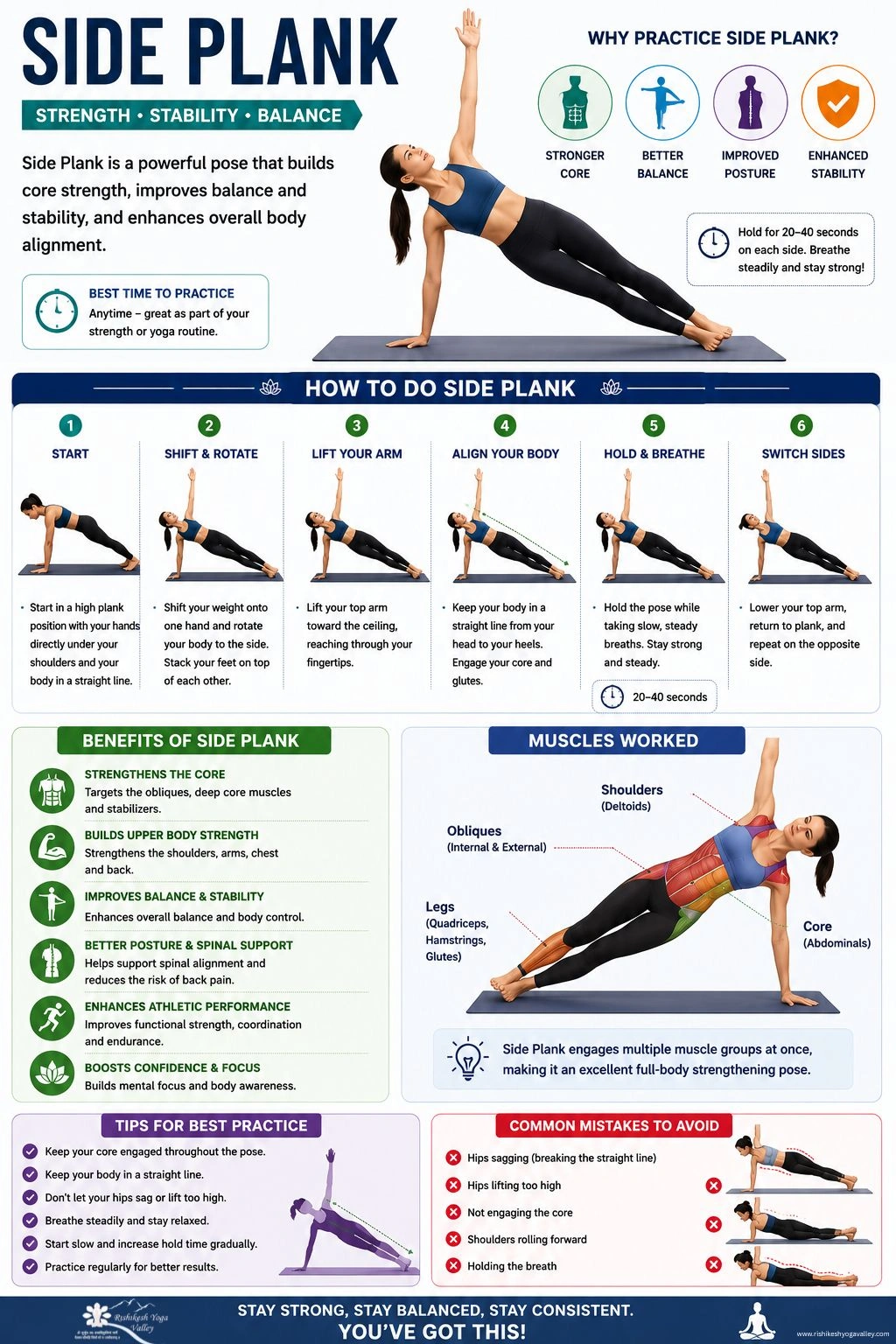
32. Side Plank
👉 Improves balance
How to Do Side Plank
Start in a regular plank position and shift your weight onto one hand or forearm. Stack your feet on top of each other and rotate your body to one side while raising the opposite arm toward the ceiling. Keep your body in a straight line from head to heels, engage your core, and hold the pose for 20–45 seconds before switching sides.
Benefits of Side Plank
Side Plank strengthens the core, shoulders, arms, and obliques while improving balance and stability. It helps enhance posture, supports spinal alignment, and increases overall body endurance. Regular practice can also improve coordination, strengthen wrist muscles, and reduce the risk of back pain.
33. Boat Pose
👉 Strengthens abs
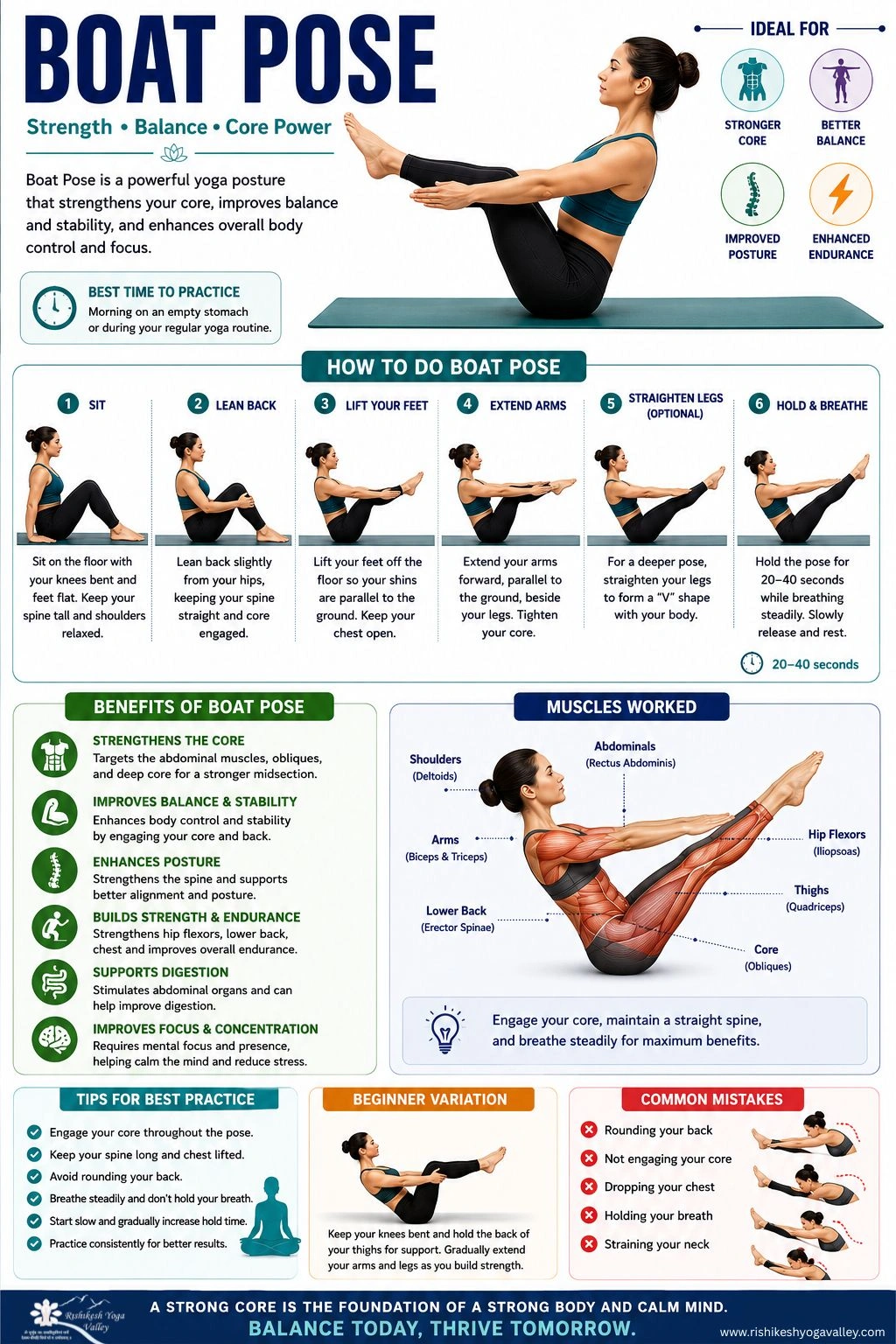
How to Do Boat Pose
Sit on the floor with your knees bent and feet flat. Lean back slightly while keeping your spine straight, then lift your feet off the floor so your shins are parallel to the ground. Extend your arms forward beside your legs and engage your core. For a deeper pose, straighten your legs into a “V” shape and hold for 20–40 seconds while breathing steadily.
Benefits of Boat Pose
Boat Pose strengthens the core, hip flexors, and lower back while improving balance and stability. It helps enhance posture, build abdominal strength, and support better body control. Regular practice can also improve focus, digestion, and overall endurance while toning the abdominal muscles.
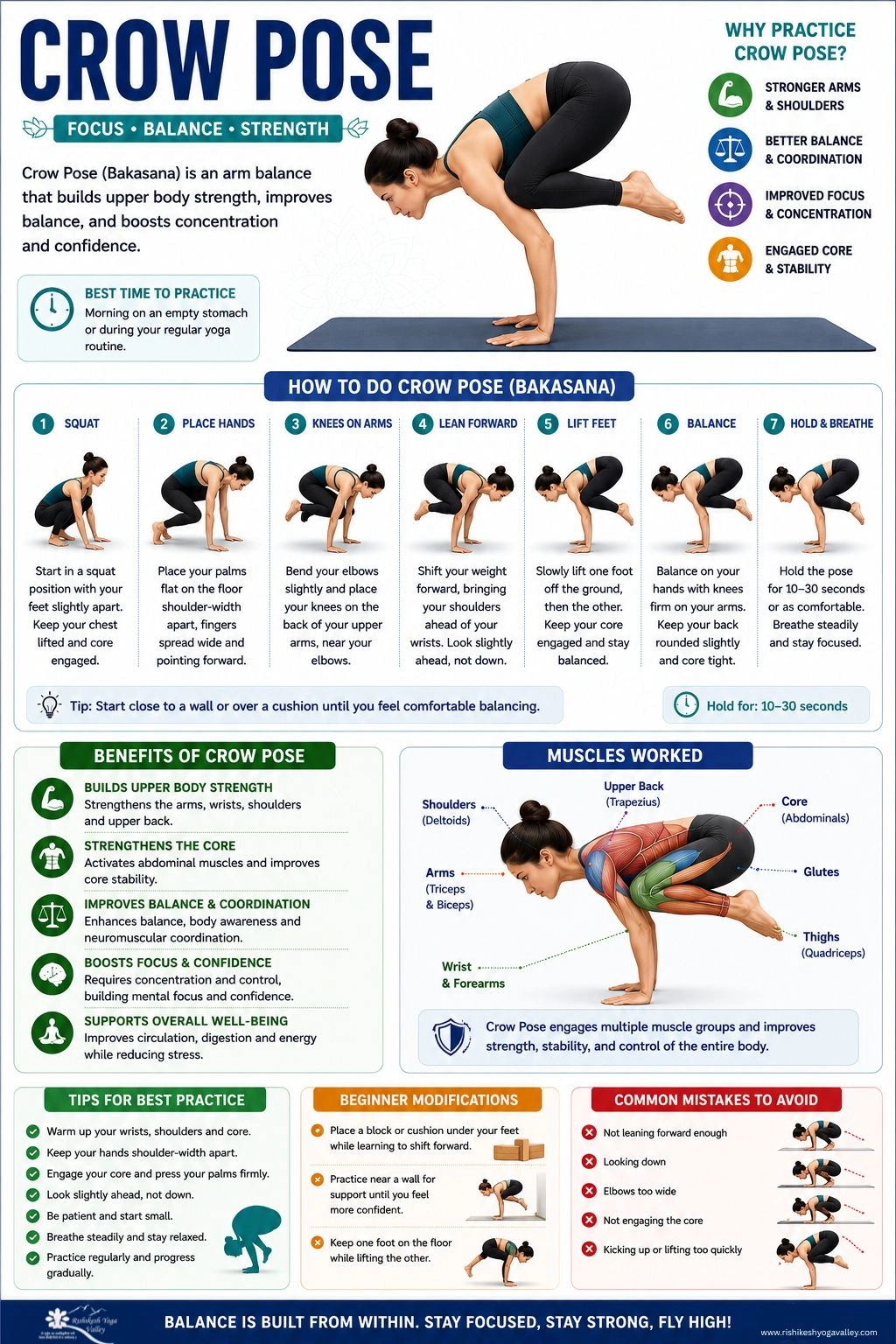
34. Crow Pose
👉 Builds arm strength
35. Headstand
👉 Improves circulation
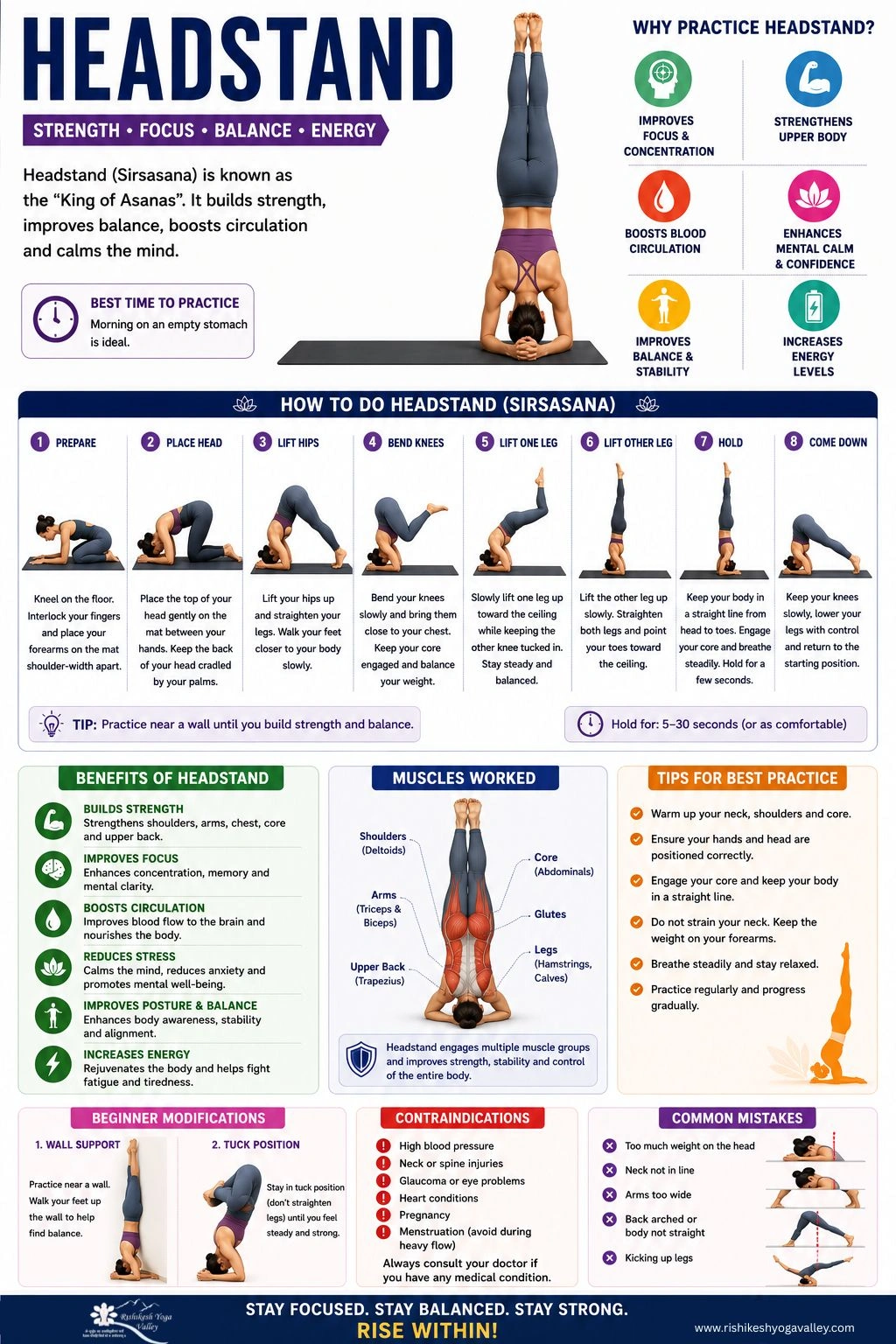
How to Do Headstand
Start by kneeling on the floor and interlocking your fingers to create a stable base with your forearms. Place the top of your head gently on the mat between your hands, then lift your hips and slowly walk your feet closer to your body. Engage your core, carefully lift one leg and then the other toward the ceiling, keeping your body straight and balanced. Hold the pose for a few seconds while breathing steadily, then slowly lower your legs back down with control.
Benefits of Headstand
Headstand strengthens the shoulders, arms, core, and upper body while improving balance and body control. It helps increase focus, concentration, and blood circulation, and may also boost energy and confidence. Regular practice can improve posture, enhance stability, and support overall mental calmness and body awareness.
36. Shoulder Stand
👉 Balances hormones
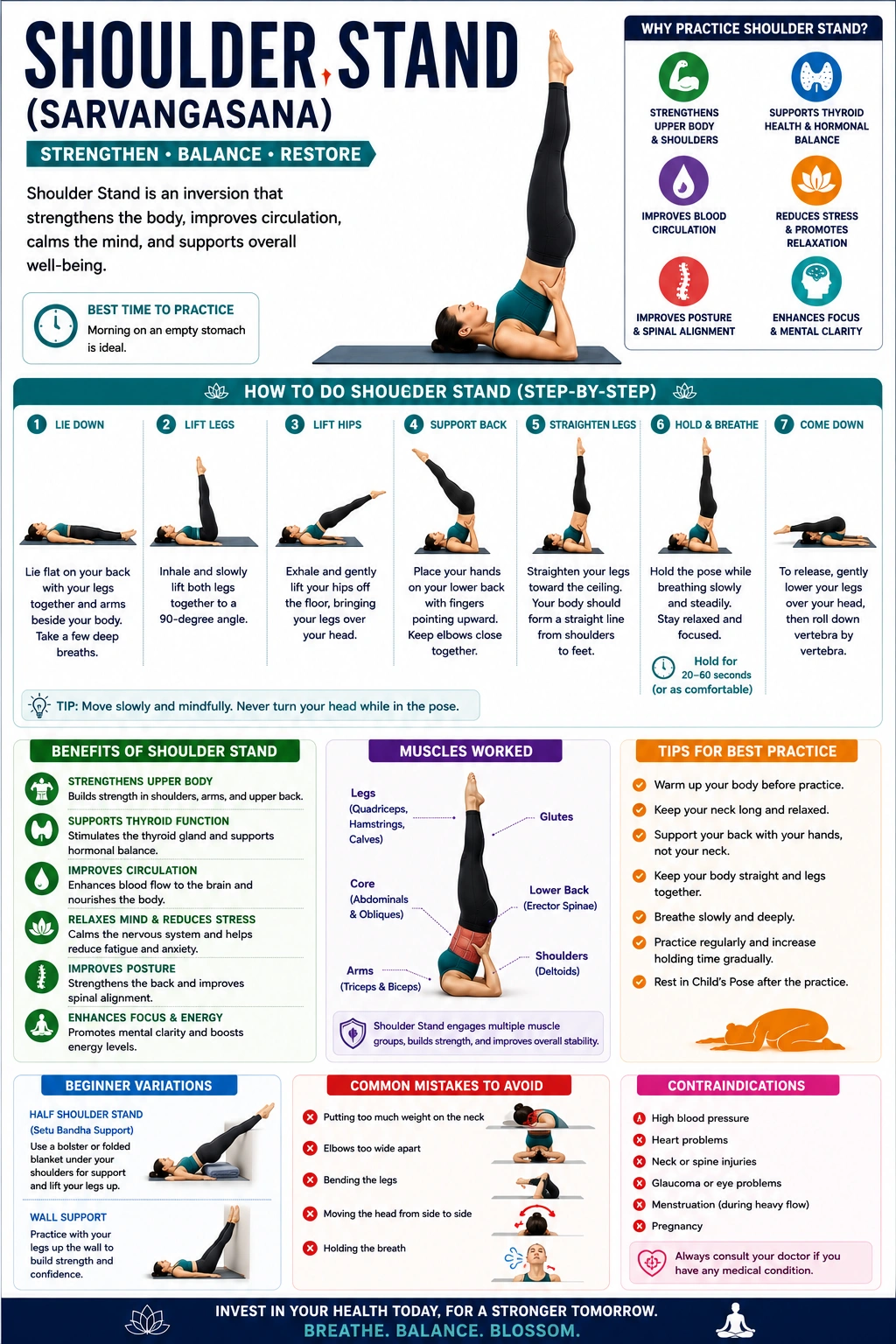
How to Do Shoulder Stand
Lie flat on your back with your arms beside your body. Lift your legs upward, then raise your hips off the floor while supporting your lower back with your hands. Keep your elbows close together and straighten your legs toward the ceiling, creating a straight line from shoulders to feet. Hold the pose while breathing slowly and steadily, then gently lower your body back down with control.
Benefits of Shoulder Stand
Shoulder Stand strengthens the shoulders, core, neck, and upper body while improving balance and posture. It helps promote relaxation, improve blood circulation, and increase body awareness. Regular practice may also support flexibility, reduce stress, and enhance overall focus and mental calmness.
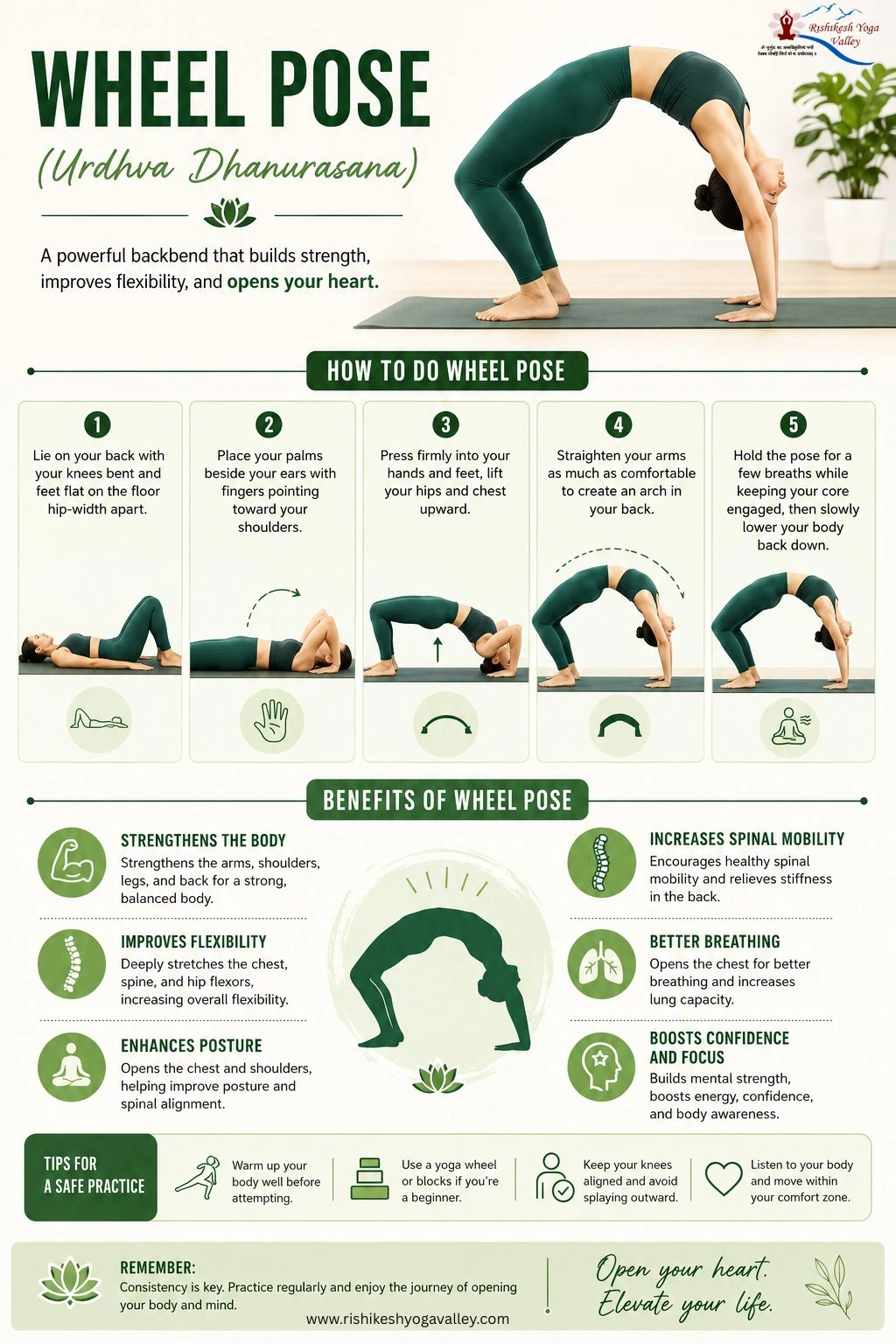
37. Wheel Pose
👉 Opens chest deeply
38. Camel Pose
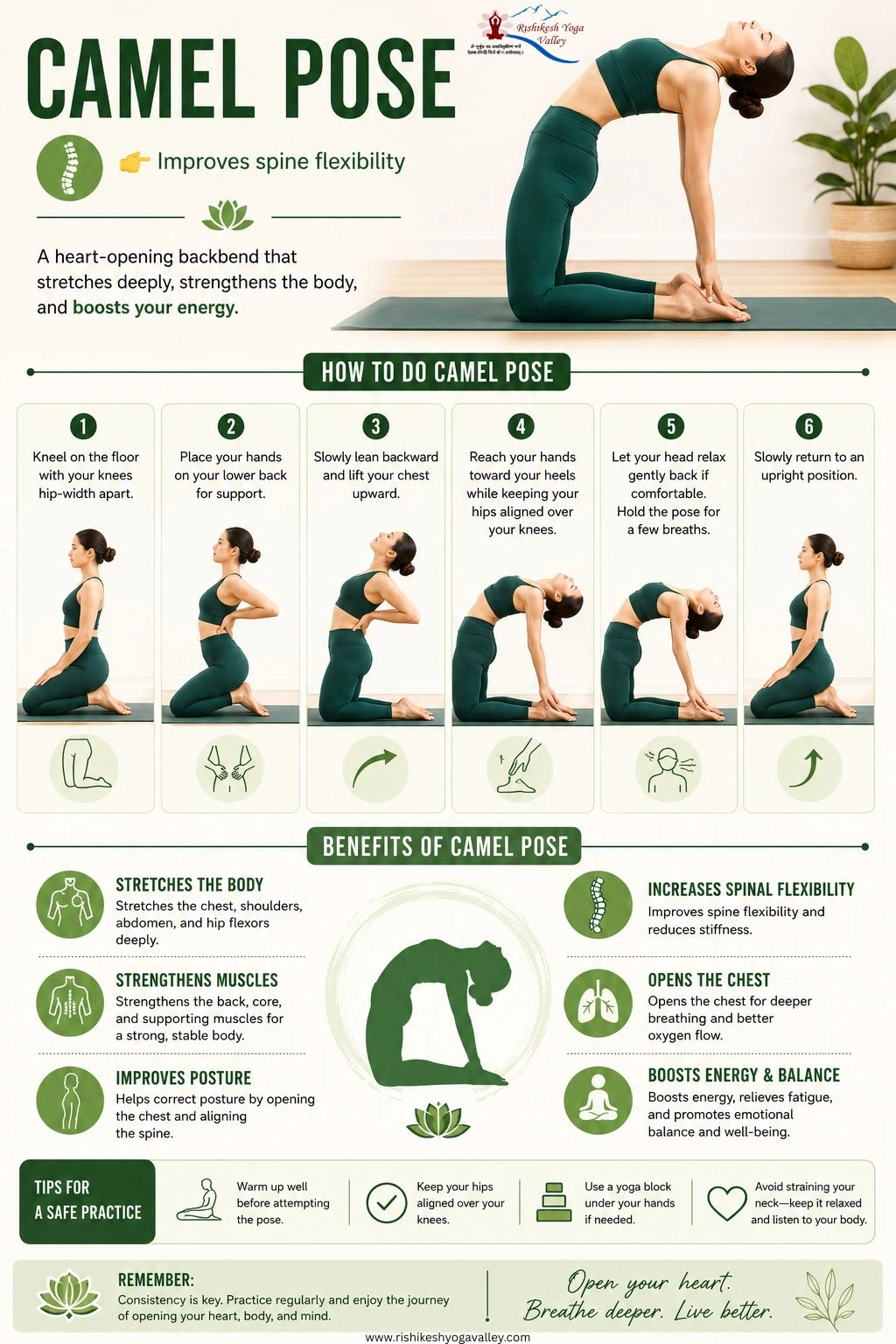
👉 Improves spine flexibility
How to Do Camel Pose
Kneel on the floor with your knees hip-width apart and place your hands on your lower back for support. Slowly lean backward, lift your chest upward, and reach your hands toward your heels while keeping your hips aligned over your knees. Let your head relax gently back if comfortable, hold the pose for a few breaths, and then slowly return to an upright position.
Benefits of Camel Pose
Camel Pose stretches the chest, shoulders, abdomen, and hip flexors while strengthening the back and core muscles. It helps improve posture, increase spinal flexibility, and open the chest for deeper breathing. Regular practice can also boost energy, reduce stiffness, and promote better body awareness and emotional balance.
39. Bow Pose
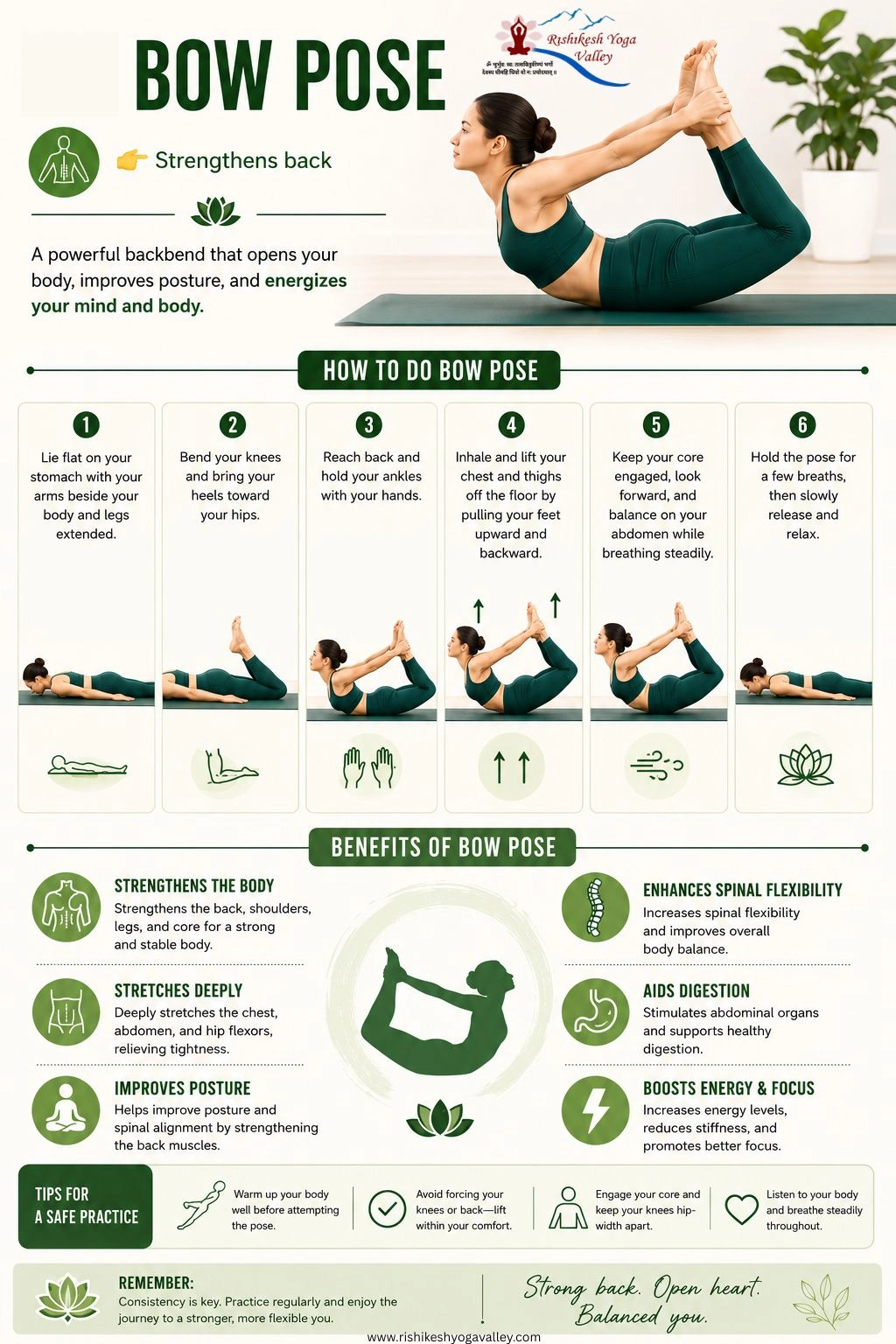
👉 Strengthens back
How to Do Bow Pose
Lie flat on your stomach with your arms beside your body and knees bent. Reach back and hold your ankles with your hands, then inhale and lift your chest and thighs off the floor by pulling your feet upward and backward. Keep your core engaged, look forward, and balance on your abdomen while breathing steadily. Hold the pose for a few breaths, then slowly release and relax.
Benefits of Bow Pose
Bow Pose strengthens the back, shoulders, legs, and core while deeply stretching the chest, abdomen, and hip flexors. It helps improve posture, spinal flexibility, and overall body balance. Regular practice can also stimulate digestion, increase energy levels, reduce stiffness, and promote better focus and body awareness.
40. Locust Pose
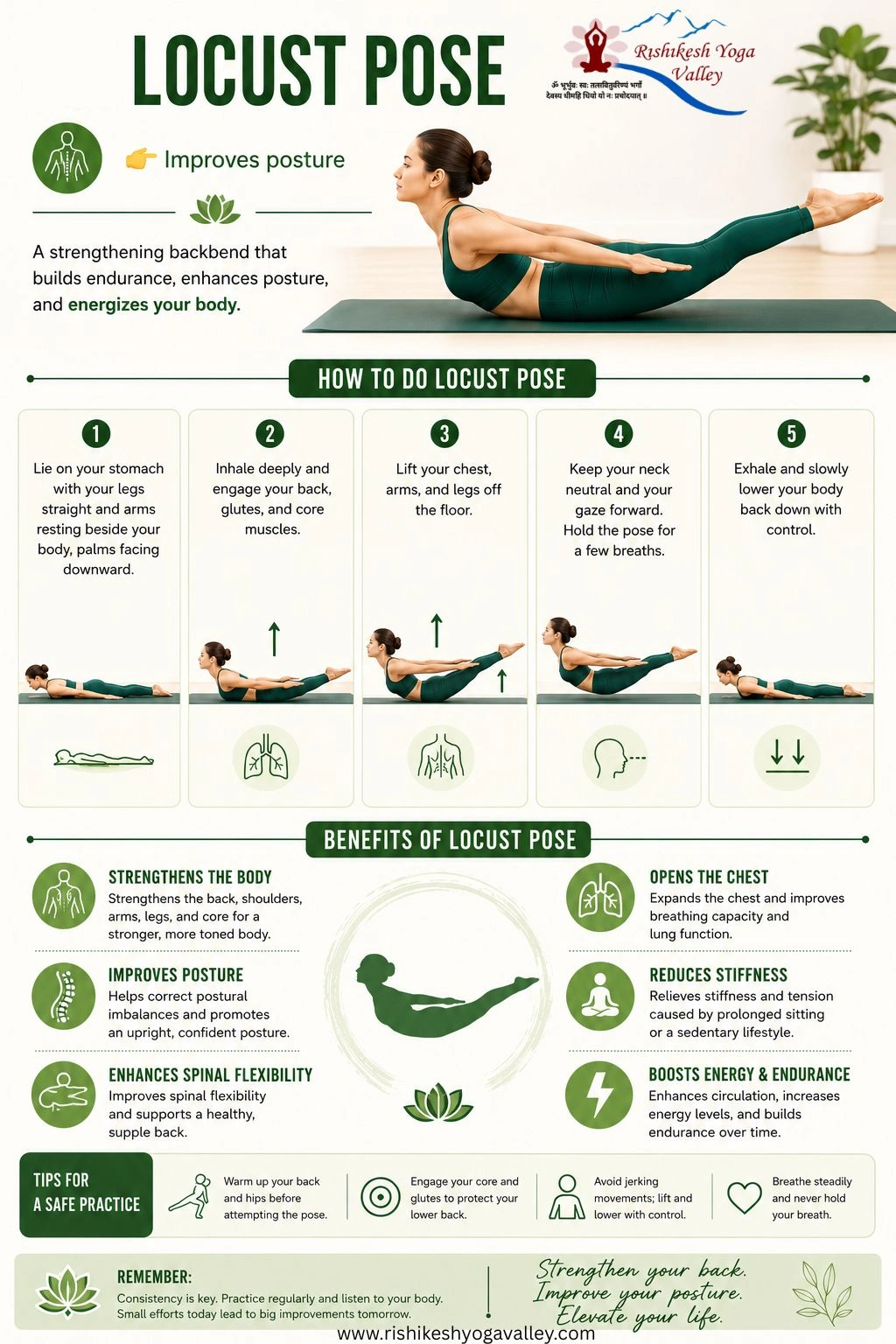
👉 Improves posture
How to Do Locust Pose
Lie on your stomach with your legs straight and arms resting beside your body, palms facing downward. Inhale deeply and lift your chest, arms, and legs off the floor while keeping your neck neutral and your gaze forward. Engage your back, glutes, and core muscles as you hold the pose for a few breaths, then slowly lower your body back down with control.
Benefits of Locust Pose
Locust Pose strengthens the back, shoulders, arms, legs, and core while improving posture and spinal flexibility. It helps open the chest, increase body awareness, and reduce stiffness caused by prolonged sitting. Regular practice can also boost circulation, support better balance, and improve overall strength and endurance.
⸻
🧘 FULL BODY YOGA EXERCISES
41. Sun Salutation (Surya Namaskar)
👉 Complete full body workout
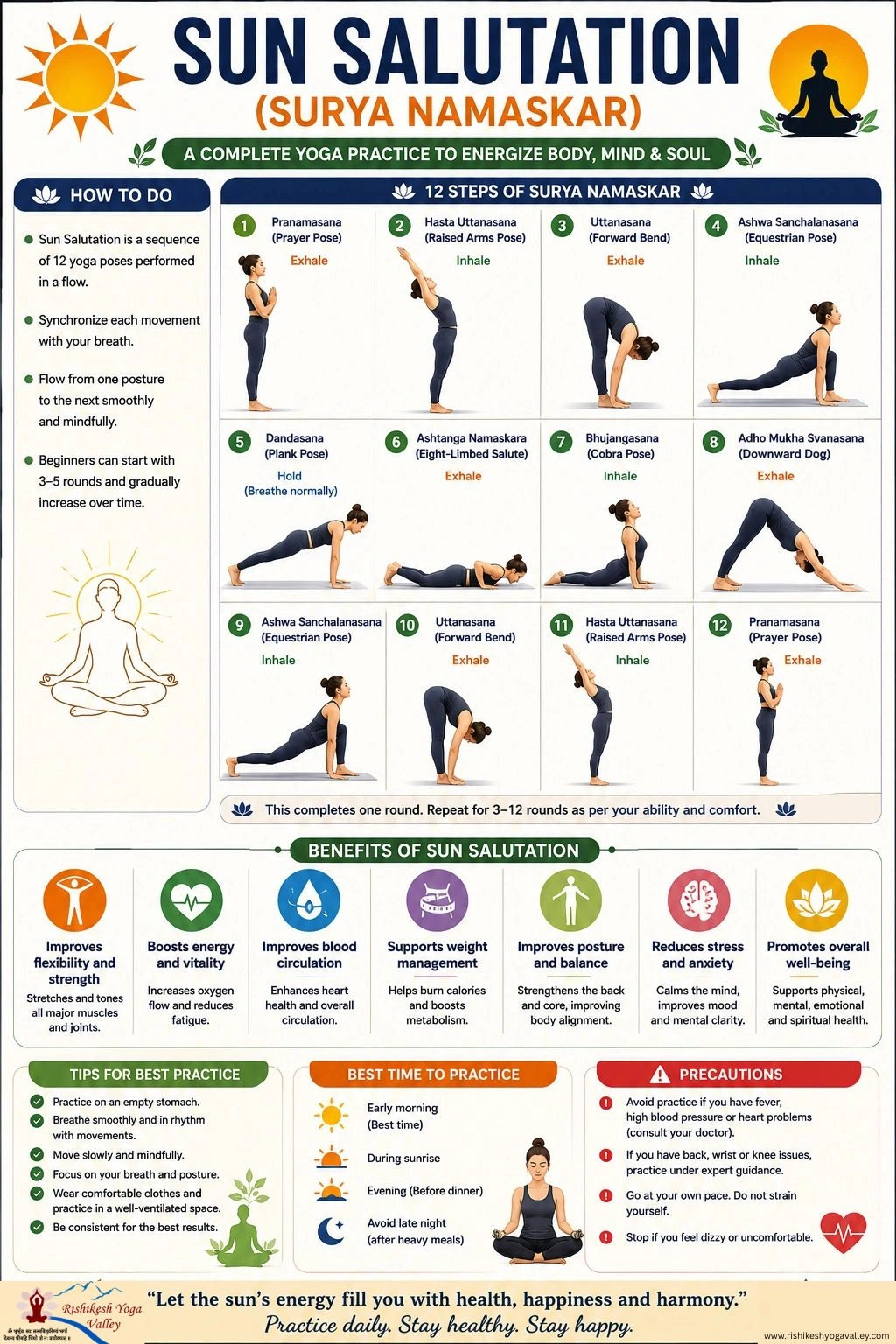
How to Do Sun Salutation (Surya Namaskar)
Stand straight with your palms joined in front of your chest. Move through a sequence of yoga poses including forward bend, plank, cobra pose, and downward dog while coordinating each movement with your breathing. Flow smoothly from one posture to the next and complete the sequence slowly and mindfully. Beginners can start with 3–5 rounds and gradually increase practice over time.
Benefits of Sun Salutation (Surya Namaskar)
Sun Salutation improves flexibility, strength, and blood circulation while stretching the entire body. It helps boost energy levels, supports weight management, and improves posture and balance. Regular practice also reduces stress, improves focus, and promotes overall physical and mental well-being.
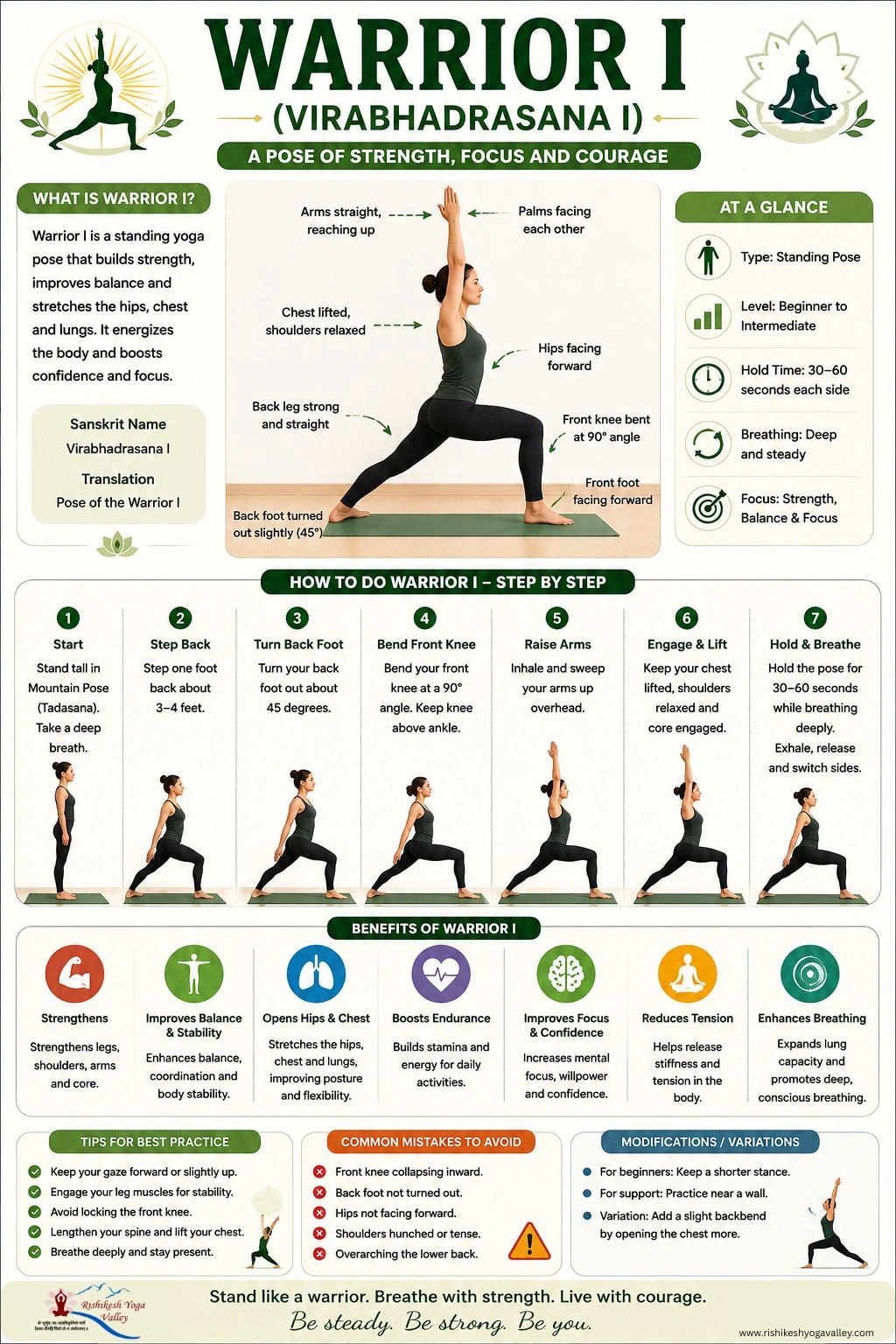
42. Warrior I
👉 Builds strength
43. Warrior II
👉 Improves endurance
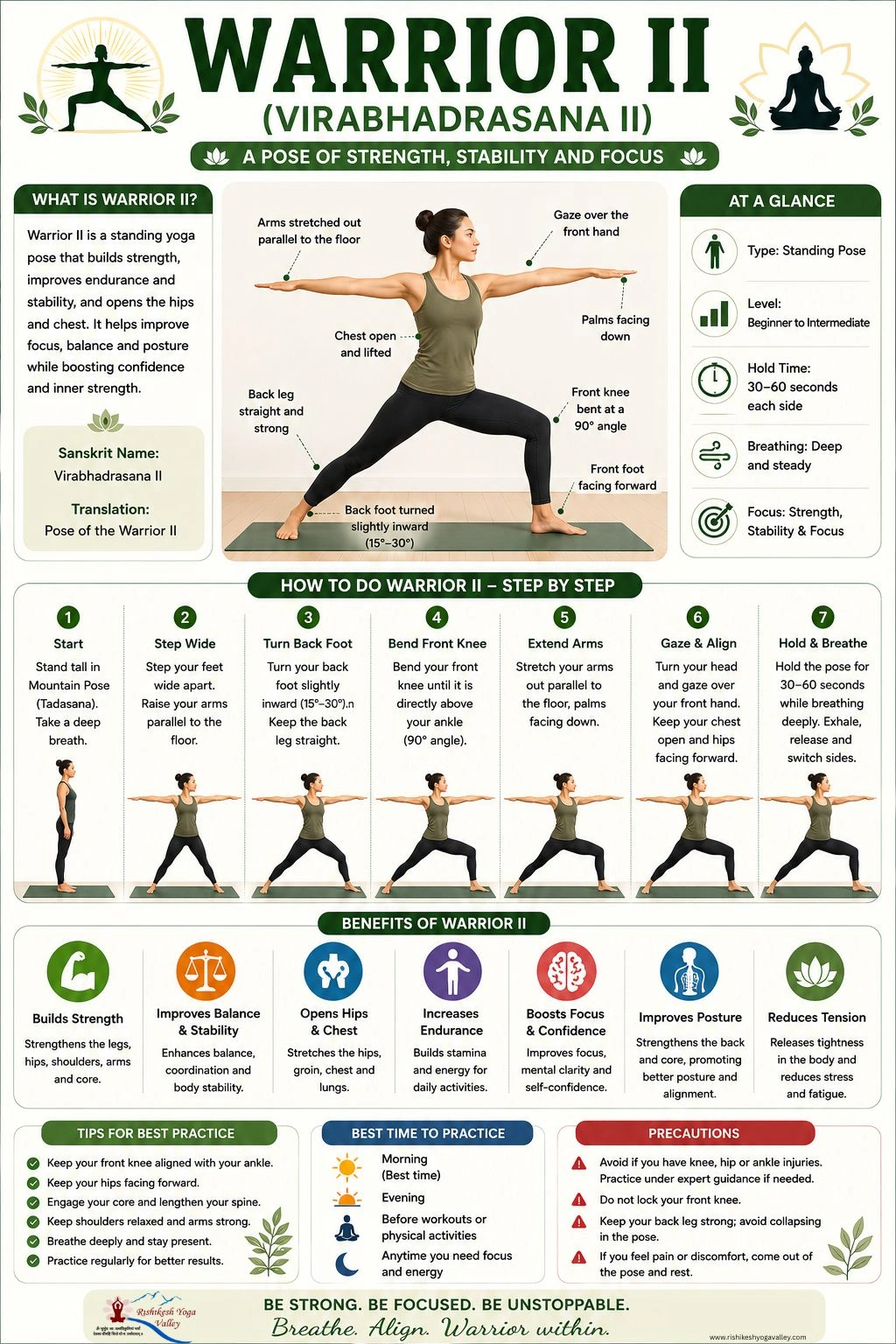
How to Do Warrior II
Stand with your feet wide apart and turn one foot forward while turning the back foot slightly inward. Bend your front knee until it forms a 90-degree angle, keeping the back leg straight. Stretch your arms out parallel to the floor with palms facing down and gaze over your front hand. Hold the pose for 30–60 seconds while breathing deeply, then switch sides.
Benefits of Warrior II
Warrior II strengthens the legs, hips, shoulders, and core while improving balance and stamina. It stretches the chest, groin, and hips, helping increase flexibility and stability. Regular practice also improves focus, confidence, posture, and overall body coordination while reducing stiffness and tension.
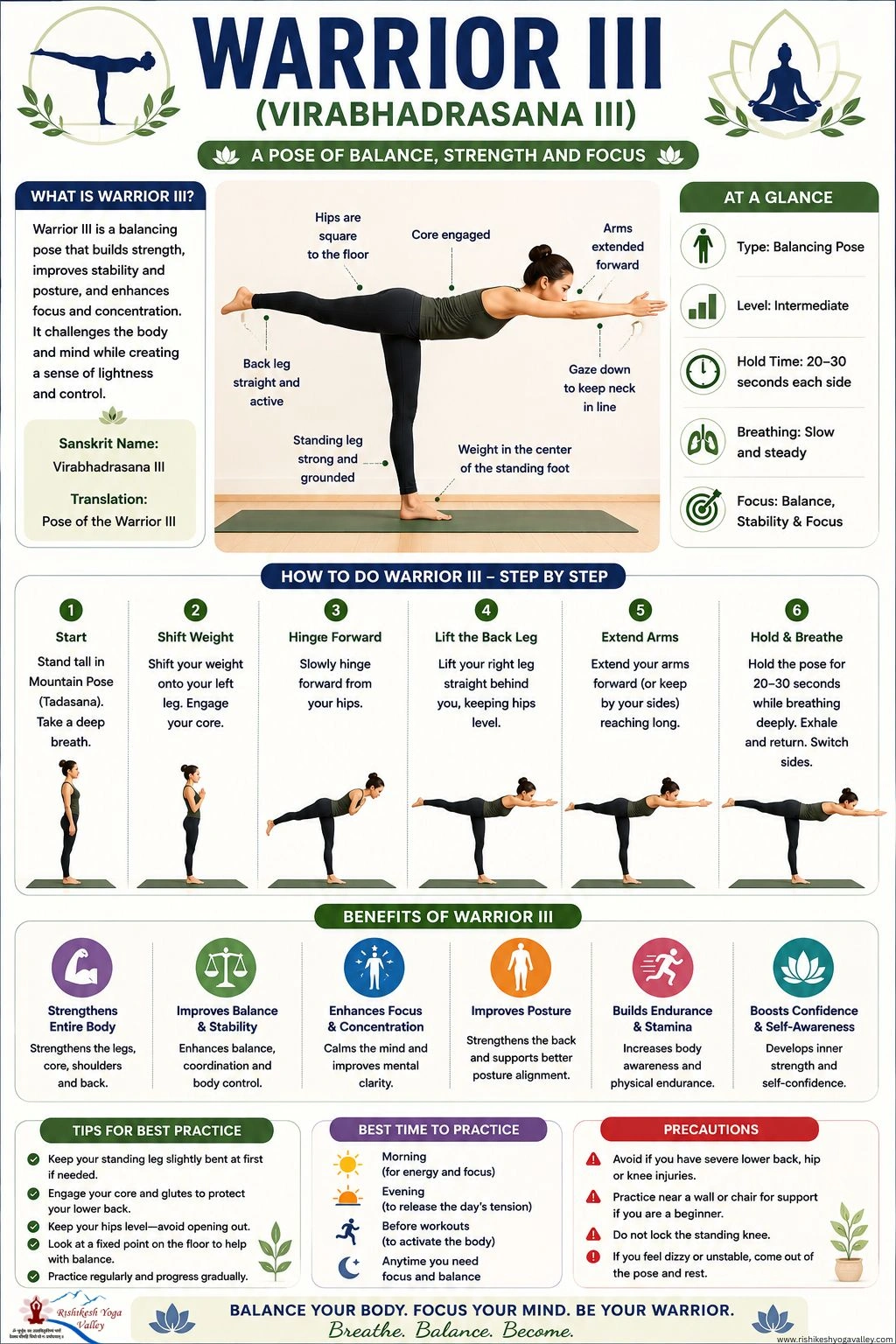
44. Warrior III
👉 Enhances balance
45. Chair Pose
👉 Strengthens legs
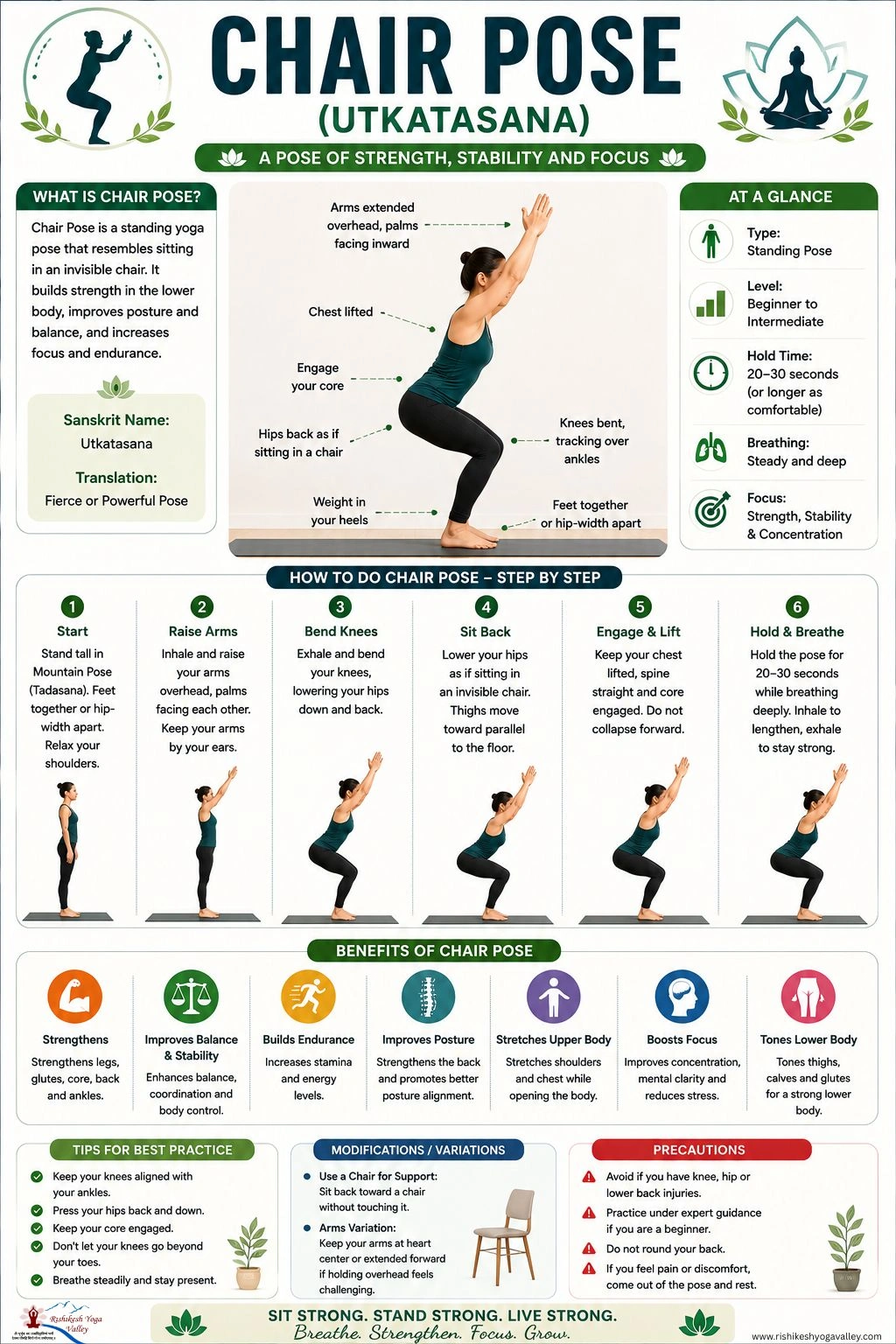
How to Do Chair Pose
Stand tall with your feet together and raise your arms overhead with palms facing inward. Bend your knees and lower your hips as if sitting back into an invisible chair while keeping your chest lifted and spine straight. Keep your weight in your heels, engage your core, and hold the pose for 20–30 seconds while breathing deeply.
Benefits of Chair Pose
Chair Pose strengthens the legs, glutes, core, and back while improving balance and stability. It helps increase endurance, improves posture, and stretches the shoulders and chest. Regular practice also boosts focus, builds body awareness, and tones the lower body muscles.
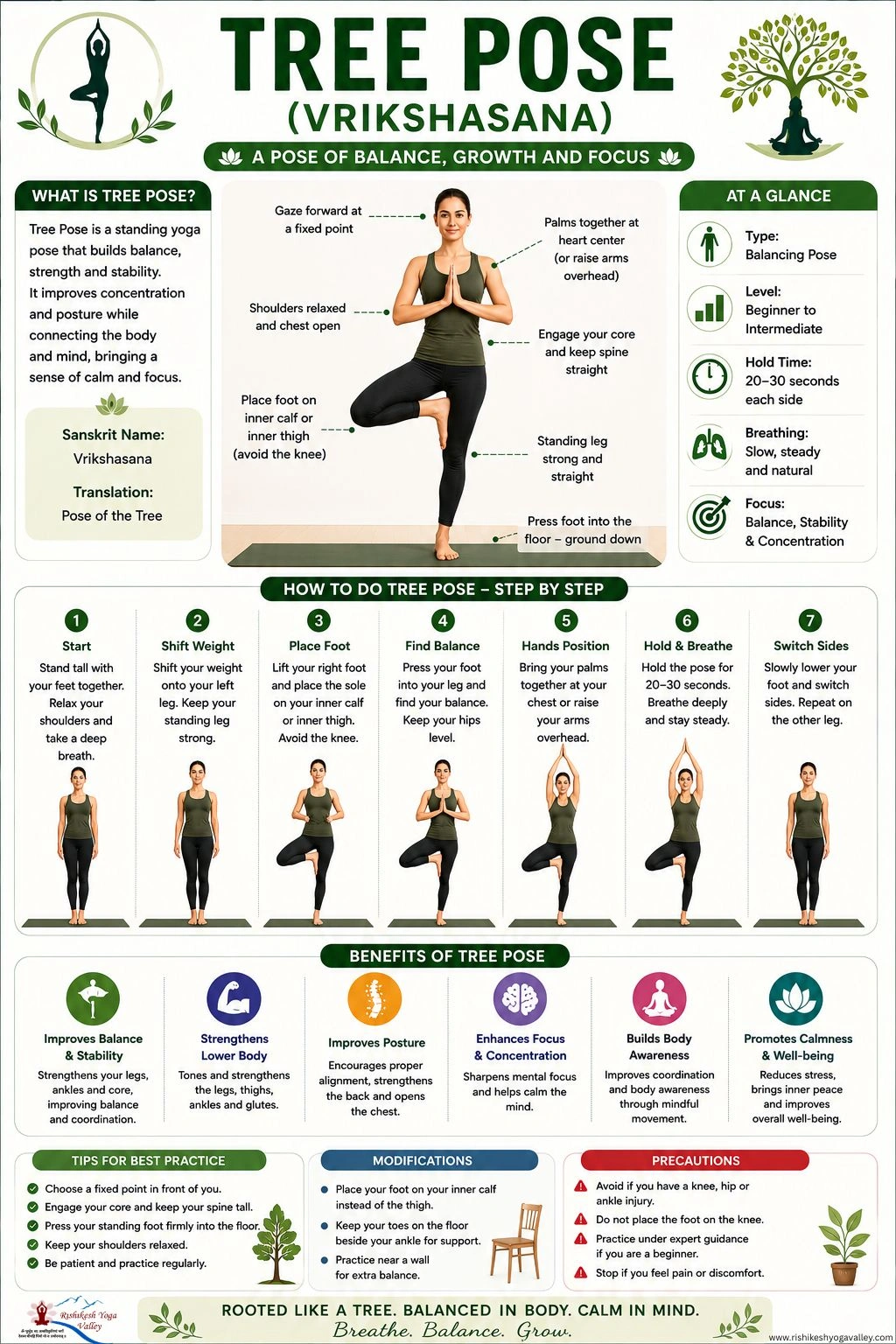
46. Tree Pose
👉 Improves focus
⸻
🧠 THERAPEUTIC YOGA EXERCISES
47. Cat-Cow
👉 Relieves back pain
48. Cobra
👉 Improves spine health
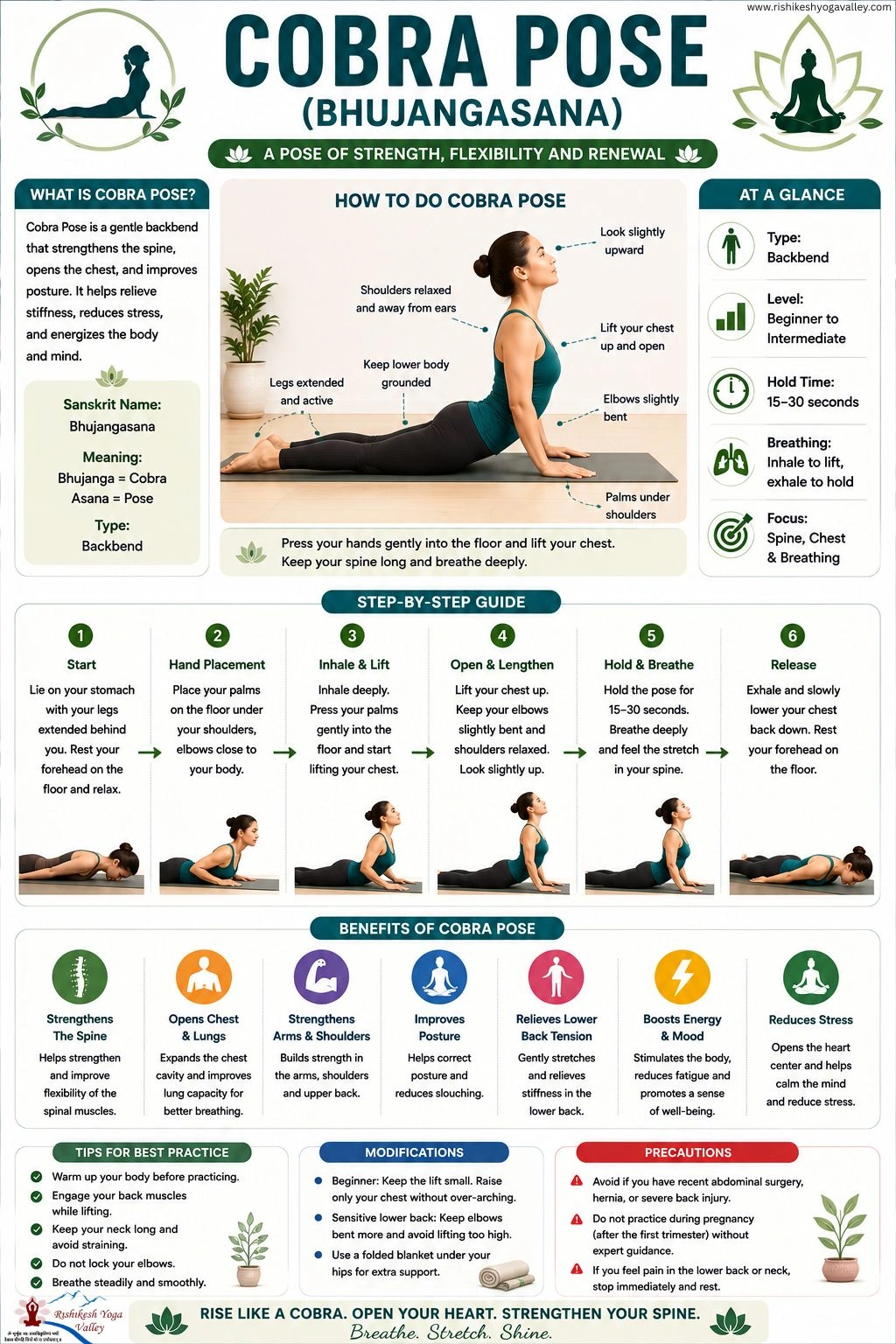
How to Do Cobra Pose
Lie flat on your stomach with your legs extended and palms placed under your shoulders. Press your hands gently into the floor and slowly lift your chest while keeping your elbows slightly bent and shoulders relaxed. Keep your lower body grounded, look slightly upward, and hold the pose for 15–30 seconds while breathing deeply.
Benefits of Cobra Pose
Cobra Pose strengthens the spine, shoulders, and arms while improving flexibility in the chest and abdomen. It helps improve posture, opens the lungs for better breathing, and relieves tension in the lower back. Regular practice also boosts energy, reduces stress, and supports overall spinal health.
49. Bridge
👉 Supports lower back
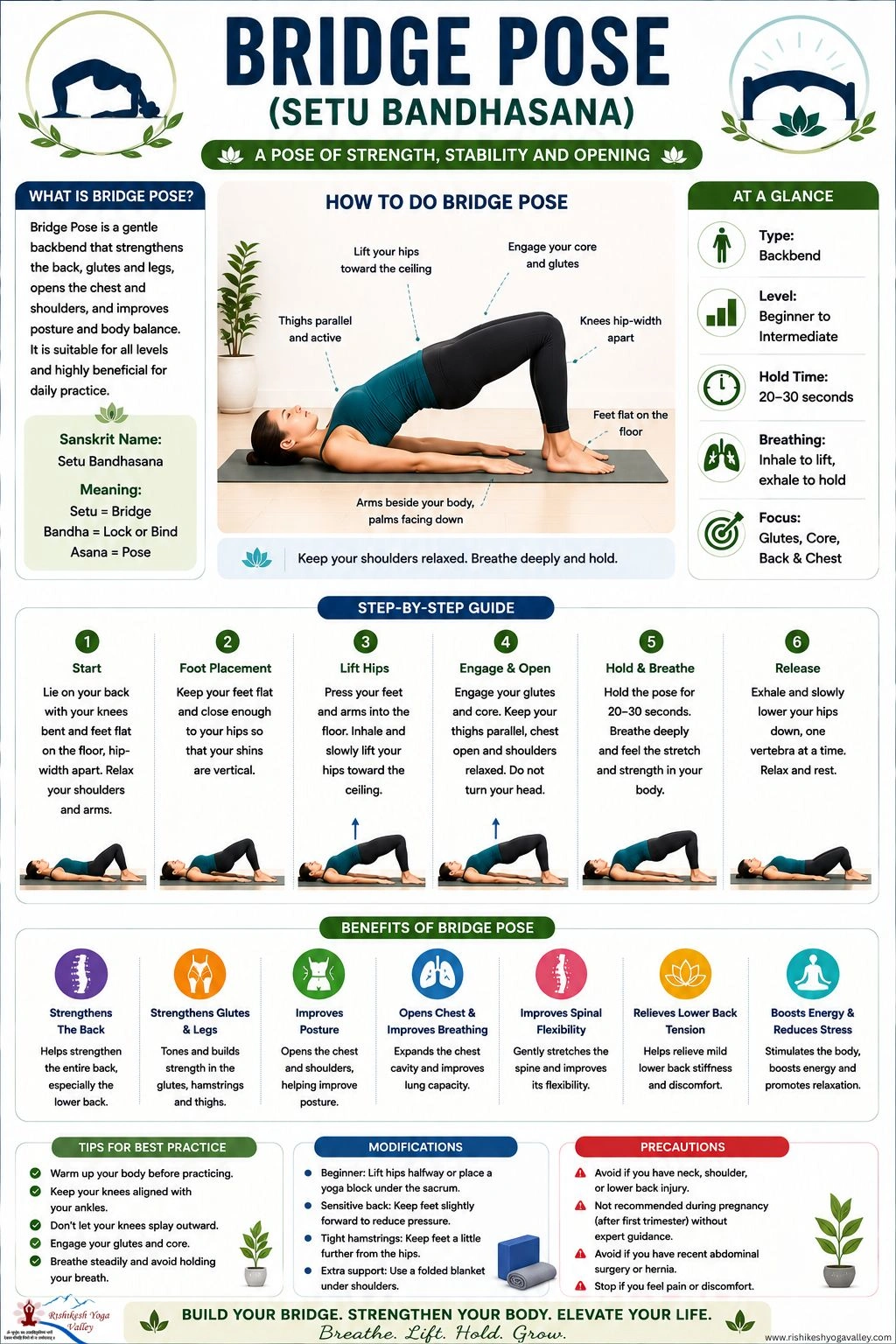
How to Do Bridge Pose
Lie on your back with your knees bent and feet flat on the floor, hip-width apart. Place your arms beside your body with palms facing down. Press your feet and arms into the floor while slowly lifting your hips toward the ceiling. Keep your shoulders relaxed, engage your core and thighs, and hold the pose for 20–30 seconds while breathing deeply.
Benefits of Bridge Pose
Bridge Pose strengthens the back, glutes, legs, and core while improving spinal flexibility and posture. It opens the chest and shoulders, helping improve breathing and reduce tension in the lower back. Regular practice also promotes relaxation, boosts energy levels, and supports overall body balance and stability.
50. Supine Twist
👉 Relieves tension
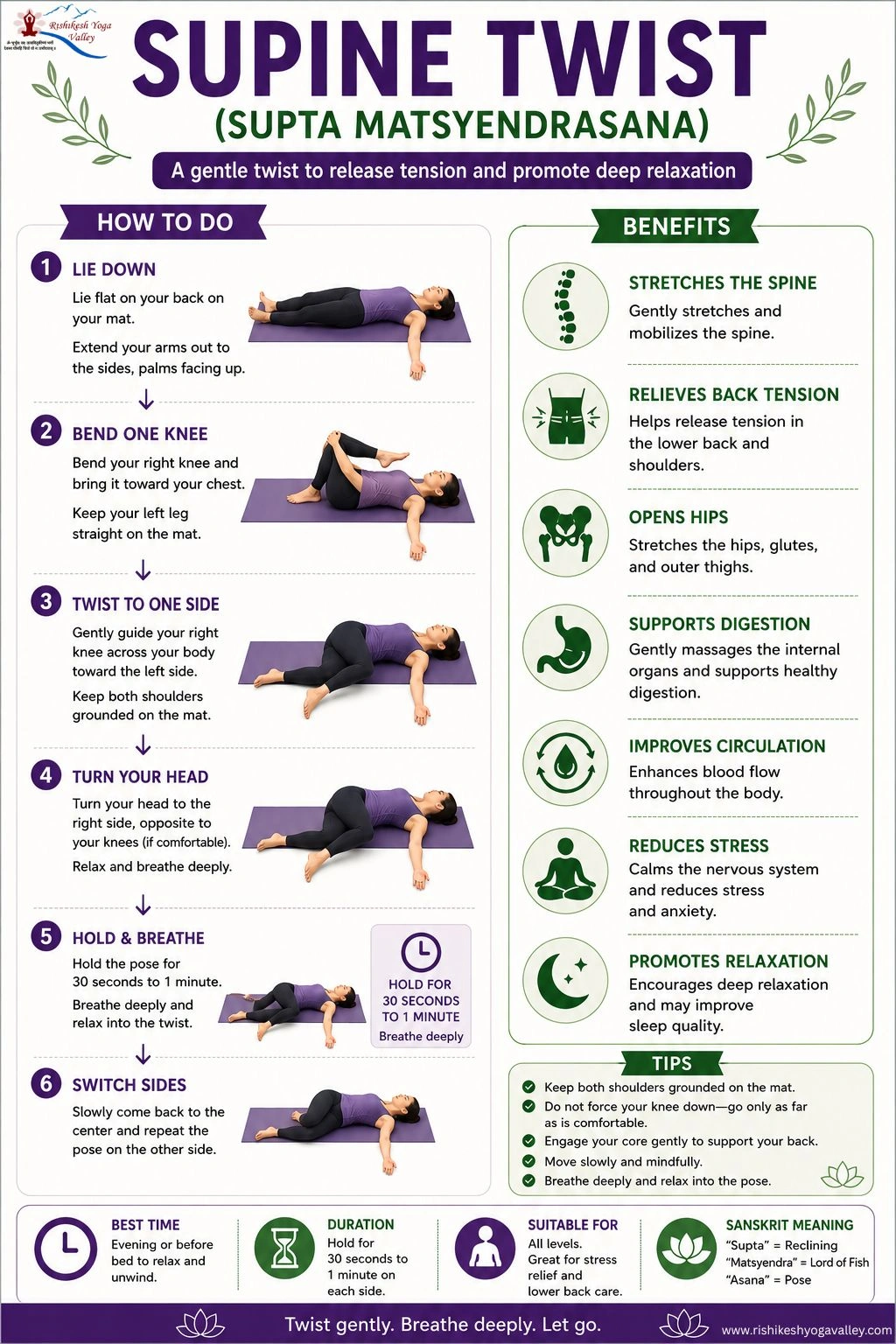
How to Do Supine Twist
Supine Twist is performed by lying flat on your back with your arms extended out to the sides. Bend one knee and gently guide it across your body toward the floor while keeping your shoulders grounded. Turn your head in the opposite direction if comfortable, breathe deeply, and hold the pose for a few breaths before switching sides.
Benefits of Supine Twist
Supine Twist helps stretch the spine, lower back, hips, and shoulders while improving flexibility and mobility. This relaxing yoga pose may also help relieve back tension, support better digestion, reduce stress, and promote deep relaxation and mental calmness.
⸻
🧘 BREATHING & MIND PRACTICES
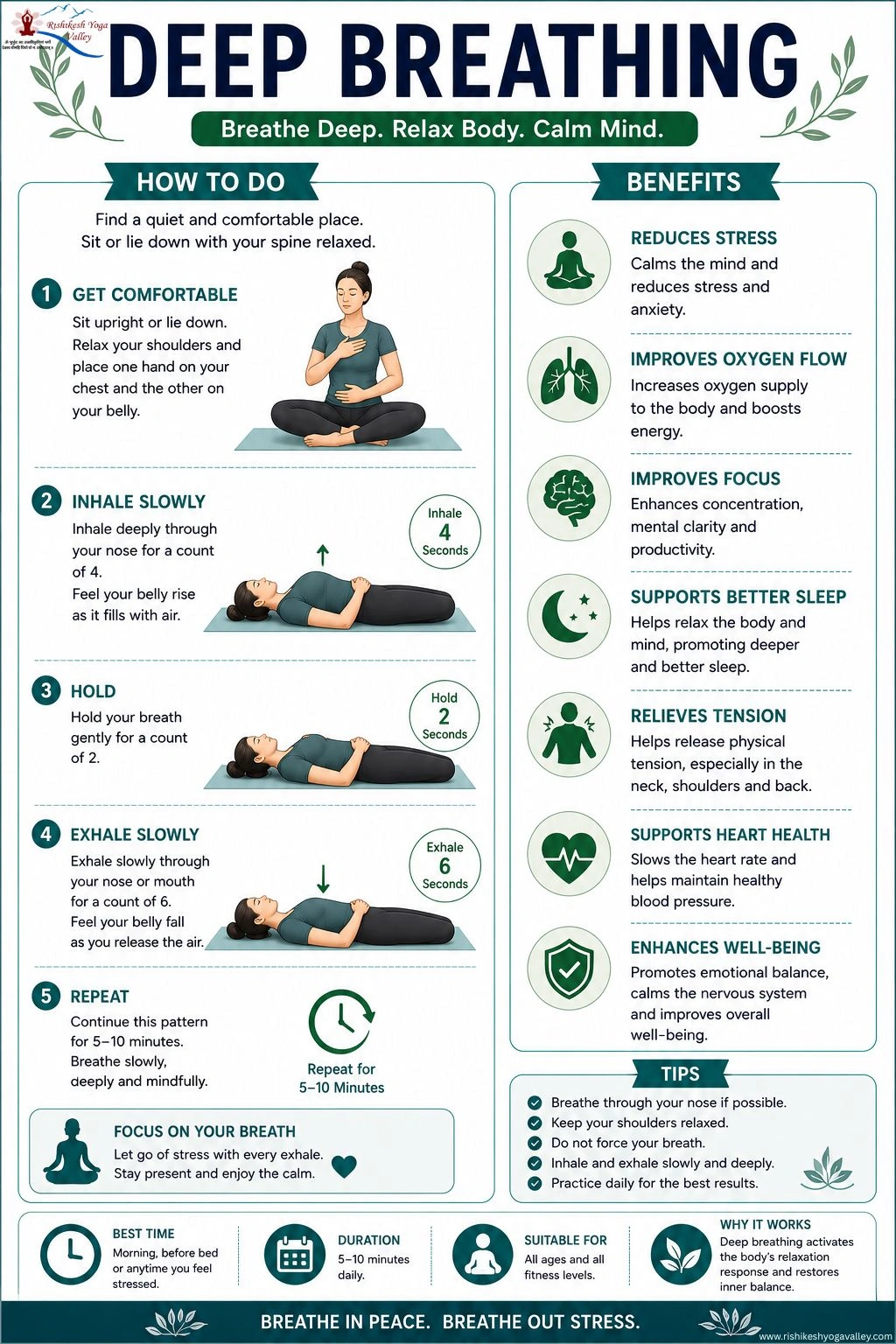
51. Deep Breathing
👉 Improves oxygen flow
52. Kapalbhati
👉 Detoxifies system
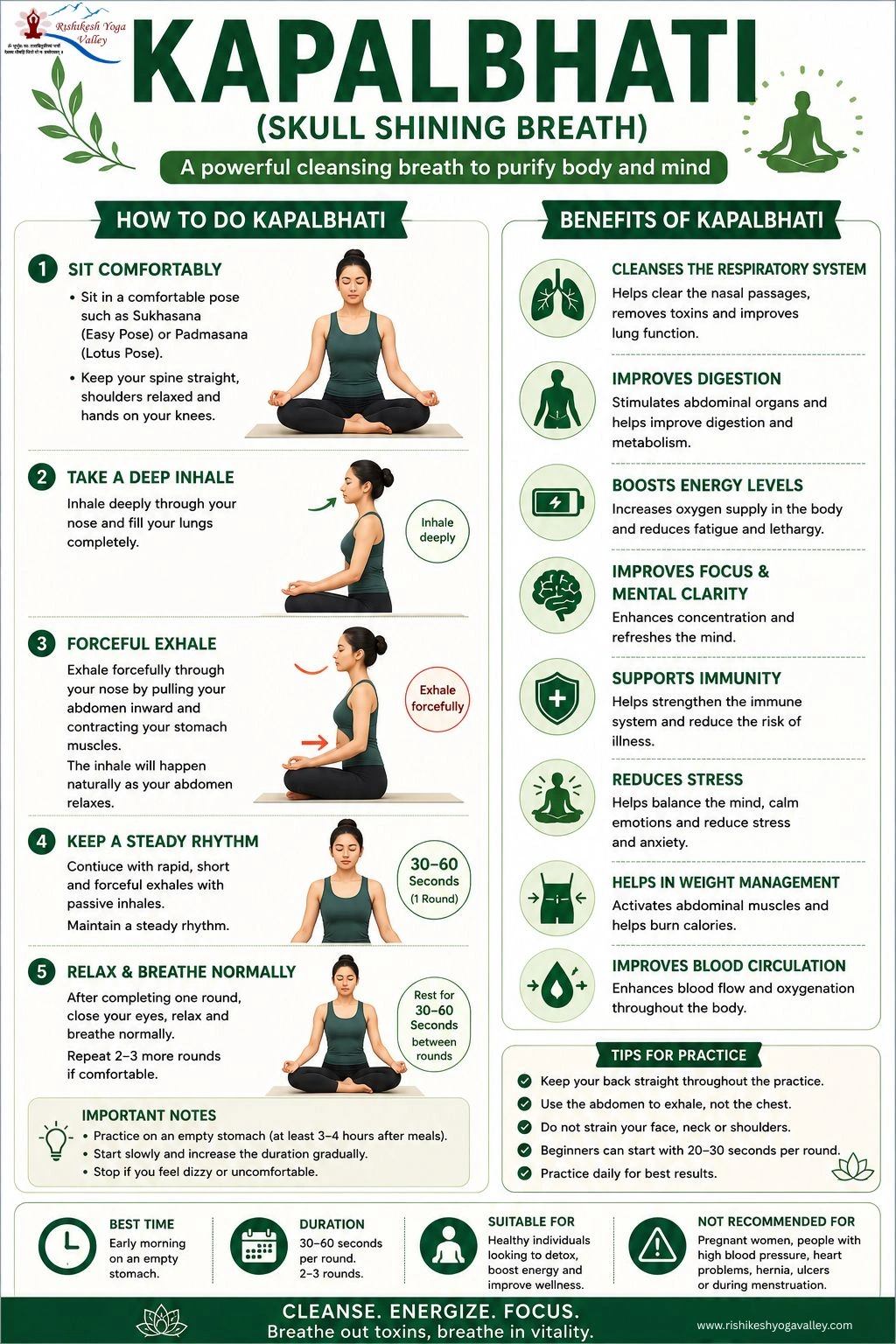
How to Do Kapalbhati
Kapalbhati is performed by sitting comfortably with your spine straight and shoulders relaxed. Take a deep inhale through your nose, then forcefully exhale by pulling your abdomen inward while allowing the inhale to happen naturally. Continue this rapid breathing pattern in a steady rhythm for 30–60 seconds, then relax and breathe normally.
Benefits of Kapalbhati
Kapalbhati helps cleanse the respiratory system, improve lung capacity, and boost energy levels. This powerful breathing exercise may also support better digestion, improve focus and mental clarity, reduce stress, and promote overall respiratory and abdominal health.
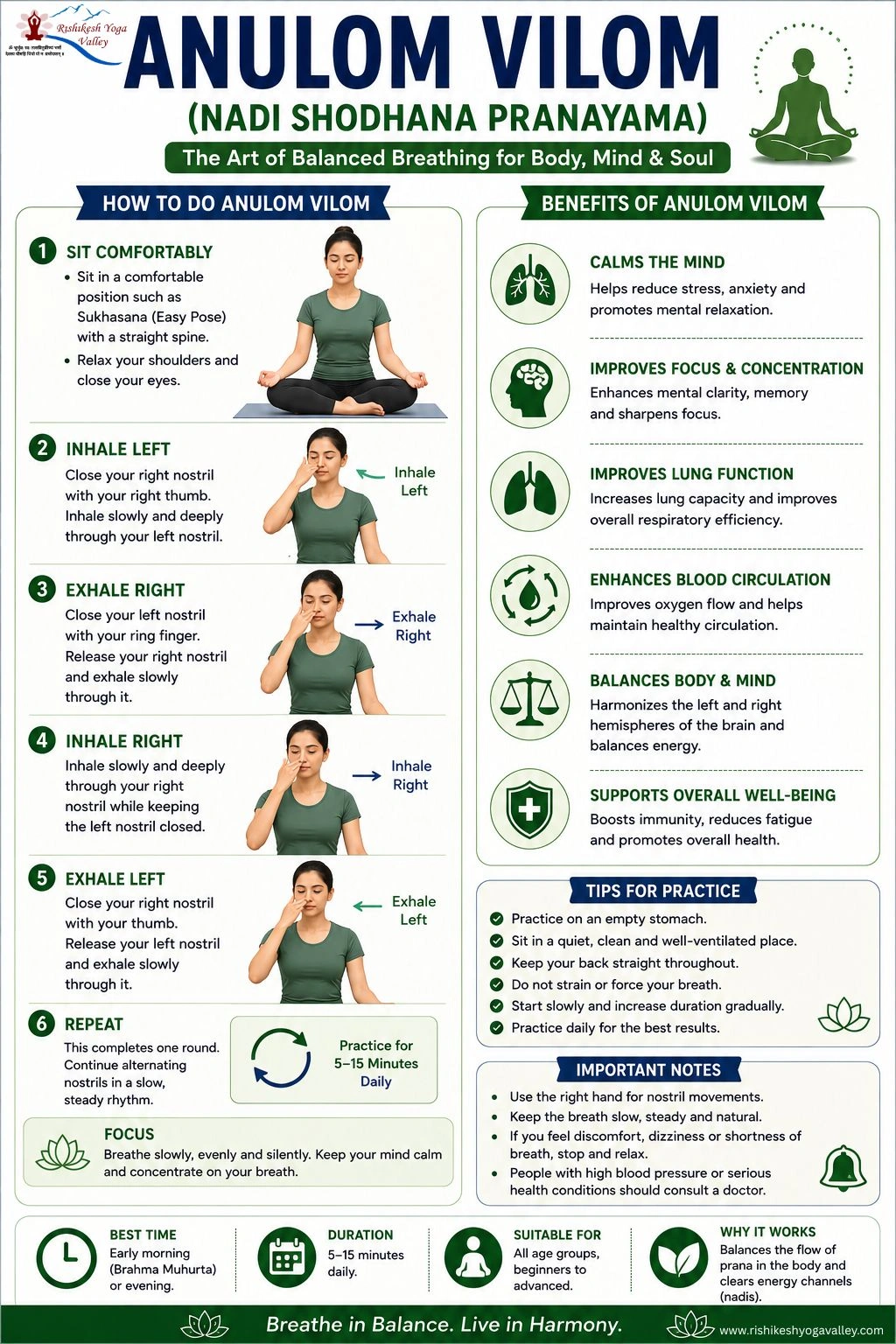
53. Anulom Vilom
👉 Balances energy
How to Do Anulom Vilom
Anulom Vilom is performed by sitting comfortably with your spine straight and shoulders relaxed. Close your right nostril with your thumb and inhale slowly through the left nostril, then close the left nostril with your fingers and exhale through the right nostril. Continue alternating nostrils in a slow and controlled rhythm while focusing on calm, deep breathing.
Benefits of Anulom Vilom
Anulom Vilom helps calm the mind, reduce stress, and improve breathing efficiency. This balancing breathing exercise may also support better lung function, improve focus and mental clarity, enhance blood circulation, and promote overall emotional and physical well-being.
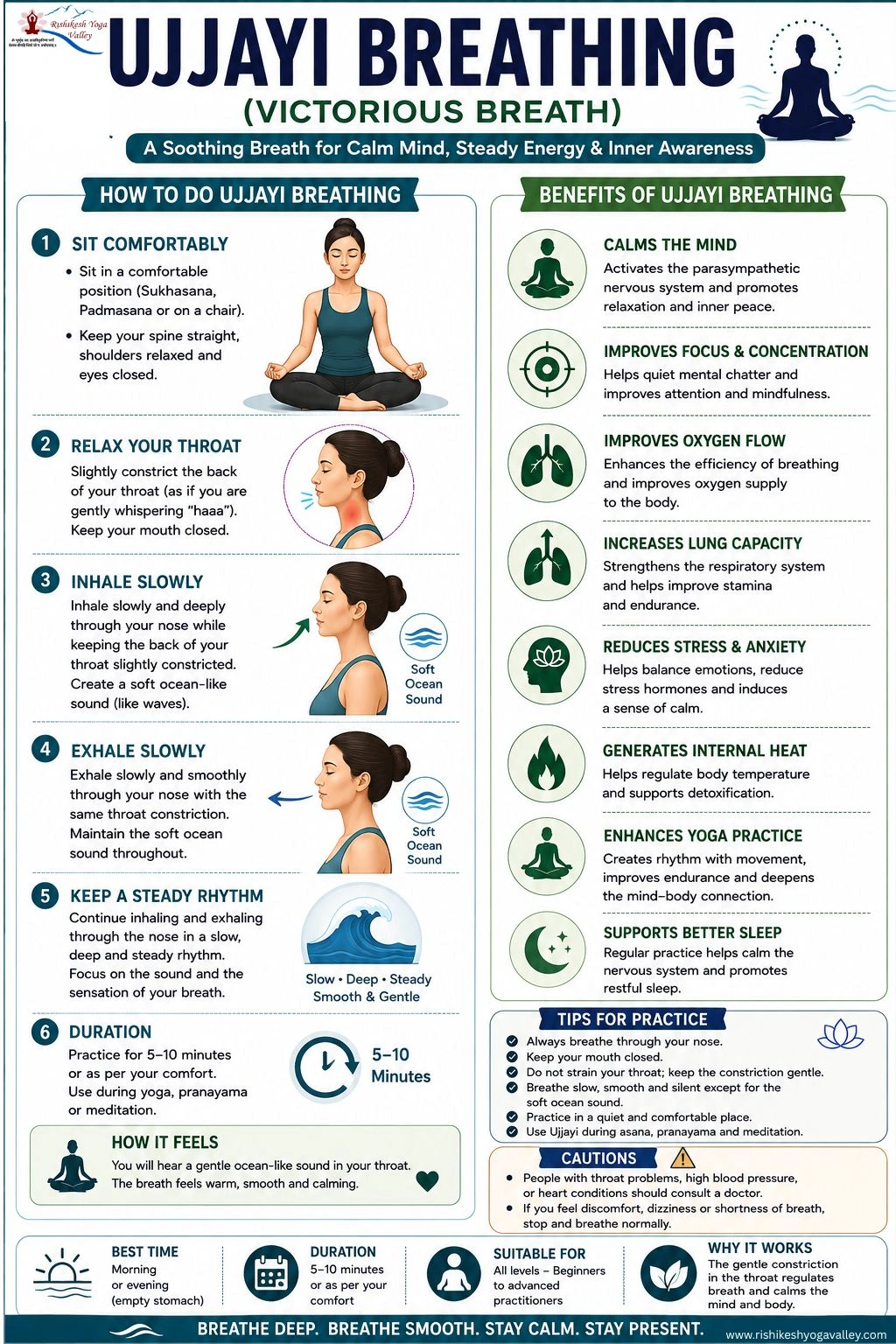
54. Ujjayi Breathing
👉 Improves focus
How to Do Ujjayi Breathing
Ujjayi Breathing is performed by sitting comfortably with your spine straight and shoulders relaxed. Inhale slowly through your nose while slightly constricting the back of your throat to create a soft ocean-like sound. Exhale gently through the nose with the same throat control, maintaining slow, deep, and steady breaths throughout the practice.
Benefits of Ujjayi Breathing
Ujjayi Breathing helps calm the mind, improve focus, and promote deep relaxation. This soothing breathing technique may also support better oxygen flow, increase lung capacity, reduce stress and anxiety, and enhance mindfulness during yoga and meditation practices.
⸻
🌿 MEDITATIVE POSES
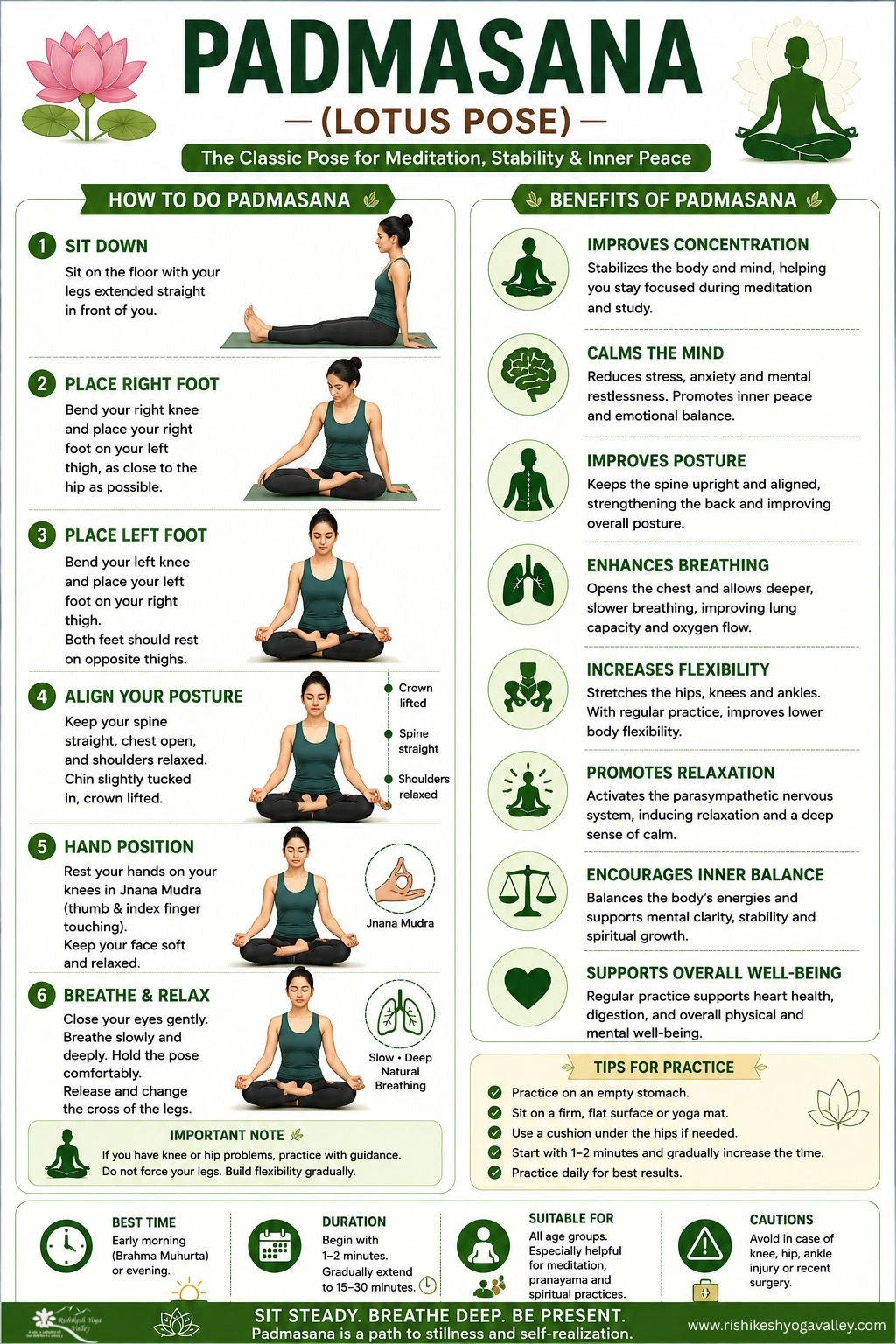
55. Padmasana
👉 Deep meditation
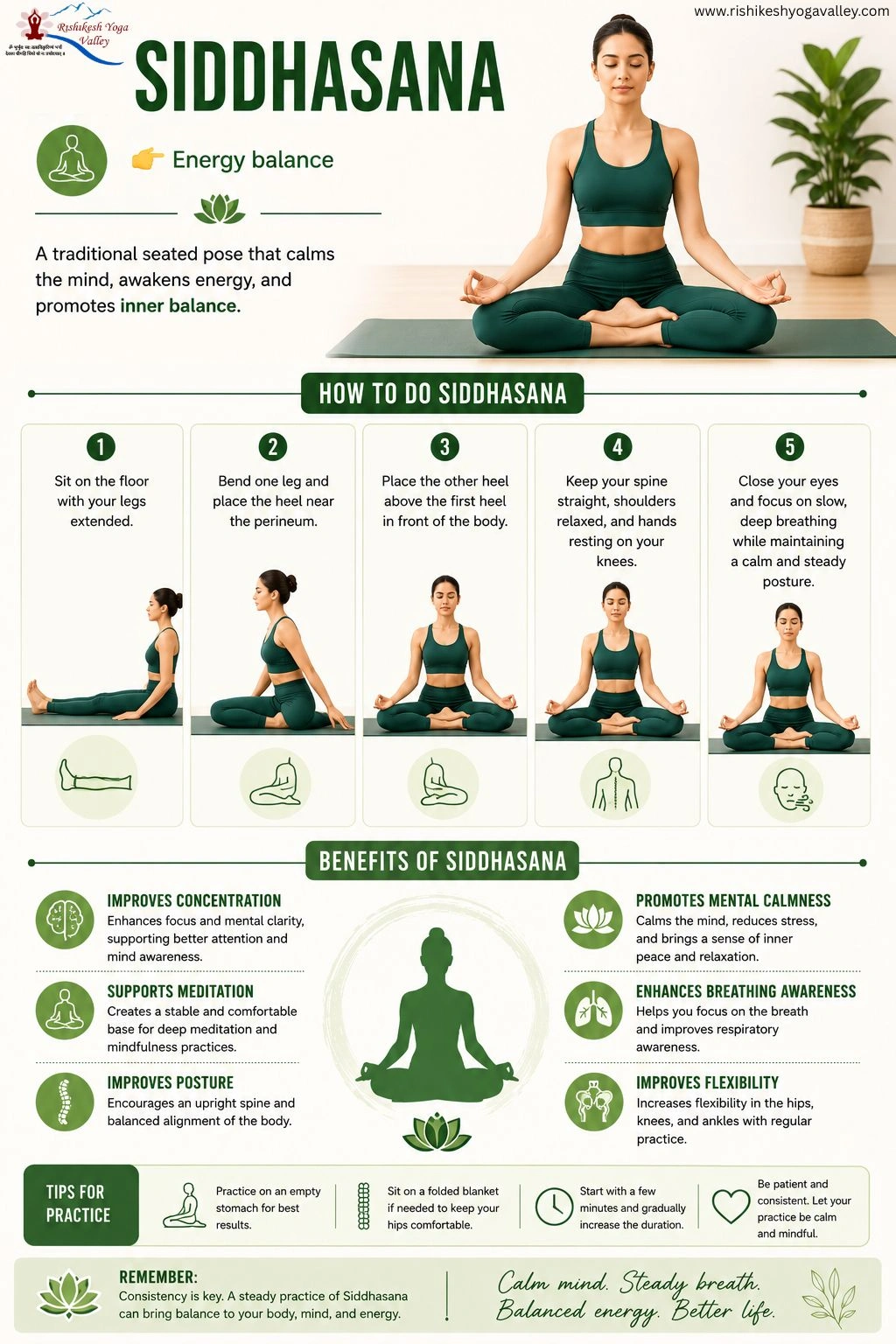
56. Siddhasana
👉 Energy balance
How to Do Siddhasana
Siddhasana is performed by sitting comfortably on the floor with one heel placed near the perineum and the other heel positioned above it in front of the body. Keep your spine straight, shoulders relaxed, and hands resting on your knees. Close your eyes and focus on slow, deep breathing while maintaining a calm and steady posture.
Benefits of Siddhasana
Siddhasana helps improve concentration, posture, and mental calmness while supporting meditation and mindfulness practices. This traditional seated yoga pose may also enhance breathing awareness, reduce stress, improve flexibility in the hips and legs, and promote inner balance and relaxation.
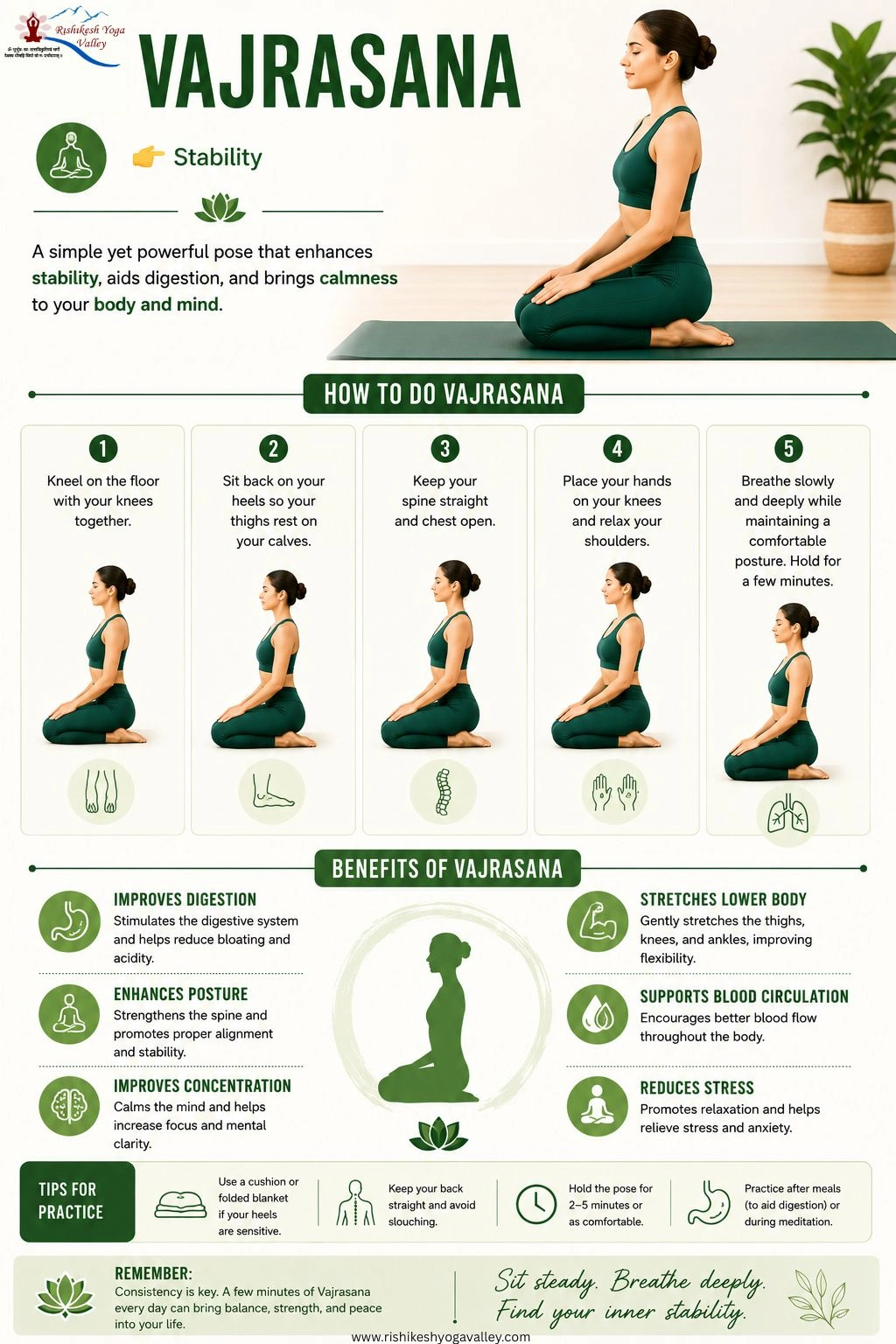
57. Vajrasana
👉 Stability
How to Do Vajrasana
Kneel on the floor with your knees together and sit back on your heels so your thighs rest on your calves. Keep your spine straight, place your hands on your knees, and relax your shoulders. Breathe slowly and deeply while maintaining a comfortable posture. You can hold Vajrasana for a few minutes during meditation or after meals.
Benefits of Vajrasana
Vajrasana helps improve digestion, posture, and concentration while calming the mind and body. It gently stretches the thighs, knees, and ankles and supports better blood circulation. Regular practice can also reduce stress, improve breathing, and create a stable posture for meditation and mindfulness exercises.
⸻
🔥 EXTRA FUNCTIONAL POSES
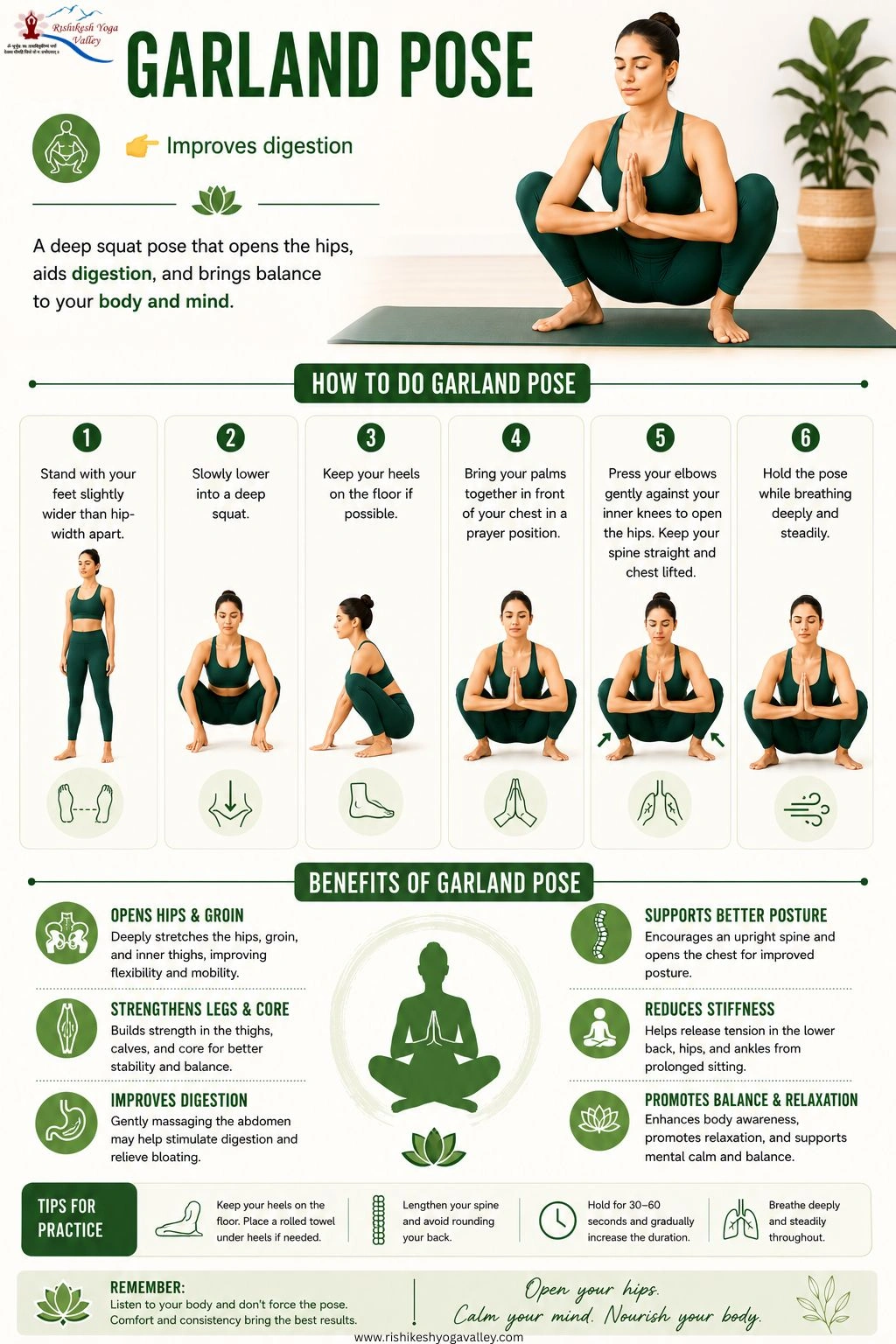
58. Garland Pose
👉 Improves digestion
How to Do Garland Pose
Stand with your feet slightly wider than hip-width apart and slowly lower into a deep squat. Keep your heels on the floor if possible and bring your palms together in front of your chest in a prayer position. Press your elbows gently against your inner knees to open the hips while keeping your spine straight and chest lifted. Hold the pose while breathing deeply and steadily.
Benefits of Garland Pose
Garland Pose helps stretch the hips, groin, ankles, and lower back while improving flexibility and mobility. It strengthens the legs and core, supports better posture, and encourages healthy digestion. Regular practice can also reduce stiffness from sitting for long periods and promote balance, relaxation, and body awareness.
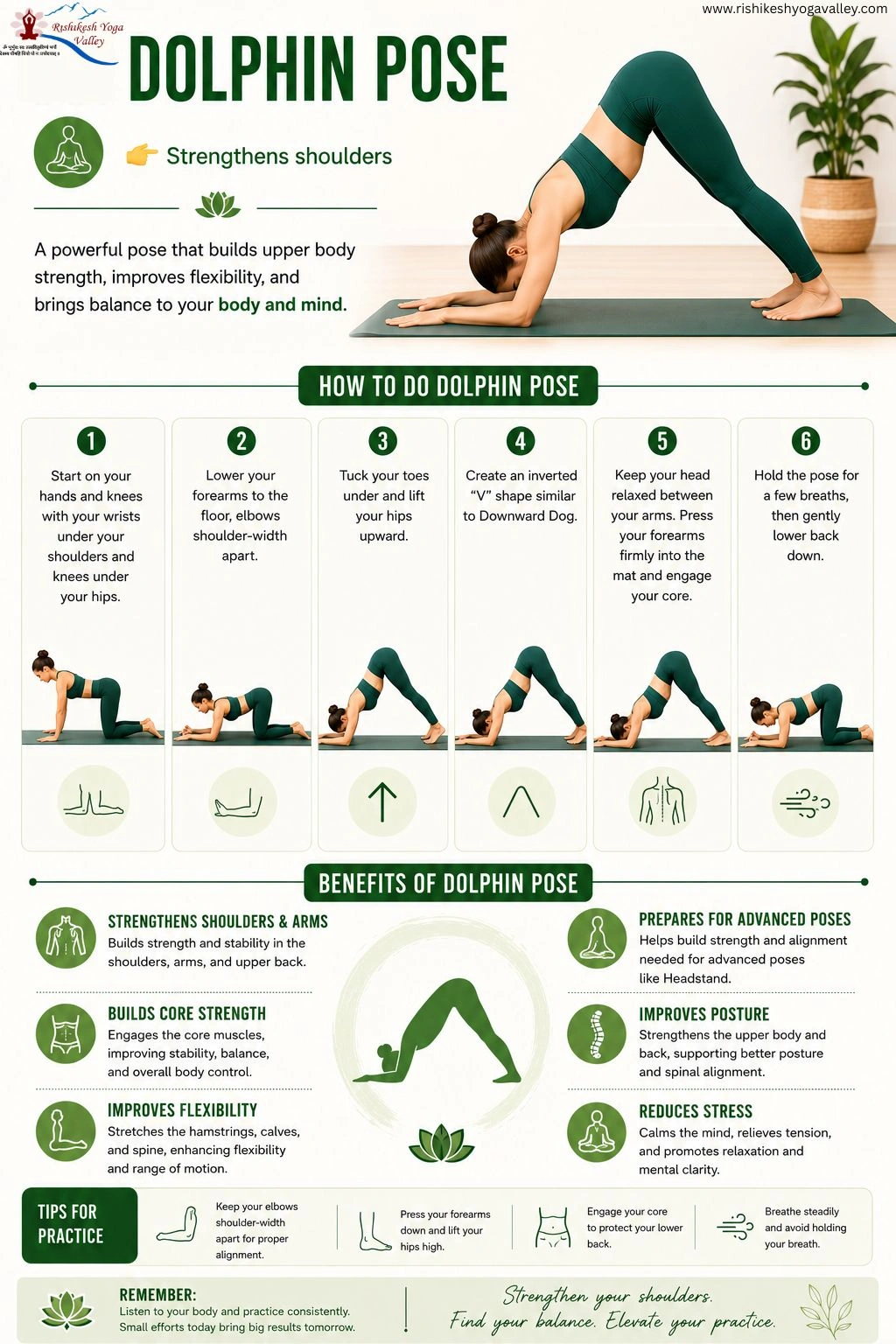
59. Dolphin Pose
👉 Strengthens shoulders
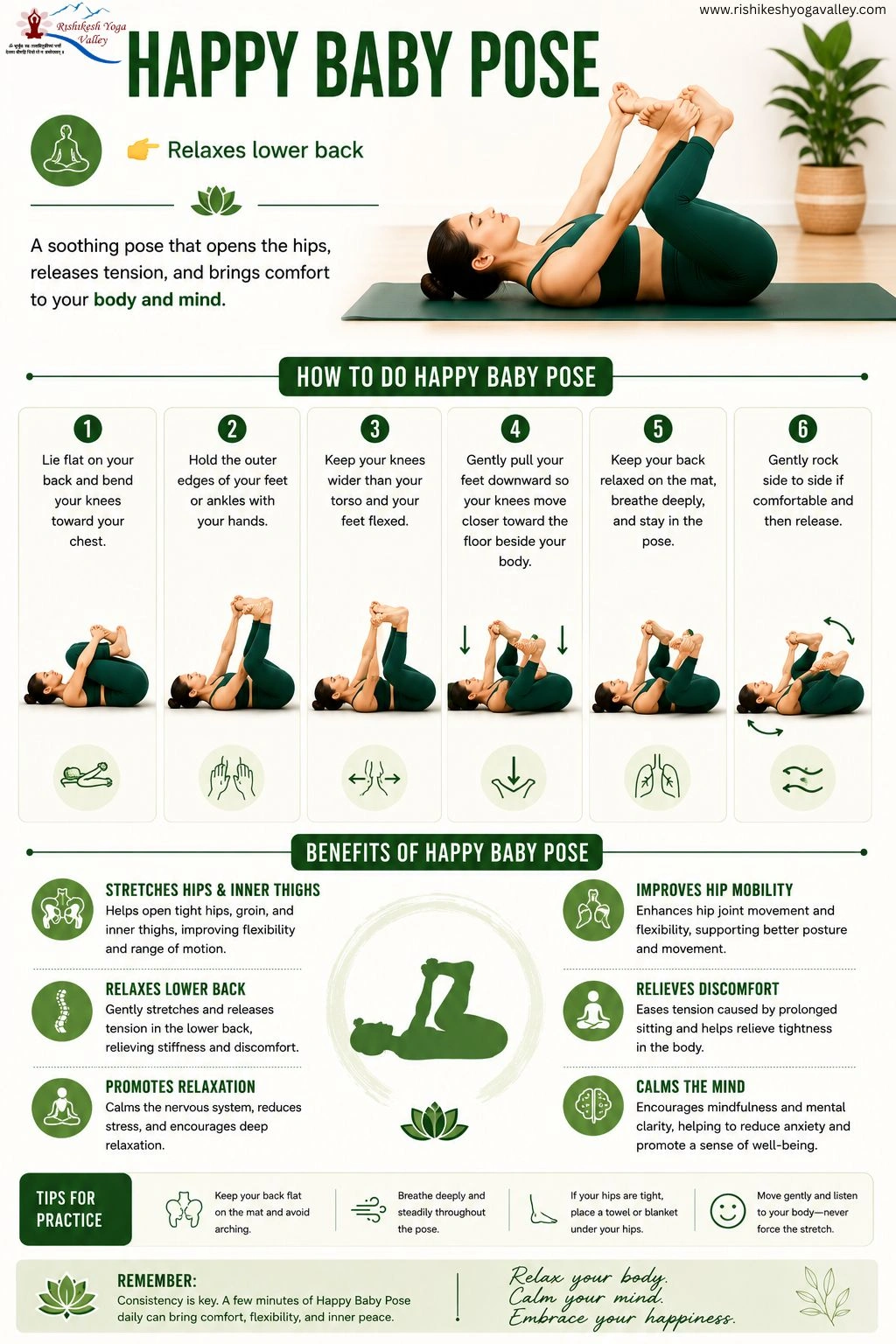
60. Happy Baby Pose
👉 Relaxes lower back