If you’re researching yoga teacher trainings, you’ve probably noticed that most programs are built around one of two foundational styles: Hatha or Vinyasa. They share a lot of the same poses, which makes the difference confusing at first glance – but once you understand what actually separates them, choosing which one to train in first becomes a much easier decision.
The Core Difference: Pace, Not Poses
Both styles draw from the same modern canon of postures, so you’ll see Downward Dog, Warrior II, and Triangle Pose in either one. The real difference is in how you move between them.
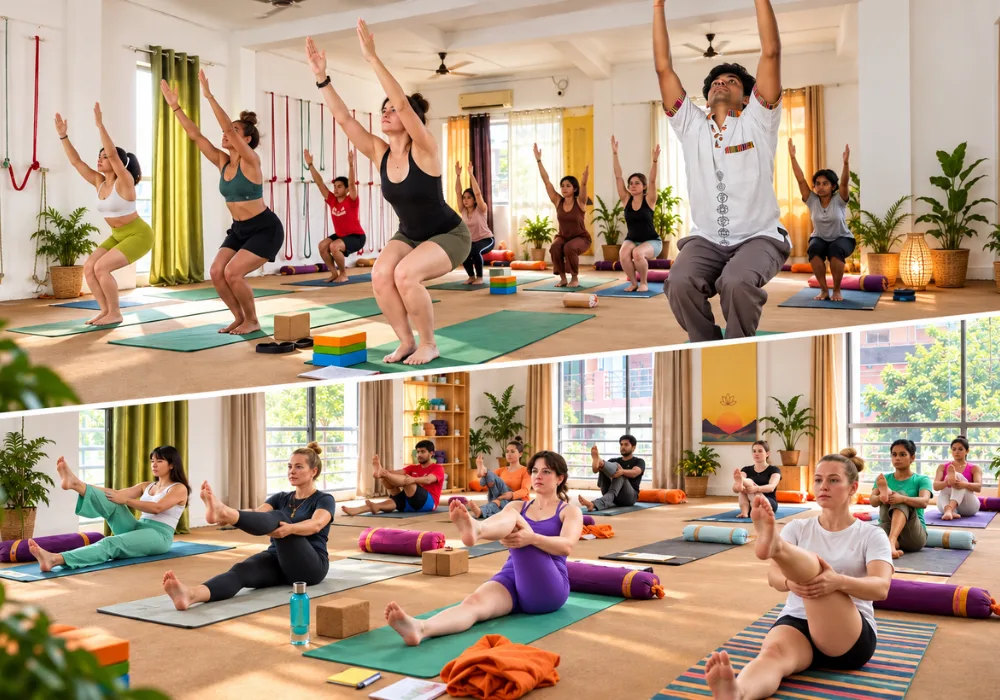
In a Hatha class, poses are held individually, often for several breaths at a time, with a pause or neutral position before moving into the next shape. The pace is slow and deliberate, giving you time to focus on alignment, muscle engagement, and steady breathing in each posture.
In a Vinyasa class, poses are linked together in a continuous, flowing sequence, with each movement tied to a single inhale or exhale. There’s no real pause between postures – one pose flows directly into the next, creating momentum and building heat as the class progresses.
What Hatha Yoga Actually Teaches You
Hatha is widely considered the foundational branch that most other modern yoga styles, including Vinyasa, ultimately grew out of. Because of its slower pace, it’s built around depth rather than flow:
- Extended holds that let you genuinely study alignment in each pose
- A strong emphasis on breath awareness independent of movement
- A structure that suits beginners, since there’s time to learn and correct each posture before moving on
- A calming, often meditative quality, since the nervous system isn’t being asked to keep pace with constant movement
As a teacher, training in Hatha first builds an unusually strong foundation in alignment and cueing, because you’re forced to actually understand what a pose is doing in the body, rather than just moving through it quickly.
What Vinyasa Yoga Actually Teaches You
Vinyasa is essentially Hatha in motion – the same poses, but strung together into a continuous, breath-led flow:
- Poses transition into one another using Ujjayi breath as the connecting thread throughout the sequence
- The pace generates real cardiovascular engagement, closer to a moving workout than a static practice
- Sequencing becomes a creative skill in itself, since instructors design their own flows rather than repeating a fixed structure
- The class builds heat and momentum, which many practitioners find energizing rather than calming
As a teacher, training in Vinyasa first sharpens your sequencing instincts early – you learn how to design a flow that makes physical and creative sense from one pose to the next, which is a genuinely different skill from cueing a single held posture.
So, Which Should You Learn to Teach First?
Choose Hatha first if:
- You’re new to yoga yourself and want a strong alignment foundation before anything else
- You want to become the kind of teacher students turn to for careful correction and technique
- Your own practice leans toward calm, meditative, and restorative energy
- You eventually want to branch into therapeutic or beginner-focused teaching
Choose Vinyasa first if:
- You already have a solid base of practice and are comfortable with faster-paced movement
- You’re drawn to the creative side of sequencing and want to design your own flows
- You want to teach in studios or gyms where dynamic, workout-style classes are in high demand
- Your own energy and teaching style lean toward the energizing rather than the meditative
Here’s the good news: this isn’t a permanent fork in the road. Most 200-hour YTT programs, including traditional ones taught in Rishikesh, actually teach both styles within the same training, since Hatha alignment principles directly inform good Vinyasa sequencing. The real question isn’t “which one forever” – it’s which foundation you want to build first, since the deeper, slower study of Hatha tends to make everything you later learn in Vinyasa land more solidly.
Frequently Asked Questions
Is Hatha or Vinyasa better for beginners?
Hatha is generally considered the gentler starting point, since its slower pace gives beginners time to learn proper alignment before adding movement and flow on top of it. That said, many studios also offer beginner-friendly Vinyasa classes designed specifically for newcomers.
Do Hatha and Vinyasa use different poses?
No – both styles draw from largely the same set of foundational postures. The real difference is the pace and structure of how those poses are sequenced together, not the poses themselves.
Which style burns more calories, Hatha or Vinyasa?
Vinyasa tends to be more physically demanding and cardiovascular, closer to a moving workout, due to its continuous pace. Hatha, with its longer holds and pauses, is gentler on the cardiovascular system but still builds real strength and flexibility.
Can I become certified in both Hatha and Vinyasa at once?
Yes – most comprehensive 200-hour yoga teacher trainings teach both styles within the same program, since a solid Hatha foundation actually strengthens how well you’re able to sequence and teach Vinyasa flows later.
Which style is better for stress relief?
Hatha is generally considered stronger for stress reduction specifically, due to its slower pace and emphasis on stillness and breath. Vinyasa can still reduce stress and anxiety through its cardiovascular and meditative-in-motion qualities, but its energizing effect works differently than Hatha’s calming one.
Building a Foundation in Both
Understanding both styles deeply – not just how to move through them, but why each one works the way it does – is exactly what a comprehensive teacher training should give you. Our 200-Hour Yoga Teacher Training in Rishikesh covers both traditional Hatha alignment and Vinyasa flow sequencing, so you graduate able to teach confidently in either style, rather than being boxed into just one.