Vayu Mudra is a powerful yogic hand gesture practiced to balance the air element within the body. In Ayurveda and yoga philosophy, excess air energy can disturb physical and mental health, leading to issues such as bloating, anxiety, arthritis, joint pain, and restlessness.
This simple mudra works by regulating Vata Dosha, which is primarily governed by the air element. Regular practice of Vayu Mudra may help calm the nervous system, improve digestion, reduce excess gas, and support emotional balance.
Because of its effectiveness in relieving gastric discomfort, Vayu Mudra is often called the “Mudra for Stomach Gas.”
What is Vayu Mudra?
The word Vayu means “air” or “wind,” while Mudra means “gesture” or “seal.”
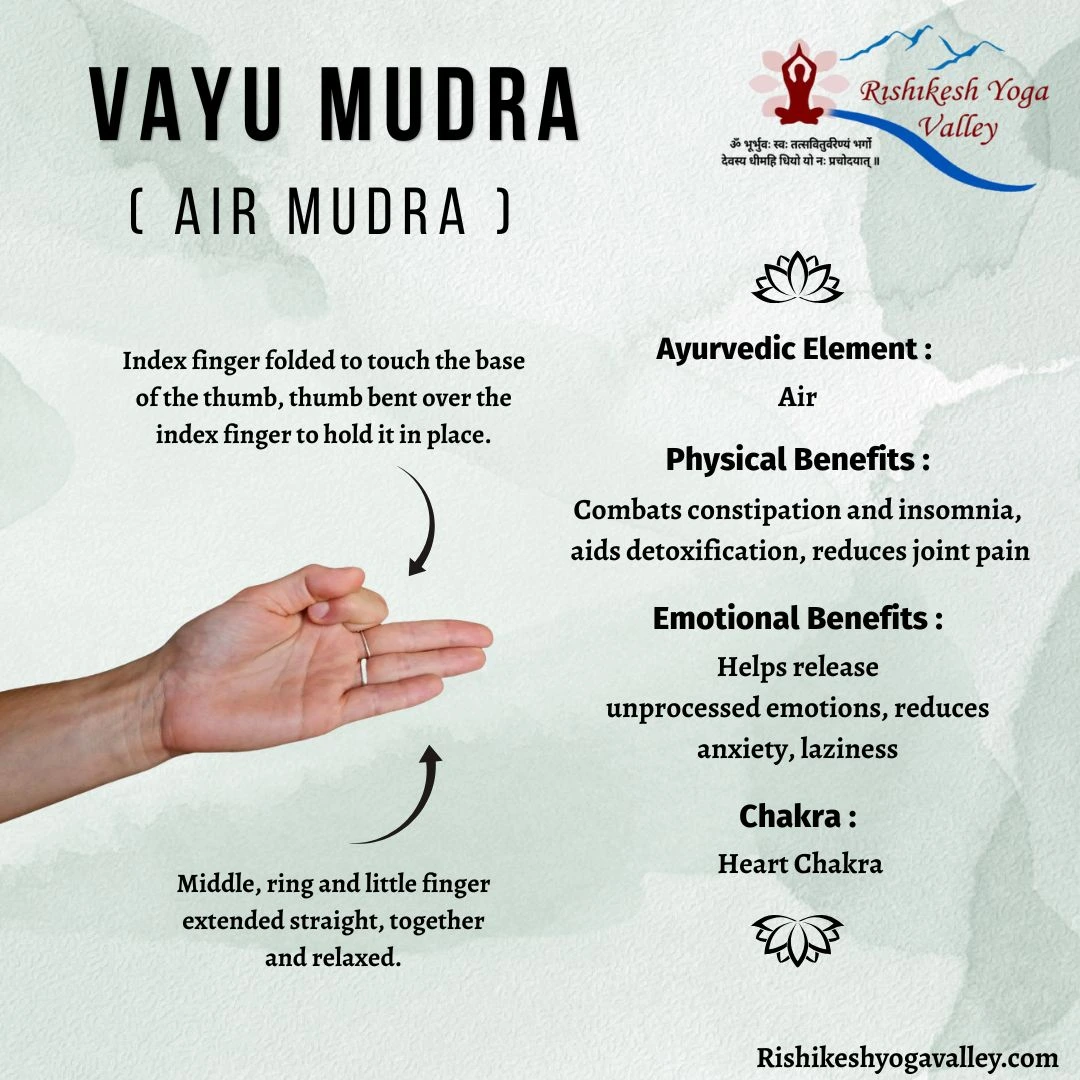
Vayu Mudra is a type of Hasta Mudra (hand gesture) used in yoga and Ayurveda to reduce excess air in the body. According to Ayurvedic principles, the index finger represents the air element, while the thumb symbolizes the fire element.
By gently pressing the index finger with the thumb, the fire element helps regulate excess air energy, restoring internal balance.
Vayu Mudra has been described in traditional yogic teachings as a hand gesture that helps regulate the air element within the body. While many practitioners report benefits such as reduced restlessness and improved digestive comfort, individual experiences may vary. It is best practiced as part of a balanced yoga and wellness routine rather than as a replacement for medical care.
Importance of the Air Element in the Body
According to Ayurveda, the human body is composed of five elements:
- Air
- Water
- Fire
- Earth
- Ether (Space)
The air element governs movement, circulation, breathing, nerve impulses, and mental activity. When balanced, it supports creativity, flexibility, and vitality. However, excessive air energy may cause:
- Anxiety
- Restlessness
- Gas and bloating
- Joint pain
- Nervous disorders
- Dryness
- Insomnia
Vayu Mudra helps harmonize this energy and supports overall wellness.
How to Do Vayu Mudra
Practicing Vayu Mudra is simple and suitable for beginners.
Step-by-Step Instructions
Step 1: Sit Comfortably
Sit in a comfortable position such as:
- Vajrasana
- Padmasana
- Sukhasana
- Siddhasana
- Swastikasana
If sitting on the floor is uncomfortable, you may sit on a chair with your spine straight.
Step 2: Relax Your Body
Place your hands on your knees or thighs with palms facing upward. Relax your shoulders and close your eyes.
Step 3: Fold the Index Finger
Bend the index finger so its tip touches the base of the thumb.
Step 4: Press with the Thumb
Gently press the folded index finger using the thumb.
Step 5: Keep Remaining Fingers Straight
Extend the middle, ring, and little fingers comfortably without stiffness.
Step 6: Focus on Your Breath
Take slow, deep breaths and maintain awareness of your breathing pattern.
Step 7: Release Slowly
After completing the practice, relax your fingers and slowly open your eyes.
Learning mudras correctly becomes easier when practiced under experienced yoga teachers. If you’re interested in understanding traditional yogic techniques beyond hand gestures, a structured yoga teacher training program can help deepen your knowledge of asana, pranayama, meditation, mudras, and yogic philosophy: Yoga Teacher Training in Rishikesh
Duration of Practice
Beginners can start with:
- 10 minutes daily
Gradually increase to:
- 30–45 minutes daily
You can practice:
- In one continuous session
- Or divide into 3 sessions of 15 minutes each
For noticeable benefits, regular practice for at least 2 months is recommended.
Best Time to Practice Vayu Mudra
The ideal time to practice is:
- Early morning
- During meditation or pranayama
- On an empty stomach
However, it may also be practiced:
- During stress
- After meals (with a gap of 45 minutes)
- While sitting, standing, walking, or lying down
Combining Vayu Mudra with daily meditation and breathing practices may enhance its calming effects on the nervous system and help improve overall mental clarity: Meditation Retreat in Rishikesh
How Does Vayu Mudra Work?
In yogic philosophy:
- The index finger represents the air element
- The thumb represents the fire element
When the thumb presses the index finger, excess air energy is controlled by the fire element. This helps regulate disturbed Vata Dosha and supports energetic balance throughout the body.
Benefits of Vayu Mudra
Regular practice of Vayu Mudra offers several physical, mental, and energetic benefits.
1. Relieves Gas and Bloating
Vayu Mudra is highly effective for:
- Stomach gas
- Flatulence
- Bloating
- Digestive discomfort
Practicing it after meals may help reduce trapped gas.
Note: Many practitioners combine mudras with meditation retreats to develop a consistent mindfulness practice and experience deeper relaxation in a peaceful environment: Yoga and Meditation Retreat in Rishikesh
2. Balances Vata Dosha
This mudra helps regulate excess Vata energy, supporting smoother bodily functions and mental calmness.
Note: In Ayurveda, balancing Vata involves not only yoga practices but also proper diet, daily routines, herbal therapies, and lifestyle recommendations: Ayurveda Retreat in Rishikesh
3. Helps Reduce Joint Pain
Vayu Mudra may help relieve:
- Arthritis
- Gout
- Knee pain
- Back pain
- Neck pain
- Sciatica
4. Supports Nervous System Health
This mudra is believed to calm the nervous system and may support conditions linked to nervous imbalance.
5. Reduces Stress and Anxiety
Regular practice promotes emotional stability and relaxation by calming excessive mental activity.
6. Improves Circulation
It supports smoother energy and blood circulation throughout the body.
7. Strengthens Chest and Respiratory Function
Vayu Mudra may help strengthen the chest area and provide support against cold and cough tendencies.
8. Supports Bone and Joint Health
According to Ayurveda, Vata imbalance affects bones and joints. Vayu Mudra may support recovery and flexibility.
9. Enhances Mental Stability
Practicing this mudra regularly may improve focus, clarity, and emotional balance.
Vayu Mudra and Tridosha Balance
In Ayurveda, health depends on the balance of the three doshas:
- Vata
- Pitta
- Kapha
Effect on Vata Dosha
Vayu Mudra primarily balances Vata Dosha, which controls movement, circulation, and nervous system activity.
Effect on Pitta Dosha
The thumb represents the fire element (Agni), which helps regulate metabolism and energy transformation.
Effect on Kapha Dosha
By reducing stagnation and excessive air imbalance, this mudra indirectly supports Kapha harmony as well.
Vayu Mudra Variations
1. Prana Vayu Mudra
This variation combines Vayu Mudra with Prana Mudra to enhance vitality and concentration.
2. Apana Vayu Mudra (Heart Mudra)
This version supports heart health, circulation, and emotional balance.
3. Vyana Vayu Mudra
This variation helps improve circulation and coordination between mind and body.
Precautions and Contraindications
While Vayu Mudra is generally safe, follow these precautions:
Avoid Excessive Pressure
Press gently without straining the fingers.
Stop After Desired Results
Once symptoms improve, reduce practice duration to avoid excessive depletion of the air element.
Stay Relaxed
Do not tense the body or hold the breath during practice.
Practice with Patience
Results may take time. Consistency is more important than force.
Common Mistakes to Avoid
Avoid these errors while practicing:
- Pressing the index finger too hard
- Slouching the spine
- Holding the breath
- Practicing inconsistently
- Forcing finger positions
- Practicing excessively despite improvement
Can Vayu Mudra Be Combined with Other Mudras?
Yes. Traditional yogic practices often combine Vayu Mudra with:
- Varuna Mudra
- Prana Mudra
- Samana Mudra
These combinations may support pain relief, circulation, and joint health.
Who Can Practice Vayu Mudra?
Vayu Mudra is suitable for:
- Beginners
- Yoga practitioners
- Meditation practitioners
- People with gas or bloating
- Individuals experiencing stress or anxiety
- Those seeking Vata balance
People with serious medical conditions should consult a healthcare professional before beginning therapeutic yoga practices.
Final Thoughts on Vayu Mudra
Vayu Mudra is a simple yet highly beneficial yogic hand gesture that helps regulate the air element and restore energetic balance in the body. Its calming effects on digestion, circulation, joints, and the nervous system make it a valuable addition to daily wellness routines.
With regular and mindful practice, Vayu Mudra may help reduce physical discomfort, calm the mind, and improve overall vitality.
Practice consistently, breathe deeply, and allow this ancient mudra to support greater balance and well-being.
If you’d like to explore traditional yoga beyond individual mudras, learning directly from experienced teachers in Rishikesh can provide a deeper understanding of yogic philosophy, meditation, breathwork, and holistic wellness: Rishikesh Yoga Valley
FAQs About Vayu Mudra
What is Vayu Mudra used for?
Vayu Mudra is primarily used to balance excess air in the body and may help relieve gas, bloating, joint pain, stress, and Vata imbalance.
Note: Those interested in learning yoga systematically may also consider joining a beginner-friendly yoga teacher training course where mudras, pranayama, meditation, and yoga philosophy are taught together: 100 Hour Yoga Teacher Training in Rishikesh
How long should I practice Vayu Mudra?
Practice for 10–45 minutes daily depending on your comfort and experience level.
Can Vayu Mudra help with anxiety?
Yes, it may help calm the nervous system and reduce anxiety and restlessness.
Can beginners practice Vayu Mudra?
Absolutely. It is easy to learn and suitable for beginners.
When should I practice Vayu Mudra?
Morning practice is ideal, but it can also be practiced anytime during the day.
Does Vayu Mudra help with arthritis?
Traditional yoga and Ayurveda suggest that regular practice may help reduce arthritis-related discomfort and stiffness.