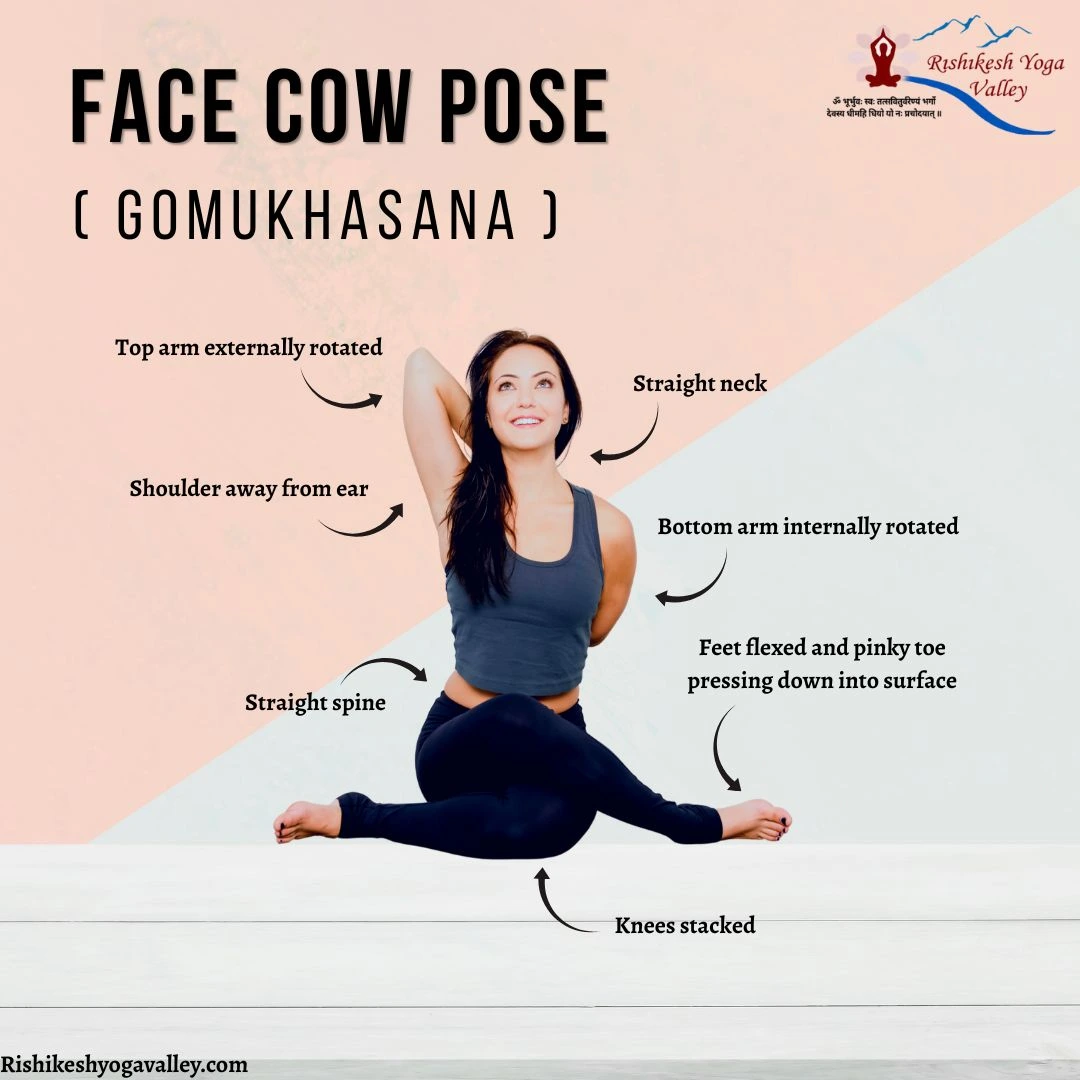
Yoga is not only about flexibility—it’s also about awareness, balance, and mindful movement. One pose that beautifully combines deep stretching with posture improvement is Gomukhasana, commonly known as Cow Face Pose. This seated yoga posture stretches the shoulders, chest, hips, thighs, and arms while encouraging an upright spine and calm breathing.
Whether you’re a beginner or an experienced practitioner, Gomukhasana can help release tightness caused by long hours of sitting, poor posture, and stress. In this guide, we’ll explore how to practice Gomukhasana safely, its benefits, beginner-friendly modifications, and common mistakes to avoid.
What is Gomukhasana?
The Sanskrit word Gomukhasana comes from:
- Go = Cow
- Mukha = Face
- Asana = Pose
The posture is named “Cow Face Pose” because the legs stacked over one another resemble a cow’s mouth, while the bent elbows represent the ears.
Gomukhasana is a seated posture that deeply stretches the shoulders, triceps, chest, hips, glutes, and thighs. At the same time, it encourages better posture by keeping the spine long and upright.
This pose is often included in seated yoga sequences because it combines hip-opening and shoulder-opening benefits in one posture.
How to Do Gomukhasana
Follow these steps carefully to practice Cow Face Pose safely:
1. Start in Staff Pose
Sit on your yoga mat with your legs extended straight in front of you and your spine tall.
2. Stack the Legs
Bend your left knee and bring the left foot beside your right hip.
Cross your right leg over the left, stacking the knees on top of each other. Place the right foot beside the left hip.
3. Sit Evenly
Ground both sitting bones evenly on the mat. If your hips feel tight, sit on a folded blanket or yoga block.
4. Raise the Top Arm
Lift your right arm overhead. Bend the elbow and let the hand drop down your back.
5. Bring the Bottom Arm Behind
Take your left arm behind your back and bend the elbow upward.
6. Clasp the Hands
Try to interlock your fingers behind your back. If they don’t reach, use a yoga strap.
7. Lengthen the Spine
Keep your chest lifted and avoid collapsing forward. Relax your neck and breathe deeply.
8. Hold the Pose
Stay in the posture for 30–60 seconds, breathing gently through the nose.
9. Release and Repeat
Slowly release the arms and legs, then repeat on the opposite side.
Beginner Tips for Gomukhasana
Cow Face Pose can feel intense initially, especially for people with tight shoulders or hips. These beginner-friendly tips can help:
- Sit on a folded blanket to reduce hip strain.
- Use a yoga strap between your hands if they don’t touch.
- Keep the lower leg extended if stacking knees feels difficult.
- Focus on maintaining a straight spine rather than forcing flexibility.
- Practice slowly and avoid pulling aggressively.
With consistent practice, flexibility improves naturally over time.
Variations of Gomukhasana
One of the best things about Gomukhasana is that it can be adapted for different flexibility levels.
Classic Gomukhasana
The traditional variation with stacked knees and clasped hands behind the back.
Gomukhasana with a Strap
Use a yoga strap or towel between the hands to reduce shoulder strain.
Seated Cow Face Pose on a Block
Sit on a yoga block or folded blanket to create more space in the hips and maintain spinal alignment.
Chair Gomukhasana
Practice the arm variation while sitting on a chair. This is ideal for seniors or people with limited mobility.
Forward Fold Variation
Once in the pose, gently fold forward to deepen the hip stretch and release lower back tension.
Benefits of Gomukhasana
Regular practice of Gomukhasana offers physical, mental, and postural benefits.
1. Opens Tight Shoulders and Chest
The arm position deeply stretches the shoulders, triceps, chest, and armpits, making it excellent for people who spend hours at a desk.
2. Improves Posture
Keeping the spine upright strengthens postural muscles and helps counter slouching.
3. Stretches Hips and Thighs
The stacked-leg position targets the outer hips, glutes, thighs, and IT band.
4. Relieves Stress and Anxiety
Deep breathing in this seated pose calms the nervous system and promotes relaxation.
5. Strengthens the Back
Maintaining spinal length activates and strengthens back muscles.
6. Enhances Flexibility
Consistent practice improves flexibility in the hips, shoulders, and ankles.
7. Encourages Better Breathing
Opening the chest creates more room for fuller, deeper breaths.
8. May Help with Sciatica
Gentle hip stretching may reduce tightness associated with sciatica discomfort.
Common Mistakes to Avoid
Rounding the Spine
Avoid slouching or collapsing the chest. Always lift through the crown of the head.
Forcing the Hands Together
Never strain the shoulders to clasp the fingers. Use a strap instead.
Uneven Weight on the Hips
Try to sit evenly on both sitting bones to maintain alignment.
Pulling the Neck Forward
Keep your head neutral and avoid leaning to one side.
Ignoring Pain
A stretch is fine, but sharp pain is not. Ease out if you feel discomfort in the shoulders or knees.
Safety Tips and Contraindications
While Gomukhasana is generally safe, certain conditions require caution.
Avoid or modify the pose if you have:
- Severe shoulder injuries
- Knee pain or ligament injuries
- Hip injuries
- Severe sciatica flare-ups
- Spondylitis
- Muscle tears in the thighs or shoulders
Always practice under the guidance of a qualified yoga teacher if you have existing health concerns.
How to Include Gomukhasana in Your Yoga Practice
You can integrate Cow Face Pose into your yoga routine in different ways:
As a Shoulder Opener
Practice before backbends or inversions to prepare the upper body.
During a Hip-Opening Sequence
Include it alongside poses like Pigeon Pose or Bound Angle Pose.
After Long Sitting Hours
It works wonderfully after desk work to release shoulder and hip tension.
In a Restorative Practice
Use props and hold the pose gently with slow breathing for relaxation.
Take Your Yoga Practice Beyond Gomukhasana
Final Thoughts
Gomukhasana, or Cow Face Pose, is much more than a simple seated stretch. It combines shoulder opening, hip mobility, spinal alignment, and mindful breathing into one powerful posture.
With regular practice, this pose can improve flexibility, posture, and body awareness while helping calm the mind. Whether you use the full expression of the pose or a modified variation with props, Gomukhasana offers benefits for practitioners of every level.
Take your time, breathe deeply, and allow the posture to gradually open your body with patience and consistency.