One of the most common emails yoga schools receive isn’t about accommodation, course fees, or certification.
It’s a much simpler question.
“I’m a complete beginner. Can I still join?”
Sometimes the message comes from someone who has only attended a handful of yoga classes.
Sometimes it’s from a person who has been practicing at home through YouTube videos.
Others have never stepped into a yoga studio at all but feel a strong desire to learn yoga in a deeper, more traditional way.
Behind each message is the same concern:
“Will everyone else be more experienced than me?”
If you’ve asked yourself that question, you’re far from alone.
After years of watching students arrive in Rishikesh from different countries, professions, and age groups, one thing becomes clear very quickly.
Most beginners imagine the course will be filled with experienced yoga teachers.
The reality is often very different.
Many students are joining their first teacher training—not because they’re already teachers, but because they want to build a strong foundation.
In this guide, we’ll look honestly at who a 200 Hour Yoga Teacher Training is designed for, what teachers expect from beginners, the challenges you may face, and why previous experience is often less important than your willingness to learn.
The Short Answer: Yes, Beginners Can Absolutely Join
Let’s answer the question first.

Yes.
A beginner can absolutely join a 200 Hour Yoga Teacher Training.
In fact, many Yoga Alliance–registered schools design their curriculum with beginners in mind.
The purpose of a 200-hour course isn’t to polish expert teachers.
It’s to create a solid foundation.
That foundation includes:
- Yoga postures (Asana)
- Breathing practices (Pranayama)
- Meditation
- Yoga philosophy
- Anatomy
- Teaching methodology
- Alignment
- Ethics of teaching yoga
If everyone already knew these subjects, there would be little reason to attend a teacher training in the first place.
This is why many schools welcome students who are new to yoga, provided they arrive with realistic expectations and a genuine interest in learning.
What Does "Beginner" Actually Mean?
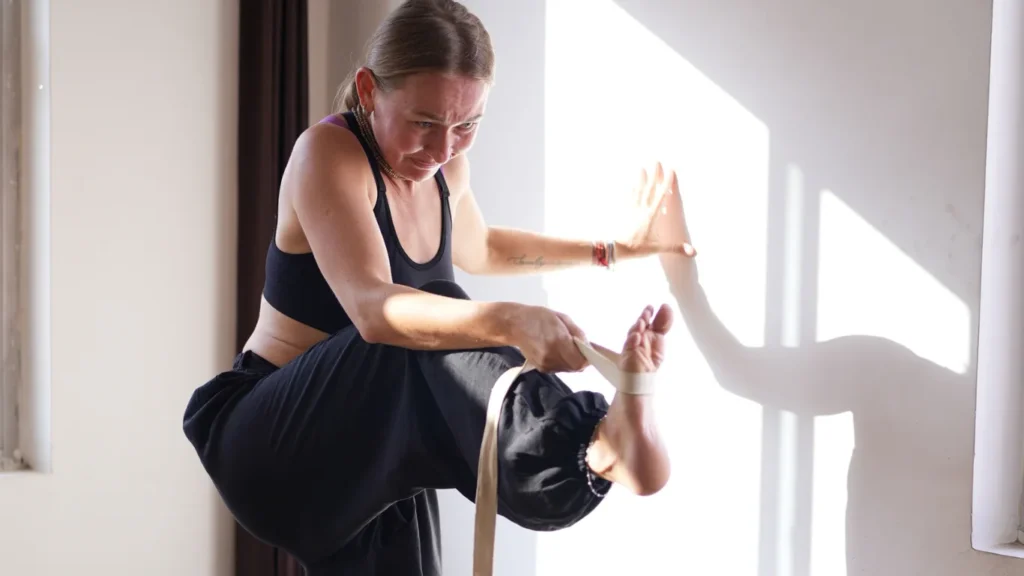
Interestingly, the word beginner means different things to different people.
Someone who has practiced yoga once a week for two years may still consider themselves a beginner.
Another person may have only practiced for six months but already feel confident with basic postures.
Experience isn’t measured only by time.
It’s measured by understanding.
Generally speaking, beginners often fall into one of these groups.
You've Never Practiced Yoga Before
Yes, people in this category do join teacher training courses.
Will the first week feel overwhelming?
Probably.
Will you be the only person in that situation?
Almost certainly not.
Many schools begin by teaching the fundamentals because they know students arrive with different levels of experience.
You've Practiced Through YouTube
This has become increasingly common.
Online videos are a wonderful introduction to yoga, but they can’t replace the feedback of an experienced teacher.
Many students who learned online say their biggest realization during teacher training was discovering small alignment mistakes they never noticed before.
That isn’t a failure.
It’s part of the learning process.
You've Taken Studio Classes
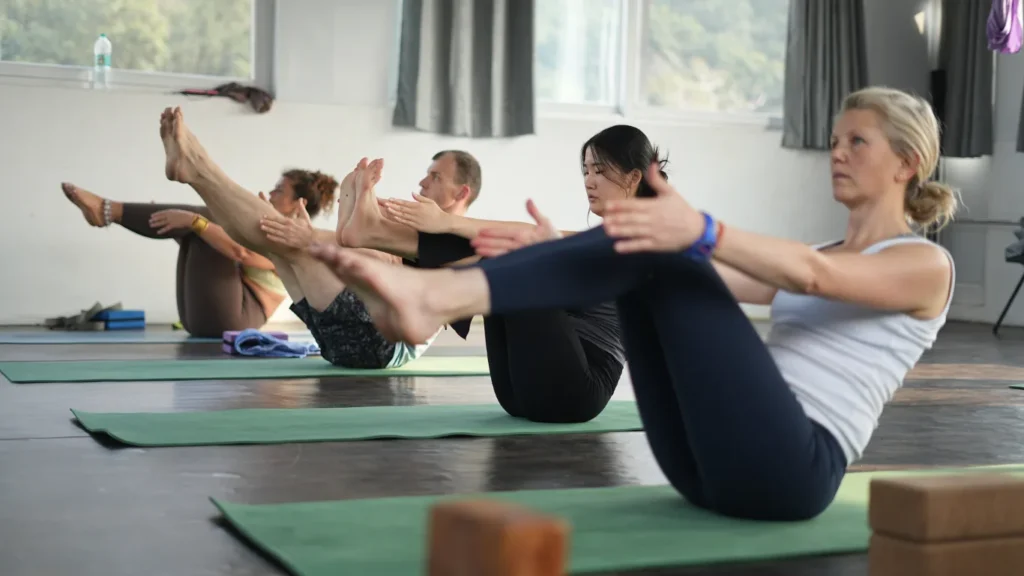
If you’ve attended local yoga classes, you’ll probably feel comfortable with some familiar postures.
Teacher training, however, goes far beyond repeating sequences.
You’ll begin asking questions that regular classes rarely explore.
Why does a posture work?
Which muscles are involved?
Who shouldn’t practice it?
How should it be modified?
How do you teach it safely?
This shift—from practicing yoga to understanding yoga—is what makes teacher training unique.
From the Yoga Hall
One thing we’ve noticed over the years is that beginners often apologize before class even begins.
They’ll quietly say things like:
“I’m sorry, I’m not very flexible.”
“I’ve only been practicing for a few months.”
“I hope I don’t slow everyone down.”
Interestingly, those same students are often smiling by the second week.
Not because they suddenly became advanced practitioners.
But because they realize something important.
Nobody is judging them.
Everyone is busy working on their own practice.
The atmosphere inside a good yoga teacher training isn’t about competition.
It’s about learning together.
Once beginners understand that, their confidence usually grows much faster.
Common Myth vs Reality
| Myth | Reality |
|---|
| I need to be flexible before joining. | Flexibility develops through consistent practice. |
| Everyone else will be experienced. | Most batches include many beginners. |
| I must know advanced yoga poses. | Schools teach progressively from foundational concepts. |
| I’ll embarrass myself. | Everyone starts somewhere, and learning is expected. |
| Teacher training is only for future instructors. | Many students join for personal growth rather than teaching. |
What Teachers Actually Expect From Beginners
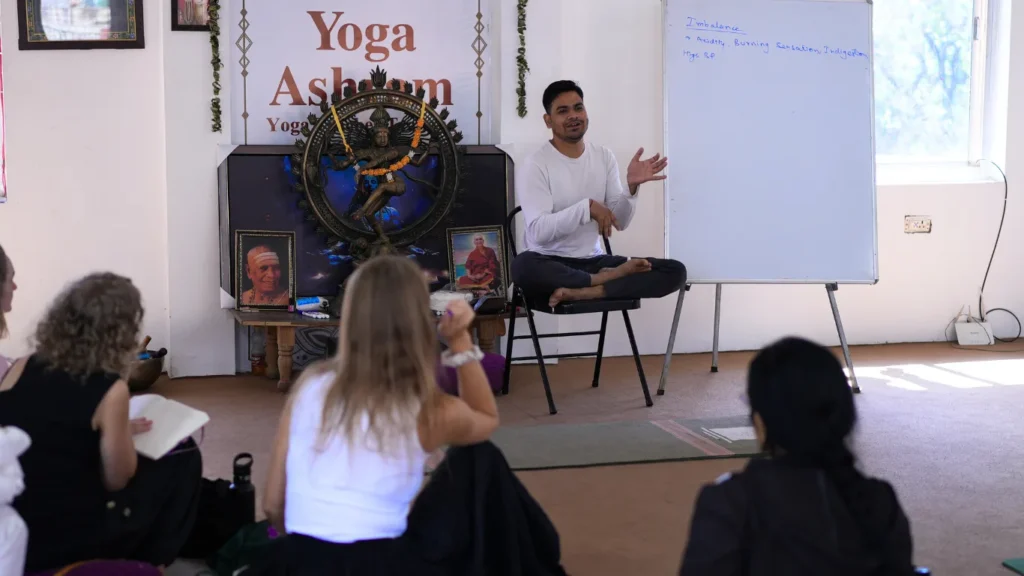
This is where many people misunderstand yoga teacher training.
Teachers aren’t looking for perfect students.
They’re looking for teachable students.
That means they appreciate qualities like:
- Curiosity
- Humility
- Consistency
- Respect
- Patience
- Willingness to ask questions
- Regular attendance
Notice what’s missing from that list.
There’s nothing about touching your toes.
Nothing about handstands.
Nothing about advanced flexibility.
Those skills can develop over time.
The mindset you bring into the classroom is far more important.
Five Signs You're Ready for a 200 Hour Yoga Teacher Training
Many people wait years because they think they need one more class, one more workshop, or one more year of practice.
In reality, readiness often has very little to do with perfecting postures.
Here are five signs that suggest you may already be ready to begin.
1. You Want to Understand Yoga Beyond the Physical Practice
Perhaps you’ve reached the point where you’re asking deeper questions.
Why does breath influence the mind?
What do yoga philosophy and meditation have to do with daily life?
How do experienced teachers create classes that feel balanced and purposeful?
Curiosity like this is often the first step toward teacher training.
2. You’re Comfortable Being a Beginner
Ironically, students who admit they don’t know everything often learn the fastest.
They’re open to feedback.
They’re willing to change old habits.
They ask questions without worrying about appearing inexperienced.
That openness creates rapid growth.
3. You’re Ready to Commit to a Daily Routine
Teacher training isn’t a holiday.
For several weeks, you’ll wake up early, attend classes, study, practice, and reflect.
If the idea of living with more structure excites you rather than discourages you, you’re already thinking in the right direction.
What If You're Not Flexible?
This is probably the biggest fear beginners have.
Many people imagine a yoga teacher training filled with students effortlessly performing handstands, deep backbends, and advanced arm balances.
The reality is usually much more balanced.
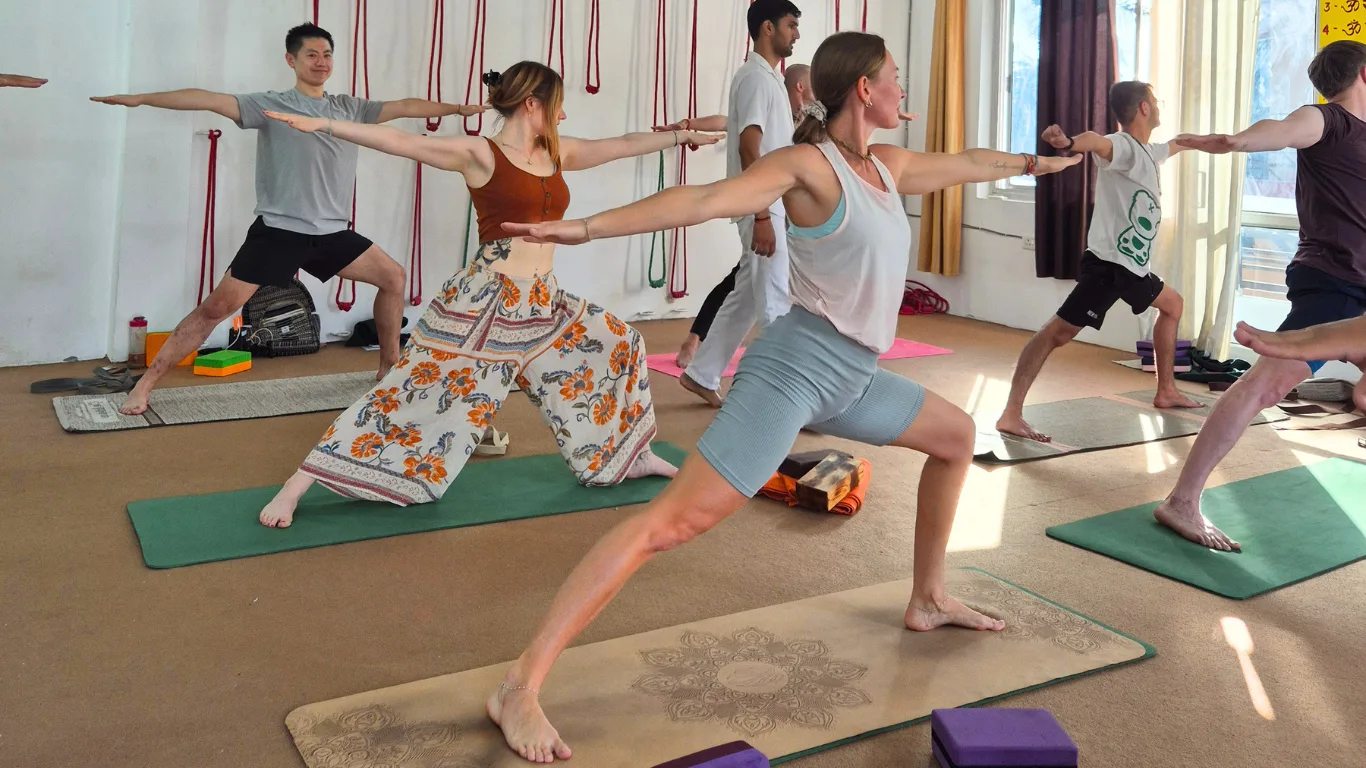
Walk into a typical 200 Hour Yoga Teacher Training in Rishikesh, and you’ll find people with very different bodies, abilities, and levels of experience. Some may have practiced for years, while others are still learning how to coordinate their breath with movement.
Flexibility isn’t an entry requirement.
It’s a result of consistent practice.
More importantly, yoga teachers aren’t trying to make every student look the same. They encourage you to work with your own body, understand your current range of motion, and improve safely over time.
Some of the best yoga teachers aren’t the most flexible people in the room. They’re the ones who understand movement, communicate clearly, and create a welcoming environment for their students.
What If You're Overweight?
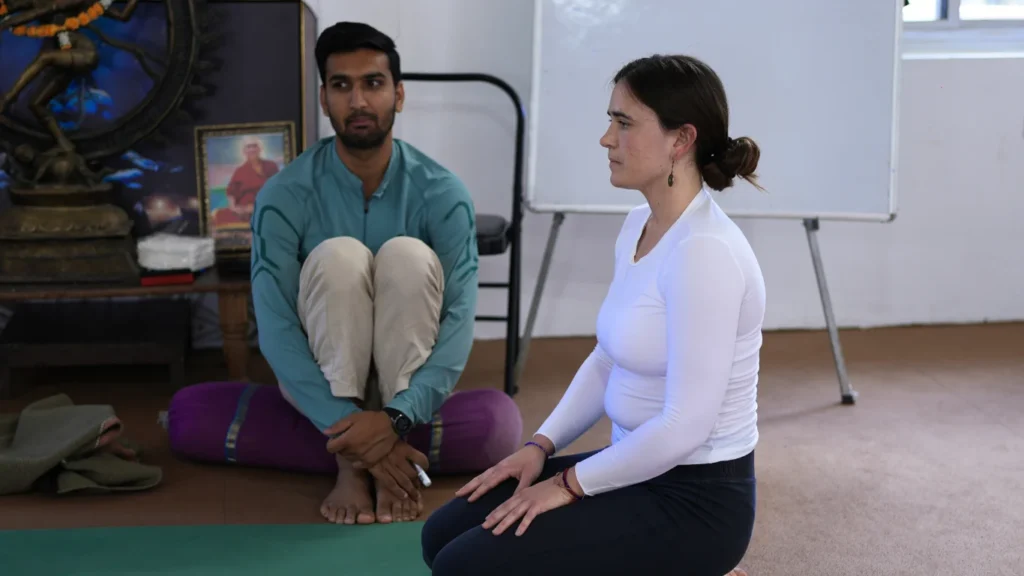
This is another question people often hesitate to ask.
The answer is simple.
Yes, you can absolutely join.
Yoga isn’t reserved for one body type.
Every year, students of different heights, weights, and fitness levels complete yoga teacher training successfully.
Certain postures may require modifications in the beginning, and that’s perfectly normal.
Experienced teachers regularly offer alternatives that allow students to practice safely without feeling excluded.
Progress in yoga is measured by awareness, balance, breathing, and consistency—not by fitting a particular image.
Is There an Age Limit?
One of the wonderful things about yoga is that it welcomes people at different stages of life.
We’ve seen students in their early twenties studying alongside retirees who decided it was finally time to pursue something they’d wanted to do for years.
Age certainly influences recovery time and mobility, but it doesn’t determine your ability to learn.
In many cases, older students bring qualities that enrich the learning environment:
- Greater patience
- Better listening skills
- More life experience
- Strong self-discipline
- Less interest in competition
Those qualities often make teacher training an enjoyable experience.
What If English Isn't Your First Language?
Since Rishikesh attracts students from around the world, this concern comes up regularly.
The good news is that most internationally recognized yoga schools teach in clear, conversational English rather than highly technical academic language.
You’ll also notice that yoga is a practical subject.
Teachers demonstrate postures.
They observe movement.
They guide breathing.
They provide hands-on corrections where appropriate.
Even when students come from different countries, the shared experience of practicing together creates a language that goes beyond words.
If your English is at a level where you can comfortably follow conversations and ask simple questions, you’ll usually adapt well.
And don’t be surprised if your confidence improves throughout the course simply because you’re using English every day.
Can Men Join a Yoga Teacher Training?
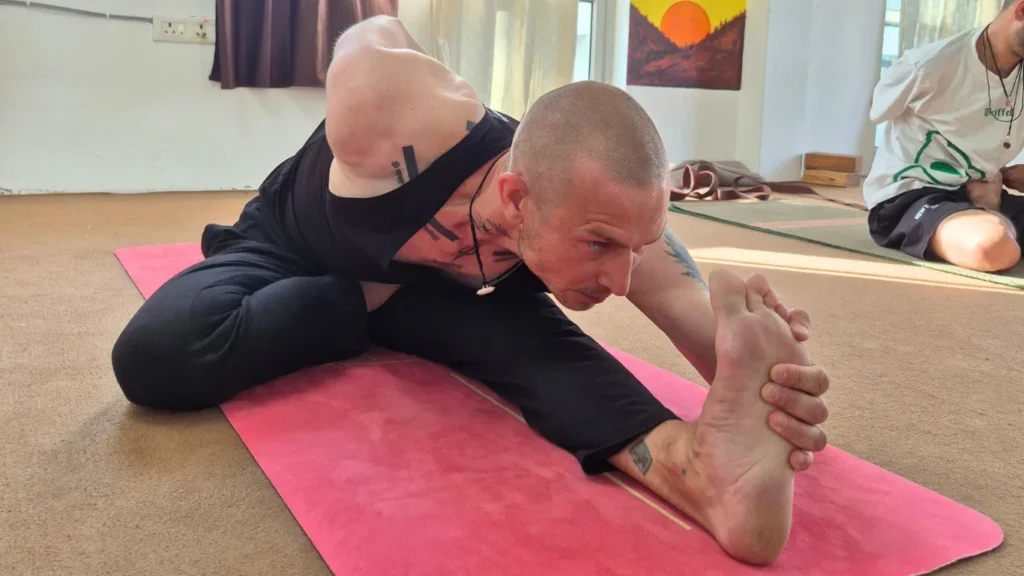
Absolutely.
Although yoga is sometimes portrayed differently on social media, traditional yoga has always been practiced by both men and women.
Today, most 200 Hour Yoga Teacher Training courses in Rishikesh welcome students from a wide range of backgrounds, professions, cultures, and age groups.
A balanced class often creates richer discussions and more diverse teaching perspectives.
Whether you’re an athlete, office worker, traveller, healthcare professional, or simply someone looking for personal growth, yoga teacher training is open to everyone who approaches the practice with sincerity.
What Beginners Usually Experience During the First Week
The first week is rarely about mastering yoga.
It’s about adjusting.
Most beginners experience a combination of excitement, curiosity, and uncertainty.
Some common experiences include:
Your body feels different.
Practicing every day may leave you with sore muscles, especially if you’re not used to regular movement.
Fortunately, the body adapts surprisingly quickly when given proper rest and nutrition.
Your mind feels busy.
Many students are surprised by how difficult it can be to sit quietly during meditation.
Without constant notifications and daily distractions, your thoughts become much more noticeable.
This isn’t a sign that you’re “bad at meditation.”
It’s simply part of becoming more aware.
The schedule feels structured.
For people coming from busy professional lives, the routine can feel surprisingly refreshing.
Classes, meals, study time, and rest gradually create a rhythm that allows you to focus without constantly making decisions.
Many graduates later describe this routine as one of their favourite parts of the experience.
From the Yoga Hall
One moment repeats itself in almost every batch.
During the first few days, beginners often look around the room.
They quietly compare themselves with everyone else.
Someone appears more flexible.
Someone seems to remember Sanskrit names more easily.
Someone balances longer.
Then something interesting happens.
By the second week, those comparisons begin to disappear.
Students become more interested in their own progress than someone else’s.
They celebrate small improvements.
A posture feels steadier.
Breathing becomes smoother.
Teaching a short sequence feels less intimidating.
That’s often the point where beginners stop thinking, “Can I do this?” and start thinking, “I’m actually learning.”
Watching that transformation never gets old.
How to Make Your First Yoga Teacher Training Easier
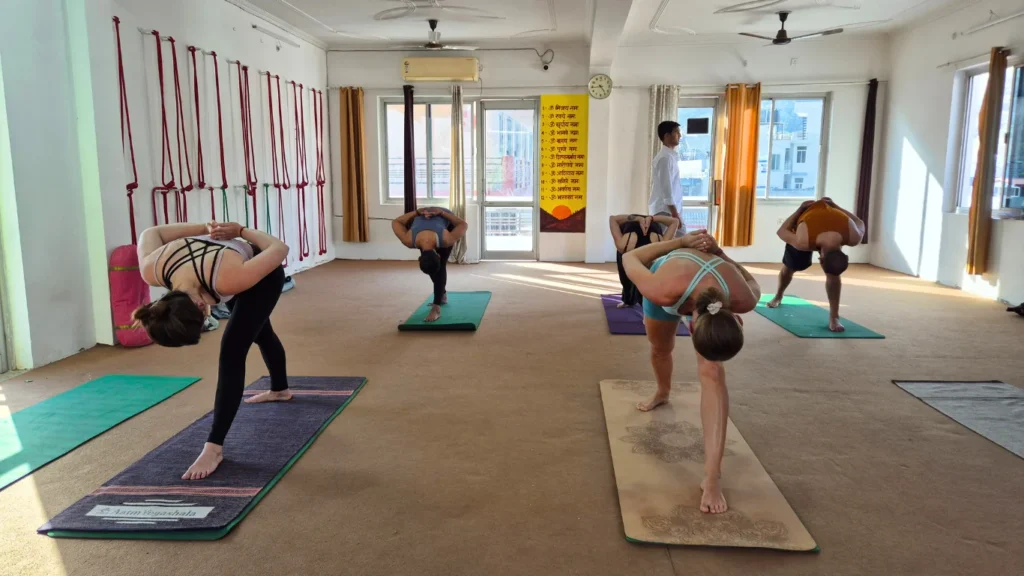
You don’t need to prepare like you’re training for a marathon.
Simple habits before your course can make the transition much smoother.
Build consistency instead of intensity.
Practicing three or four times each week is usually more helpful than doing one long session every weekend.
Focus on mobility.
Gentle stretching, walking, and basic strength exercises help prepare your body for daily practice.
Get used to waking up earlier.
Even shifting your schedule by thirty minutes each week can make early morning classes feel much easier.
Stay curious.
The students who learn the most aren’t necessarily the strongest.
They’re the ones who remain open to new ideas, ask thoughtful questions, and accept that learning takes time.
So... Should a Beginner Join a 200 Hour Yoga Teacher Training?
If you’re waiting until you feel “ready,” you may wait much longer than necessary.
The truth is that most students don’t arrive feeling completely prepared.
They arrive with questions.
With doubts.
Sometimes with excitement mixed with nervousness.
That’s entirely normal.
A good teacher training isn’t designed for perfect yogis.
It’s designed for sincere students.
If you’re willing to learn, practice consistently, and approach the experience with an open mind, being a beginner isn’t a disadvantage.
In many ways, it can actually be a strength.
Without years of fixed habits, beginners are often more receptive to learning safe alignment, proper breathing, and the deeper principles of yoga from the very beginning.
Frequently Asked Questions
Can I join if I've never attended a yoga class?
Yes. Many students begin teacher training with very little practical experience. The first few days involve learning foundational techniques, and teachers generally expect beginners to ask questions.
Will I slow down the rest of the class?
No. Yoga teacher training groups usually include students with different levels of experience. Classes are designed to support gradual learning rather than competition.
Do I need to lose weight before joining?
No. While improving general fitness may help you feel more comfortable, there is no requirement to reach a specific weight before enrolling.
Is previous meditation experience necessary?
Not at all. Meditation is taught progressively, and many beginners experience it for the first time during their teacher training.
Can I become a yoga teacher after completing a 200-hour course?
A 200-hour training provides the foundational knowledge and practical experience needed to begin teaching. Like any profession, confidence and skill continue to develop through regular practice, continuing education, and real teaching experience.
Final Thoughts
Every experienced yoga teacher remembers what it felt like to be a beginner.
The uncertainty.
The questions.
The fear of not being flexible enough.
The quiet hope that they had made the right decision.
Looking back, most of them will tell you the same thing.
They didn’t become confident before joining.
They became confident because they joined.
If you genuinely want to understand yoga beyond the physical postures, don’t let the word beginner convince you that you’re not ready.
Everyone begins somewhere.
The important thing is simply choosing to begin.