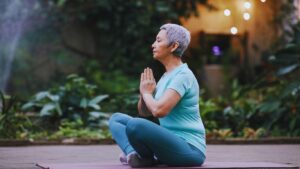

In many parts of the world today, yoga is associated mainly with physical exercise. People attend yoga classes to improve flexibility, reduce stress, or strengthen their bodies.
However, in traditional teachings, yoga was never intended to be just a workout.
According to ancient yogic texts, yoga is a complete lifestyle philosophy designed to guide how individuals think, act, eat, breathe, and interact with the world.
These teachings developed thousands of years ago in India and continue to influence modern yoga education. Students who travel to Rishikesh, located in the foothills of the Himalayas, often explore these principles while studying yoga philosophy, meditation, pranayama, and yogic lifestyle practices during immersive yoga training programs.
Understanding the traditional yogic lifestyle can help modern practitioners see yoga as much more than a physical practice. It becomes a path toward balance, awareness, and harmony between the body and mind.
This article explores:
- What ancient yoga texts say about living a yogic life
- Key ethical principles of yoga philosophy
- How practices such as asana, pranayama, meditation, and Ayurveda support a balanced lifestyle
Practical ways modern practitioners can integrate yogic principles into daily life
Quick Definition: What Is a Yogic Lifestyle?
A yogic lifestyle refers to a way of living guided by the principles of yoga philosophy, including ethical behavior, mindful living, balanced diet, meditation, and self-awareness.
According to ancient yogic teachings, the purpose of this lifestyle is to create harmony between the body, breath, mind, and environment.
Rather than focusing only on physical postures, the yogic lifestyle encourages individuals to cultivate balance in every aspect of life.
To learn yoga in depth, explore our courses below.
Ancient Yoga Texts That Describe the Yogic Lifestyle
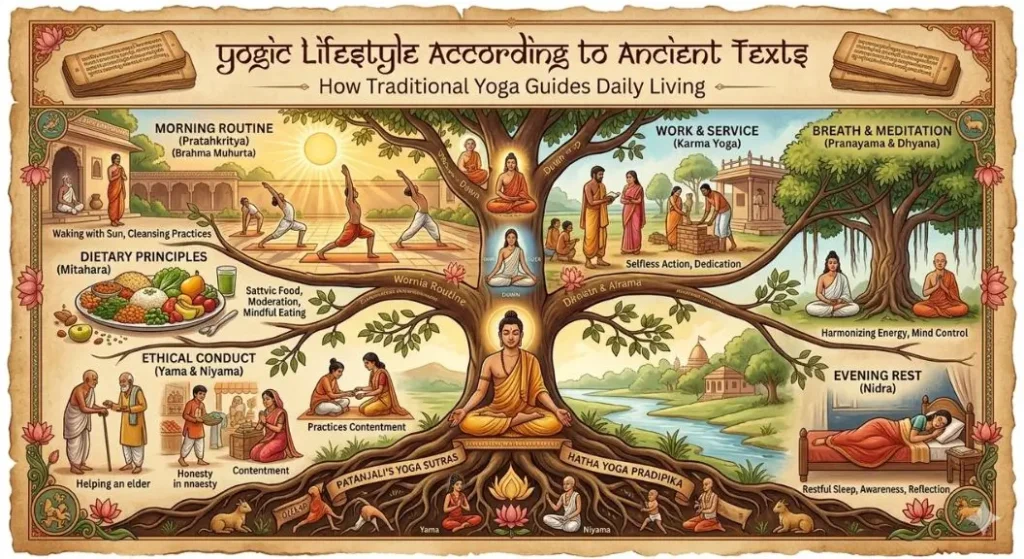
Several classical texts form the philosophical foundation of yoga.
Important Yogic Texts
Text | Key Teachings |
Yoga Sutras of Patanjali 
| Ethical principles and mental discipline |
Bhagavad Gita | Yoga as a path of selfless action and awareness |
Hatha Yoga Pradipika | Physical practices such as asana and pranayama |
Upanishads | Philosophical insights into consciousness |
These texts describe yoga as a holistic path toward inner clarity and spiritual awareness.
The Eight Limbs of Yoga
One of the most influential frameworks in yoga philosophy comes from the Yoga Sutras of Patanjali, which describe the Eight Limbs of Yoga.
These limbs provide a guide for living a balanced and conscious life.
The Eight Limbs Explained
Limb | Meaning |
Yama | Ethical principles for interacting with others |
Niyama | Personal disciplines and self-care |
Asana | Physical postures |
Pranayama | Breath regulation |
Pratyahara | Withdrawal of the senses |
Dharana | Concentration |
Dhyana | Meditation |
Samadhi | Deep spiritual awareness |
Together, these practices form a comprehensive path toward mental clarity and self-awareness.
The Ethical Foundations: Yamas
The Yamas describe ethical principles that guide how individuals interact with the world.
The Five Yamas
- Ahimsa (Non-violence)
Practicing kindness and avoiding harm toward others and oneself. - Satya (Truthfulness)
Living honestly and communicating with integrity. - Asteya (Non-stealing)
Respecting the time, energy, and possessions of others. - Brahmacharya (Moderation)
Maintaining balance in relationships and personal habits. - Aparigraha (Non-attachment)
Avoiding excessive materialism and cultivating simplicity.
These principles encourage mindfulness in daily actions and relationships.
Personal Discipline: The Niyamas
The Niyamas focus on personal habits and self-development.
The Five Niyamas
- Saucha (Purity)
Maintaining cleanliness of body and mind. - Santosha (Contentment)
Practicing gratitude and acceptance. - Tapas (Discipline)
Developing self-control and dedication. - Svadhyaya (Self-study)
Reflecting on personal thoughts and behaviors. - Ishvara Pranidhana (Surrender)
Cultivating humility and trust in the flow of life.
These practices encourage individuals to develop awareness and inner balance.
Asana Practice in the Yogic Lifestyle
In modern yoga culture, asana practice often receives the most attention.
However, in traditional teachings, postures were originally intended to support meditation.
The purpose of asana includes:
- strengthening the body
- improving posture
- preparing the body for long periods of meditation
Regular practice also supports physical health and nervous system balance.
Pranayama: The Science of Breath
Another important aspect of yogic living is pranayama, the practice of conscious breathing.
Pranayama techniques help regulate the flow of energy in the body.
Examples of Pranayama Practices
- Nadi Shodhana – alternate nostril breathing
- Kapalabhati – cleansing breath
- Ujjayi breathing – rhythmic breathing used in yoga practice
These practices help calm the mind and improve concentration.
Meditation and Inner Awareness
Meditation is one of the central practices described in ancient yoga texts.
Through regular meditation, practitioners develop:
- mental clarity
- emotional stability
- deeper awareness of thoughts and reactions
Meditation allows individuals to observe their inner experiences without judgment
Over time, this practice cultivates greater calm and balance in daily life.
The Role of Ayurveda in Yogic Living
The yogic lifestyle is closely connected to Ayurveda, the traditional system of health and wellbeing that developed alongside yoga.
Ayurveda emphasizes balance between body, mind, and environment.
Key principles include:
- eating nourishing, seasonal foods
- maintaining daily routines
- supporting digestive health
These practices complement yoga by supporting overall wellbeing.
Looking for short yoga program?
Check out below our:
Why Rishikesh Is Associated With Traditional Yogic Living
Many students interested in yoga philosophy travel to Rishikesh, a town long known as a center of spiritual learning.
Located near the Himalayas and the sacred Ganges River, Rishikesh has attracted yogis and meditation practitioners for centuries.
Today the town continues to host:
- yoga schools
- meditation centers
- wellness retreats
Many visitors come to explore traditional teachings and experience a simpler lifestyle focused on mindfulness.
Applying the Yogic Lifestyle in Modern Life
While ancient yogic teachings developed in a different historical context, their principles remain relevant today.
Modern practitioners can integrate yogic lifestyle principles through simple habits.
Practical Ways to Live Yogically
- practicing daily meditation
- maintaining mindful breathing
- eating balanced meals
- cultivating compassion and patience
- reducing unnecessary distractions
These practices help bring yoga into everyday life beyond the yoga mat.
Real Experiences From Yoga Students
Students who explore the deeper aspects of yoga often describe changes in their daily habits.
Many report:
- improved emotional resilience
- healthier lifestyle choices
- stronger sense of purpose
These transformations often develop gradually through consistent practice and reflection.
People Also Ask
What is a yogic lifestyle?
A yogic lifestyle refers to living according to the principles of yoga philosophy, including ethical behavior, mindfulness, balanced diet, meditation, and self-awareness.
What do ancient yoga texts say about daily life?
Ancient yoga texts such as the Yoga Sutras describe practices that guide how individuals think, behave, and cultivate awareness in everyday life.
Is yoga only about physical exercise?
No. Traditional yoga includes meditation, breathing practices, ethical principles, and philosophical teachings.
What are the eight limbs of yoga?
The eight limbs describe stages of yogic development, including ethical principles, physical practice, breath control, meditation, and spiritual awareness.
How does Ayurveda relate to yoga?
Ayurveda complements yoga by focusing on balanced nutrition, healthy routines, and overall wellbeing.
Why do people study yoga philosophy in Rishikesh?
Rishikesh is considered a spiritual center for yoga learning and attracts students from around the world interested in meditation and traditional teachings.
Can beginners follow a yogic lifestyle?
Yes. Beginners can gradually integrate practices such as mindful breathing, meditation, and ethical living into their daily routines.
Do yoga teacher training programs teach yoga philosophy?
Yes. Many programs include philosophy studies alongside asana practice, meditation, and anatomy.
Check out our Retreats in Rishikesh for Beginners and intermediates:
Key Takeaways
- A yogic lifestyle involves ethical living, mindful awareness, and balanced daily habits.
- Ancient texts such as the Yoga Sutras describe principles for living with clarity and compassion.
- Yoga includes practices such as asana, pranayama, meditation, and self-study.
- Ayurveda supports yogic living through balanced nutrition and healthy routines.
Exploring these teachings in places such as Rishikesh, near the Himalayas, helps deepen understanding of traditional yoga philosophy.
Final Thoughts
Ancient yoga texts present yoga as a comprehensive path for living with awareness, balance, and compassion.
While physical yoga practice remains valuable, the deeper teachings encourage individuals to integrate mindfulness into every aspect of life.
Practices such as meditation, pranayama, ethical living, and self-reflection help cultivate inner clarity and resilience.
Many students who travel to Rishikesh find that the peaceful Himalayan environment offers a unique opportunity to explore these teachings more deeply.
Yoga schools such as Rishikesh Yoga Valley provide structured training programs and retreat experiences where students can study yoga philosophy, meditation, and holistic wellbeing in a supportive learning environment.
Ultimately, the yogic lifestyle is not about perfection—it is about continuously cultivating awareness, balance, and harmony in everyday life.
FAQ
What is a yogic lifestyle according to ancient texts?
A yogic lifestyle involves ethical behavior, meditation, mindful living, and practices that support physical and mental balance.
What are the main principles of yoga philosophy?
Yoga philosophy includes ethical principles, breath control, meditation, and self-awareness as described in the eight limbs of yoga.
Is yoga connected to Ayurveda?
Yes. Ayurveda complements yoga by emphasizing balanced nutrition, daily routines, and holistic wellbeing.
Why do people study yoga philosophy in Rishikesh?
Rishikesh has long been a center of yoga and meditation traditions and attracts students from around the world seeking deeper knowledge.