

200 Hour YTT in Rishikesh vs USA
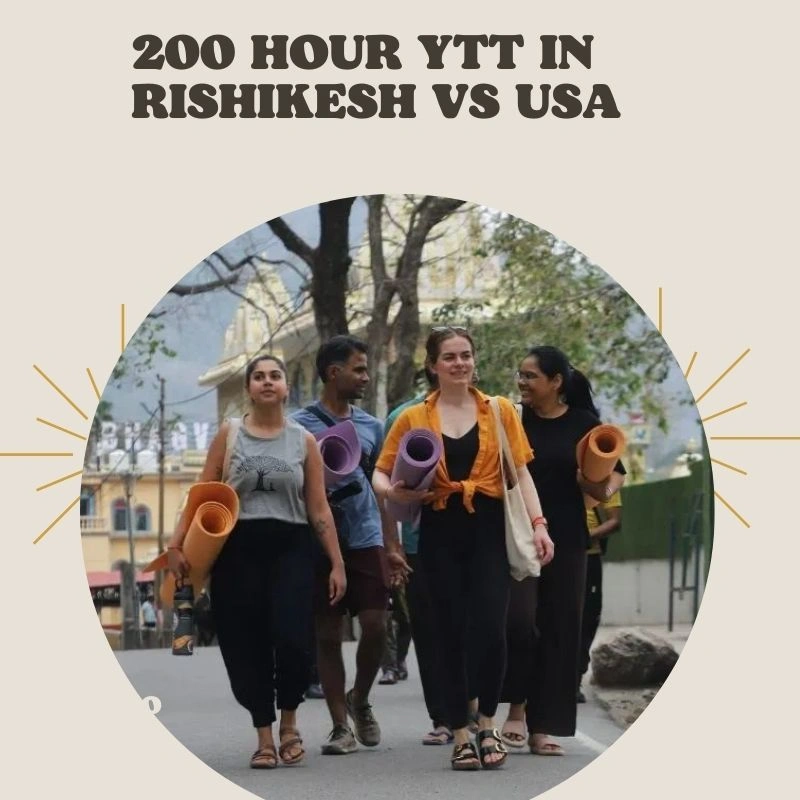
Choosing where to complete your 200-hour Yoga Teacher Training (YTT) is one of the most important decisions in your yoga journey. Two of the most common destinations are Rishikesh, India and the United States. Both offer internationally recognized training, but the cost structure, experience, immersion level, and long-term value differ dramatically.
This guide provides a data-backed comparison for students at the decision stage, evaluating cost, certification recognition, cultural immersion, career outcomes, visa considerations, and return on investment (ROI).
Quick Comparison: Rishikesh vs USA
| Factor | Rishikesh (India) | United States |
|---|---|---|
| Average Course Cost | $600–$1,800 | $2,500–$5,000 |
| Typical Duration | 24–30 days intensive | 8–12 weeks (weekends) |
| Accommodation | Usually included | Often NOT included |
| Food | 3 vegetarian meals daily | Rarely included |
| Cultural Experience | Traditional yogic lifestyle | Modern studio training |
| Certification | Yoga Alliance recognized | Yoga Alliance recognized |
| Travel Required | International for most | Domestic (for Americans) |
| Teaching Focus | Philosophy + spirituality | Teaching methodology + fitness |
| Total Budget (Realistic) | $2,200–$3,000 | $3,500–$6,000+ |
Courses in Rishikesh are often half the price of U.S. programs because living costs, rent, and operational expenses are significantly lower.
Understanding the 200 Hour Yoga Teacher Training Certification
A 200-hour YTT is the global entry-level credential required to teach yoga professionally.
Most schools worldwide follow the standards of Yoga Alliance.
Typical Curriculum
A Yoga Alliance–registered program includes:
Asana practice
Yoga philosophy
Anatomy & physiology
Teaching methodology
Alignment and adjustments
Meditation & pranayama
Ethics and professional practice
After completion, graduates can register as RYT-200 (Registered Yoga Teacher) and teach internationally.
Cost Breakdown: Rishikesh vs USA
Cost is usually the first major factor students evaluate. But the key is understanding the true total cost, not just the tuition.
Cost of 200 Hour YTT in Rishikesh
Average Course Price
Typical price ranges:
| School Category | Price |
|---|---|
| Budget | $600 – $900 |
| Mid-range | $1,000 – $1,400 |
| Premium | $1,500 – $2,100 |
Many programs include accommodation, meals, course materials, and certification.
Example Cost Structure
| Expense | Typical Cost |
|---|---|
| Tuition + accommodation | $900–$1,500 |
| Food (included) | $0 |
| Flights | $600–$1,200 |
| Visa | $50–$100 |
| Personal spending | $200–$400 |
| Total Estimated Budget | $2,200–$3,000 |
Programs typically last 25 days with full residential immersion.
Cost of 200 Hour YTT in the USA
Training in the U.S. usually costs significantly more due to higher studio rents, instructor salaries, and operational expenses.
Average Price
| Program Type | Cost |
|---|---|
| Studio-based training | $2,500–$4,500 |
| Premium programs | $4,000–$5,000+ |
| Retreat-style residential training | $4,000–$7,000 |
Typical prices range $3,500–$5,000 for a 200-hour training.
Example Cost Structure
| Expense | Typical Cost |
|---|---|
| Tuition | $3,000–$4,500 |
| Accommodation | $800–$1,500 |
| Food | $300–$700 |
| Books & materials | $100–$300 |
| Yoga Alliance registration | $115 |
| Total Estimated Budget | $4,500–$7,000 |
Most programs are non-residential and run on weekends over 2–3 months.
Cost Chart: Total Investment Comparison
| Cost Category | Rishikesh | USA |
|---|---|---|
| Tuition | $600–$1,800 | $2,500–$5,000 |
| Accommodation | Included | Often separate |
| Meals | Included | Usually separate |
| Travel | High | Low |
| Total Estimated Cost | $2,200–$3,000 | $4,500–$7,000 |
Key insight: Even after international travel, Rishikesh often costs 30–60% less overall.
Experience Comparison
Cost is only one dimension. The training experience itself differs significantly.
Cultural Immersion
Rishikesh
Rishikesh is widely known as the “Yoga Capital of the World.”
Students experience:
Ashram-style living
Traditional yogic philosophy
Meditation and mantra chanting
Sattvic vegetarian diet
Temple visits and Ganga ceremonies
Training typically follows a daily schedule from sunrise to evening.
Example day:
| Time | Activity |
|---|---|
| 6:00 | Meditation |
| 7:00 | Asana practice |
| 9:00 | Breakfast |
| 10:00 | Anatomy |
| 13:00 | Lunch |
| 15:00 | Teaching practice |
| 17:00 | Philosophy |
| 19:00 | Dinner |
This immersive environment helps students internalize yoga as a lifestyle rather than just a fitness method.
United States
U.S. programs are usually designed for working professionals.
Typical format:
Weekend training
Online theory modules
Studio-based practice
Focus on teaching skills
Advantages:
No need to leave work
Familiar environment
Modern facilities
However, immersion is typically less intense.
Accommodation Differences
Rishikesh
Most schools include accommodation such as:
Shared dorm rooms
Private rooms (upgrade option)
Ashram or retreat setting
Amenities often include:
Wi-Fi
Yoga halls
Study materials
Laundry services
Accommodation is included in most packages.
USA
Accommodation is usually not included unless the program is a retreat.
Students must arrange:
Hotels
Airbnb
commuting from home
This adds significant cost.
Food and Lifestyle
Rishikesh
Meals usually include three daily vegetarian meals designed for yogic living.
Typical diet:
Fresh fruits
Dal and rice
Vegetable curries
Herbal teas
The diet follows sattvic principles, believed to support meditation and spiritual clarity.
USA
Food is generally not included.
Students usually:
Eat at home
Bring meals
Buy food nearby
Diet is not usually part of the curriculum.
Spiritual Authenticity and Tradition
Many students choose India for its historical connection to yoga.
Yoga originated in India thousands of years ago and is deeply embedded in its philosophy, scriptures, and spiritual traditions.
Training in Rishikesh often includes:
Study of Yoga Sutras
Bhagavad Gita philosophy
Sanskrit chanting
Meditation traditions
U.S. programs often focus more on:
Alignment
biomechanics
injury prevention
teaching techniques
Both approaches are valuable—but they emphasize different aspects of yoga.
Hidden Costs to Consider
Rishikesh
Possible hidden expenses:
International flights
Travel insurance
Visa fees
Ayurvedic treatments
Personal excursions
Flights can cost $500–$1,500 depending on location.
USA
Hidden costs may include:
Accommodation
commuting
textbooks
certification fees
insurance
Yoga Alliance registration itself costs about $115.
Visa Requirements
For international students attending training in India:
Most travelers obtain an Indian e-visa
Cost: about $50–$100
Duration: 30–90 days
Students from most Western countries can apply online.
Safety Considerations
Safety is a common concern for international students.
Rishikesh is generally considered one of India’s safest spiritual destinations and hosts thousands of yoga students annually.
Yoga schools typically provide:
secure campus accommodation
airport pickup
student support
However, students should still follow common travel precautions.
Teaching Career Value
Certification Recognition
Programs registered with Yoga Alliance are globally recognized.
Graduates can teach in:
yoga studios
gyms
wellness centers
retreats
private classes
This applies whether the certification was completed in India or the United States.
Teaching Income Potential
Typical yoga teacher earnings vary widely.
Common income streams:
studio classes
private sessions
online classes
retreats
workshops
Experienced teachers who run training programs can earn $1,500–$5,000 per student per course.
However, beginners often teach part-time while building experience.
Return on Investment (ROI)
Rishikesh ROI
Pros:
lowest upfront cost
immersive experience
cultural authenticity
international networking
Cons:
travel required
intense schedule
adjustment to new culture
Best for:
serious yoga students
those seeking spiritual immersion
international travelers
USA ROI
Pros:
easier logistics
flexible schedule
strong professional networks
Cons:
higher cost
less immersion
accommodation usually not included
Best for:
working professionals
students unable to travel
those focused on teaching locally
Decision Framework: Which Should You Choose?
Use this quick framework.
Choose Rishikesh if you want:
the lowest cost
immersive learning
authentic yoga philosophy
international travel experience
intensive training
Choose USA if you want:
flexibility while working
familiar environment
local professional network
shorter daily training hours
FAQ
Is a 200-hour yoga certification from India valid internationally?
Yes. If the school is registered with Yoga Alliance, the certification is globally recognized.
Is it cheaper to do yoga teacher training in India?
Yes. Even with travel costs, programs in Rishikesh often cost 30–60% less than similar programs in the United States.
How long is a 200-hour yoga teacher training?
Rishikesh: typically 24–30 days intensive
USA: often 8–12 weeks part-time
Can beginners take a 200-hour YTT?
Yes. The course is designed for beginners and intermediate practitioners.
Do yoga teachers make good money?
Income varies widely. Many teachers start part-time and expand into private sessions, retreats, or online teaching.