
The average adult needs about 7–8 hours of sleep. So why do so many of us wake up feeling like we haven’t rested at all — drowsy through the day, even after hitting that number?
It’s not just about how many hours you sleep. It’s about the quality of those hours, which is what really defines your sleep cycle.
So what actually affects sleep quality?
– Caffeine, increased screen time, alcohol, smoking, and physical pain all play a role — but chronic stress and anxiety have become the leading causes of insomnia and disturbed sleep in adults.
– Overworking, poor nutrition, overthinking, living too much in the past or future, family responsibilities, and major life events can all show up as stress-related symptoms: elevated blood pressure, disordered eating, insomnia, anxiety, depression, and other lifestyle-related issues.
The good news: much of this is manageable with yoga, lifestyle changes, and consistent, holistic practice. It starts with the willingness to make a change.
A growing body of research points to yoga therapy as a meaningful support for psychological well-being, quality of life, and managing stress, anxiety, and depression — though it works best alongside, not instead of, professional care if you’re dealing with persistent or severe symptoms.
Below is a set of simple yoga asanas and pranayama practices that can genuinely help improve sleep quality by addressing the stress factor at its root. All it takes is 30–40 minutes a day — stay consistent, and you’ll feel the difference.
Breathing Exercises
Pranayama
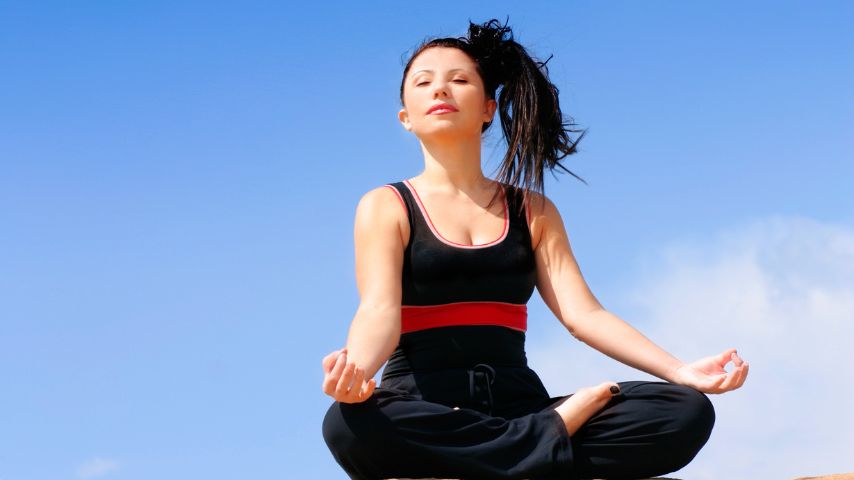
I always like to start with Pranayama, as it helps to disconnect your senses from the surroundings and completely focus on your own breath and body.
Yogic Breathing
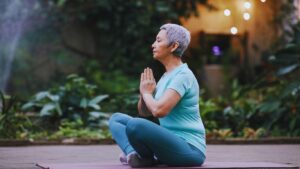
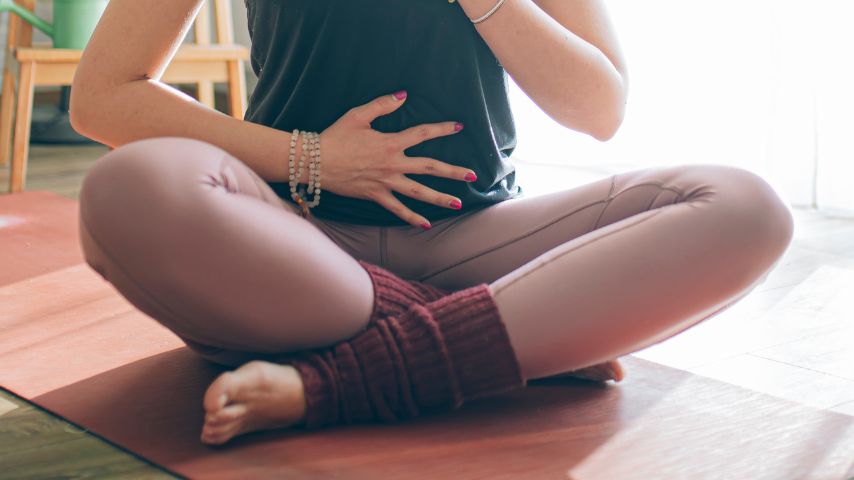
Start by gently closing your eyes. Bring your hands into Anjali Mudra (Namaskara Mudra), then place one palm on your diaphragm and the other at the level of your collarbones. Inhale deeply and exhale slowly, observing the movement of your chest muscles, diaphragm, sternum, and collarbones as you breathe.
Repeat 6–8 times.
Anuloma – Viloma / Alternative Nostril Breathing
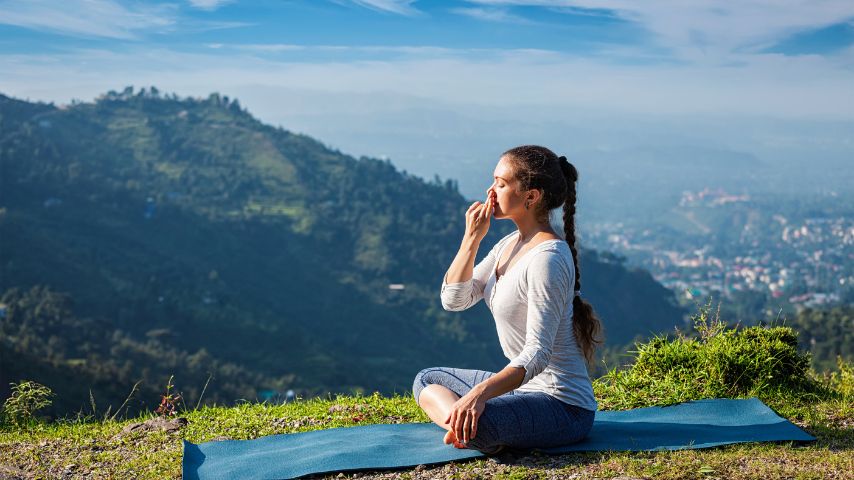
Start by adopting Nasika Mudra: bring your right hand in front of you, and fold your index and middle fingers in to touch your palm. Close your right nostril with your thumb, and begin by exhaling through your left nostril.
Once you’ve exhaled fully, inhale deeply through the same left nostril until your lungs are full. Then close the left nostril with your ring finger, release your thumb, and exhale through your right nostril. Inhale through the right, then repeat, alternating sides each round.
Bhramari Pranayama
Bhramari Pranayama mainly works on the Vishuddhi Chakra (throat chakra). Practicing it helps calm the mind and ease fear, anxiety, stress, and anger.
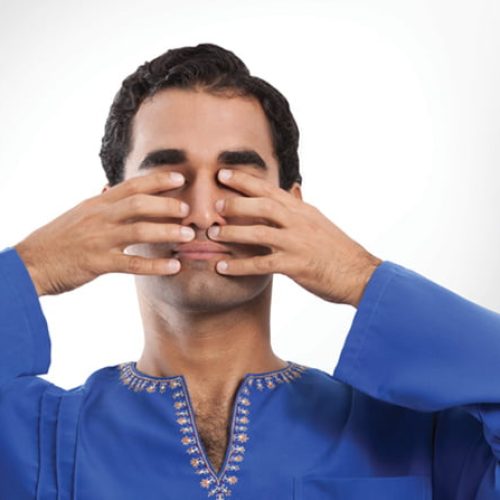
Adopt Shanmukhi Mudra: close both ears with your thumbs, place your index fingers on your closed eyelids, your middle fingers beside your nostrils, your ring fingers above your upper lip, and your little fingers below your lower lip.
This is a beautiful mudra, and my personal favorite — it signifies drawing the senses inward, by closing the eyes, nostrils, ears, and mouth all at once.
Inhale deeply, and as you exhale, produce a soft humming sound from your throat — similar to a bee, or similar to chanting Aum.
If you have no time to practice all the asanas on a given day, Bhramari Pranayama alone, done before bed, is enough — especially if better sleep is your main goal.
Yoga Asanas
Chandra Namaskara / Moon Salutations :
As Chandra / The Moon signifies calm & cool qualities, performing of Chandra namaskara yeilds benefits like Calmness of mind & Relief from Stress & Anxiety. It is a set of 14 asanas and has can be performed in the calm hours of the day.
Marjariasana / Cat and cow pose:
Start in table top position, make sure you’re fingers are spead & your wrists in- line with your shoulders, similary your knees in- like with your hips. As you inhale & look up ,see that you lower your belly and lift your tailbone. Exhale and look down, round your back, tuck your tailbone and lift your navel towards your spine.
Repeat 6 times. This relaxes your spine and relives all the tension from the body making it flexible.
Balasana / Child’s pose :
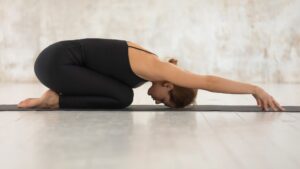
Start in Vajrasana, spread your knees slightly apart, and lower your torso down, touching your forehead to the ground. You can stretch your arms out in front of you with palms on the ground, or simply rest them alongside your hips.
A pillow under your torso or forehead can make this more comfortable and supportive.
Ananda Balasana / Happy Baby Pose :
As the name suggests, this one can genuinely make you feel like a happy baby. Lie on your back, bend your knees, lift your legs, and grab your toes. Open your hips and gently rock side to side.
It’s a wonderfully relaxing posture — after a long day, there’s something freeing about letting yourself rock like a happy baby for a minute.
Uttana Shishosana / Puppy Pose :
Start in tabletop position, hips stacked over your knees. Stretch your arms forward and slowly lower your chest toward the ground as you exhale, reaching your forehead down. A yoga block or soft pillow under your forehead can help — go only as far as feels comfortable, and avoid putting excess pressure on your lower back.
Breathe fully into your lungs and hold for 30–40 seconds.
FAQ About Yoga Breathing & Asana
When to do these?
- Yoga asanas and pranayama practices are best done on an empty stomach, or at least 2.5–3 hours after a meal. The exact gap depends on what you ate – if your last meal included meat, fried food, or anything heavy, give yourself more time before practicing. That said, practicing early in the morning tends to yield the best results, helping you start the day calm and centered.
How soon before bed should I practice for better sleep?
About 30–45 minutes before bed works well for most people. This gives your nervous system enough time to downshift from the practice into actual sleep, without leaving too long a gap where the calming effect wears off before you lie down.
Can beginners do these practices safely?
Yes — everything covered here (Pranayama, Bhramari, and the asanas) is beginner-friendly and doesn’t require prior yoga experience. If you have a existing respiratory condition, high blood pressure, or are pregnant, it’s worth checking with a doctor or an experienced teacher before starting any new breathing practice.
Building This Into Your Routine
None of these practices need to be perfect to work — what matters most is consistency. Start with just one or two techniques that feel manageable, and let the rest come with time. If stress or sleep issues are seriously affecting your daily life, these practices are a strong complement to professional support, not a replacement for it.
Want to go deeper into a structured practice? Explore our Yoga & Meditation Retreats in Rishikesh