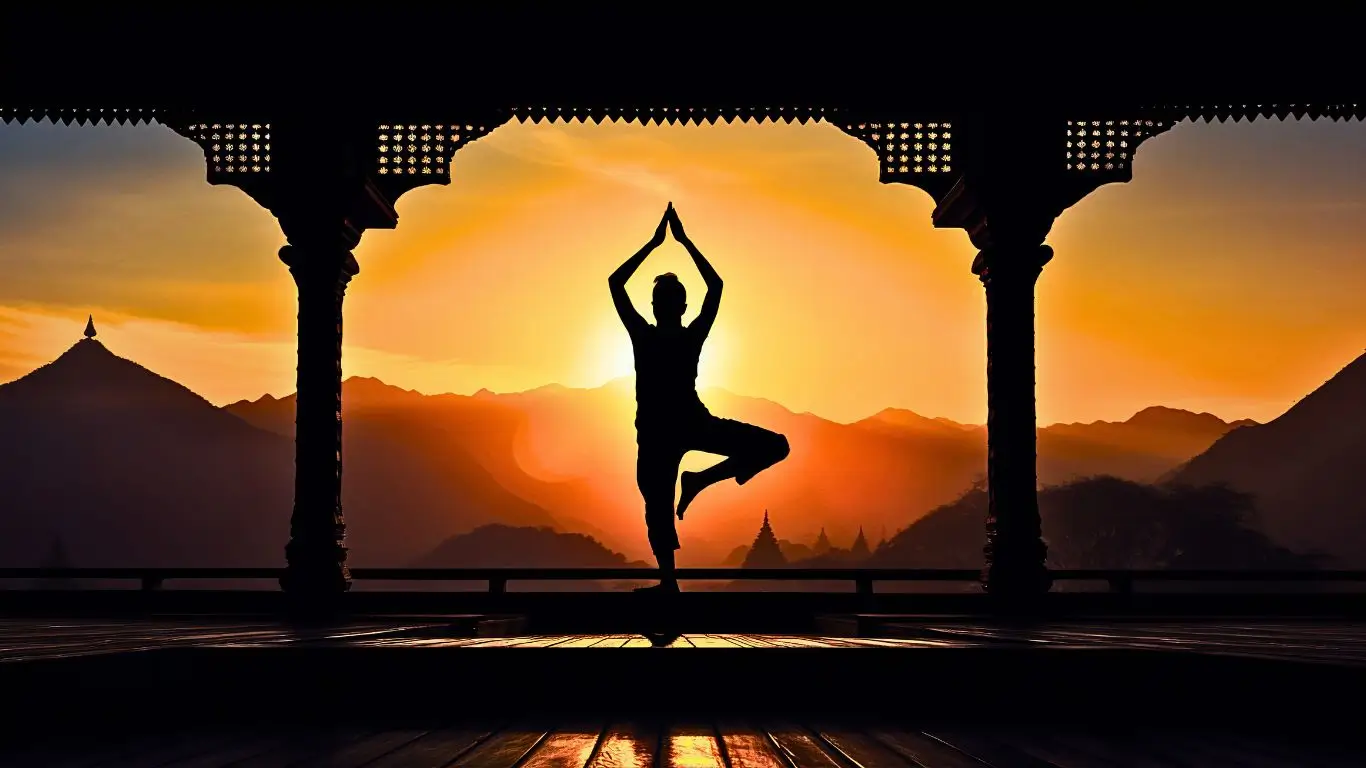
Tree Pose, known in Sanskrit as Vrksasana, is a classic standing yoga posture that challenges balance while encouraging steadiness, focus, and body awareness. The posture requires you to remain grounded through one leg while maintaining an upright and relaxed position.
Tree Pose is often practiced by beginners and experienced yoga practitioners alike because it can be adapted to different levels of balance and flexibility. With regular and mindful practice, Vrksasana can help strengthen the standing leg, improve balance, and develop greater awareness of posture and alignment.
In this guide, we explore how to practice Tree Pose step by step, its potential benefits, common mistakes, variations, and the deeper meaning behind this traditional yoga posture.
Table of Contents
What is Tree Pose (Vrksasana)?
Tree Pose, known in Sanskrit as Vrksasana, is a traditional standing balance posture in yoga. The word vrksa means “tree,” while asana means “seat” or “posture.”
The pose is inspired by the image of a tree: stable and rooted below while extending upward. In Tree Pose, one foot remains firmly connected to the ground while the other leg bends outward. The sole of the lifted foot may be placed against the inner calf or inner thigh of the standing leg, depending on your level of balance and comfort.
The arms can remain at the sides, rest together at the chest in Anjali Mudra, or extend upward overhead.
Tree Pose primarily challenges balance and body awareness. It also requires attention to alignment, steady breathing, and the ability to maintain a stable standing position without unnecessary tension.
For many practitioners, Vrksasana can be a useful posture for exploring the relationship between physical stability and focused attention—both on and off the yoga mat.
Step-by-Step Guide to Perform Tree Pose
Follow these steps to practice Tree Pose with control and awareness:
1. Begin in Mountain Pose (Tadasana)
Stand upright with your feet comfortable and parallel, allowing your arms to rest by your sides. Feel your weight distributed through both feet and lengthen gently through the spine.
Take a few steady breaths and establish a stable, relaxed standing position.
2. Shift Your Weight onto One Leg
Slowly transfer your weight onto one foot. Keep the standing leg active without locking the knee, and allow the sole of the foot to remain firmly connected with the floor.
Take a moment to find your balance before lifting the other foot.
3. Place the Other Foot
Bend the opposite knee and turn it gently outward. Place the sole of the lifted foot against the inner calf or inner thigh of the standing leg, depending on your flexibility and balance.
Avoid placing the foot directly against the knee joint.
If balancing is difficult, keep the toes of the lifted foot lightly on the floor or use a wall for support.
4. Bring Your Hands to the Heart Centre
Once you feel stable, bring your palms together in front of your chest in Anjali Mudra.
Choose a steady point in front of you and rest your gaze there. In yoga, a focused point of gaze is often called drishti, and it can help you maintain attention while balancing.
5. Extend Your Arms
If you feel comfortable, slowly raise your arms overhead. Keep the shoulders relaxed and allow the arms to extend upward without creating unnecessary tension.
You may keep the palms apart, bring them together, or maintain the hands at the heart centre if that feels more stable.
6. Hold the Pose and Breathe
Remain in Tree Pose for several slow, comfortable breaths. Keep your attention on the standing foot, your breathing, and your overall sense of balance.
When you are ready to come out of the pose, slowly lower the lifted foot and return to Mountain Pose before repeating on the other side.
Benefits of Tree Pose (Vrksasana)
Tree Pose is primarily a standing balance posture, but its practice can also involve strength, mobility, posture awareness, and focused attention. The experience of the pose can vary depending on individual ability, alignment, and how it is practiced.
1. May Improve Balance and Stability
Tree Pose requires you to support your body on one leg while maintaining an upright position. This challenges the body’s ability to coordinate posture and balance.
With regular practice, balancing postures such as Vrksasana can help develop greater awareness of weight distribution and stability while standing.
2. Engages the Legs and Core
The standing leg works to support the body while the muscles around the foot and ankle contribute to maintaining balance. The core also helps support an upright position and maintain overall stability.
The amount of muscular engagement can vary depending on the individual’s balance, alignment, and variation of the pose.
3. Encourages Hip Mobility
The bent leg opens outward at the hip, which may encourage movement through the hip and inner thigh area.
Tree Pose should be practiced without forcing the lifted knee downward. The focus should remain on finding a comfortable position that allows the standing leg and pelvis to remain stable.
4. Develops Postural Awareness
When the spine lengthens and the arms are raised, Tree Pose encourages awareness of overall body alignment.
The pose can help practitioners notice how they distribute their weight and where unnecessary tension may be present, particularly while standing and balancing.
5. Encourages Focused Attention
Balancing on one leg requires attention. Practitioners often use the breath and a steady point of gaze to help maintain concentration while in the posture.
When the body begins to lose balance, Tree Pose also provides an opportunity to notice the reaction and calmly return to the starting position before trying again.
6. Offers an Opportunity to Explore Grounding
The image of a tree is closely associated with Vrksasana: stable through its roots while extending upward through its branches.
For this reason, many yoga practitioners use Tree Pose as an opportunity to explore the feeling of being physically grounded while maintaining length and lightness through the upper body.
The experience may be different for every practitioner, but the pose offers a simple way to explore the relationship between stability, balance, breathing, and attention.
Tree Pose Alignment Tips and Teaching Considerations
Although Tree Pose may look simple, maintaining balance requires attention to foot placement, the standing leg, hip position, and overall posture.
When practicing or guiding Vrksasana, encourage the standing foot to remain firmly connected to the ground and avoid locking the standing knee. The pelvis should remain as level and comfortable as possible rather than forcing the lifted knee far outward.
The lifted foot should never press directly against the knee joint. Depending on the practitioner’s balance and mobility, it may rest against the inner calf or inner thigh, or the toes may remain lightly on the floor for additional support.
A steady point of gaze and relaxed breathing can also help maintain attention and balance. Rather than forcing the body into a deeper or more advanced variation, the priority should be finding a stable and sustainable version of the pose.
For anyone guiding others in Tree Pose, it is useful to offer options rather than assuming every practitioner has the same balance, flexibility, or physical ability.
LOOKING FOR YOGA TEACHER TRAINING or READY TO BE A CERTIFIED YOGA TEACHER?
Check out Yoga Teacher Training Courses in the Birth Place of Yoga (Rishikesh, India).
- Perfect for beginners : 🔗 100 Hour Yoga Teacher Training in Rishikesh
- For beginner and daily practioner who aimed to be a certified yoga teacher : 🔗 200 Hour Yoga Teacher Training in Rishikesh
- For advanced practitioners and who have completed their 200 hour yoga teacher trianing course : 🔗 300 Hour Yoga Teacher Training in Rishikesh
Practical Tips for Practicing and Guiding Tree Pose
A few simple adjustments can make Tree Pose more stable and comfortable, particularly for beginners.
- Build stability first: Encourage the practitioner to spread the toes, connect the standing foot with the floor, and maintain gentle engagement through the standing leg.
- Use support when needed: A wall or other stable support can provide additional confidence while learning to balance. The lifted foot can also remain lower, or the toes can stay lightly on the floor.
- Maintain comfortable alignment: Keep the torso upright and avoid deliberately pushing the hips forward, backward, or sideways to create a deeper shape.
- Avoid the knee joint: The lifted foot should rest against the inner calf or inner thigh rather than directly against the knee.
- Keep breathing naturally: Encourage slow, comfortable breathing instead of holding the breath while trying to maintain balance.
- Choose the appropriate variation: Balance and mobility differ from person to person. A simpler version of Tree Pose is still a complete practice.
Common Tree Pose Mistakes to Avoid
Tree Pose can become more comfortable and stable when you focus on a few basic alignment principles. Avoid forcing the posture simply to make it look deeper or more advanced.
- Allowing the Standing Knee to Collapse: Keep the standing leg active and avoid allowing the knee to collapse inward. Maintain a comfortable alignment that feels stable for your individual body.
- Placing the Foot on the Knee: Never press the sole of the lifted foot directly against the knee joint. Place it against the inner calf or inner thigh instead. If that is not comfortable, keep the toes lightly on the floor.
- Arching the Lower Back: Reaching the arms upward does not require excessive arching of the lower back. Keep the spine comfortably lengthened and allow the ribs and pelvis to remain naturally aligned.
- Forcing the Lifted Knee Outward: The lifted knee does not need to move as far outward as possible. Work within a comfortable range without forcing the hip.
- Holding the Breath: Trying too hard to balance can cause unnecessary tension or breath-holding. Keep the breathing slow and natural.
- Relying Only on the Eyes: Looking at a steady point can help, but balance also depends on the feet, legs, core, breathing, and overall body awareness.
Best Time to Practice Tree Pose (Vrksasana)
Tree Pose can be practiced at different times of the day, so the best time is generally the time that allows you to practice comfortably and consistently.
Morning practice can be a good option because the surroundings may be quieter and there may be fewer distractions. Some practitioners also prefer practicing balancing postures before the day’s activities begin.
There is no need to restrict Vrksasana to the morning, however. It can also be included in a daytime or evening yoga practice, provided you feel comfortable and have enough space to practice safely.
If you prefer practicing early in the morning, allow yourself enough time to become physically comfortable before attempting a balance posture. A few gentle movements or warm-up postures can help prepare the body.
In Rishikesh, Tree Pose and other standing postures may be practiced outdoors or as part of structured yoga sessions, where the natural surroundings can provide a quiet setting for developing awareness and concentration.
Tree Pose can be practiced at any time, but early morning on an empty stomach is traditionally considered ideal. Morning practice enhances alertness, stability, and mental clarity throughout the day.
In many yoga programs and retreats in Rishikesh – often called the Yoga Capital of the World – Vrksasana is practiced at sunrise to cultivate grounding, awareness, and connection with nature.
Breathing Technique During Tree Pose
Breathing steadily can help you remain attentive and relaxed while practicing Tree Pose. Rather than holding the breath while trying to maintain balance, allow the breath to remain slow, comfortable, and natural.
- Inhale: Gently lengthen through the spine and create space across the chest.
- Exhale: Relax unnecessary tension and feel the standing foot becoming more grounded.
- Continue breathing: Keep your gaze steady and allow the breath to remain smooth throughout the posture.
If you lose your balance, simply place the lifted foot down, take a breath, and try again when you feel ready. The purpose is not to remain perfectly still, but to practice balance with awareness and patience.
Conclusion: Practicing Tree Pose with Stability and Awareness
Tree Pose (Vrksasana) is a simple yet challenging standing posture that brings together balance, leg strength, mobility, posture awareness, and focused attention. Its difficulty can vary from day to day, making it a useful reminder that balance is a practice rather than something that needs to be perfect.
With regular and mindful practice, you can explore different variations of Tree Pose while staying within your body’s comfortable range. Focus on a stable standing foot, relaxed breathing, a steady gaze, and an upright posture rather than trying to achieve the deepest or most advanced version of the pose.
If you are new to Vrksasana, begin with support when needed and gradually develop your balance and confidence. The goal is not simply to stand on one leg, but to practice stability, awareness, and patience while doing so.