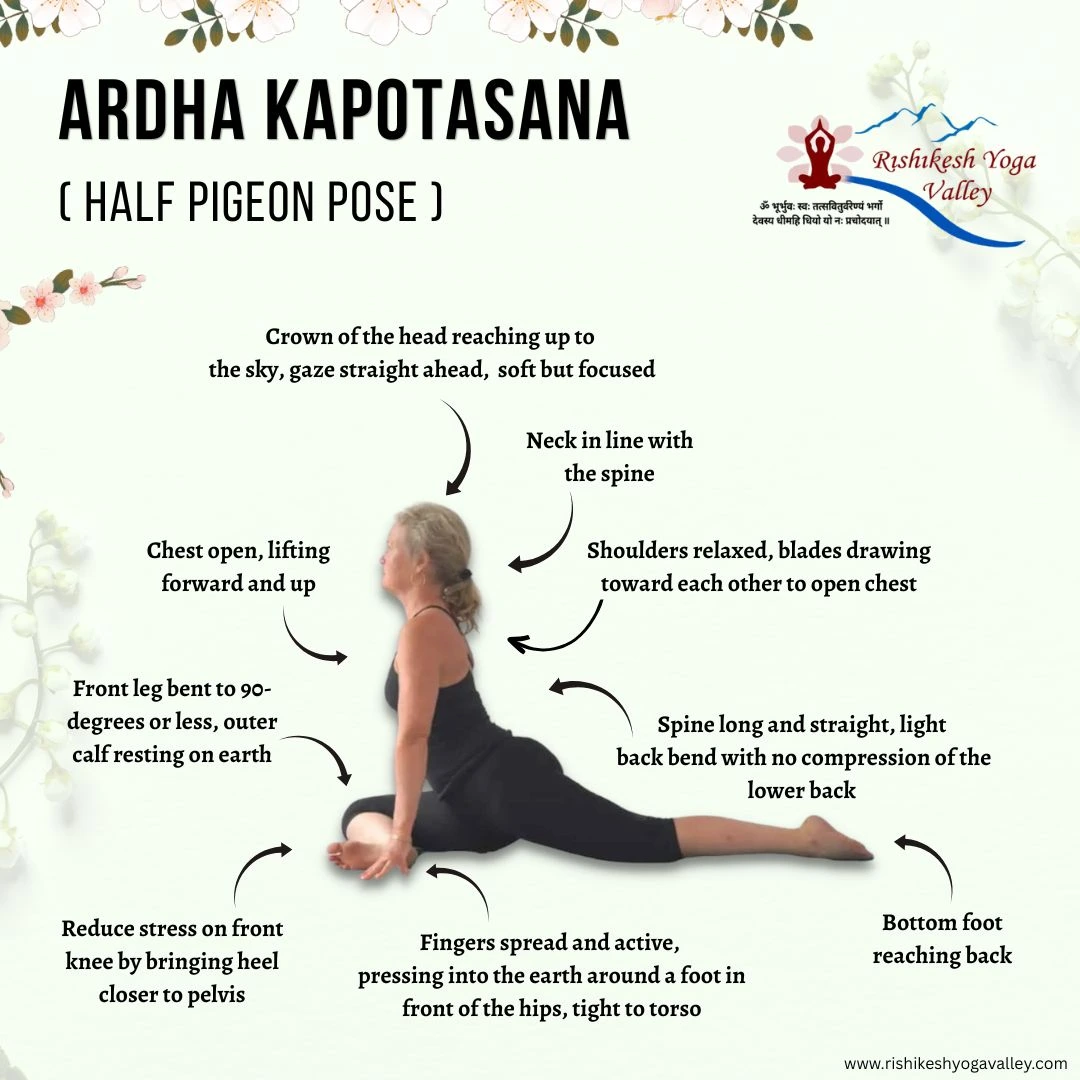
Half Pigeon Pose is one of the most effective yoga postures for opening tight hips, improving flexibility, and calming the nervous system. This deep hip-opening stretch targets the hips, thighs, glutes, and lower back while encouraging relaxation and emotional release.
Modern lifestyles often involve long hours of sitting, which can create stiffness in the hips and spine. Practicing Half Pigeon Pose regularly helps release this built-up tension while improving posture and mobility.
In this guide, we’ll explore how to practice Half Pigeon Pose safely, its benefits, modifications, contraindications, and common mistakes to avoid.
What is Half Pigeon Pose?
Half Pigeon Pose is a beginner-friendly variation of Pigeon Pose (Eka Pada Rajakapotasana).
In this posture:
- One leg folds forward beneath the torso
- The opposite leg extends straight behind
- The hips gently open while the spine lengthens
The pose creates a deep stretch in the glutes, hip flexors, thighs, and lower back. Because it encourages stillness and deep breathing, it’s also known for its calming and grounding effects.
Half Pigeon is often practiced in:
- Hatha Yoga
- Yin Yoga
- Vinyasa Yoga
- Restorative Yoga
It’s also sometimes called Sleeping Pigeon Pose when the torso folds forward over the front leg.
How to Do Half Pigeon Pose
Follow these simple steps to practice Half Pigeon safely and comfortably.
Step 1: Start in Tabletop Position
Come onto your hands and knees with:
- Hands directly under shoulders
- Knees directly under hips
Step 2: Bring One Knee Forward
Bend your right knee and slide it toward your right wrist.
Position the shin at a comfortable angle. It does not need to be perfectly parallel to the front of the mat.
Step 3: Extend the Back Leg
Slide your left leg straight behind you with the top of the foot resting on the mat.
Step 4: Level the Hips
Try to keep your hips evenly balanced rather than collapsing onto one side.
If your hip lifts off the floor, place a yoga block or folded blanket underneath for support.
Step 5: Lengthen the Spine
Place your hands beside your hips and gently lift through the chest.
Step 6: Fold Forward (Optional)
For a deeper stretch:
- Walk your hands forward
- Lower onto your forearms
- Rest your forehead on the floor or a block
Step 7: Hold and Breathe
Stay in the pose for 3–5 deep breaths or longer if comfortable.
Step 8: Release and Switch Sides
Press into your hands, return to Tabletop or Downward Dog, and repeat on the other side.
Benefits of Half Pigeon Pose
Regular practice of Half Pigeon Pose offers both physical and mental benefits.
1. Opens Tight Hips
The pose deeply stretches the glutes, hip flexors, and outer hips, helping reduce stiffness from sitting or exercise.
2. Improves Flexibility
Half Pigeon increases flexibility in:
- Hips
- Thighs
- Groin
- Glutes
3. Relieves Lower Back Tension
Tight hips often contribute to lower back discomfort. This pose helps release that tension.
4. Enhances Hip Mobility
Improved mobility supports better posture, walking, running, and overall movement.
5. Calms the Nervous System
Forward folding and deep breathing encourage relaxation and stress relief.
6. Improves Circulation
The stretch promotes healthy blood flow throughout the hips and lower body.
7. Supports Better Posture
Opening the hips and lengthening the spine can improve overall body alignment.
8. Prepares for Advanced Yoga Poses
Half Pigeon helps prepare the body for deeper hip-opening poses like Lotus Pose.
Chakra Connection
Half Pigeon Pose is commonly associated with the Sacral Chakra (Svadhisthana).
This chakra relates to:
- Creativity
- Emotional balance
- Pleasure
- Passion
- Connection
Practicing hip-opening poses like Half Pigeon may help release emotional tension and encourage greater openness and creativity.
Beginner Modifications
Half Pigeon can feel intense at first, especially for tight hips. These modifications make the pose more comfortable.
Use a Yoga Block
Place a block or folded blanket beneath the hip of the bent leg to support alignment.
Keep the Front Foot Closer
Bringing the front heel closer to the body reduces intensity on the hips and knees.
Stay Upright
Instead of folding forward, remain seated upright to lessen the stretch.
Practice Reclined Figure Four
If Pigeon feels uncomfortable, try a reclined figure four stretch for a gentler hip opener.
Use Bolsters or Pillows
Rest your chest or forehead on props for a restorative variation.
Common Mistakes to Avoid
Forcing the Front Knee
Avoid trying to create a perfect 90-degree angle if your hips are tight.
Collapsing Onto One Hip
Try to keep both hips balanced evenly on the mat.
Rounding the Spine
Lengthen the spine before folding forward.
Ignoring Knee Pain
Hip stretching is normal, but sharp knee pain is not. Exit the pose immediately if discomfort occurs.
Holding the Breath
Steady breathing helps muscles relax safely into the stretch.
Contraindications
Avoid or modify Half Pigeon Pose if you have:
- Knee injuries
- Hip injuries
- Acute sciatica pain
- Recent surgery involving the hips, back, or legs
- Severe lower back pain
Always practice mindfully and consult a qualified yoga teacher if needed.
Tips for Safe Practice
- Warm up the hips before entering the pose
- Engage the front foot slightly to protect the knee
- Move slowly into the posture
- Never force flexibility
- Use props freely for support
- Focus on steady, relaxed breathing
How to Add Half Pigeon Pose to Your Practice
After Standing Sequences
It works well after lunges or standing poses to release hip tension.
During Yin Yoga
Holding the pose longer encourages deeper relaxation and connective tissue release.
After Exercise
Runners and athletes often use Half Pigeon to stretch the hips and glutes.
Before Meditation
Opening the hips can make seated meditation more comfortable.
Deepen Your Practice Beyond Half Pigeon Pose
Final Thoughts
Half Pigeon Pose is one of the most beneficial yoga postures for releasing tight hips, improving flexibility, and calming the mind. Whether practiced as an active stretch or a restorative posture, it offers powerful physical and emotional benefits.
Remember that flexibility develops gradually. Use props when needed, breathe deeply, and allow your body to open naturally over time. With regular practice, Half Pigeon Pose can become an essential part of a balanced and relaxing yoga routine.