Yoga helps build strength, flexibility, balance, and mindfulness through movement and breath. Among the many standing yoga poses, Parivrtta Utkatasana, also known as Revolved Chair Pose or Twisting Chair Pose, is a powerful posture that combines balance, core strength, and spinal mobility.
This energizing twisting pose strengthens the legs while deeply rotating the spine and stimulating the abdominal organs. It challenges concentration and stability, making it a wonderful posture for developing endurance and body awareness.
In this blog, we’ll explore the meaning of Parivrtta Utkatasana, how to practice it safely, its benefits, modifications, common mistakes, and precautions.
What is Parivrtta Utkatasana?
The Sanskrit name Parivrtta Utkatasana can be broken down into:
- Parivrtta = Revolved or twisted
- Utkata = Fierce or powerful
- Asana = Pose
Together, the pose translates to Revolved Chair Pose.
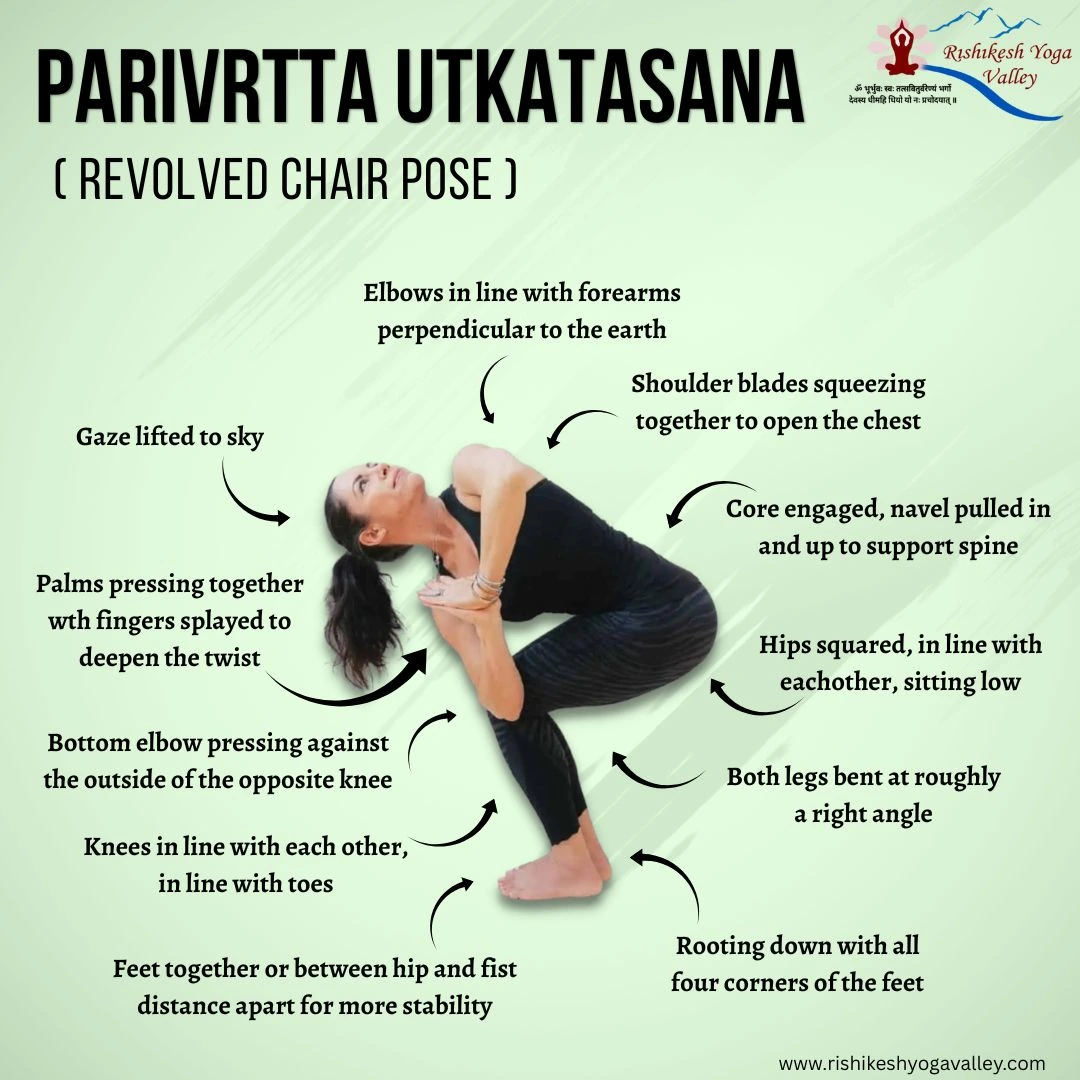
Parivrtta Utkatasana is a twisting variation of Chair Pose where the torso rotates to one side while maintaining a seated squat position. The posture combines the strengthening benefits of Utkatasana with the detoxifying effects of a spinal twist.
This pose activates the legs, core, and back muscles while improving spinal flexibility and balance.
How to Do Parivrtta Utkatasana
Follow these step-by-step instructions to practice Revolved Chair Pose safely and effectively.
1. Start in Mountain Pose
Stand tall with your feet together or hip-width apart if you need more stability. Keep your spine long and arms relaxed beside the body.
2. Move into Chair Pose
Bend your knees and sink your hips back as though sitting in an imaginary chair. Keep your chest lifted and your weight in the heels.
3. Bring Hands to Prayer Position
Place your palms together at your heart center in Anjali Mudra (Prayer Position).
4. Twist the Torso
Inhale to lengthen your spine. Exhale and twist your torso to the right, bringing your left elbow to the outside of your right thigh.
5. Press and Rotate
Press your palms firmly together and use the elbow against the thigh to deepen the twist gently. Keep both knees aligned and hips level.
6. Extend the Spine
With every inhale, lengthen through the spine. With every exhale, deepen the twist slightly without forcing the movement.
7. Hold the Pose
Maintain the pose for 5–8 breaths while keeping the legs active and the core engaged.
8. Return to Center
Inhale back to Chair Pose and repeat on the opposite side.
Benefits of Parivrtta Utkatasana
Practicing Revolved Chair Pose regularly offers many physical and mental benefits.
Strengthens the Legs and Core
The pose builds strength in the thighs, glutes, calves, and abdominal muscles while improving overall endurance.
Improves Spinal Mobility
The twisting action increases flexibility in the spine and helps release tension from the back and shoulders.
Stimulates Digestion
Twisting yoga poses gently massage the abdominal organs, supporting digestion and detoxification.
Enhances Balance and Stability
Maintaining the posture improves coordination, concentration, and body awareness.
Improves Posture
Parivrtta Utkatasana strengthens the muscles that support proper spinal alignment and posture.
Boosts Energy Levels
The pose increases circulation and activates the nervous system, helping energize the body and mind.
Encourages Focus and Mindfulness
Balancing in a twist requires concentration and controlled breathing, promoting mental clarity and mindfulness.
Beginner Tips for Revolved Chair Pose
Keep the Knees Even
Avoid letting one knee move forward more than the other. Keep the legs aligned for stability.
Twist from the Upper Back
Focus on rotating from the thoracic spine instead of forcing the lower back.
Use Hip-Width Feet
If balancing feels difficult, separate the feet hip-width apart for better support.
Keep the Spine Long
Lengthen the spine before twisting to avoid collapsing the chest.
Move Slowly
Enter the twist gradually while maintaining steady breathing.
Modifications for Beginners
Hands at the Heart
Keep palms pressed together at the chest instead of extending the arms.
Use a Yoga Block
Place a block under the lower hand if reaching the floor feels difficult.
Reduce the Depth of the Twist
A smaller twist can still provide benefits while maintaining comfort and stability.
Practice Near a Wall
Use a wall for support if balance feels challenging.
Common Mistakes to Avoid
Collapsing the Chest
Avoid rounding the upper back. Keep the chest open and lifted.
Letting the Knees Separate
Keep both knees aligned and pointing forward.
Holding the Breath
Maintain slow and steady breathing throughout the pose.
Twisting Too Deeply
Forcing the twist may strain the spine or knees. Move gently and mindfully.
Shifting Weight into the Toes
Keep the majority of your weight in the heels to protect the knees.
Contraindications and Precautions
Avoid or modify Parivrtta Utkatasana if you have:
- Knee injuries
- Hip injuries
- Severe lower back pain
- Spinal injuries
- High or low blood pressure
- Insomnia
- Chronic headaches
Pregnant individuals should avoid deep twists or practice only under professional guidance.
Always listen to your body and avoid pushing into discomfort or pain.
Preparatory Poses
These poses help prepare the body for Revolved Chair Pose:
- Mountain Pose (Tadasana)
- Chair Pose (Utkatasana)
- Cat-Cow Stretch
- Standing Forward Fold
- Low Lunge Twist
Counter Poses
After practicing Parivrtta Utkatasana, try these relaxing poses:
- Standing Forward Fold
- Child’s Pose
- Supine Twist
- Mountain Pose
Deepen Your Practice Beyond Parivrtta Utkatasana
Final Thoughts
Parivrtta Utkatasana is a powerful yoga posture that combines strength, balance, flexibility, and mindfulness into one dynamic pose. While it can feel challenging initially, regular practice improves stability, spinal mobility, and concentration.
The key to mastering Revolved Chair Pose is patience, controlled breathing, and proper alignment. Focus on maintaining a long spine, grounded legs, and gentle twists rather than forcing the posture.
With consistent practice, Parivrtta Utkatasana can become an energizing and transformative part of your yoga routine.