
Yoga is not only about building strength and flexibility—it’s also about developing awareness, balance, and humility. One beautiful posture that combines grounding strength with deep surrender is Humble Warrior, also known as Baddha Virabhadrasana.
This powerful standing yoga pose stretches the shoulders and hips while strengthening the legs and improving focus. As the torso folds forward and the hands extend behind the body, the posture encourages introspection, calmness, and stability.
Note: Standing postures like Humble Warrior are often introduced progressively so practitioners can develop proper alignment, balance, and breath awareness. Learning these foundations under experienced guidance helps build confidence and reduces the risk of injury as the practice becomes more advanced: Yoga Teacher Training in Rishikesh
In this blog, we’ll explore what Humble Warrior is, how to practice it safely, its benefits, variations, precautions, and common mistakes to avoid.
What is Humble Warrior (Baddha Virabhadrasana)?
The Sanskrit name Baddha Virabhadrasana can be broken down into:
- Baddha = Bound
- Virabhadra = Warrior
- Asana = Pose
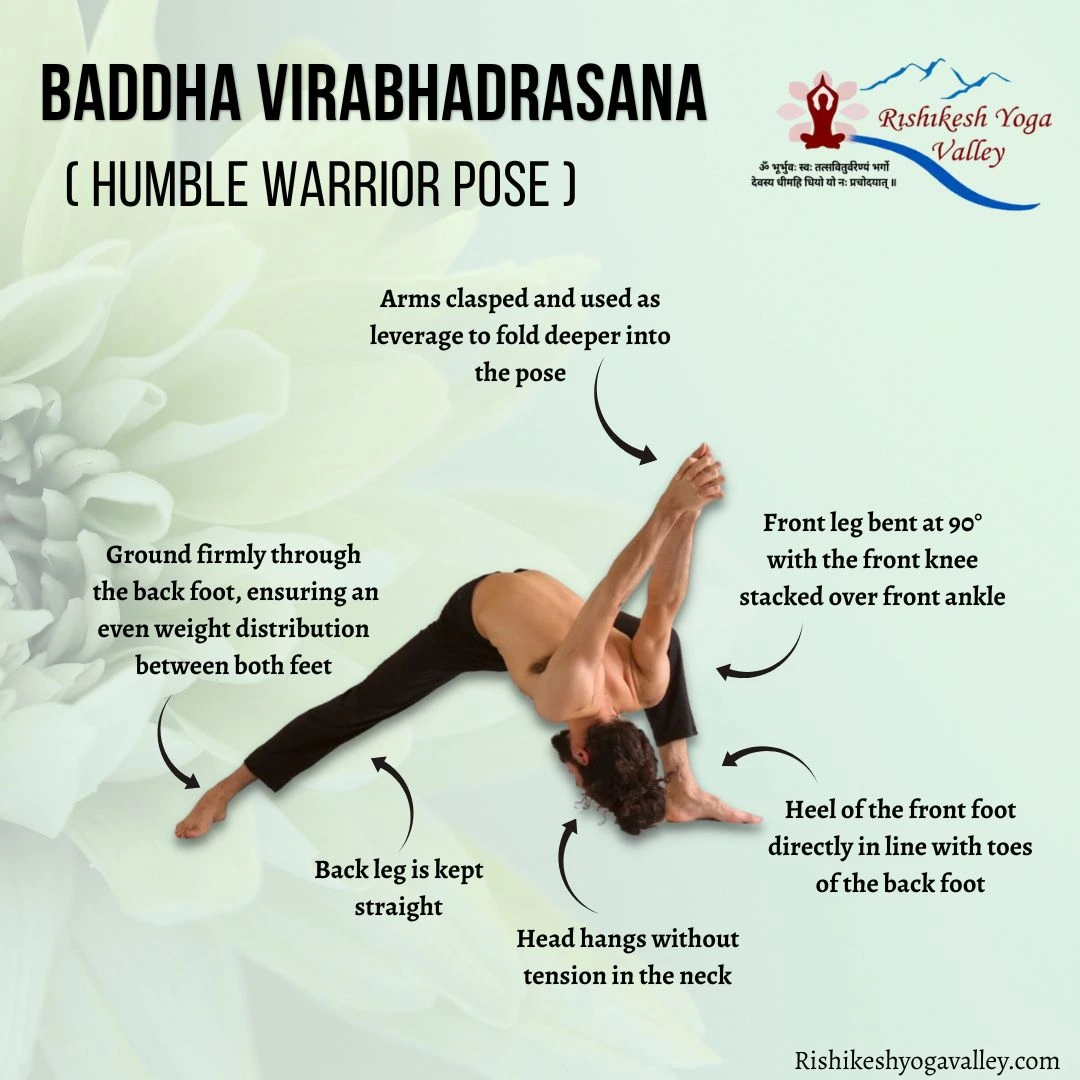
Humble Warrior is a variation of Warrior I where the hands are clasped behind the back and the torso folds forward inside the front leg. The pose symbolizes both strength and surrender, combining the stability of a warrior stance with the humility of a forward fold.
This posture requires balance, concentration, flexibility, and lower-body strength, making it an energizing and grounding addition to any yoga practice.
How to Do Humble Warrior
Follow these steps to practice Humble Warrior safely and effectively:
1. Start in Mountain Pose
Stand tall with your feet together and arms relaxed beside your body. Distribute your weight evenly through both feet.
2. Step Back into Warrior I
Step your left foot back about 4–5 feet. Turn the back foot slightly outward at a 45-degree angle while keeping the front foot facing forward.
3. Align the Hips
Square your hips toward the front of the mat as much as possible.
4. Bend the Front Knee
Bend your right knee until it stacks above your ankle, creating a strong Warrior I foundation.
5. Engage the Legs
Press firmly into the outer edge of the back foot and engage the back leg muscles for stability.
6. Lift the Arms
Inhale and raise your arms overhead, lengthening through the spine and opening the chest.
7. Interlace the Fingers
Bring your hands behind your back and interlace your fingers. Press the palms together if accessible.
8. Open the Chest
Lift your chest gently and draw your shoulder blades toward each other.
9. Fold Forward
Exhale and hinge from the hips, folding your torso forward inside the front thigh while lifting your clasped hands upward.
10. Relax the Neck
Allow your head and neck to soften while keeping the legs strong and grounded.
11. Hold the Pose
Stay in the pose for 5–8 deep breaths, maintaining steady breathing and balance.
12. Release Slowly
Inhale to lift your torso back up, release the hands, straighten the front leg, and return to Mountain Pose before switching sides.
Benefits of Humble Warrior
Regular practice of Humble Warrior offers many physical and mental benefits.
Strengthens the Legs
The strong Warrior stance tones the thighs, calves, ankles, and glutes while improving endurance.
Opens the Shoulders and Chest
Clasping the hands behind the back creates a deep stretch across the shoulders, chest, and arms.
Improves Balance and Stability
The forward fold challenges coordination and helps improve balance and body awareness.
Enhances Hip Flexibility
The posture stretches the hips and groin, improving lower-body mobility.
Activates the Core
Maintaining stability in the fold requires engagement of the abdominal and lower back muscles.
Encourages Calmness and Focus
The introspective nature of the pose promotes mindfulness, concentration, and emotional grounding.
Note: Combining standing postures with meditation and mindful breathing can deepen mental clarity while helping practitioners cultivate greater emotional balance: Meditation Retreat in Rishikesh
Increases Circulation
The forward fold and strong stance help improve circulation and energize the body.
Variations and Modifications
Humble Warrior can be modified to suit different flexibility and experience levels.
Use a Strap
Note: Beginners often benefit from learning modifications before progressing into deeper variations, allowing flexibility and confidence to develop gradually: 100 Hour Yoga Teacher Training in Rishikesh
If your hands do not comfortably clasp behind your back, hold a yoga strap or towel between your hands.
Wider Stance
Take a slightly wider stance for better balance and stability.
Supported Head
Place a yoga block under your head for support if the forward fold feels too intense.
Hands on Hips
If shoulder mobility is limited, keep your hands on your hips while folding forward.
Gentle Fold
Avoid folding too deeply if you experience tightness in the hamstrings or lower back.
Common Mistakes to Avoid
Collapsing the Chest
Keep the chest broad and avoid rounding the upper back while folding.
Losing Balance
Ground firmly through both feet and keep your weight evenly distributed.
Front Knee Moving Past the Ankle
Ensure the front knee stays aligned above the ankle to protect the joint.
Twisting the Hips
Try to keep the hips square toward the front of the mat.
Locking the Back Knee
Keep the back leg active without hyperextending the knee.
Forcing the Shoulder Stretch
Only lift the arms as high as comfortable without straining the shoulders.
Tips for Safe Practice
- Warm up the hips, shoulders, and hamstrings before practicing.
- Engage your core for balance and lower back support.
- Focus on lengthening the spine before folding.
- Keep steady and relaxed breathing throughout the pose.
- Use props when needed to maintain proper alignment.
- Move slowly and mindfully into and out of the posture.
Working with experienced instructors can help refine alignment, improve body awareness, and ensure that each posture is practiced safely according to individual ability: Rishikesh Yoga Valley
Contraindications and Precautions
Avoid or modify Humble Warrior if you have:
- Shoulder injuries
- Severe lower back pain
- Hip injuries
- High blood pressure
- Heart conditions
- Balance disorders
If you have any medical concerns, consult a healthcare professional or experienced yoga teacher before practicing.
Exploring these sequences in a structured yoga program helps practitioners understand how individual postures are connected to create safe, balanced, and effective classes: 300 Hour Yoga Teacher Training in Rishikesh
How to Add Humble Warrior to Your Yoga Practice
Humble Warrior fits beautifully into many yoga sequences, including:
- Standing yoga flows
- Warrior sequences
- Hip-opening practices
- Heart-opening sequences
- Strength and balance routines
It pairs well with poses like Warrior I, Triangle Pose, Downward Dog, and Pyramid Pose.
Exploring these sequences in a structured yoga program helps practitioners understand how individual postures are connected to create safe, balanced, and effective classes: 300 Hour Yoga Teacher Training in Rishikesh
Deepen Your Yoga Practice Beyond Baddha Virabhadrasana
Final Thoughts
Humble Warrior, or Baddha Virabhadrasana, is a powerful blend of strength, surrender, balance, and awareness. While the legs work strongly to support the posture, the forward fold encourages calmness, humility, and introspection.
Like all yoga poses, Humble Warrior is not about perfection—it’s about creating connection between breath, body, and mind. Practice patiently, respect your body’s limits, and allow the pose to gradually deepen over time.
Note: If you’d like to deepen your yoga practice beyond individual postures, learning in the traditional setting of Rishikesh offers an opportunity to study asana, pranayama, meditation, philosophy, and mindful living in an immersive environment: Rishikesh Yoga Valley
Step onto your mat, ground through your feet, open your heart, and experience the steady strength and quiet humility of Humble Warrior.