
If you’re asking “How difficult is a 200 Hour Yoga Teacher Training?”, you’re probably feeling excited and slightly nervous at the same time. That’s completely normal.
For many people, enrolling in a yoga teacher training is more than booking a course—it’s investing several weeks of their time, traveling to a new place, and stepping outside their daily routine. Naturally, they wonder whether they’ll be physically capable, mentally prepared, or experienced enough to keep up with the classes.
After spending years around yoga teacher training programs in Rishikesh, we’ve noticed something interesting.
The people who worry the most before arriving are rarely the ones who struggle the most during the course.
Instead, it’s usually the students who underestimate the commitment—thinking they’ll simply attend a few yoga classes, relax by the Ganga, and receive a certificate—who find the experience more demanding than expected.
The truth lies somewhere in the middle.
A 200 Hour Yoga Teacher Training is challenging, but it isn’t designed to defeat you.
It’s designed to gradually reshape the way you practice, think, breathe, study, and understand yoga.
That process naturally requires discipline.
But difficulty doesn’t always come from advanced postures or exhausting workouts.
Sometimes it comes from waking up before sunrise every day.
Sometimes it’s sitting quietly during meditation for longer than you’ve ever done before.
Sometimes it’s learning to slow down in a world that constantly encourages you to speed up.
If you’re considering joining a Yoga Teacher Training in Rishikesh, this guide will give you an honest picture of what actually feels difficult, what surprises most students, and why thousands of complete beginners successfully finish the course every year.
The Short Answer: Yes, It's Challenging—But Probably Not for the Reasons You Think
Let’s answer the question immediately.

Yes.
A 200 Hour Yoga Teacher Training is challenging.
But it’s probably not difficult in the way many people imagine.
Many first-time students assume they’ll spend the entire day attempting advanced poses or balancing on their hands.
That rarely reflects reality.
Instead, the challenge comes from consistency.
You’ll practice every day.
You’ll study subjects you’ve probably never explored before.
You’ll follow a structured schedule.
You’ll spend time reflecting on yourself.
You’ll likely experience physical soreness during the first week.
And you’ll be asked to stay present, even when your mind wants to wander.
These are very different challenges from lifting heavier weights at the gym or completing a marathon.
Yoga teacher training is less about proving how strong you are and more about learning how consistently you can show up.
That distinction surprises many students.
Who Usually Finds a 200 Hour Yoga Teacher Training Difficult?
One of the biggest misconceptions is that flexibility determines success.
It doesn’t.
Over the years, we’ve seen students arrive with years of gym experience who found meditation surprisingly difficult.
We’ve also seen beginners who couldn’t comfortably touch their toes complete the course with confidence because they stayed curious and committed.
From experience, these groups often face different challenges.
Complete Beginners
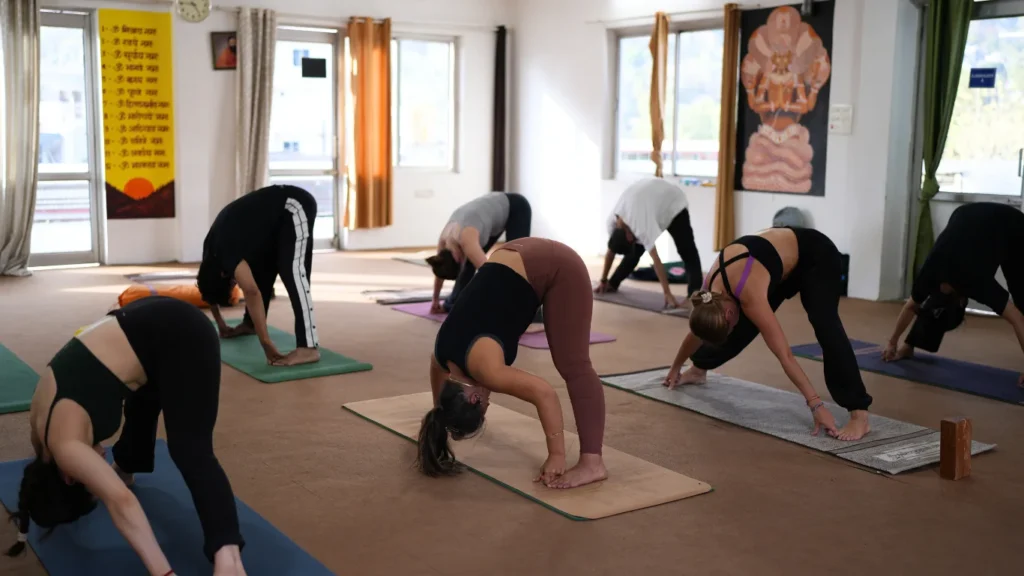
Beginners often worry they’ll fall behind.
In reality, most schools expect beginners to join.
The first few days can feel overwhelming because everything is new.
You’ll hear unfamiliar Sanskrit words.
You’ll learn breathing techniques.
You’ll attend philosophy classes.
You’ll practice postures that may feel awkward initially.
The learning curve is steep—but it’s also expected.
No teacher assumes beginners should know everything on Day One.
People with Extremely Busy Lifestyles
Many students come from demanding careers.
Doctors.
Engineers.
Corporate professionals.
Business owners.
The biggest adjustment isn’t yoga itself.
It’s slowing down.
Imagine going from checking your phone every ten minutes to spending an hour focusing only on your breath.
That shift can feel surprisingly uncomfortable.
Yet, after a week or two, many students say it’s one of the most valuable parts of the entire training.
Fitness Enthusiasts
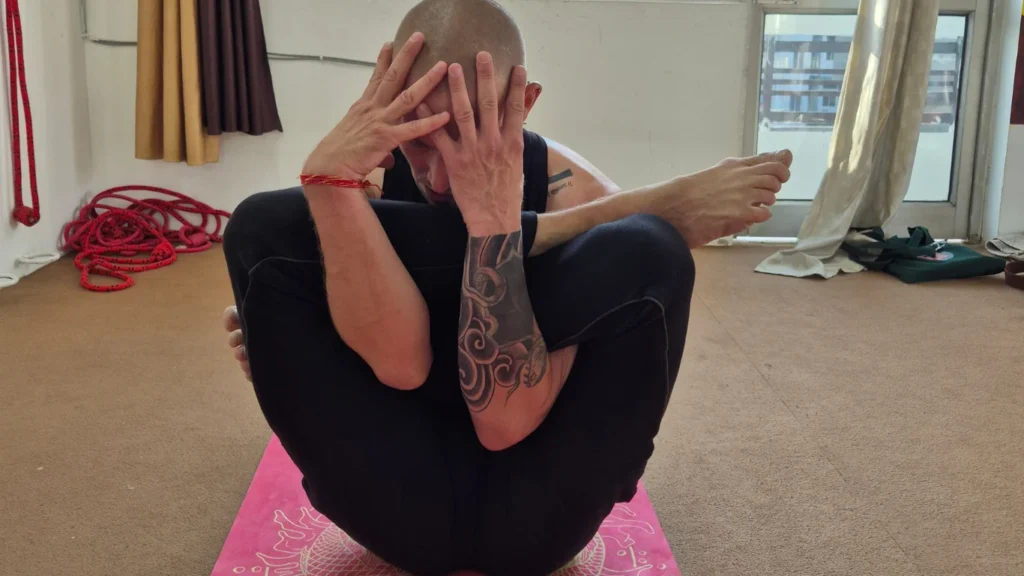
Strong athletes sometimes assume they’ll progress quickly because they’re already fit.
Physically, they often adapt well.
Mentally, yoga can ask something entirely different.
Instead of pushing harder, yoga often asks you to soften.
Instead of competing, it asks you to observe.
Instead of chasing the next achievement, it encourages patience.
For people used to measuring success through performance, this change in mindset can take time.
Students Over 50
Age is one of the most common concerns we hear.
The honest answer?
Age matters far less than consistency.
We’ve seen students in their twenties struggle because they expected quick results.
We’ve also seen students in their fifties and sixties steadily improve because they listened carefully, respected their bodies, and practiced without comparing themselves to others.
Yoga has never been about competing with the youngest person in the room.
What Does a Typical Day During a 200 Hour Yoga Teacher Training Actually Look Like?
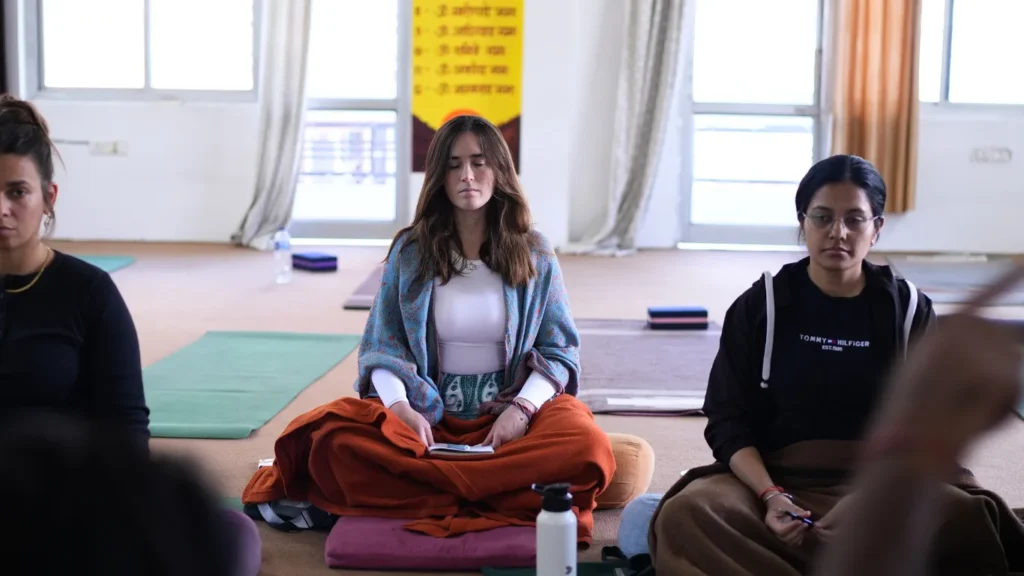
One reason people imagine the course is impossibly difficult is because they don’t know what a normal day looks like.
While every yoga school follows its own schedule, most traditional programs in Rishikesh have a similar rhythm.
A typical day may include:
- Early morning meditation or pranayama
- Hatha yoga practice
- Breakfast
- Yoga philosophy
- Anatomy and physiology
- Teaching methodology
- Alignment and adjustment practice
- Ashtanga or Vinyasa practice
- Self-study or homework
- Dinner
- Personal reflection or rest
At first glance, it looks like a long day.
And it is.
But here’s something interesting that many graduates mention afterward.
The routine itself becomes one of the easiest parts.
When your days follow a predictable rhythm, you stop making hundreds of small decisions.
You simply wake up, attend class, eat nourishing meals, study, practice, and rest.
Many students say they haven’t followed such a healthy routine in years.
The Physical Challenges Nobody Talks About
When people think about difficulty, they immediately picture advanced yoga poses.
Ironically, that’s rarely what students complain about.
Instead, these are the physical challenges we hear most often.
Sitting for Long Periods
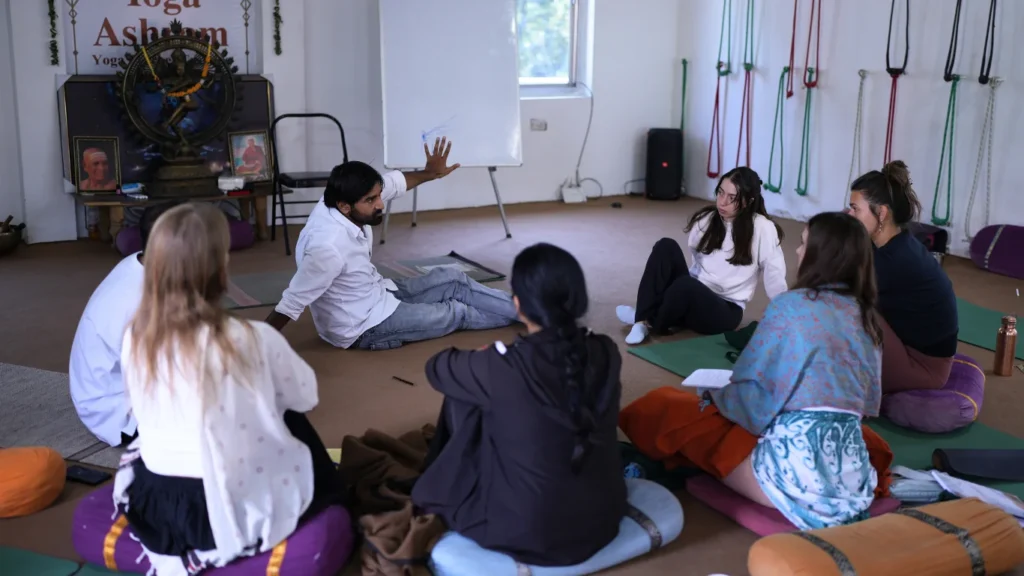
Many philosophy and anatomy classes require students to sit attentively for extended periods.
If you’re used to office chairs, sitting cross-legged on the floor may feel uncomfortable during the first few days.
Fortunately, most schools allow cushions, blankets, or blocks to support comfortable sitting.
As your hips gradually open and your posture improves, this becomes much easier.
Muscle Soreness During the First Week
Practicing yoga every day is different from attending two or three weekly classes.
Even students who exercise regularly often experience soreness during the first week.
That’s completely normal.
The body is adapting to consistent movement rather than occasional exercise.
By the second week, most students notice that recovery becomes much faster.
Early Morning Classes
For many international students, waking up before sunrise becomes one of the biggest adjustments.
This challenge isn’t about fitness.
It’s about routine.
Jet lag, travel fatigue, and adjusting to a different time zone can make the first few mornings feel demanding.
Thankfully, the body usually adapts surprisingly quickly.
Learning to Respect Your Limits
Perhaps the biggest physical lesson isn’t becoming more flexible.
It’s recognizing when to pause.
One mistake beginners sometimes make is trying to match the strongest student in the room.
Experienced teachers encourage the opposite.
Yoga isn’t about proving your ability.
It’s about practicing safely enough that you can return the next day feeling stronger rather than injured.
That lesson often stays with students long after the course ends.
The Mental Challenge Is Often Harder Than the Physical One
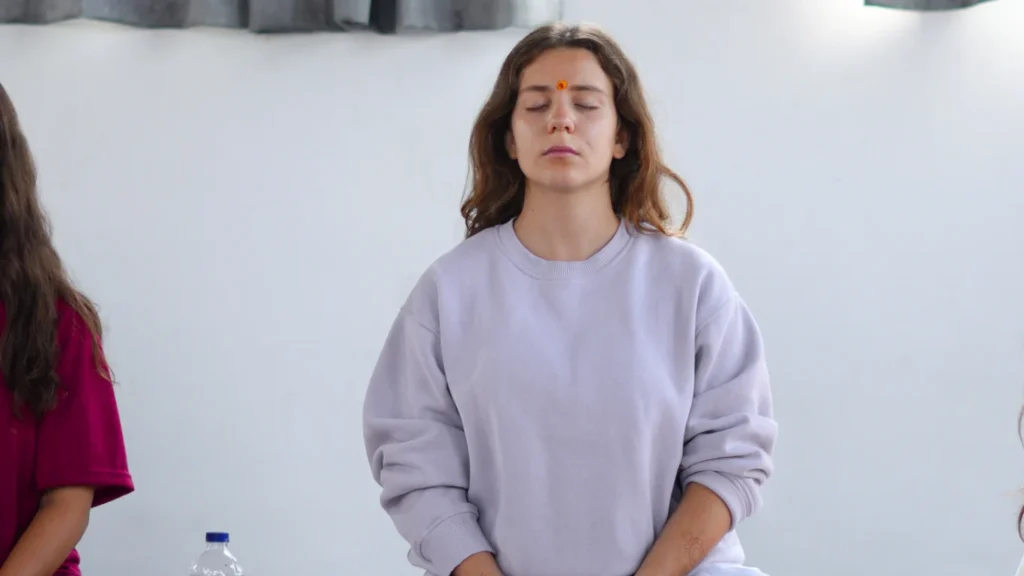
This surprises almost everyone.
Many students arrive expecting sore muscles.
Very few expect their minds to become the biggest challenge.
During training, you’ll likely spend more time with yourself than you normally do.
Without the usual distractions of work, social media, commuting, and daily responsibilities, thoughts that are normally buried often rise to the surface.
Some students become impatient.
Others begin questioning themselves.
A few feel homesick during the first week.
None of these experiences mean you’re failing.
In fact, they’re remarkably common.
Yoga teacher training isn’t only about improving your downward-facing dog.
It’s also about becoming more aware of how your mind reacts to discomfort, uncertainty, routine, silence, and change.
That awareness can be challenging.
But it’s also one of the reasons so many graduates describe the experience as life-changing—not because life suddenly becomes easier, but because they learn to respond to challenges differently.
The Subjects Students Usually Find Most Challenging
When people think about yoga teacher training, they often imagine long hours of physical practice. In reality, the academic side of the course surprises many students just as much.
You don’t need a background in biology or philosophy to succeed, but you do need curiosity and a willingness to learn.
Let’s look at the areas that students commonly find challenging.
Yoga Philosophy
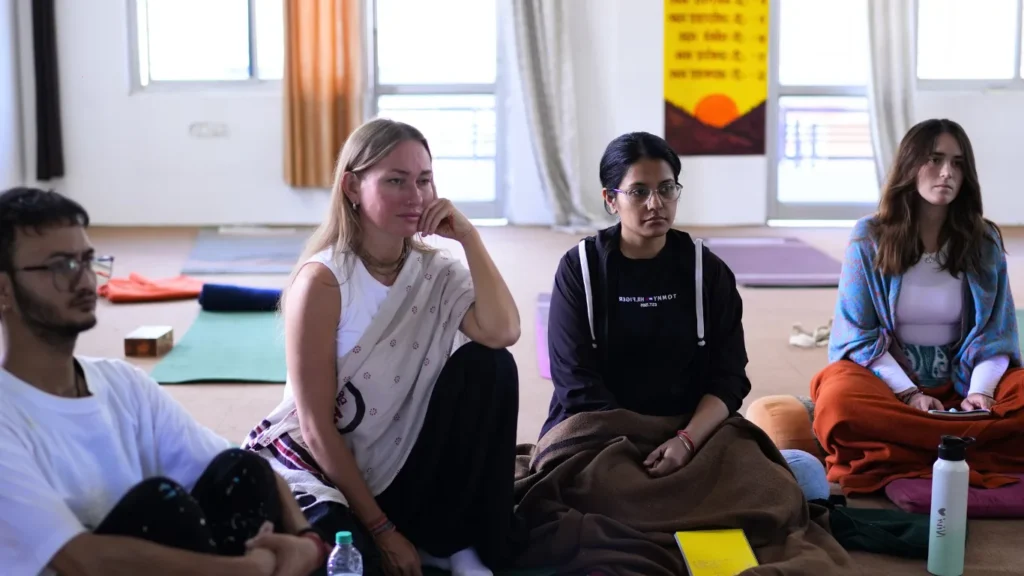
For many students, yoga philosophy is completely new.
If your understanding of yoga has mainly come from studio classes or fitness videos, concepts from ancient yogic texts may initially feel unfamiliar.
You’ll hear terms like Karma Yoga, Jnana Yoga, Raja Yoga, the Eight Limbs of Yoga, and discussions about the Yoga Sutras of Patanjali.
The challenge isn’t that these ideas are impossible to understand. It’s that they encourage you to think differently.
Instead of asking, “How do I improve this pose?” philosophy often asks, “Why do I practice yoga in the first place?”
For some students, this becomes the most meaningful part of the entire course.
Anatomy and Physiology
Anatomy can seem intimidating at first, especially if you haven’t studied science for years.
Fortunately, most 200-hour yoga teacher training courses don’t expect you to become a medical expert.
Instead, you’ll learn practical knowledge that helps you teach safely.
You’ll begin to understand:
- How common joints move
- Why alignment matters
- Which muscles are active in different postures
- How breathing affects the nervous system
- Basic injury prevention
Students often discover that anatomy becomes much easier once they relate it directly to movement on the yoga mat.
Sanskrit
Many people worry they’ll need to memorize hundreds of Sanskrit words.
Thankfully, that’s not the case.
You’ll become familiar with the names of common postures and a few foundational yoga terms, but no one expects fluency.
Most students naturally remember the words through daily repetition.
By the end of the course, names that once sounded unfamiliar often become part of everyday conversation.
Teaching Your First Class
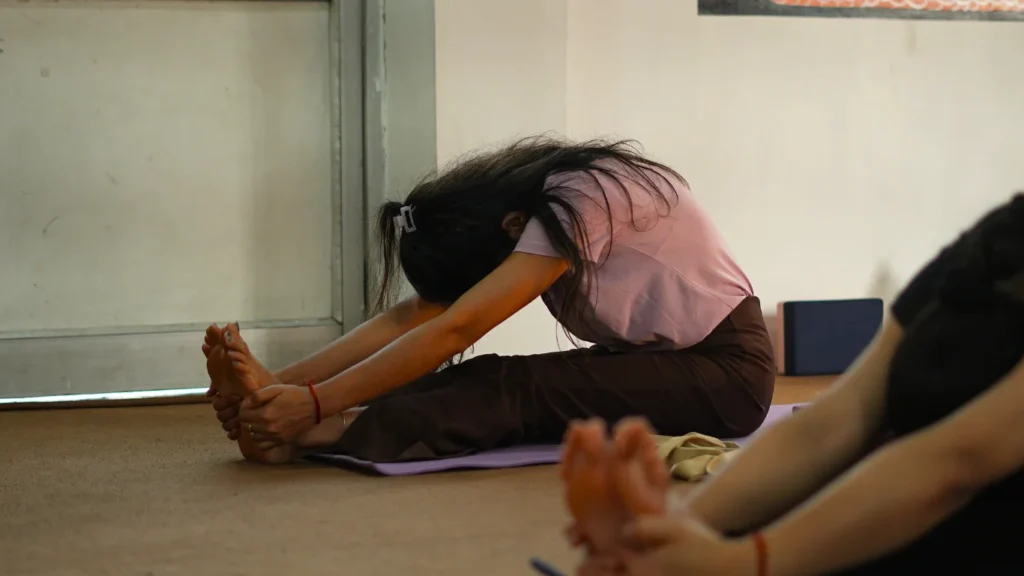
This is the moment that makes many students nervous.
Standing in front of your classmates and guiding a sequence for the first time can feel uncomfortable.
Even students who practice confidently sometimes freeze when they begin teaching.
That nervousness is completely normal.
One of the biggest lessons during yoga teacher training is realizing that becoming a good teacher isn’t about speaking perfectly.
It’s about communicating clearly, observing your students, and creating a safe environment where people feel supported.
Confidence grows through practice—not perfection.
The Biggest Mistakes That Make the Course Feel Harder
Over the years, certain patterns appear again and again.
The students who struggle the most usually aren’t the least flexible or the least experienced.
They’re the ones who unknowingly create unnecessary pressure for themselves.
Here are some of the most common mistakes.
Comparing Yourself to Everyone Else
Every batch includes students with different backgrounds.
Some have practiced yoga for ten years.
Others attended their first class only a few months ago.
If you constantly compare your flexibility, balance, or knowledge with others, the course feels much harder than it needs to.
Yoga is one of the few learning environments where comparison slows progress instead of accelerating it.
Trying to Master Every Pose
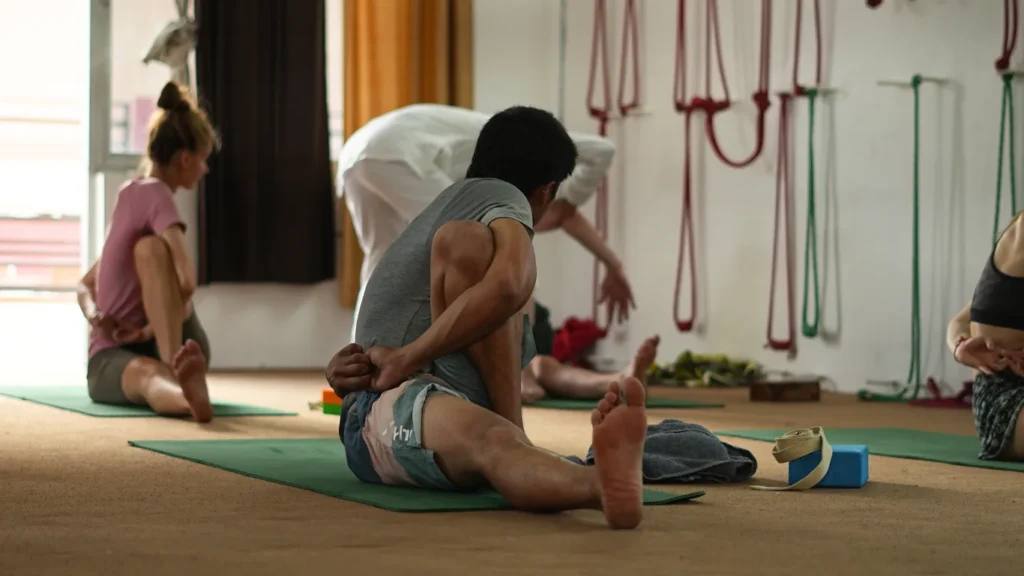
Many students arrive believing they should perfect every posture before graduating.
That’s simply unrealistic.
A 200-hour course is a foundation.
It’s the beginning of your learning—not the finish line.
The goal isn’t to leave as a perfect yogi.
The goal is to leave with safe techniques, deeper understanding, and the confidence to keep learning.
Ignoring Rest
Ironically, students who push themselves through every class without adequate recovery often struggle more.
Your body adapts during rest just as much as during practice.
Sleeping well, staying hydrated, and eating nourishing food are part of the training.
Being Afraid to Ask Questions
The strongest students aren’t always the ones who know the most.
They’re often the ones who ask thoughtful questions.
Every teacher expects students to have doubts.
Whether it’s anatomy, breathing techniques, philosophy, or alignment, asking for clarification helps you grow faster.
How to Prepare Before You Arrive in Rishikesh
You don’t need months of advanced preparation.
Small, consistent habits make a much bigger difference.
Here are a few practical ways to prepare.
- Practice yoga three or four times a week if possible.
- Begin waking up a little earlier each day.
- Walk regularly to improve general fitness.
- Stay hydrated.
- Reduce screen time before bed to improve sleep quality.
- Keep an open mind about learning.
- Read a beginner-friendly introduction to yoga philosophy.
- Arrive with curiosity rather than expectations.
One piece of advice stands out above the rest:
Don’t try to become an expert before the course begins.
That’s exactly what the training is designed to help you achieve.
What We've Observed After Watching Hundreds of Students Train in Rishikesh
One of the privileges of teaching in Rishikesh is meeting students from all over the world.
Some arrive from busy cities where yoga is an evening class squeezed into a hectic schedule.
Others come after months of travelling through India.
A few have dreamed about visiting Rishikesh for years.
Despite their different backgrounds, certain patterns appear again and again.
The students who grow the most aren’t always the youngest.
They’re not always the strongest.
They’re rarely the most flexible.
Instead, they tend to be the students who stay consistent.
They attend every class.
They ask questions.
They laugh when they lose their balance.
They allow themselves to make mistakes without embarrassment.
By the final week, many of them aren’t just performing postures more confidently.
They’re breathing more calmly.
Listening more carefully.
Teaching more naturally.
And carrying themselves with a quiet confidence that wasn’t there on the first day.
Those are changes that can’t be measured by flexibility alone.
So… Is a 200 Hour Yoga Teacher Training Really Difficult?
Here’s the honest answer.
Yes.
It requires commitment.
It requires discipline.
It asks you to wake up early, study consistently, and practice every day.
There will probably be moments when your muscles feel sore.
There may be days when philosophy challenges your thinking more than any yoga posture challenges your body.
You may occasionally wonder whether you’re doing enough.
But difficulty doesn’t mean it’s beyond your ability.
Thousands of students from different countries, professions, age groups, and fitness levels complete a 200-hour yoga teacher training every year.
Most of them don’t succeed because they’re naturally gifted.
They succeed because they keep showing up.
If you’re willing to learn with patience instead of chasing perfection, the course becomes less about surviving the schedule and more about discovering what consistent practice can do.
That’s why many graduates look back and say something similar.
The course wasn’t easy.
But it was absolutely worth it.
Is a 200-hour yoga teacher training suitable for complete beginners?
Yes. Many schools in Rishikesh welcome beginners. You don’t need to master advanced postures before joining. A willingness to learn is far more important than experience.
Do I need to be flexible before joining?
No. Flexibility improves through regular practice. Most teachers focus on safe alignment and steady progress rather than achieving difficult poses.
How many hours do students practice yoga each day?
This varies between schools, but students typically spend several hours each day in practical sessions, along with philosophy, anatomy, meditation, and teaching methodology classes.
Is there an exam at the end of the course?
Most Yoga Alliance–registered schools include practical teaching assessments, written assignments, or both. These evaluations are designed to measure understanding rather than create unnecessary pressure.
What is usually the hardest week?
Many students find the first week the most demanding because they’re adjusting to the schedule, daily practice, and a new environment. Once the routine becomes familiar, the course often feels more manageable.
Can someone over 50 complete a 200-hour yoga teacher training?
Absolutely. Age alone is not a barrier. Consistency, patience, and listening to your body are much more important than your birth date.