
Eagle Pose (Garudasana): Benefits, Steps, and Complete Yoga Guide
What is Eagle Pose (Garudasana)?
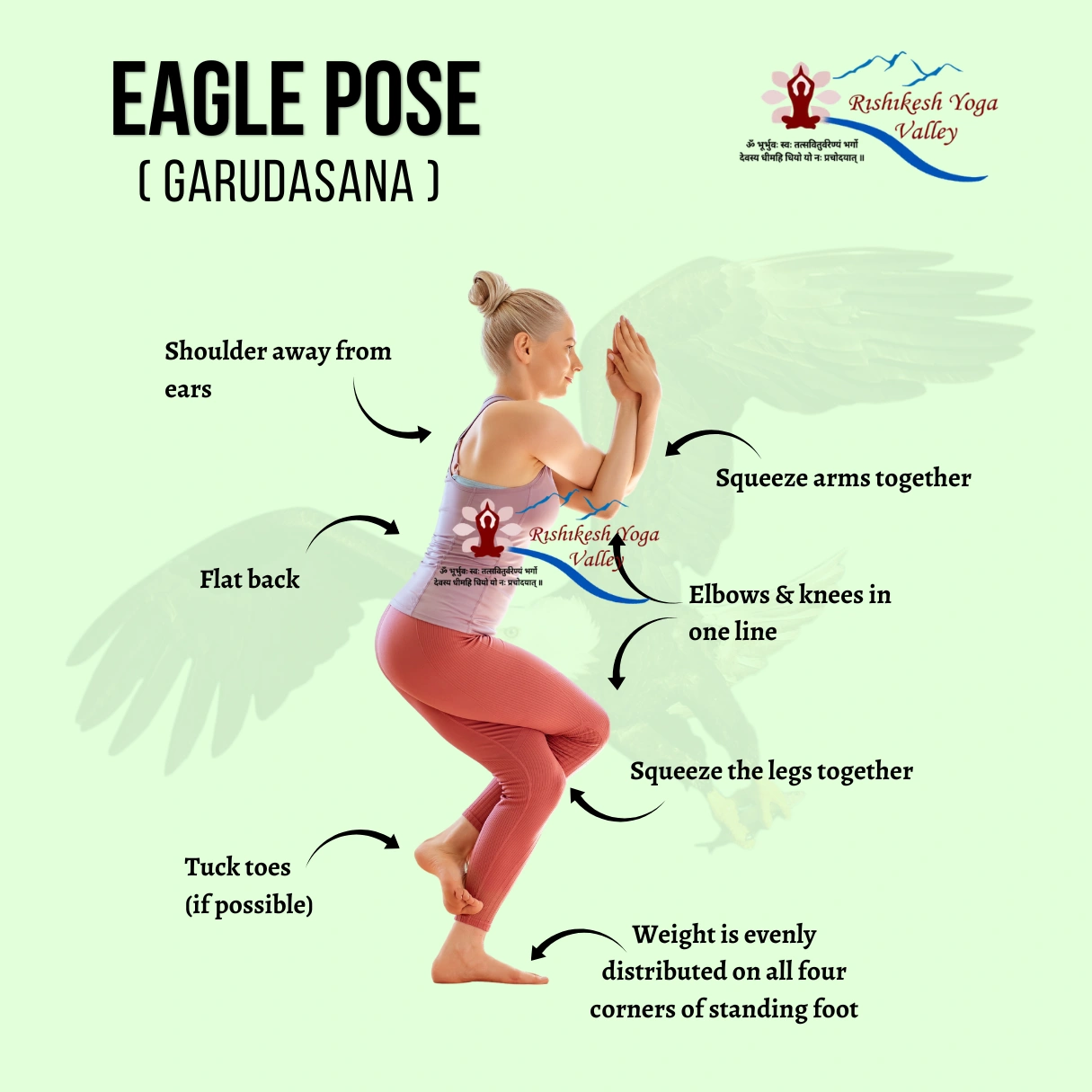
Eagle Pose, traditionally known as Garudasana, is a powerful standing yoga posture that improves balance, concentration, and flexibility. The pose resembles an eagle wrapping its wings and legs around itself, symbolizing strength, awareness, and stability.
The name Garudasana comes from two Sanskrit words:
Garuda – Eagle (the mythical king of birds in Hindu mythology)
Asana – Pose or posture
In yogic philosophy, Garuda represents focus, courage, and power, which are qualities cultivated while practicing this posture.
Unlike many other yoga poses, Garudasana challenges both physical balance and mental concentration, making it an excellent posture for developing body awareness.
Eagle Pose at a Glance
Sanskrit Name: Garudasana
English Name: Eagle Pose
Pose Type: Standing Balance Pose
Difficulty Level: Intermediate
Best Time to Practice: Morning or during yoga flow sequences
Primary Benefits: Balance, flexibility, joint strength, focus
How to Do Eagle Pose (Garudasana) – Step-by-Step
Follow these simple steps to practice eagle pose safely and effectively.
Step 1: Start in Mountain Pose
Stand upright with your feet together and arms relaxed at your sides.
Step 2: Bend Your Knees
Slightly bend both knees while maintaining an upright spine.
Step 3: Wrap the Legs
Lift your right leg and cross it over your left thigh.
If possible, hook your right foot behind the left calf.
Step 4: Wrap the Arms
Extend both arms forward and cross your left arm over your right.
Step 5: Join the Palms
Bend the elbows and bring the palms together so they face each other.
Step 6: Find Your Balance
Keep your gaze fixed on a point in front of you to maintain stability.
Step 7: Hold the Pose
Stay in this position for 20–30 seconds while breathing deeply.
Step 8: Release the Pose
Slowly unwind the arms and legs and return to the starting position.
Repeat on the opposite side.
To learn yoga in depth, explore our courses below.
Duration & Repetitions
Beginners: 15–20 seconds
Intermediate: 30 seconds
Advanced: Up to 1 minute
Repeat 2–3 times on each side for maximum benefits.
Powerful Benefits of Eagle Pose
Practicing Garudasana regularly provides many physical and mental benefits.
1. Improves Balance and Stability
Eagle pose requires standing on one leg, which strengthens stabilizing muscles and enhances body coordination.
2. Strengthens Legs and Ankles
The wrapping motion of the legs works the:
calves
thighs
ankles
knee joints
This helps build strength and endurance in the lower body.
3. Enhances Flexibility
Garudasana deeply stretches:
shoulders
upper back
hips
thighs
This improves joint mobility and flexibility over time.
4. Relieves Shoulder and Upper Back Tension
The arm position stretches muscles between the shoulder blades, helping relieve stiffness caused by poor posture or desk work.
5. Boosts Concentration
Maintaining balance in Eagle Pose demands focus and mindfulness, which helps improve mental clarity and awareness.
6. Improves Blood Circulation
The twisting and compression involved in the pose encourage healthy blood flow throughout the body.
7. Detoxifies the Body
The wrapping action gently compresses internal organs, which may help stimulate circulation and support natural detox processes.
Unique Elements of Garudasana
Garudasana is different from many standing yoga poses because:
✔ It involves simultaneous arm and leg wrapping
✔ It strengthens both upper and lower body
✔ It enhances balance and mental focus
✔ It stretches shoulders, hips, and thighs at the same time
Common Mistakes to Avoid
When practicing eagle pose, avoid these common errors:
Leaning too far forward
Losing alignment of the spine
Holding your breath
Forcing the leg wrap
Always keep your spine upright and breathing steady.
Looking for short yoga program?
Check out below our:
Modifications for Beginners
If the full Eagle Pose feels difficult, try these modifications:
Option 1:
Keep your toes on the floor instead of wrapping the leg fully.
Option 2:
Cross the arms without touching the palms.
Option 3:
Practice near a wall for balance support.
Preparatory Poses
Before practicing Garudasana, try these poses:
Mountain Pose (Tadasana)
Chair Pose (Utkatasana)
Tree Pose (Vrikshasana)
These help build the balance required for Eagle Pose.
Follow-Up Poses
After Garudasana, you may practice:
Standing Forward Bend
Warrior III
Half Moon Pose
These poses help release tension from the legs and hips.
Who Should Avoid Eagle Pose?
Avoid or practice cautiously if you have:
Knee injuries
Ankle injuries
Shoulder injuries
Varicose veins
Severe arthritis
Always practice under the guidance of a qualified yoga instructor if you have medical concerns.
Eagle Pose and Yoga Philosophy
In yogic symbolism, Garuda represents courage, speed, and awareness. Practicing Garudasana encourages practitioners to develop these qualities while maintaining inner balance.
Just like an eagle soaring high in the sky, this pose reminds us to stay focused, stable, and powerful.
FAQs
1. What is Eagle Pose in yoga?
Eagle Pose is a standing balance posture where the arms and legs wrap around each other to improve flexibility, balance, and focus.
2. How long should I hold Eagle Pose?
Beginners can hold the pose for 15–20 seconds, gradually increasing to one minute.
3. Is Eagle Pose good for shoulders?
Yes. It deeply stretches the shoulders and upper back, helping relieve stiffness and tension.
4. Can beginners practice Garudasana?
Yes, beginners can practice it with simple modifications or wall support.
5. What muscles does Eagle Pose work?
It primarily targets the thighs, calves, hips, shoulders, and upper back muscles.
Check out our Retreats in Rishikesh for Beginners and intermediates: