Vedanta teaches that who you actually are isn’t the body, the breath, the mind, or even your sense of self as you usually experience it — it’s what remains once all of that is set aside. This is the essence of the five sheaths, or pancha kosha: five layers that wrap around your true nature, each one a little subtler than the last, each one commonly mistaken for the self.
The Five Layers Between You and Your True Self
Vedanta describes five koshas, moving from the most obvious to the most subtle:
– Annamaya Kosha — the physical body, made of food, the most outer layer
– Pranamaya Kosha — the layer of breath and life force
– Manomaya Kosha — the mind, thoughts, and emotions
– Vijnanamaya Kosha — intellect, discernment, and judgment
– Anandamaya Kosha — the subtlest layer, experienced as deep peace or bliss
Most people live entirely identified with the first three — body, breath, and mind — mistaking these shifting layers for who they truly are.
What This Meditation Actually Does
The practice isn’t about rejecting or suppressing these layers — it’s about noticing that you are the one aware of them, not the layers themselves. As attention moves inward, past the body, past the breath, past mental noise, what’s left is described in Vedanta as pure consciousness — steady, unchanging, and untouched by whatever is happening in the five sheaths above it.
The Five Meditation Practices Used to Release Each Sheath
To break the soul’s attachment to these five sheaths, five corresponding meditation practices are used:
1. Unity with Sound Vibration Meditation (Om Chanting Meditation) — for freeing the soul from attachment to the food sheath (Annamaya Kosha), or physical body.
2. Conscious Breathing Meditation (Simple Pranayama) — for freeing consciousness from attachment to the vital sheath (Pranamaya Kosha), or energy body.
3. Repeating Prayer Meditation (Ajapa Japa or So’ham Meditation) — for freeing consciousness from attachment to the mental sheath (Manomaya Kosha), or emotional body.
4. Conscious Witnessing Meditation (Sakshi Bhava) — for freeing consciousness from attachment to the knowledge sheath (Vijnanamaya Kosha), or intellectual body.
5. Inner Silence Meditation — for freeing consciousness from attachment to the blissful sheath (Anandamaya Kosha), or causal body.
Learning This Practice in Rishikesh
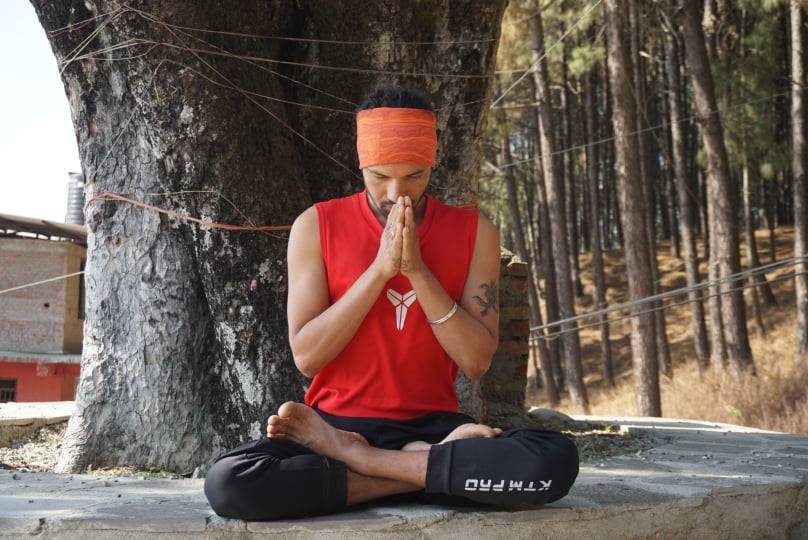
Five sheath meditation is traditionally taught with guidance, as each layer can be subtle and easy to skip past too quickly on your own. At Rishikesh Yoga Valley, this and other classical meditation techniques are taught as part of our yoga and meditation retreats, in the tradition they come from.
Explore our Meditation Retreat in Rishikesh