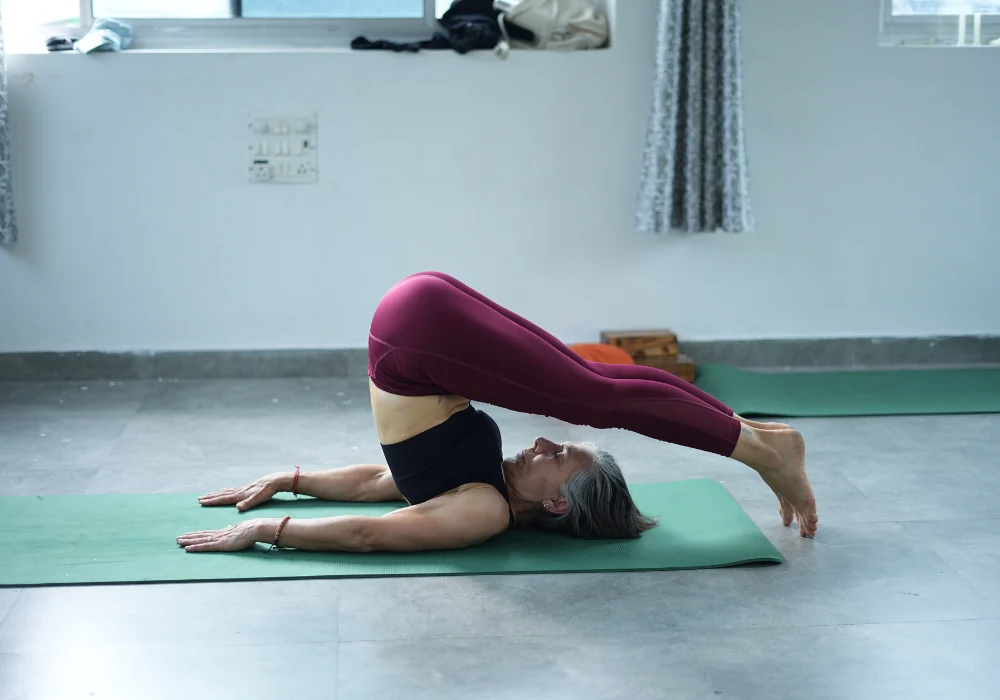
Ashtanga has a reputation that precedes it – fast-paced, physically demanding, and a little intimidating for anyone who hasn’t tried it. Some of that reputation is earned. But underneath the intensity is one of the most carefully structured, thoughtfully sequenced systems in all of yoga, and once you understand how it’s built, it becomes far less mysterious and far more approachable.
What Is the Primary Series, Exactly?
The Primary Series is the first of six sequences that make up the Ashtanga Vinyasa system, developed by Sri K. Pattabhi Jois in Mysore, India, based on teachings passed down from his own teacher, Krishnamacharya. In Sanskrit, it’s called Yoga Chikitsa, meaning “yoga therapy,” and that name is deliberate – this sequence is designed to detoxify and realign the body, building strength, flexibility, and stamina as a foundation for everything that follows.
Unlike a Vinyasa class where the instructor designs a new flow each session, Ashtanga is a fixed sequence – the same poses, in the same order, every single time. That structure is a feature, not a limitation. It means your progress becomes genuinely measurable, and it means you’re free to focus entirely on your breath and your body, rather than wondering what’s coming next.
How the Sequence Is Structured
Depending on how transitions are counted, the Primary Series contains somewhere around 75 postures and movements in total, organized into four clear sections:
The Opening Sequence. Every practice begins with several rounds of Surya Namaskar A (Sun Salutation A) followed by several rounds of Surya Namaskar B, which warm the body and establish the breathing rhythm used throughout the entire practice.
The Standing Sequence. A progression of standing postures – starting with poses like Padangusthasana (Big Toe Pose) and moving through balancing and hip-opening poses – that build strength, stability, and alignment before you move to the floor.
The Seated Sequence. The longest and most demanding part of the practice, moving through forward folds, twists, hip openers, and deeper poses in a steady progression, each connected to the next through a vinyasa (a linking flow of movement and breath).
The Finishing Sequence. A set of poses, including inversions like headstand and shoulderstand, followed by a few final grounding postures and Savasana (Corpse Pose), allowing the body to fully integrate everything that came before.
The Three Elements That Hold It All Together
What makes Ashtanga distinct from other flowing styles isn’t just the fixed sequence – it’s the three core techniques woven through every single pose:
Breath (Ujjayi). A slightly audible, ocean-sounding breath that’s maintained constantly throughout the practice, used to regulate internal heat and keep the nervous system steady even as the physical demand increases.
Bandhas. Internal muscular locks, primarily at the pelvic floor and lower abdomen, that support the spine and help direct energy through the body during the practice.
Drishti. A fixed gazing point for each pose, used to train concentration and prevent the mind from wandering – an often-overlooked detail that’s actually central to the meditative quality of the practice.
Together, these three elements are why experienced Ashtanga practitioners describe the practice as “moving meditation” rather than just a physical workout – the constant coordination of breath, engagement, and focus leaves very little room for the mind to drift.
Do You Need Experience to Start?
No – but it’s worth setting realistic expectations. A full Primary Series practice typically takes 90 minutes to two hours once you’re familiar with the whole sequence, and it is genuinely demanding, both physically and mentally. That said, beginners are not expected to complete the whole thing on day one.
Most traditional Ashtanga schools, taught in the Mysore style, have you begin with just the opening sequence and a handful of standing poses, adding new postures gradually as your teacher sees you’re ready – a system sometimes called learning the Half Primary Series. This self-paced, teacher-guided progression is exactly why Ashtanga suits complete beginners far better than its intimidating reputation suggests, as long as you’re learning it properly rather than trying to push through the full sequence unsupervised.
What Makes Ashtanga Different From Other Styles
If you’ve read our comparison of Hatha and Vinyasa, Ashtanga sits closest to Vinyasa in feel, since both connect poses through breath-led movement. The key difference is that Vinyasa sequences vary from class to class and teacher to teacher, while Ashtanga’s sequence is completely fixed. This is also what separates it from Hatha, which favors longer individual holds with pauses in between, rather than one continuous, breath-linked flow.
Frequently Asked Questions
How many poses are in the Ashtanga Primary Series?
Depending on how transitions between poses are counted, the Primary Series contains roughly 75 postures and movements in total, though some counting methods list closer to 40-50 core asanas plus their connecting vinyasas.
Is Ashtanga yoga good for complete beginners?
Yes, as long as it’s learned progressively under proper guidance. Beginners typically start with just the opening sequence and early standing poses, adding more of the sequence gradually as their teacher sees they’re ready, rather than attempting the full Primary Series right away.
How long does a full Primary Series practice take?
Once you’re familiar with the entire sequence, a full practice typically takes 90 minutes to two hours, though beginners working through a shortened version will naturally take less time.
What's the difference between Ashtanga and Vinyasa yoga?
Both link poses together through breath-synchronized movement, but Vinyasa sequences vary by class and instructor, while Ashtanga follows one fixed sequence that never changes, practiced the same way every time.
Do I need to be flexible to start Ashtanga?
No – flexibility develops through consistent practice, it isn’t a prerequisite for starting. What matters more at the beginning is a willingness to move at your own pace and build the sequence gradually under proper instruction.
Learning the Full System Properly
Understanding the philosophy and structure behind Ashtanga is one thing – being able to teach it safely, with proper modifications for real beginners, is another skill entirely. Our 200-Hour Yoga Teacher Training in Rishikesh includes dedicated instruction in traditional sequencing systems like this one, so you graduate genuinely equipped to guide students through it, not just perform it yourself.