
If you’ve spent any time researching Yoga Teacher Training in Rishikesh, you’ve probably noticed something.
Most schools look remarkably similar online.
They mention experienced teachers.
Comfortable accommodation.
Nutritious meals.
Beautiful surroundings.
International students.
Yoga Alliance registration.
At first glance, the differences seem small.
That can make choosing a school feel surprisingly difficult.
Yet speak to graduates a year after their training, and a different picture often emerges.
They rarely remember the marketing headlines.
Instead, they remember the teacher who patiently answered every question.
The classmate who encouraged them before their first teaching practice.
The feedback that completely changed how they understood a posture.

The morning they realised they were beginning to think like a teacher instead of simply following instructions.
Those experiences don’t happen by accident.
They grow from the culture of the school you choose.
That’s why your decision matters far more than many people realise.
A Yoga School Does More Than Deliver a Curriculum
Two schools can teach the same subjects.
Both may include anatomy, philosophy, pranayama, meditation, and teaching methodology.
On paper, the curriculum looks almost identical.
In practice, the experience can feel completely different.
One school may encourage discussion and thoughtful questions.
Another may focus more heavily on demonstration and repetition.
One teacher may spend extra time helping students understand why a technique works.
Another may concentrate on helping students remember how to perform it.
Neither approach is automatically right or wrong.
The important question is whether the school’s way of teaching matches the way you learn.
The Best Teachers Don't Just Give Answers
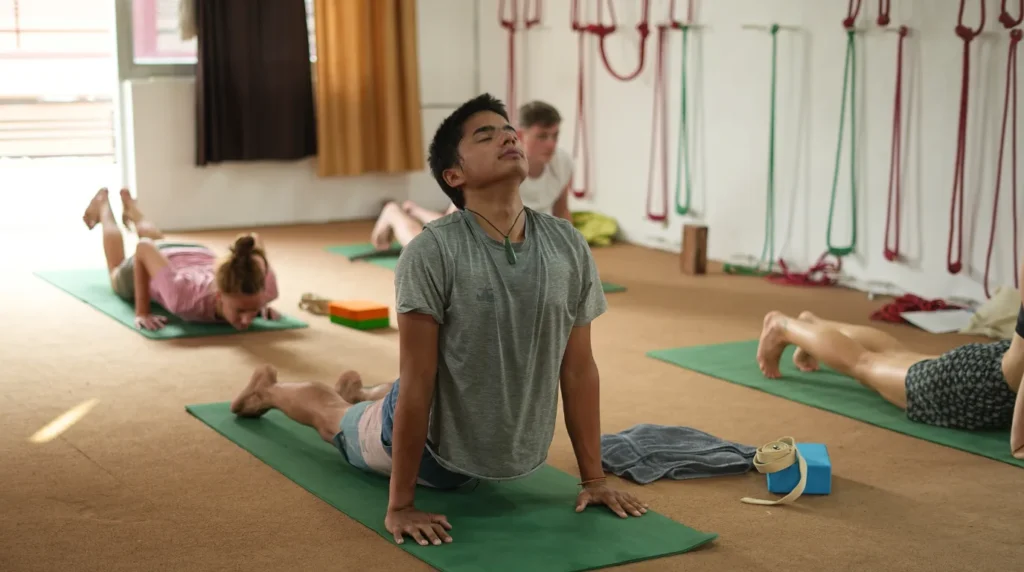
Think back to a teacher who made a lasting difference in your life.
Perhaps it wasn’t because they knew the most.
Perhaps it was because they knew how to help you discover the answer for yourself.
Great yoga teachers do something similar.
They don’t simply correct a posture.
They ask questions.
They observe carefully.
They encourage curiosity.
They help students build confidence rather than dependence.
That kind of learning often stays with people long after individual techniques are forgotten.
From the Yoga Hall
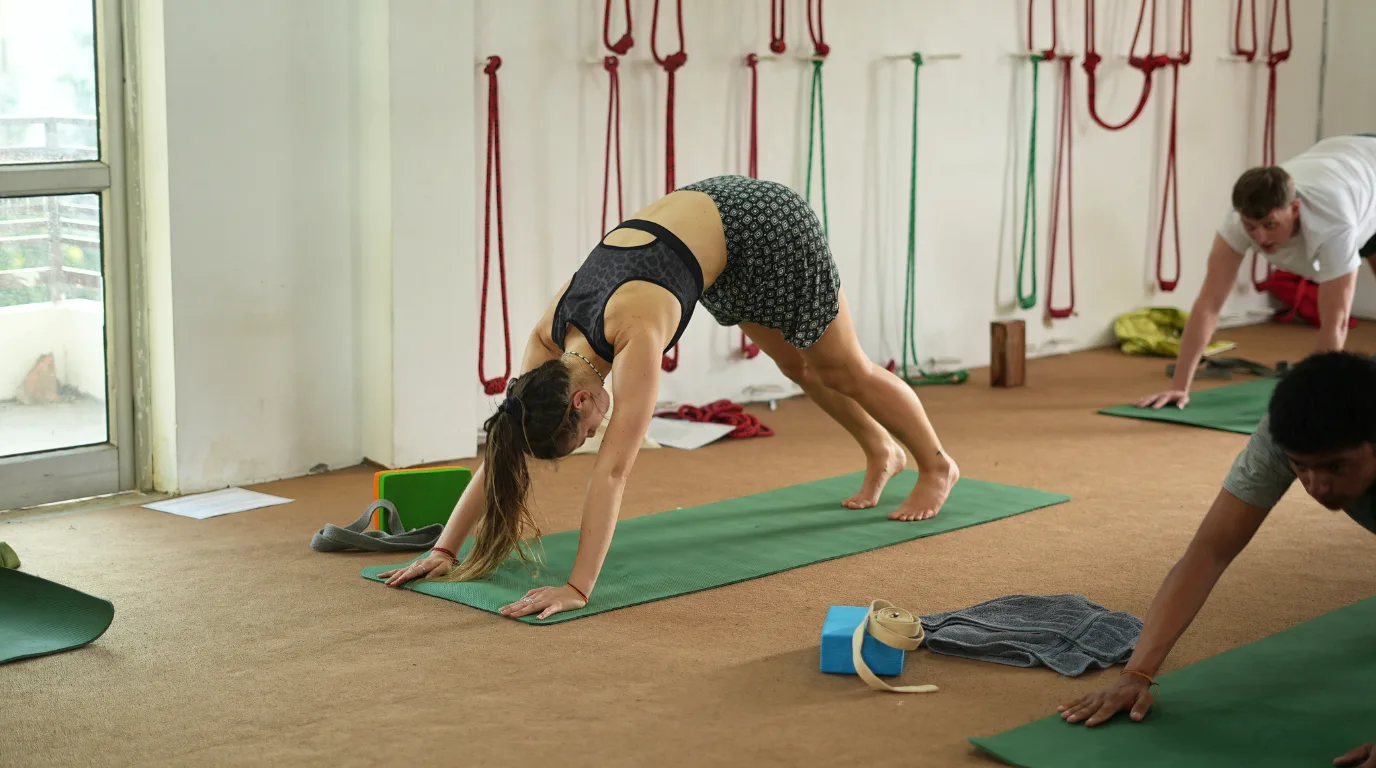
One of the most interesting moments during a teacher training isn’t the first class.
It’s the first time a student explains a posture to someone else.
The words may not come out perfectly.
The instructions might need refining.
But something important has happened.
Learning has begun to turn into teaching.
A supportive environment makes those moments feel safe.
And that safety gives students the confidence to keep improving.
Great Teachers Create Independent Students, Not Dependent Ones
One of the clearest signs of a strong yoga school isn’t how often students rely on their teachers.
It’s how gradually they begin relying on themselves.
In the beginning, it’s natural to look toward the teacher for every answer.
“Is my alignment correct?”
“Am I breathing properly?”
“Should I modify this posture?”
As the weeks pass, something begins to change.
Students start observing their own movement more carefully.
They recognise when a posture feels stable.
They become more aware of their breath.
They ask deeper questions rather than simply waiting for instructions.
This is one of the quiet goals of a good teacher training.
Not creating students who always need guidance.
But helping people develop the confidence to continue learning long after the course has ended.
Feedback Is One of the Most Valuable Parts of Teacher Training
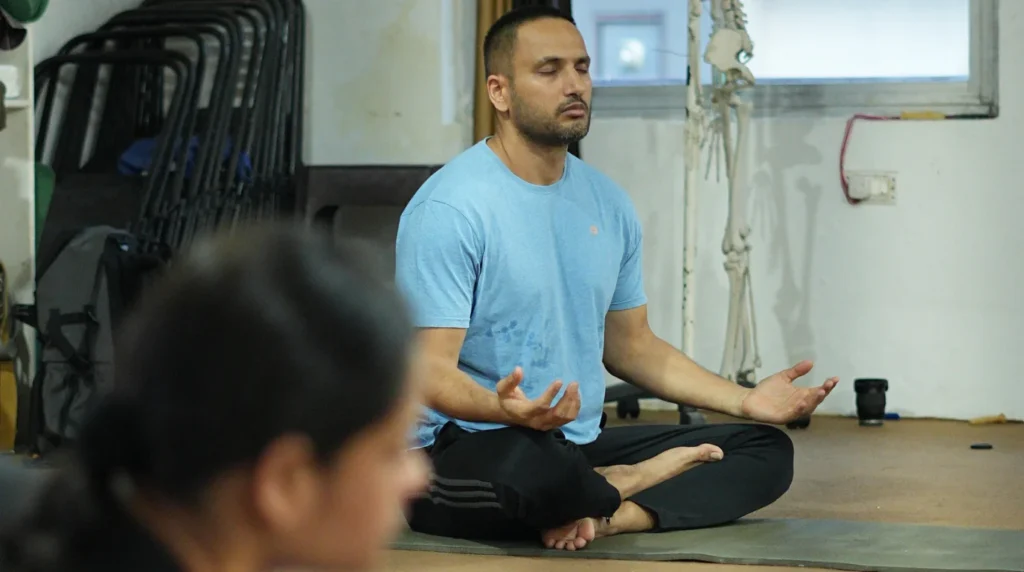
Watching a demonstration is useful.
Practising on your own is important.
But personalised feedback is where much of the learning happens.
Imagine teaching your first yoga sequence.
You finish feeling uncertain.
Then your teacher says,
“Your explanations were clear. Next time, slow down slightly when demonstrating the transition between postures.”
That single observation may improve your teaching far more than repeating the entire sequence again without guidance.
Constructive feedback isn’t criticism.
It’s refinement.
The strongest learning environments create opportunities for students to practise, receive thoughtful observations, and try again.
That’s how confidence grows.
Community Is Part of the Curriculum
When people imagine yoga teacher training, they often picture classes.
What they don’t always imagine are the conversations between those classes.
Sharing breakfast after morning practice.
Discussing philosophy while walking back from the yoga hall.
Helping a classmate remember a Sanskrit term.
Encouraging someone before their first teaching assessment.
These moments may not appear in the official timetable.
Yet they often become some of the most memorable parts of the experience.
Learning happens in relationships as much as it happens in lectures.
A supportive community encourages questions, celebrates progress, and reminds students that growth is rarely a solitary process.
From the Yoga Hall
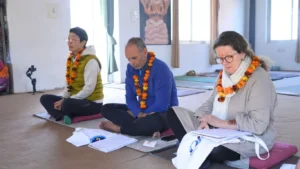
Every graduation has a familiar scene.
Certificates have been handed out.
Photographs have been taken.
Suitcases are waiting in the rooms.
Yet very few people leave immediately.
Instead, small groups gather for one last cup of tea.
They exchange books.
Write phone numbers in notebooks.
Promise to visit one another.
Talk about meeting again for an advanced training somewhere in the future.
It’s a reminder that while the course has an end date, the relationships often do not.
Many graduates leave with more than knowledge.
They leave with a global community that continues to encourage their practice long after they return home.
The Right Environment Encourages Questions
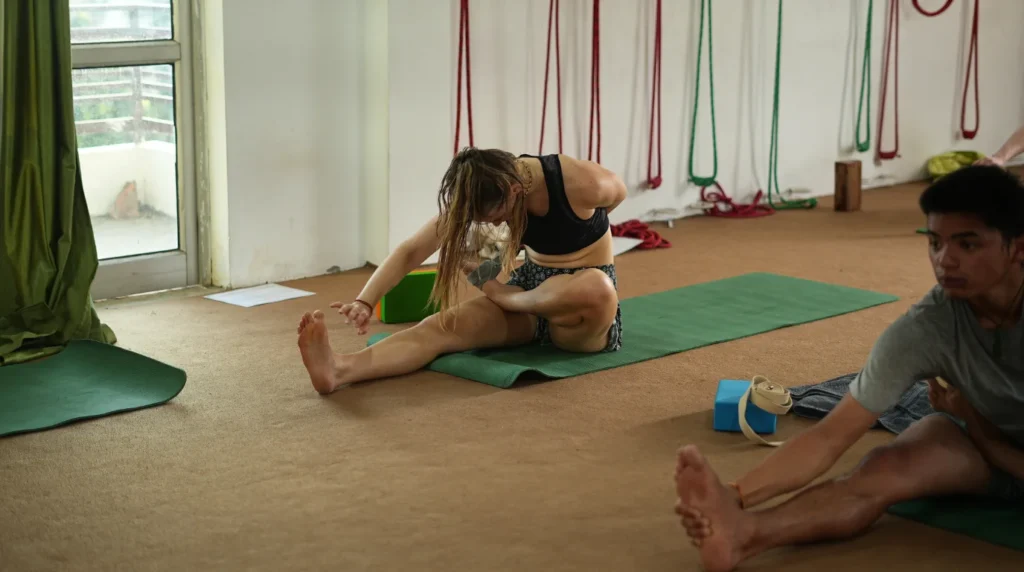
Some students hesitate to ask questions because they worry about slowing down the class.
Others wonder whether their question is too basic.
A healthy learning environment changes that.
It reminds students that curiosity isn’t a weakness.
It’s a sign of engagement.
Often, the question one student is nervous about asking is the same question several others have been quietly thinking.
When teachers welcome thoughtful discussion, the entire class benefits.
The goal isn’t simply to cover the curriculum.
It’s to understand it.
A Great Yoga School Doesn't End on Graduation Day
A certificate marks the completion of the course.
It shouldn’t mark the end of your education.
Many graduates continue reading.
Practising.
Attending workshops.
Joining advanced trainings.
Teaching small community classes.
Seeking mentorship from experienced teachers.
The strongest schools don’t encourage students to believe they’ve mastered yoga in a few weeks.
Instead, they inspire a lifelong relationship with learning.
That’s one of the healthiest expectations any student can have before beginning teacher training.
How to Recognise a School That Values Learning Over Marketing
Every school wants to present itself well.
There’s nothing wrong with that.
But before enrolling, pay attention to what the school consistently talks about.
Do they mostly discuss facilities?
Or do they spend time explaining how students learn?
Do they encourage thoughtful questions before you enrol?
Do they provide clear information about the curriculum and teaching approach?
Do they set realistic expectations rather than promising dramatic transformations?
Schools that value education often demonstrate it long before the first class begins.
Their communication reflects the same qualities they hope students will develop: clarity, honesty, and patience.
The Best Decision Is the One That Fits You
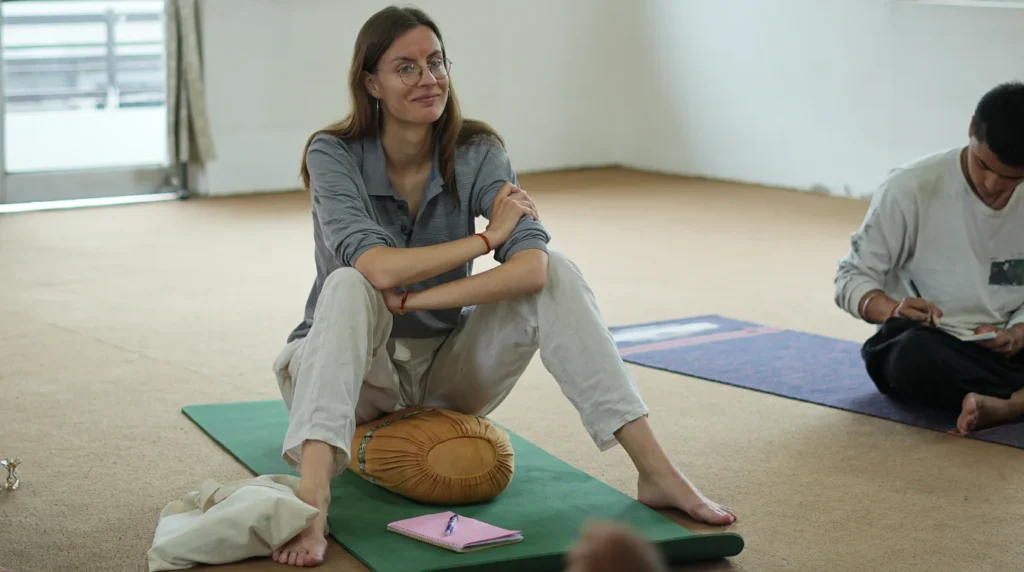
It’s tempting to search for the single “best” yoga school.
In reality, the better question is,
“Which school will help me learn most effectively?”
A school that suits one student’s goals may not suit another’s.
Some people flourish in highly traditional environments.
Others appreciate a balance between classical teachings and modern educational methods.
Some enjoy larger international groups.
Others prefer smaller classes with more individual interaction.
Choosing well isn’t about finding a universally perfect school.
It’s about finding the right match for your learning journey.
Frequently Asked Questions
What is the most important factor when choosing a yoga school?
Teaching quality and the learning environment usually have the greatest influence on your experience. A supportive teaching team, thoughtful curriculum, and opportunities for practical feedback often matter more than facilities alone.
Does a beautiful campus mean better education?
Not necessarily. Comfortable surroundings contribute to the experience, but the quality of teaching, mentorship, and student support typically have a much greater impact on what you learn.
Should I contact the school before enrolling?
Yes. Asking questions about the curriculum, teaching methodology, daily schedule, and student support can help you understand whether the school aligns with your goals.
Is a smaller class always better?
Not always. Smaller groups may allow for more individual attention, while larger groups can offer a wider range of perspectives and cultural experiences. The quality of interaction matters more than the number of students alone.
Can I judge a school only by online reviews?
Reviews are helpful, especially when they describe specific experiences. They are best used alongside conversations with the school, a careful reading of the curriculum, and an understanding of your own learning goals.
Final Thoughts
The yoga school you choose becomes much more than the place where you earn a certificate.
It becomes the environment where you’ll ask questions you may have carried for years.
Where you’ll discover strengths you didn’t know you had.
Where you’ll make mistakes in a space designed for learning.
Where you’ll meet teachers who challenge your assumptions and classmates who broaden your perspective.
Months from now, you probably won’t remember every class in perfect detail.
But you’ll remember how the experience made you feel.
Supported.
Encouraged.
Challenged.
Inspired.
Those memories are rarely created by buildings alone.
They’re created by people, by thoughtful teaching, and by a culture that values learning over appearances.
Choose a school that helps you become not just a certified yoga teacher, but a lifelong student of yoga.