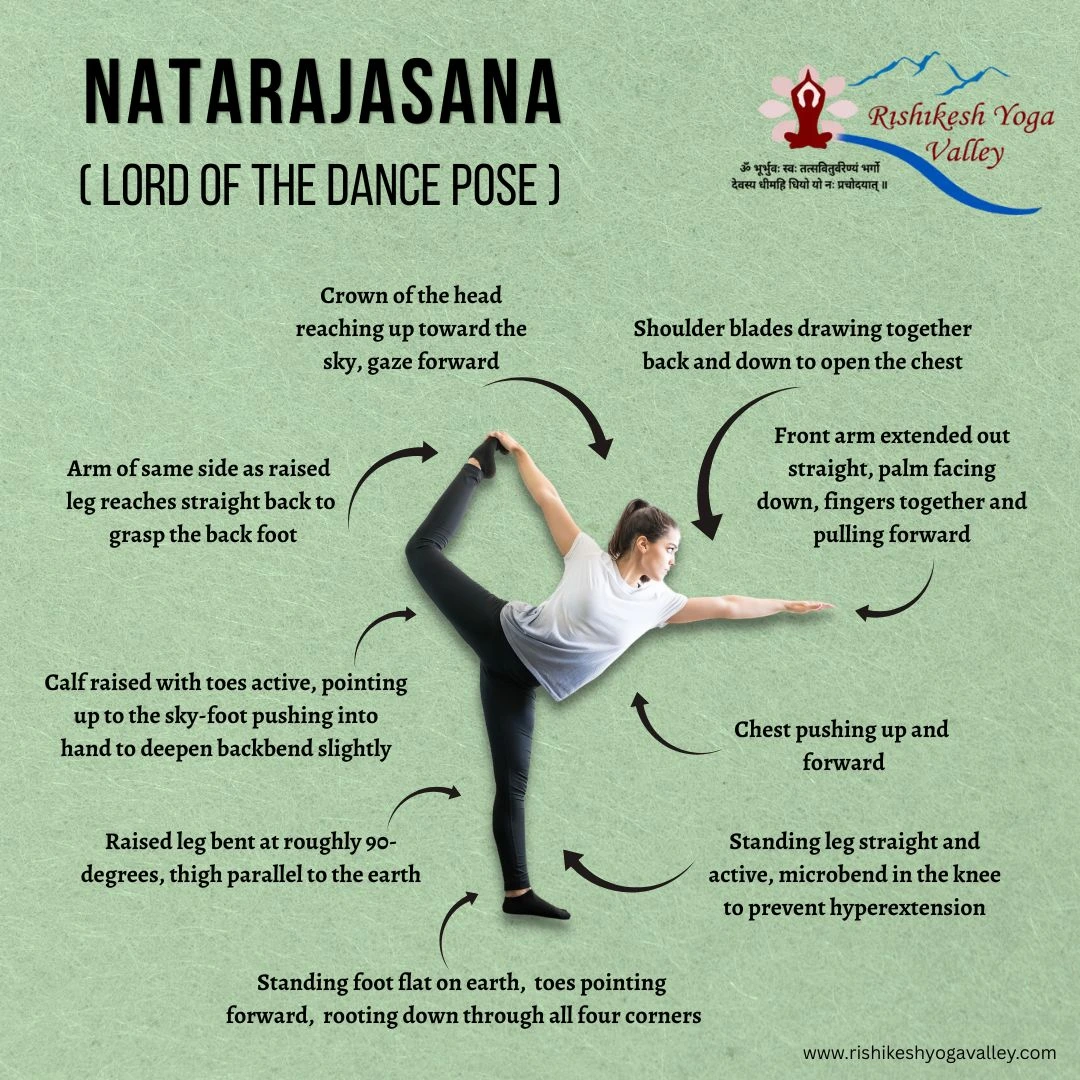
Natarajasana, commonly known as Dancer Pose or Lord of the Dance Pose, is a graceful standing yoga posture that combines balance, flexibility, strength, and focus. Inspired by the dancing form of Lord Shiva, this pose symbolizes power, elegance, and inner harmony.
This beautiful backbend challenges the body while calming the mind. Natarajasana stretches the chest, shoulders, hips, and thighs while strengthening the legs, core, and back muscles. Whether you are a beginner exploring balance poses or an advanced yogi refining your backbends, Dancer Pose offers both physical and mental benefits.
Learning balancing postures like Natarajasana under experienced guidance helps improve alignment, confidence, and body awareness. In a structured yoga teacher training program, students gradually develop the strength, flexibility, and understanding needed to practice poses safely: Yoga Teacher Training in Rishikesh
What is Natarajasana?
The word Natarajasana comes from Sanskrit:
- Nata = Dancer
- Raja = King or Lord
- Asana = Pose
The pose is named after Lord Shiva Nataraja, who is often depicted performing a cosmic dance symbolizing creation, destruction, and transformation.
Natarajasana is considered a standing backbend and balancing posture that improves body awareness, concentration, and posture while opening the front body.
Benefits of Natarajasana (Dancer Pose)
Practicing Natarajasana regularly can offer several physical, mental, and emotional benefits.
1. Improves Balance and Stability
Balancing on one leg strengthens the ankles, feet, and stabilizing muscles while improving coordination and concentration.
2. Strengthens the Back and Core
Dancer Pose activates the spinal extensors, abdominal muscles, glutes, and hamstrings, helping build a stronger and healthier back.
3. Opens the Chest and Shoulders
The pose deeply stretches the chest, shoulders, and upper body, helping improve posture and reduce tightness caused by prolonged sitting.
4. Increases Flexibility
Natarajasana stretches the hip flexors, quadriceps, hamstrings, and shoulders, improving overall flexibility and range of motion.
5. Enhances Focus and Body Awareness
Maintaining balance in the pose improves concentration, mindfulness, and proprioception (awareness of body movement in space).
6. Energizes the Body
The uplifting nature of the pose stimulates energy flow, leaving practitioners feeling refreshed, confident, and graceful.
7. Improves Posture
The pose encourages spinal extension and chest opening, which can help counter poor posture habits.
How to Do Natarajasana (Dancer Pose)
Follow these step-by-step instructions carefully to practice the pose safely and effectively.
Step 1: Start in Mountain Pose
Stand tall in Tadasana (Mountain Pose) with your feet hip-width apart. Distribute your weight evenly across both feet.
Step 2: Shift Your Weight
Slowly transfer your weight into your left foot while grounding firmly through all four corners of the standing foot.
Step 3: Bend the Opposite Leg
Bend your right knee and bring your right heel toward your buttocks.
Step 4: Hold the Foot
Reach your right hand back and hold the inside of your right ankle or foot. Keep your knees close together initially.
Step 5: Engage the Core
Activate your abdominal muscles and lengthen your spine. Keep the chest lifted and shoulders relaxed.
Step 6: Lift the Leg
Begin pressing your foot into your hand while lifting the thigh upward and backward. Simultaneously lean your torso slightly forward.
Step 7: Extend the Free Arm
Stretch your left arm forward or upward for balance.
Step 8: Deepen the Pose
Lift your sternum and open the chest while keeping the standing leg stable. Avoid collapsing into the lower back.
Step 9: Breathe Steadily
Hold the pose for 3–5 deep breaths while maintaining smooth and controlled breathing.
Step 10: Release Gently
Slowly lower the leg and return to Mountain Pose. Repeat on the opposite side.
Alignment Tips for Natarajasana
Proper alignment is essential for maintaining balance and preventing strain.
Note: Working with experienced teachers can help you understand subtle alignment adjustments that improve stability and reduce the risk of unnecessary strain during standing backbends: 200 Hour Yoga Teacher Training in Rishikesh
Keep the Hips Parallel
Avoid letting the lifted hip rotate outward too much. Keep the pelvis as neutral as possible.
Avoid Lower Back Compression
Lengthen the tailbone downward and engage the core muscles to support the lumbar spine.
Lift Through the Chest
Focus on lifting the sternum and opening the heart space rather than forcing the backbend.
Maintain a Soft Standing Knee
A slight bend in the standing leg can improve stability and protect the knee joint.
Keep the Breath Smooth
Steady breathing helps maintain focus and ease while holding the posture.
Beginner Modifications for Dancer Pose
If you are new to Natarajasana, these modifications can help make the pose more accessible.
Use a Yoga Strap
Loop a yoga strap around the lifted foot if reaching the ankle feels difficult.
Practice Near a Wall
Stand beside a wall or chair for additional support and balance.
Keep the Torso Upright
Instead of leaning deeply forward, maintain a more upright position while building strength and flexibility.
Focus on Balance First
Work on balancing steadily before attempting deeper backbends.
Beginners often find it easier to develop confidence in balancing poses by first building a strong foundation through guided yoga practice and proper alignment techniques: 100 Hour Yoga Teacher Training in Rishikesh
Advanced Variations of Natarajasana
Once you feel comfortable with the traditional pose, you can explore advanced variations.
Full King Dancer Pose
Reach both arms overhead to hold the lifted foot while deepening the backbend.
Eyes Closed Variation
Practicing with closed eyes intensifies the balance challenge and improves concentration.
Elevated Standing Foot
Stand on a yoga block to increase difficulty and body awareness.
Common Mistakes to Avoid
Overarching the Lower Back
Many practitioners force the backbend into the lumbar spine. Instead, distribute the curve evenly throughout the spine.
Locking the Standing Knee
Keep the standing leg active but not hyperextended.
Opening the Hip Too Much
Avoid turning the lifted knee outward excessively.
Holding the Breath
Breathing should remain smooth and relaxed throughout the pose.
Rushing Into the Full Pose
Develop balance and flexibility gradually rather than forcing advanced variations.
Preparatory Poses for Natarajasana
Preparing the body properly can make Dancer Pose safer and more effective.
- Tadasana (Mountain Pose)
- Low Lunge
- Cobra Pose
- Bow Pose (Dhanurasana)
- Warrior I
- Camel Pose
- Standing Quad Stretch
Counter Poses After Dancer Pose
Avoid or modify Natarajasana if you have:
- Severe lower back pain
- Ankle or knee injuries
- Shoulder injuries
- Vertigo or balance disorders
- High or low blood pressure
Pregnant practitioners should practice under professional guidance and avoid deep backbends.
Always warm up before attempting the pose and never force the body beyond its comfortable range.
Contraindications and Precautions
Natarajasana should be practiced with care if you have knee, ankle, shoulder, or lower back injuries. Warm up thoroughly before attempting the pose, avoid forcing the backbend, and progress gradually within your comfortable range of motion. If you are recovering from an injury or have a medical condition, seek guidance from a qualified yoga instructor or healthcare professional.
Note: Practicing under experienced guidance can help improve technique and reduce the likelihood of poor alignment during challenging balancing postures: Rishikesh Yoga Valley
Mental and Energetic Benefits of Natarajasana
Beyond physical strength and flexibility, Natarajasana also encourages emotional balance and inner confidence. The pose requires calm focus, patience, and surrender, helping practitioners cultivate mindfulness and grace.
Because the chest opens deeply in the posture, many yogis associate Dancer Pose with heart-opening energy and emotional release.
Combining balancing postures with meditation and mindful breathing can help cultivate greater concentration, emotional stability, and inner awareness: Meditation Retreat in Rishikesh
Take Your Yoga Practice Beyond Natarajasana
Frequently Asked Questions (FAQs)
Is Natarajasana suitable for beginners?
Yes, beginners can practice a modified version using a wall or yoga strap for support.
Note: Those who want to learn balancing postures with proper guidance may benefit from a beginner-friendly yoga teacher training program that introduces foundational standing poses, breathing techniques, and alignment principles: 50 Hour Yoga Teacher Training in Rishikesh
How long should I hold Dancer Pose?
Hold the pose for 3–5 breaths initially. Advanced practitioners may hold it longer with steady breathing.
What muscles does Natarajasana strengthen?
The pose strengthens the legs, glutes, hamstrings, core, shoulders, and back muscles.
Does Natarajasana improve posture?
Yes, the pose opens the chest and strengthens the spine, which can improve overall posture.
Can I practice Dancer Pose daily?
Yes, practicing regularly can improve balance, flexibility, and body awareness, provided you avoid overstraining.
Final Thoughts
Natarajasana is more than just a visually impressive yoga posture. It is a powerful combination of balance, strength, flexibility, and mindfulness. With regular practice, Dancer Pose can improve posture, increase focus, strengthen the body, and cultivate a deeper sense of inner stability.
Whether you are practicing a beginner variation or exploring advanced backbends, approach the pose with patience, awareness, and controlled breathing. Over time, Natarajasana can help you feel both physically empowered and mentally centered.
Roll out your mat, move with grace, and embrace the transformative energy of Dancer Pose.
If you’d like to deepen your understanding of yoga beyond individual postures, learning in the traditional yogic environment of Rishikesh offers an opportunity to explore asana, pranayama, meditation, philosophy, and mindful living as part of a complete practice: Rishikesh Yoga Valley