Bhujapidasana (Shoulder-Pressing Pose): Complete Guide for Beginners

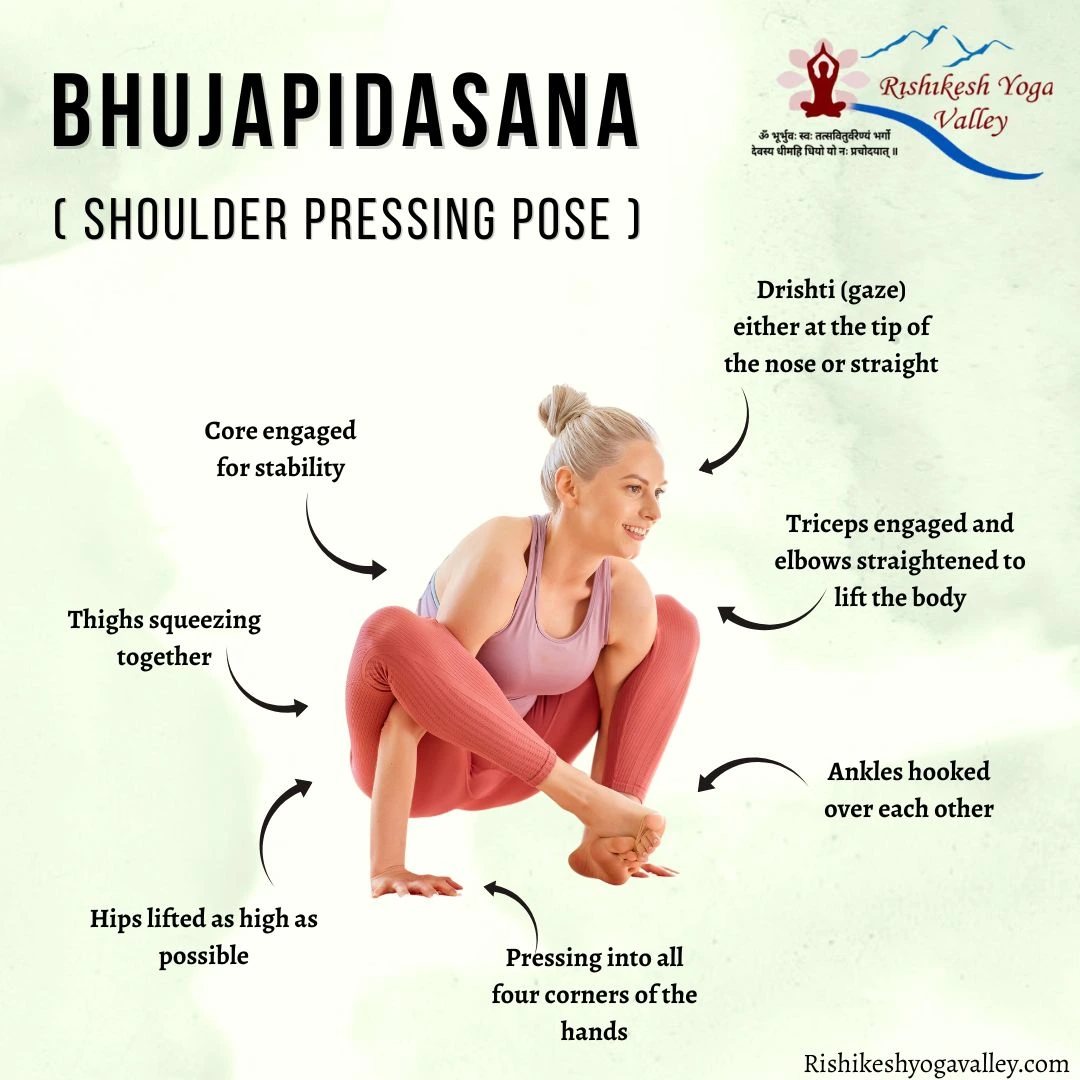
Woman performing Bhujapidasana (Shoulder Pressing Pose) balancing on her hands with ankles crossed, demonstrating alignment cues for core engagement, arm strength, hip lift, gaze, and thigh positioning.

Yoga is much more than physical movement—it is a practice that strengthens the body, sharpens the mind, and builds inner awareness. Among the many advanced yoga postures, Bhujapidasana, also known as the Shoulder-Pressing Pose, stands out as a powerful arm balance that develops strength, flexibility, balance, and concentration.

Although this pose may seem intimidating at first, consistent practice and proper guidance can help you gradually build the confidence and control needed to master it. Bhujapidasana challenges both the body and mind, making it an excellent posture for improving focus and body awareness.

In this blog, we’ll explore the meaning of Bhujapidasana, step-by-step instructions, benefits, beginner modifications, common mistakes, and important safety precautions.

What is Bhujapidasana?

The word Bhujapidasana comes from Sanskrit:

  • Bhuj = Arm or shoulder
  • Pida = Pressure
  • Asana = Pose

Together, Bhujapidasana translates to Shoulder-Pressing Pose.

In this advanced arm-balancing posture, the thighs wrap tightly around the upper arms while the body balances on the hands. The pose requires strong arms, an engaged core, flexible hips, and deep concentration.

Bhujapidasana is often practiced in advanced yoga sequences and Ashtanga Yoga because it builds the foundation for more challenging arm balances.

How to Do Bhujapidasana

Follow these steps carefully to practice Bhujapidasana safely and effectively:

1. Begin in a Squat

Start in a low squatting position with your feet slightly wider than hip-width apart. Keep your knees bent and your torso leaning forward between your thighs.

2. Place Your Hands on the Floor

Bring your palms flat to the floor behind your feet. Spread your fingers wide for stability and ensure your wrists are aligned under your shoulders.

3. Position the Legs

Lift your hips slightly and slide your shoulders underneath your thighs as high as possible. Wrap your thighs firmly around your upper arms.

4. Engage the Core

Activate your abdominal muscles and press strongly into your palms. This helps stabilize the body and prepares you to lift off the floor.

5. Cross the Ankles

Lean your weight forward slowly and lift your feet off the ground. Cross one ankle over the other in front of you.

6. Hold the Pose

Keep your gaze forward and maintain steady breathing. Hold the posture for 15–30 seconds or as long as comfortable.

7. Release Carefully

Slowly lower your feet back to the floor and return to a squat position.
Benefits of Bhujapidasana

Practicing Bhujapidasana regularly offers several physical and mental benefits.

Strengthens Arms and Shoulders

This posture builds strength in the wrists, arms, shoulders, and upper back by supporting the body’s weight entirely through the hands.

Improves Core Stability

The abdominal muscles work intensely to maintain balance, helping strengthen and tone the core.

Enhances Hip Flexibility

Bhujapidasana deeply opens the hips and stretches the groin area, improving mobility and flexibility.

Develops Balance and Coordination

Balancing the body on the hands increases coordination, body control, and spatial awareness.

Increases Mental Focus

The pose requires complete concentration and mindful breathing, helping improve mental clarity and focus.

Builds Confidence

Mastering advanced arm balances can boost self-confidence and encourage patience and perseverance in yoga practice.

Strengthens Wrists

Weight-bearing through the hands improves wrist strength and stability when practiced correctly.

Beginner Tips for Bhujapidasana

If you’re new to arm balances, these tips can make the pose more accessible:

Practice Hip Openers First

Tight hips can make Bhujapidasana difficult. Include poses like:

  • Malasana (Garland Pose)
  • Pigeon Pose
  • Wide-Legged Forward Fold

Use Yoga Blocks

Place blocks under your hands to create extra lift and make balancing easier.

Focus on Core Engagement

Strong core activation helps lift the feet and maintain stability.

Start Slowly

Do not rush into the full expression of the pose. Practice lifting one foot at a time before balancing completely.

Keep Breathing

Avoid holding your breath. Slow, steady breathing improves balance and relaxation.

Common Mistakes to Avoid

Skipping the Warm-Up

Attempting Bhujapidasana without warming up the hips, shoulders, and wrists can increase injury risk.

Looking Down

Looking straight down may shift your balance backward. Keep your gaze slightly forward.

Locking the Elbows

Keep a slight bend in the elbows to avoid unnecessary joint strain.

Weak Core Engagement

Without an active core, the body becomes unstable and difficult to lift.

Rushing into the Pose

Entering too quickly can cause imbalance or falls. Move slowly and mindfully.

Modifications for Beginners

Supported Bhujapidasana

Place a yoga block or bolster under the hips for support while learning balance.

Practice with Feet on the Floor

Keep your toes lightly touching the ground while building arm and core strength.

Use a Strap

A yoga strap around the upper arms can help maintain proper arm positioning.

Precautions and Contraindications

Avoid Bhujapidasana if you have:

  • Wrist injuries
  • Shoulder injuries
  • Elbow pain
  • Lower back problems
  • Hip injuries
  • High blood pressure
  • Recent surgery

Pregnant individuals should avoid this posture due to pressure on the abdomen and balance demands.

Always practice under the guidance of a qualified yoga instructor if you are attempting advanced poses for the first time.

Preparatory Poses for Bhujapidasana

These poses help prepare the body for Shoulder-Pressing Pose:

  • Malasana (Garland Pose)
  • Crow Pose (Bakasana)
  • Downward Facing Dog
  • Forward Fold
  • Lizard Pose

Counter Poses

After Bhujapidasana, practice gentle counter poses such as:

  • Child’s Pose
  • Seated Forward Fold
  • Supine Twist
  • Wrist stretches

Final Thoughts

Bhujapidasana is a challenging yet rewarding yoga posture that combines strength, flexibility, concentration, and balance. While it may take time to master, regular practice helps develop confidence, body awareness, and mental focus.

Remember that yoga is a journey, not a competition. Progress slowly, listen to your body, and celebrate small improvements along the way. With patience and consistency, Bhujapidasana can become a powerful part of your yoga practice.

Person meditating with glowing purple aura energy representing crown chakra and spiritual awakening

Purple Aura Meaning: Personality, Spiritual Significance

Purple Aura Meaning: Spiritual Significance, Personality, and What It Reveals About You The purple aura...

Read Full Blog
Gold aura meaning infographic showing spiritual power, abundance, psychic protection, enlightenment, prosperity, and higher consciousness through meditation energy.

Gold Aura Meaning: Personality Traits, Chakra Connection & Spiritual Energy

Gold Aura Meaning: Personality Traits, Chakra Connection & Spiritual Symbolism A gold aura is one...

Read Full Blog
Infographic comparing yoga and meditation, showing yoga as a physical and spiritual practice that improves strength, flexibility, balance, and energy, while meditation enhances focus, relaxation, emotional well-being, self-awareness, and sleep quality.

Yoga vs Meditation: Key Differences, Benefits, and How They Work Together

Yoga vs Meditation: Understanding the Real Difference and How They Complement Each Other Yoga and...

Read Full Blog

Our Yoga School in Rishikesh

Fill out form to know more about Yoga Teacher Training and Yoga Retreat in Rishikesh, India