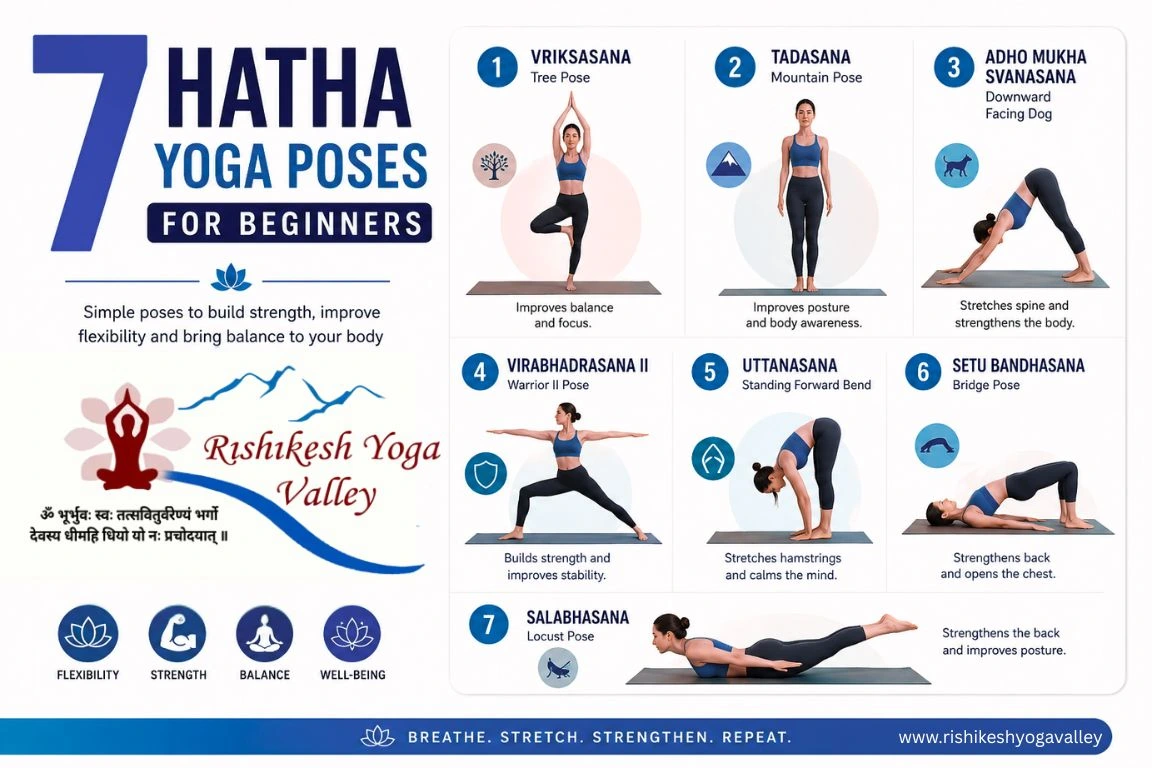
Hatha Yoga is one of the oldest and most respected branches of yoga. Rooted in ancient yogic traditions, it focuses on balancing the body and mind through physical postures (asanas), breathing techniques (pranayama), and mindful awareness.
The word Hatha comes from two Sanskrit syllables:
- Ha = Sun
- Tha = Moon
Together, Hatha Yoga represents the union of opposing energies within the body — strength and softness, activity and stillness, masculine and feminine energy.
Unlike fast-paced yoga styles, Hatha Yoga is slower, more controlled, and ideal for beginners. It builds the foundation for flexibility, posture, balance, breathing control, and mental clarity.
Ancient yogic texts like the Hatha Yoga Pradipika describe Hatha Yoga as a path toward physical purification and spiritual awakening.
In this guide, we’ll explore 7 classical Hatha yoga poses that are beginner-friendly, deeply effective, and still widely practiced today.
What Is Hatha Yoga?
Hatha Yoga is a traditional yoga system that combines:
- Physical postures
- Breath control
- Energy balancing
- Meditation
- Relaxation
Its purpose is not just exercise — it is about creating harmony between the body, breath, and mind.
Hatha Yoga helps:
- Improve flexibility
- Strengthen muscles
- Calm the nervous system
- Improve posture
- Increase energy flow
- Prepare the body for meditation
Because of its slower pace, Hatha Yoga is considered one of the best yoga styles for beginners.
Technology evolves through algorithms. Humans evolve through awareness. Both seek efficiency, but their foundations differ:
AI learns through data.
Humans grow through experience.
AI optimizes intelligence.
Yoga cultivates wisdom.
The difference between intelligence and wisdom is where mindfulness finds its purpose. While AI can mimic the human brain, it cannot embody the human heart.
Combining Hatha Yoga with sound healing can enhance relaxation and help restore energetic balance. Many practitioners use sound therapy alongside yoga to reduce stress, improve focus, and support emotional well-being.
Benefits of Hatha Yoga
Regular Hatha Yoga practice may help:
- Improve body flexibility
- Enhance balance and coordination
- Reduce stress and anxiety
- Strengthen muscles and joints
- Improve breathing capacity
- Support better posture
- Increase mental focus
- Promote relaxation and mindfulness
Many practitioners also use Hatha Yoga to create a healthy daily routine and improve emotional balance.
1. Tadasana (Mountain Pose)
What Is Tadasana?
Tadasana, or Mountain Pose, is one of the most foundational Hatha yoga poses. Although it looks simple, it teaches proper posture, grounding, and body awareness.
This pose forms the base for many standing yoga postures.
How to Do Tadasana
- Stand upright with your feet together.
- Keep your spine straight and shoulders relaxed.
- Distribute weight evenly across both feet.
- Engage your thighs gently.
- Raise your arms overhead if comfortable.
- Breathe slowly and deeply.
- Hold for 30–60 seconds.
Benefits of Tadasana
- Improves posture
- Strengthens legs and ankles
- Enhances body alignment
- Improves balance
- Increases awareness and focus
- Supports spinal health
AI-powered apps know you better than you know yourself. They predict your next purchase, suggest your next video, and even finish your sentences. While convenient, this subtle automation creates a silent danger: the loss of mindful choice.
Yoga trains us to pause, breathe, and notice before reacting. Without mindfulness, we risk outsourcing not just our work—but our will.
2. Vrikshasana (Tree Pose)
What Is Vrikshasana?
Vrikshasana, or Tree Pose, is a balancing posture that improves stability and concentration.
The pose symbolizes the grounded strength and calmness of a tree.
How to Do Vrikshasana
- Stand tall in Tadasana.
- Shift weight onto one foot.
- Place the opposite foot on the inner thigh or calf.
- Bring palms together in prayer position.
- Focus on one point for balance.
- Hold for several breaths.
- Repeat on the other side.
Benefits of Vrikshasana
- Improves balance and coordination
- Strengthens legs and ankles
- Enhances focus and concentration
- Improves posture
- Builds mental stability
3. Uttanasana (Standing Forward Bend)
What Is Uttanasana?
Uttanasana is a forward-bending yoga pose that stretches the entire backside of the body, especially the hamstrings and spine.
It is calming for the nervous system and helps release tension.
How to Do Uttanasana
- Stand with feet hip-width apart.
- Inhale deeply.
- Exhale and bend forward from the hips.
- Allow your head and arms to relax downward.
- Keep knees slightly bent if needed.
- Hold for 30 seconds.
Benefits of Uttanasana
- Stretches hamstrings and spine
- Relieves tension in the back
- Improves blood circulation
- Calms the mind
- Supports digestion
- Reduces stress
4. Adho Mukha Svanasana (Downward Facing Dog)
What Is Downward Facing Dog?
This iconic yoga pose strengthens the body while stretching multiple muscle groups simultaneously.
It is commonly included in Hatha Yoga and Sun Salutation sequences.
How to Do Adho Mukha Svanasana
- Start on hands and knees.
- Lift hips toward the ceiling.
- Straighten the legs as comfortable.
- Press hands firmly into the floor.
- Keep the spine long.
- Relax the neck.
Benefits of Downward Dog
- Strengthens arms and shoulders
- Stretches calves and hamstrings
- Improves circulation
- Energizes the body
- Relieves stiffness
- Improves posture
5. Setu Bandhasana (Bridge Pose)
What Is Bridge Pose?
Setu Bandhasana is a gentle backbend that opens the chest and strengthens the back body.
It is especially beneficial for people who sit for long hours.
How to Do Setu Bandhasana
- Lie on your back.
- Bend your knees and place feet flat on the floor.
- Keep arms beside the body.
- Lift hips upward while pressing feet into the floor.
- Hold the position while breathing steadily.
Benefits of Bridge Pose
- Strengthens back and glutes
- Opens the chest and shoulders
- Improves spinal flexibility
- Relieves stress
- Supports better posture
- Stimulates abdominal organs
Practicing these 7 Hatha Yoga poses regularly can improve flexibility, strength, balance, and mental clarity. If you want to deepen your practice and learn proper alignment techniques, explore our professional yoga courses designed for practitioners of all levels.
6. Salabhasana (Locust Pose)
What Is Salabhasana?
Salabhasana, or Locust Pose, is a strengthening backbend that targets the spine, legs, and core muscles.
It helps improve posture and body strength.
How to Do Salabhasana
- Lie on your stomach.
- Keep arms beside the body.
- Inhale and lift chest, arms, and legs upward.
- Keep the neck neutral.
- Hold for a few breaths.
- Slowly release.
Benefits of Salabhasana
- Strengthens the back muscles
- Improves spinal support
- Enhances posture
- Stimulates digestion
- Strengthens legs and core
- Improves body endurance
7. Savasana (Corpse Pose)
What Is Savasana?
Savasana is the final relaxation pose practiced at the end of yoga sessions.
Although simple in appearance, it is one of the most important yoga postures for mental and physical recovery.
Ancient Hatha Yoga texts also emphasize the importance of relaxation and nervous system recovery after practice.
How to Do Savasana
- Lie flat on your back.
- Relax your arms and legs.
- Close your eyes.
- Breathe naturally.
- Release all body tension.
- Stay for 5–10 minutes.
Benefits of Savasana
- Deeply relaxes the nervous system
- Reduces stress and anxiety
- Lowers mental fatigue
- Improves mindfulness
- Supports emotional balance
- Helps the body recover
Why Beginners Should Start With Hatha Yoga
Hatha Yoga creates a strong foundation before moving into advanced yoga styles.
It teaches:
- Correct posture
- Breath awareness
- Body control
- Flexibility
- Patience
- Mindfulness
Because movements are slower and more controlled, beginners can safely understand proper alignment and breathing.
Tips for Practicing Hatha Yoga Safely
- Practice on an empty stomach
- Use a yoga mat for stability
- Focus on breathing slowly
- Never force a stretch
- Start with beginner poses
- Practice consistently
- Rest when needed
Hatha Yoga vs Modern Yoga Styles
| Hatha Yoga | Fast-Paced Yoga |
|---|---|
| Slow and mindful | Dynamic and energetic |
| Beginner-friendly | Often intermediate level |
| Focuses on posture and breath | Focuses more on movement |
| Relaxing and grounding | Physically intense |
Hatha Yoga is known for creating harmony between the body and mind through mindful movement and breath control. For a more immersive healing experience, our yoga retreats offer guided sessions, meditation practices, and holistic wellness programs in a peaceful environment.
Frequently Asked Questions (FAQs)
What is Hatha Yoga?
Hatha Yoga is a traditional form of yoga that combines physical postures, breathing exercises, and mindfulness to create balance between the body and mind.
Is Hatha Yoga good for beginners?
Yes. Hatha Yoga is considered one of the best yoga styles for beginners because of its slower pace and focus on foundational poses.
How often should beginners practice Hatha Yoga?
Beginners can start with 2–3 sessions per week and gradually increase consistency based on comfort and flexibility.
What are the benefits of Hatha Yoga?
Hatha Yoga may help improve flexibility, posture, breathing, balance, stress management, and overall physical wellness.
Can Hatha Yoga help reduce stress?
Yes. Hatha Yoga includes breathing exercises and relaxation techniques that calm the nervous system and support emotional balance.
Which is the easiest Hatha Yoga pose?
Tadasana (Mountain Pose) and Savasana (Corpse Pose) are among the easiest beginner-friendly Hatha Yoga postures.