
The human body is one of the most complex and fascinating systems in existence.
👉 Simple definition:
The human body is a highly organized structure made of cells, tissues, organs, and systems that work together to keep us alive.
From breathing and digestion to thinking and movement — everything happens through this incredible system.
What Is the Human Body Made Of?
Let’s break it down in the simplest way possible:
Levels of Organization
1.Cells → smallest living units
2.Tissues → groups of similar cells
3.Organs → structures made of tissues
4.Organ Systems → groups of organs working together
👉 Example:
Heart (organ) → part of circulatory system → pumps blood
Basic Structure of the Human Body
The human body follows a structured design:
• Head & Neck
• Trunk (Chest + Abdomen)
• Upper Limbs (Arms)
• Lower Limbs (Legs)
👉 This structure allows movement, protection, and function.
Chemical Composition of the Human Body
Your body is made mostly of:
• Water (~60%)
• Proteins
• Fats (Lipids)
• Carbohydrates
• Minerals & Vitamins
👉 These elements support all life processes like energy, repair, and growth
Looking for short yoga program?
Check out below our:
Major Organ Systems of the Human Body
The human body has 9–12 major organ systems that work together.
1. Integumentary System (Skin)
• Protects the body
• Prevents water loss
• Regulates temperature
2. Skeletal System
• 200+ bones
•Provides structure
•Protects organs
3. Muscular System
• Enables movement
• Supports posture
4. Nervous System
• Brain + spinal cord + nerves
• Controls everything
• Sends signals across the body
👉 Think of it as the control center
5. Endocrine System
• Hormone-producing glands
• Controls growth, metabolism, mood
6. Circulatory System
• Heart + blood + vessels
• Transports oxygen & nutrients
7. Respiratory System
• Lungs + airways
• Helps you breathe
• Exchanges oxygen and carbon dioxide
8. Digestive System
• Breaks down food
• Absorbs nutrients
9. Excretory (Urinary) System
• Removes waste
• Maintains fluid balance
10. Reproductive System
• Enables reproduction
11. Lymphatic / Immune System
• Fights infections
• Protects body
Key Organs and Their Functions
Here are some essential organs:
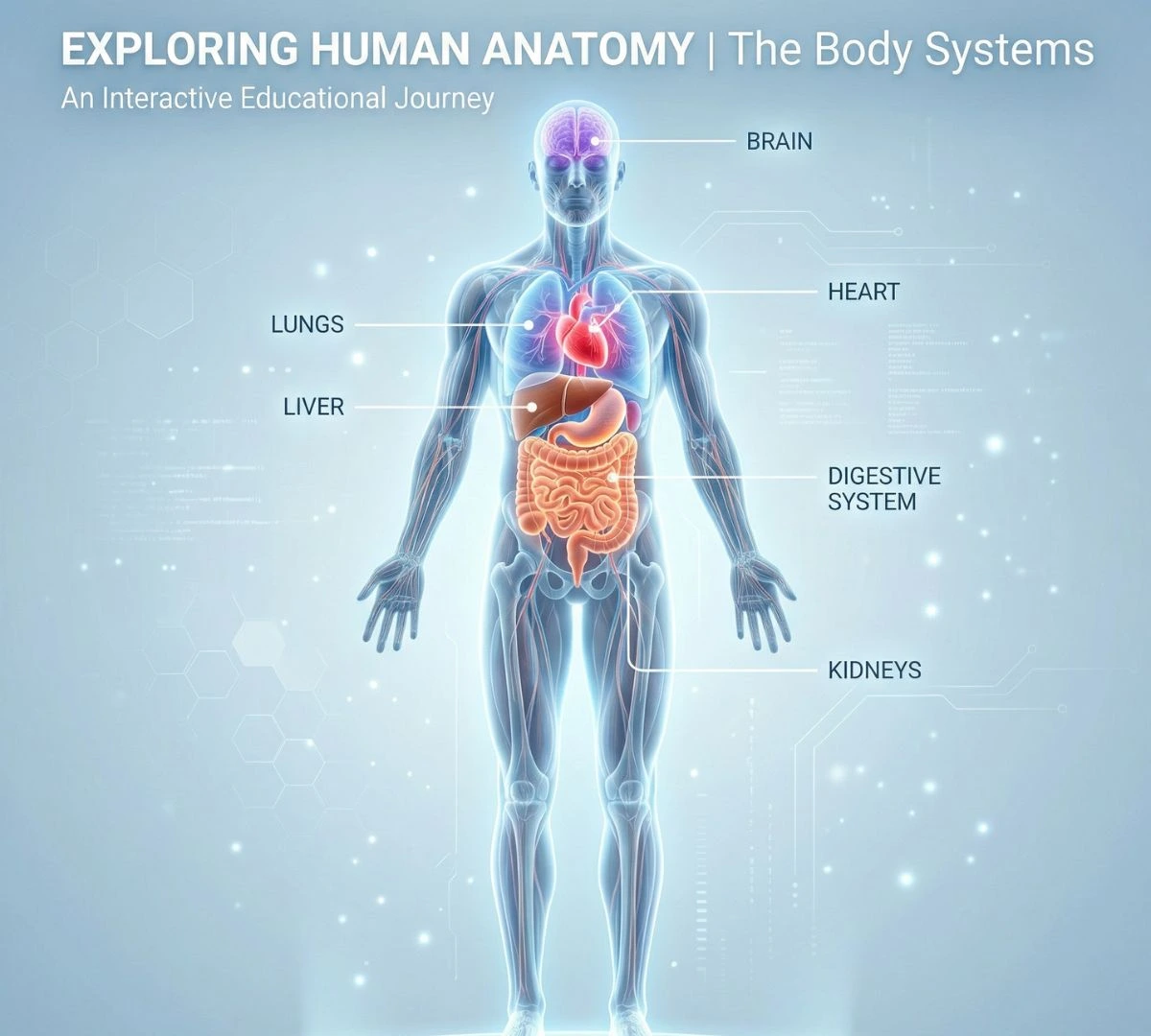
Brain → controls thoughts and actions
Heart → pumps blood
Lungs → breathing
Liver → detox + metabolism
Kidneys → filter blood
Stomach → digestion
👉 Each organ plays a specific role in survival.
To learn yoga in depth, explore our courses below.
How Organ Systems Work Together
No system works alone.
👉 Example:
• Respiratory system → provides oxygen
• Circulatory system → transports oxygen
• Cells → use oxygen for energy
👉 This teamwork keeps the body alive.
Unique Features of the Human Body
• Highly developed brain
• Ability to think and reason
• Upright (bipedal) posture
• Advanced communication
👉 Humans are unique among animals due to intelligence and adaptability
Interesting Facts About the Human Body
• ~37 trillion cells in the body
• Heart beats ~100,000 times/day
• Brain has billions of neurons
• Blood vessels could circle Earth
Why Understanding the Human Body Matters
Knowing your body helps you:
• improve health
• prevent diseases
• make better lifestyle choices
Common Misconceptions
❌ Myth: The body works independently
✔ Truth: All systems are interconnected
❌ Myth: Only organs matter
✔ Truth: Cells and tissues are equally important
❌ Myth: The brain controls everything alone
✔ Truth: Hormones and systems also regulate functions
Final Thoughts
The human body is not just a structure —
it’s a perfectly coordinated system of life.
👉 Most important takeaway:
Every part of your body works together to keep you alive, balanced, and functioning.
FAQ Section
What is the human body?
The human body is a complex system made of cells, tissues, organs, and systems working together to sustain life.
How many systems are in the human body?
There are 9 to 12 major organ systems depending on classification.
What is the most important organ?
The brain is often considered the most important because it controls all body functions.
What percentage of the body is water?
About 60% of the human body is made of water.
How do body systems work together?
They interact and depend on each other to maintain life and balance.
What is human anatomy?
Human anatomy is the study of the structure of the human body and its parts.
Why is the human body important to study?
It helps understand health, disease, and how the body functions.
Check out our Retreats in Rishikesh for Beginners and intermediates: