
Staff Pose (Dandasana): Benefits, Steps, Muscles Worked & Tips
Staff Pose, also known as Dandasana, is one of the most important foundational seated yoga poses. While it may appear simple, this posture builds the alignment, strength, and body awareness required for many advanced yoga poses.
In Staff Pose, the spine remains upright like a staff or stick, which is where the Sanskrit name comes from — “Danda” meaning staff and “Asana” meaning pose. This posture teaches proper sitting alignment while strengthening the core, back muscles, and legs.
Yoga teachers often use Dandasana as the base for many seated poses, including forward bends and twists. Regular practice can help improve posture, increase flexibility, and support spinal health.
In this guide, you will learn how to do Staff Pose step-by-step, its benefits, muscles worked, variations, and precautions.
What Is Staff Pose (Dandasana)?
Staff Pose (Dandasana) is a seated yoga posture where the legs are extended straight in front of the body while the spine remains tall and upright.
Although it looks like simply sitting with your legs straight, the pose requires active engagement of the legs, core, and back muscles to maintain proper alignment.
Dandasana is considered the “mother of all seated yoga poses” because many yoga postures begin from this position.
Key Characteristics of Staff Pose
Seated upright posture
Legs extended straight forward
Spine tall and aligned
Core muscles engaged
Shoulders relaxed but stable
Practicing this pose regularly helps develop body awareness, balance, and posture control.
How to Do Staff Pose (Dandasana)
Follow these step-by-step instructions to perform Staff Pose correctly.
Step-by-Step Instructions
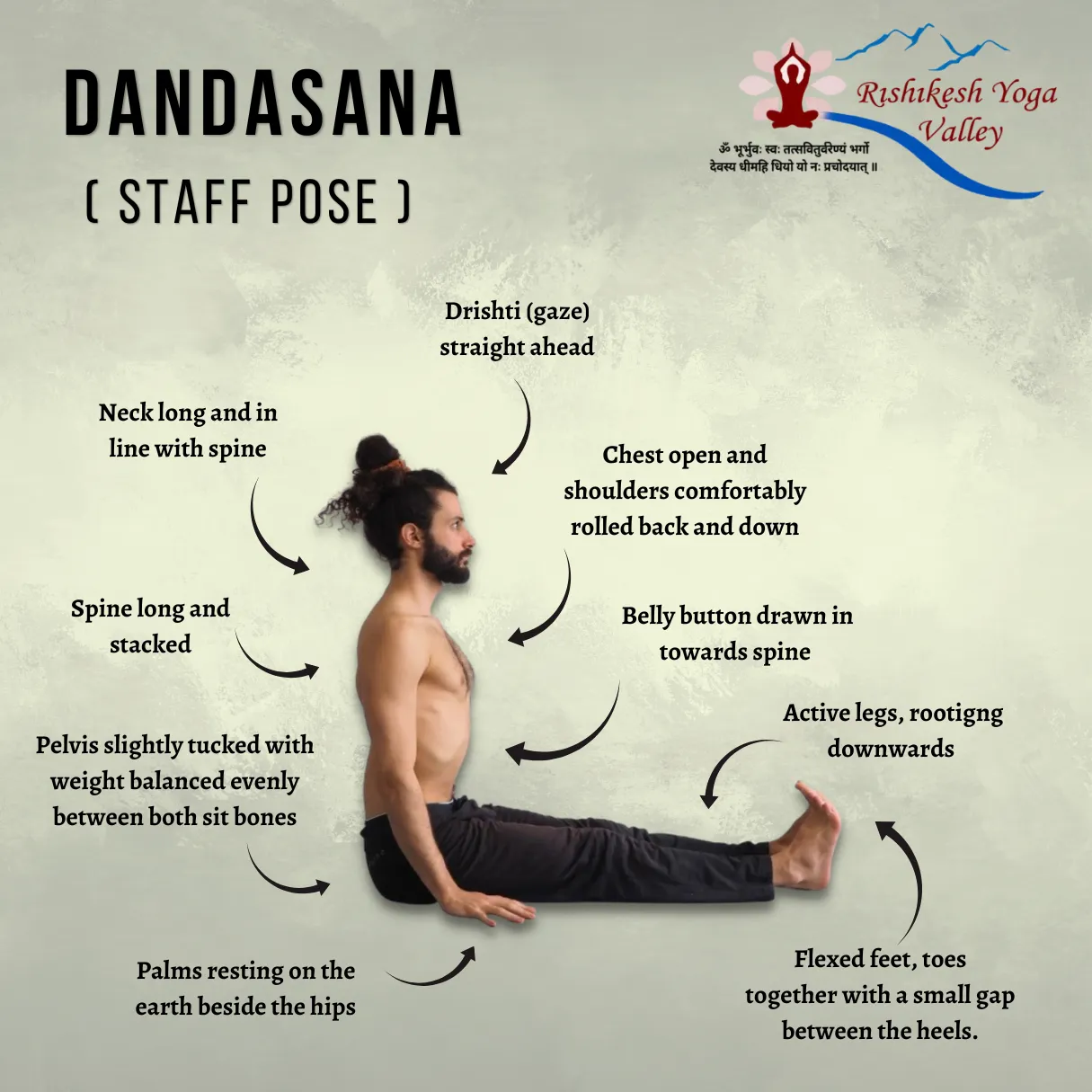
Sit on a yoga mat with your legs extended straight in front of you.
Bring your feet together and flex your toes upward toward the ceiling.
Press the backs of your legs gently into the floor.
Sit firmly on your sit bones and lengthen your spine upward.
Place your hands beside your hips on the floor with fingers pointing forward.
Pull your shoulders slightly back and down away from the ears.
Engage your core muscles and lift the chest.
Keep your gaze forward and breathe slowly.
Hold the pose for 20–30 seconds or 8–10 breaths.
Release slowly and relax.
Breathing Pattern
Inhale: Lengthen the spine upward.
Exhale: Press the legs into the floor and engage the core.
To learn yoga in depth, explore our courses below.
7 Benefits of Staff Pose (Dandasana)
Practicing Staff Pose regularly can provide several physical and mental health benefits.
1. Improves Posture
Staff Pose trains the body to sit upright with a neutral spine, which can help correct poor posture caused by long hours of sitting.
2. Strengthens the Core
Maintaining the upright position engages the abdominal muscles and lower back, helping strengthen the core.
3. Stretches the Hamstrings
Keeping the legs extended provides a gentle stretch for the hamstrings and calves.
4. Supports Spinal Health
The pose encourages proper spinal alignment, which may help reduce back stiffness.
5. Increases Body Awareness
Because the pose requires alignment of multiple body parts, it enhances mind-body awareness and balance.
6. Prepares the Body for Advanced Poses
Many yoga poses like seated forward bends and twists begin from Dandasana.
7. Helps Reduce Fatigue
Practicing yoga poses like Staff Pose can help reduce fatigue and improve energy levels by activating muscles and improving circulation.
Muscles Worked in Staff Pose
Staff Pose activates several important muscle groups, including:
Primary Muscles
Core muscles
Lower back muscles
Hip flexors
Quadriceps
Secondary Muscles
Hamstrings
Calves
Shoulder stabilizers
Engaging these muscles properly helps build stability and strength throughout the body.
Common Mistakes to Avoid
Beginners often make small alignment mistakes in Staff Pose.
1. Rounding the Back
Avoid slouching. Keep the spine tall and chest lifted.
2. Locked Knees
Do not push the knees aggressively into the floor.
3. Shoulders Hunched Up
Relax your shoulders and keep them away from the ears.
4. Leaning Back
Your torso should remain upright, not tilted backward.
Staff Pose Modifications for Beginners
If you find the pose uncomfortable, try these modifications:
Sit on a Folded Blanket
This helps elevate the hips and makes it easier to maintain a straight spine.
Bend the Knees Slightly
This reduces strain on tight hamstrings.
Use Wall Support
Sit with your back against a wall for better posture alignment.
Check out our Retreats in Rishikesh for Beginners and intermediates:
Staff Pose Variations
Once you are comfortable with Dandasana, you can try variations.
Raised Arms Staff Pose
Raise your arms overhead while maintaining the posture.
Revolved Staff Pose
Twist the torso gently to one side while keeping the legs straight.
Strap Assisted Staff Pose
Use a yoga strap around the feet to maintain alignment.
Who Should Avoid Staff Pose?
Although it is a beginner-friendly posture, some people should practice with caution.
Avoid or modify the pose if you have:
Severe lower back pain
Hamstring injuries
Recent spinal surgery
Knee or hip injuries
Always practice under the guidance of a qualified yoga instructor if you have medical conditions.
Tips to Improve Your Staff Pose
Keep your sit bones grounded evenly
Engage the core muscles
Lift the chest gently upward
Avoid leaning backward
Focus on steady breathing
With regular practice, you will notice improvements in posture, flexibility, and stability.
Conclusion
Staff Pose, or Dandasana, is a foundational yoga posture that teaches proper alignment and body awareness. Despite its simple appearance, it actively strengthens the core, improves posture, and prepares the body for more advanced seated poses.
By practicing Staff Pose regularly with proper technique, you can develop stronger back muscles, better flexibility, and improved spinal alignment.
Beginners should start slowly, focus on posture, and use modifications if needed to make the pose comfortable and effective.
Frequently Asked Questions
1. What is Staff Pose (Dandasana)?
Staff Pose, or Dandasana, is a seated yoga posture where the legs are extended forward and the spine remains upright and straight like a staff.
2. Is Staff Pose good for beginners?
Yes, Staff Pose is beginner-friendly and helps improve posture, core strength, and body alignment.
3. How long should you hold Staff Pose?
You can hold Staff Pose for about 20–30 seconds or 5–10 deep breaths while maintaining a straight spine.
4. What are the benefits of Dandasana?
Dandasana helps improve posture, strengthen the core and back muscles, stretch the legs, and increase body awareness.
5. Who should avoid Staff Pose?
People with severe back pain, hamstring injuries, or recent spinal surgery should practice this pose cautiously or consult a yoga professional.