

Kundalini Awakening: Myth vs Reality in the Yogic Tradition
In modern yoga conversations, few topics create as much curiosity and misunderstanding as Kundalini awakening.
Online videos, social media posts, and spiritual blogs often describe Kundalini as a mysterious energy that can suddenly awaken and produce intense mystical experiences. Some portray it as a dramatic transformation, while others warn of dangers associated with awakening this energy too quickly.
But what does traditional yoga philosophy actually say about Kundalini?
For centuries, yogic texts and teachers have described Kundalini as a subtle form of inner energy connected with spiritual development and self-awareness. However, the process of awakening this energy is usually understood as gradual, disciplined, and guided through consistent practice.
Students who travel to Rishikesh, located in the foothills of the Himalayas, often encounter these teachings while studying yoga philosophy, meditation, pranayama, and yogic lifestyle practices during immersive training programs or retreats.
Understanding the difference between myth and reality can help yoga students approach this subject with clarity and respect for traditional teachings.
In this article we will explore:
- What Kundalini means in yogic philosophy
- Common myths about Kundalini awakening
- How traditional yoga approaches Kundalini development
- The role of meditation, pranayama, and disciplined practice
- Why gradual inner development is emphasized in yoga
Quick Answer: What Is Kundalini?
Kundalini is described in yogic philosophy as a form of latent spiritual energy believed to reside at the base of the spine.
According to traditional teachings, this energy becomes gradually awakened through practices such as:
- meditation
- pranayama breathing techniques
- asana practice
- disciplined yogic lifestyle
Rather than a sudden mystical event, Kundalini awakening is traditionally viewed as a slow process of inner transformation and increased awareness.
To learn yoga in depth, explore our courses below.
Understanding Kundalini in Traditional Yoga
The concept of Kundalini appears in several classical yogic and tantric traditions.
In yogic symbolism, Kundalini is often described as a coiled serpent resting at the base of the spine.
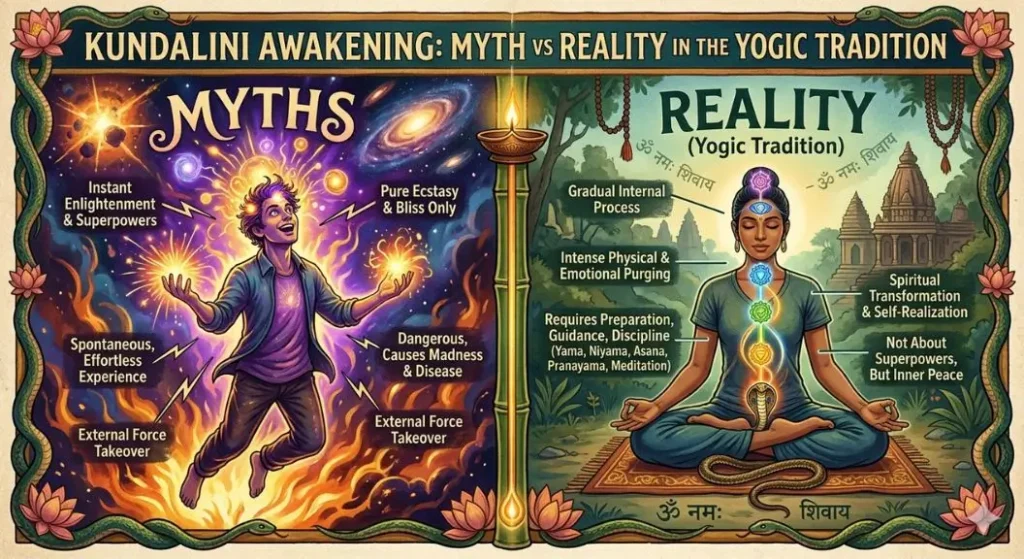
When awakened through disciplined practice, this energy is believed to move upward through subtle energy centers known as chakras.
These chakras are traditionally described as energetic centers associated with different aspects of human consciousness.
The Chakra System in Yogic Philosophy
Chakra | Location | Associated Qualities |
Root Chakra | Base of spine | Stability and grounding |
Sacral Chakra | Lower abdomen | Creativity and emotion |
Solar Plexus Chakra | Upper abdomen | Personal power |
Heart Chakra | Center of chest | Compassion and connection |
Throat Chakra | Throat | Communication and expression |
Third Eye Chakra | Forehead | Insight and intuition |
Crown Chakra | Top of head | Spiritual awareness |
In traditional teachings, Kundalini awakening is often described as energy gradually rising through these centers, expanding awareness and consciousness.
Common Myths About Kundalini Awakening
Myth 1: Kundalini Awakening Happens Suddenly
Many online stories describe sudden dramatic awakenings.
However, classical yoga teachings emphasize gradual development through disciplined practice.
Practices such as meditation, pranayama, and ethical living are considered essential preparation.
Myth 2: Kundalini Awakening Is the Goal of Yoga
Another misconception is that awakening Kundalini is the primary goal of yoga.
Traditional texts such as the Yoga Sutras of Patanjali focus more on developing mental clarity and inner stillness.
Kundalini is often considered a byproduct of deep spiritual practice, not the main objective.
Myth 3: Only Advanced Yogis Can Experience Kundalini
Some people believe Kundalini awakening is reserved only for highly advanced practitioners.
In reality, yogic traditions suggest that spiritual awareness unfolds naturally as individuals cultivate mindfulness, discipline, and compassion.
Myth 4: Kundalini Awakening Is Dangerous
While some modern discussions describe frightening experiences, traditional yoga places strong emphasis on balanced practice and guidance from experienced teachers.
Proper training ensures that practices are approached gradually and safely.
The Role of Yoga Practice in Kundalini Development
Rather than forcing Kundalini awakening, traditional yoga emphasizes balanced personal development.
Several core practices support this process.
1. Asana Practice
Physical yoga postures help prepare the body by improving:
- spinal alignment
- energy circulation
- nervous system balance
Regular asana practice supports overall physical wellbeing, which is considered essential for deeper meditation.
2. Pranayama
Pranayama refers to breathing techniques that regulate energy in the body.
Examples include:
- Nadi Shodhana (alternate nostril breathing)
- Kapalabhati (cleansing breath)
- Ujjayi breathing
These practices help calm the nervous system and improve concentration.
3. Meditation
Meditation plays a central role in yogic spiritual development.
Through consistent meditation practice, students cultivate:
- mental clarity
- emotional balance
- deeper self-awareness
These qualities are considered foundational for inner transformation.
4. Yogic Lifestyle
Traditional yoga also emphasizes lifestyle principles such as:
- ethical living
- mindful nutrition
- discipline and self-study
These practices create the foundation for spiritual growth.
Looking for short yoga program?
Check out below our:
Why Rishikesh Is Associated With Yogic Spiritual Study
Many students interested in yoga philosophy travel to Rishikesh, a town long associated with spiritual learning.
Situated near the Himalayas, Rishikesh has been home to yogis and meditation practitioners for centuries.
Today it remains a global center for studying practices such as:
- yoga philosophy
- meditation
- pranayama
- Ayurvedic lifestyle traditions
Many yoga schools offer immersive programs where students explore these teachings in a supportive environment.
Kundalini and Modern Yoga Education
In contemporary yoga education, Kundalini is often studied within broader discussions of:
- subtle energy systems
- meditation practices
- yogic philosophy
Training programs frequently emphasize that spiritual development should occur naturally through consistent practice rather than forced experiences.
Students are encouraged to focus on:
- regular practice
- patience
- self-awareness
These principles align with the deeper teachings of yoga.
Real Experiences Students Often Report
Students who engage in consistent yoga practice often describe changes such as:
- greater mental clarity
- increased emotional balance
- improved body awareness
- deeper connection to breath
These gradual changes reflect the transformative effects of yoga practice, which traditional teachings emphasize more than dramatic mystical events.
People Also Ask
What is Kundalini awakening?
Kundalini awakening refers to the gradual activation of a subtle form of spiritual energy described in yogic traditions. This process is believed to occur through disciplined practices such as meditation, pranayama, and mindful living.
Is Kundalini awakening dangerous?
In traditional yoga teachings, Kundalini practices are approached gradually and under guidance from experienced teachers. Balanced practice helps ensure safe spiritual development.
What practices help awaken Kundalini?
Practices often associated with Kundalini development include meditation, pranayama breathing techniques, yoga postures, and disciplined yogic lifestyle habits.
Do all yoga practitioners experience Kundalini awakening?
Not necessarily. Many yoga practitioners focus on improving physical health, mental clarity, and mindfulness without specifically pursuing Kundalini experiences.
Why do people study yoga philosophy in Rishikesh?
Rishikesh has long been associated with spiritual learning and yoga traditions. Its peaceful Himalayan environment supports meditation and philosophical study.
What role does meditation play in Kundalini awakening?
Meditation helps develop concentration and self-awareness, which are considered essential for deeper spiritual development.
Is Kundalini mentioned in classical yoga texts?
Kundalini concepts appear in several yogic and tantric traditions, though classical texts often emphasize mental clarity and disciplined practice as the core goals of yoga.
Can beginners learn about Kundalini in yoga training?
Yes. Many yoga training programs introduce students to the philosophical concepts surrounding Kundalini within broader discussions of yoga philosophy and meditation.
Check out our Retreats in Rishikesh for Beginners and intermediates:
Key Takeaways
- Kundalini is traditionally described as a subtle form of spiritual energy in yogic philosophy.
- Awakening this energy is believed to occur gradually through disciplined practices.
- Yoga emphasizes balanced development through meditation, pranayama, and ethical living.
- Dramatic or sudden awakening experiences are often exaggerated in modern media.
Studying yoga philosophy in places such as Rishikesh, near the Himalayas, provides deeper understanding of these teachings.
Final Thoughts
The concept of Kundalini awakening has fascinated yoga practitioners for centuries.
However, traditional yoga teachings emphasize patience, discipline, and gradual development rather than dramatic spiritual experiences.
Through consistent practice of asana, pranayama, meditation, and mindful living, students often experience profound personal growth over time.
Many individuals who explore yoga more deeply travel to Rishikesh, where the peaceful Himalayan environment and long-standing yoga traditions provide a supportive setting for studying philosophy and meditation.
Yoga schools such as Rishikesh Yoga Valley offer training programs and retreat experiences that introduce students to these teachings within a balanced and structured approach.
Ultimately, the true purpose of yoga is not chasing mystical experiences—but cultivating awareness, balance, and harmony within oneself.
FAQ
What is Kundalini awakening in yoga?
Kundalini awakening refers to the gradual activation of spiritual energy described in yogic philosophy.
Is Kundalini awakening sudden?
Traditional yoga teachings describe Kundalini awakening as a gradual process developed through consistent spiritual practice.
What practices are associated with Kundalini development?
Meditation, pranayama breathing, yoga postures, and disciplined lifestyle practices are often associated with Kundalini development.
Why is Rishikesh associated with yoga philosophy?
Rishikesh has long been a center for yoga and meditation traditions, located in the Himalayan foothills along the Ganges River.