
Cobra Pose (Bhujangasana): Benefits, Steps, Muscles Worked & Precautions
Introduction
Cobra Pose, also known as Bhujangasana, is one of the most popular back-bending yoga poses practiced in many yoga styles. It is a foundational posture that strengthens the spine, opens the chest, and improves flexibility.
The name Bhujangasana comes from the Sanskrit words “Bhujanga” meaning snake or cobra and “Asana” meaning pose. In this posture, the body resembles a cobra raising its hood, which is why it is commonly called Cobra Pose.
This pose is commonly included in the Sun Salutation (Surya Namaskar) sequence and is suitable for both beginners and experienced practitioners. Regular practice of Bhujangasana can improve posture, strengthen the back muscles, and help reduce stress caused by long hours of sitting.
In this guide, you will learn how to do Cobra Pose step-by-step, its benefits, muscles worked, variations, and precautions.
What Is Cobra Pose (Bhujangasana)?
Cobra Pose is a gentle backbend yoga posture performed while lying on the stomach. In this pose, the chest is lifted off the floor while the legs remain grounded, creating a natural arch in the spine.
Bhujangasana primarily targets the spine, chest, shoulders, and abdominal muscles. It helps counteract poor posture caused by excessive sitting, working on computers, or looking down at phones.
Key Details
Sanskrit Name: Bhujangasana
English Name: Cobra Pose
Pose Type: Backbend
Difficulty Level: Beginner
Best Time to Practice: Morning on an empty stomach
Duration: 15–30 seconds per repetition
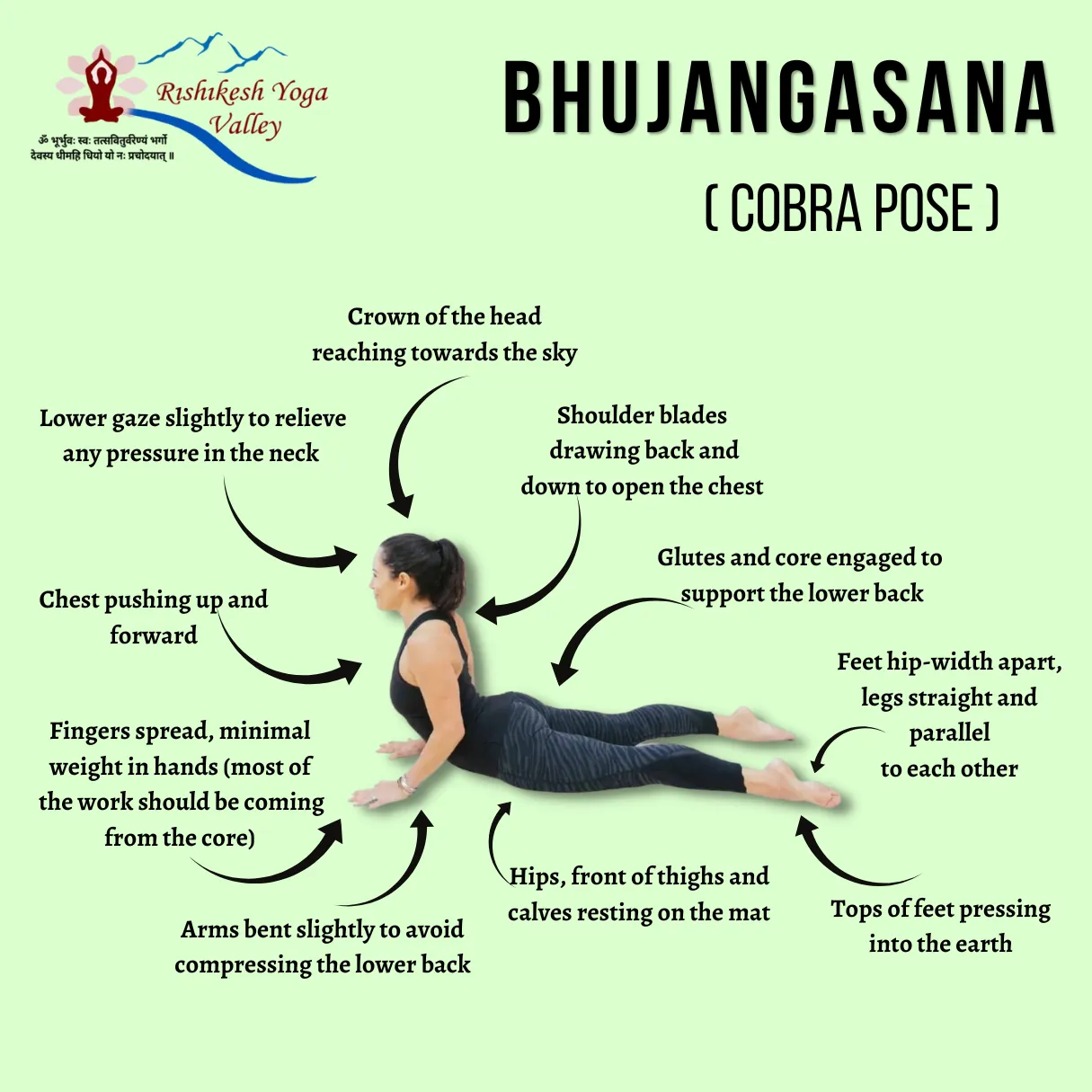
How to Do Cobra Pose (Bhujangasana) Step-by-Step
Follow these simple steps to perform Cobra Pose correctly:
1. Start in a Prone Position
Lie flat on your stomach on a yoga mat. Keep your legs extended behind you with the tops of your feet resting on the floor.
2. Place Your Hands
Place your palms on the floor under your shoulders. Keep your elbows close to your body.
3. Engage Your Legs
Press your thighs and pelvis gently into the mat while keeping your legs active.
4. Lift Your Chest
Inhale and slowly lift your chest off the floor using your back muscles. Keep your elbows slightly bent.
5. Lengthen Your Spine
Roll your shoulders back and open your chest while keeping your neck long.
6. Hold the Pose
Maintain the pose for 15–30 seconds while breathing steadily.
7. Release
Exhale slowly and lower your chest back to the floor.
Repeat 3–5 times for best results.
To learn yoga in depth, explore our courses below.
Muscles Worked in Cobra Pose
Cobra Pose works several muscle groups throughout the body.
Muscles Stretched
Abdominal muscles
Chest muscles (pectorals)
Hip flexors
Neck muscles
Muscles Strengthened
Spine extensors
Glutes
Upper back muscles
Shoulders and arms
This balanced engagement helps improve posture and spinal flexibility.
Benefits of Cobra Pose
Practicing Bhujangasana regularly offers many physical and mental health benefits.
1. Strengthens the Spine
Cobra Pose strengthens the muscles along the spine, improving posture and reducing stiffness.
2. Improves Flexibility
The pose stretches the chest, shoulders, and abdomen, helping increase upper body flexibility.
3. Reduces Lower Back Pain
Gentle backbending movements can relieve tension in the lower back caused by prolonged sitting.
4. Opens the Chest and Lungs
Bhujangasana expands the chest area, which may improve breathing capacity.
5. Improves Posture
Regular practice helps correct slouching and forward head posture caused by desk work.
6. Reduces Stress and Fatigue
The chest-opening movement can boost energy levels and help relieve stress.
Cobra Pose Variations
1. Low Cobra Pose
In this variation, the elbows remain bent and the chest lifts slightly off the floor. It is ideal for beginners.
2. Full Cobra Pose
The arms straighten more fully, lifting the torso higher while maintaining spinal length.
3. Sphinx Pose
A gentler alternative where the forearms rest on the floor while the chest lifts upward.
Check out our Retreats in Rishikesh for Beginners and intermediates:
Tips for Beginners
Keep your elbows slightly bent instead of locking them.
Avoid pushing too hard with your hands.
Focus on lifting your chest using your back muscles.
Keep your shoulders relaxed and away from your ears.
Breathe slowly and steadily
Precautions and Contraindications
Although Cobra Pose is generally safe, certain people should practice caution.
Avoid or modify this pose if you have:
Recent abdominal surgery
Wrist injuries
Severe back pain
Pregnancy
Hernia
If you have a medical condition, consult a healthcare professional or certified yoga instructor before practicing.
Conclusion
Cobra Pose (Bhujangasana) is a powerful yet beginner-friendly yoga posture that strengthens the spine, improves flexibility, and opens the chest. It is commonly practiced in yoga sequences like Sun Salutation and is beneficial for improving posture and reducing stress.
By practicing Cobra Pose regularly with proper alignment, you can enhance spinal health, build strength, and experience greater energy throughout the day.
FAQs
1. What is Cobra Pose in yoga?
Cobra Pose, or Bhujangasana, is a back-bending yoga posture performed while lying on the stomach and lifting the chest off the floor.
2. How long should you hold Cobra Pose?
You can hold Cobra Pose for about 15–30 seconds while breathing steadily.
3. Is Cobra Pose good for back pain?
Yes, Cobra Pose may help relieve mild lower back pain by strengthening spinal muscles and improving flexibility.
4. Can beginners do Bhujangasana?
Yes, beginners can practice Bhujangasana by starting with Low Cobra Pose and gradually increasing the depth of the stretch.
5. How many times should you do Cobra Pose?
You can repeat Cobra Pose 3–5 times during a yoga session.