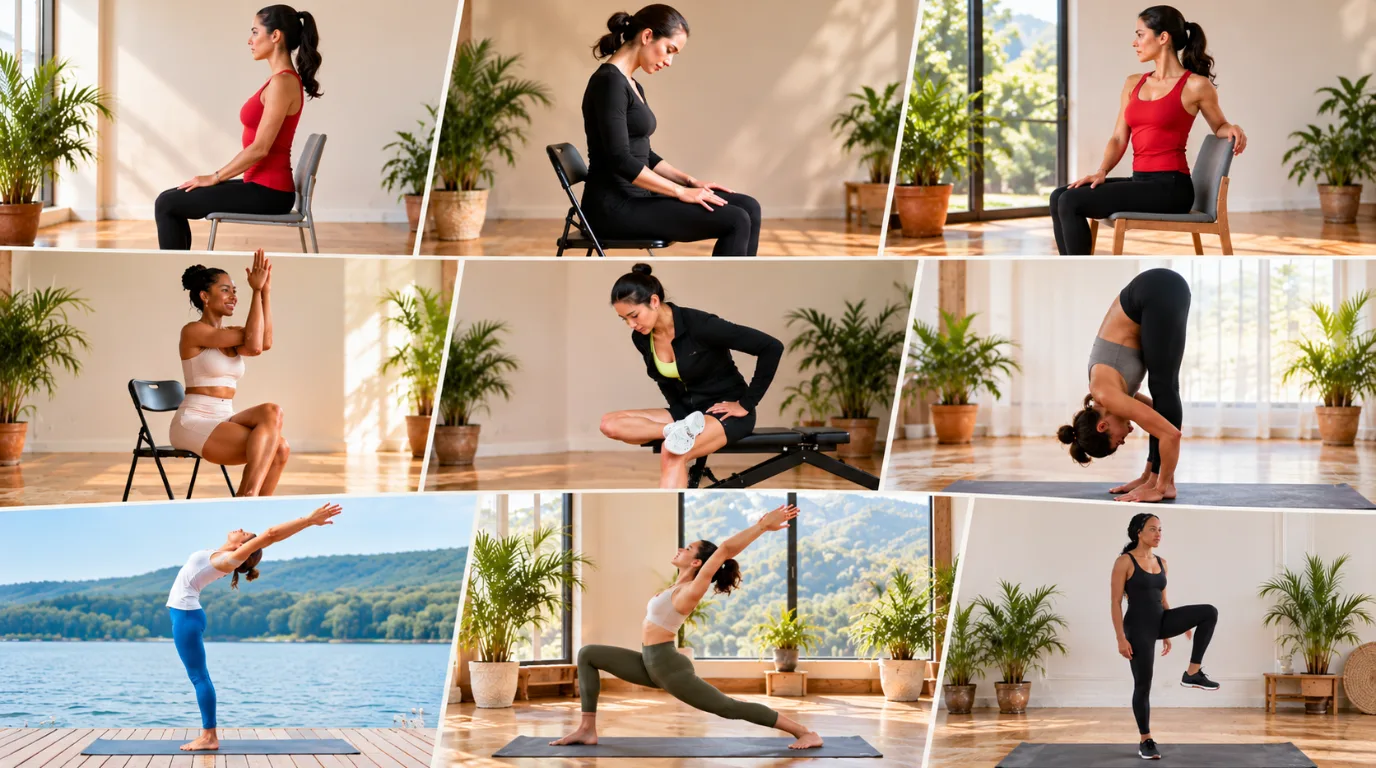
The human body wasn’t designed to fold into a 90-degree angle for eight hours a day, but that’s exactly what most desk jobs ask of it. The result shows up predictably: tight hip flexors, a rounded upper back, a forward-jutting neck sometimes called “tech neck,” and a lower back that aches the moment you finally stand up. The good news is that undoing this damage doesn’t require a studio, a mat, or even leaving your chair for most of it. Here’s a set of poses built specifically around what a desk job does to your body – not a generic yoga sequence, but a targeted counter to hours of sitting still.
What Sitting All Day Actually Does to Your Body
Before the poses, it helps to understand exactly what you’re undoing, since it makes the “why” behind each stretch click:
- Hip flexors shorten and tighten, since they stay in a permanently contracted position while you’re seated, which can pull on the lower back and contribute to that dull, aching stiffness.
- The chest and shoulders round forward, while the muscles of the upper back weaken from disuse – the classic hunched “desk posture” that becomes harder to reverse the longer it goes unaddressed.
- The neck juts forward toward a screen, a pattern often nicknamed “tech neck,” which places significantly more load on the cervical spine than a neutral head position does.
- Circulation slows throughout the legs and lower body, contributing to that heavy, sluggish feeling by mid-afternoon.
Every pose below is chosen specifically to reverse one or more of these patterns.
Seated Poses You Can Do Right at Your Desk
Seated Cat-Cow
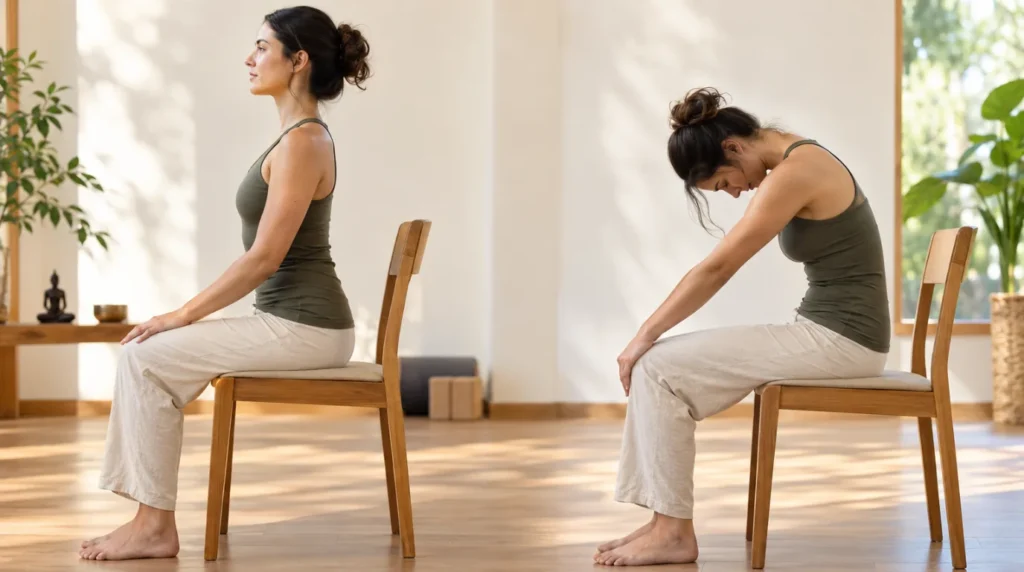
Sit at the edge of your chair, feet flat on the floor, hands resting on your knees. Inhale, arch your back, lift your chest, and look slightly up. Exhale, round your spine, tuck your chin, and draw your navel in. Move slowly between the two for 8–10 breaths.
Why it helps: It mobilizes a spine that’s been locked in one position for hours, directly countering the stiffness that builds up between movement breaks.
Seated Spinal Twist
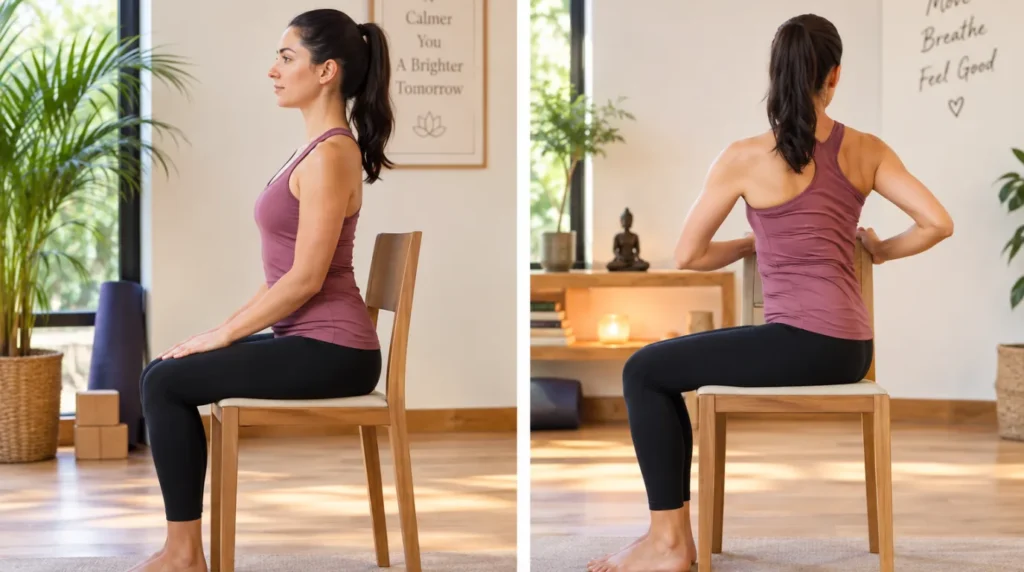
Sit tall, feet flat on the floor. Place your right hand on the back of your chair, your left hand on your right knee, and gently twist your torso to the right, keeping your hips facing forward. Hold for 4–5 breaths, then switch sides.
Why it helps: A day of sitting facing one direction leaves almost no rotational movement in the spine – this pose reintroduces it, and helps relieve tension that builds along the sides of the lower back.
Eagle Arms
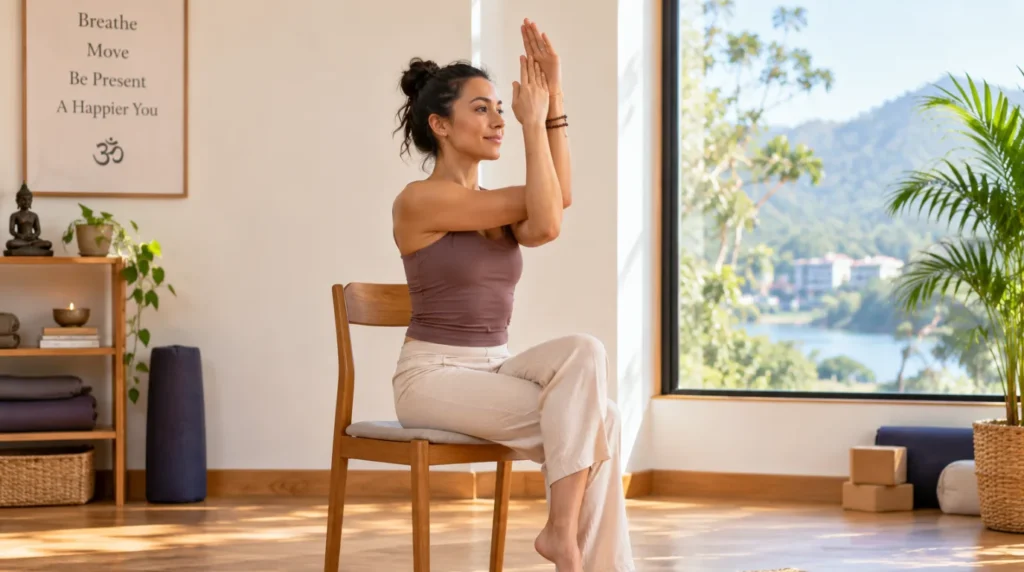
Extend both arms forward, cross your right arm over your left, and bring your palms to touch (or the backs of your hands together if your palms don’t reach). Lift your elbows slightly and hold for 5 breaths, feeling the stretch across your upper back and shoulders, then switch sides.
Why it helps: It directly counters rounded desk-posture shoulders by pulling the shoulder blades apart and releasing tension that builds between them from hours of reaching forward toward a keyboard.
Neck Rolls
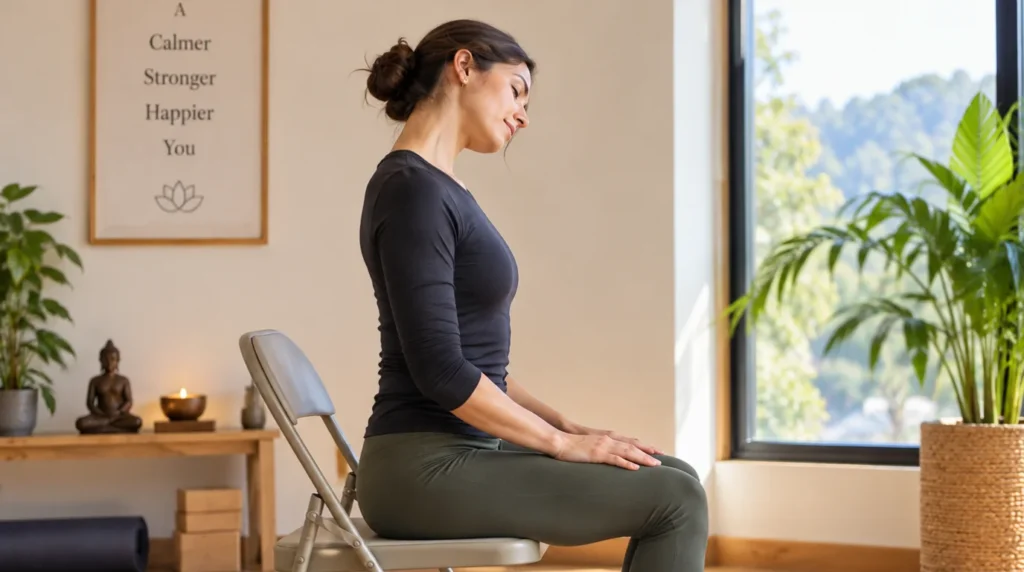
Slowly drop your right ear toward your right shoulder, then gently roll your chin down toward your chest and over to the left shoulder, completing a slow half-circle. Reverse direction after a few rounds. Keep the movement slow and gentle – never forced.
Why it helps: It releases the tight, overworked muscles at the base of the skull and sides of the neck that build up from hours of tech neck posture.
Seated Figure-Four Stretch
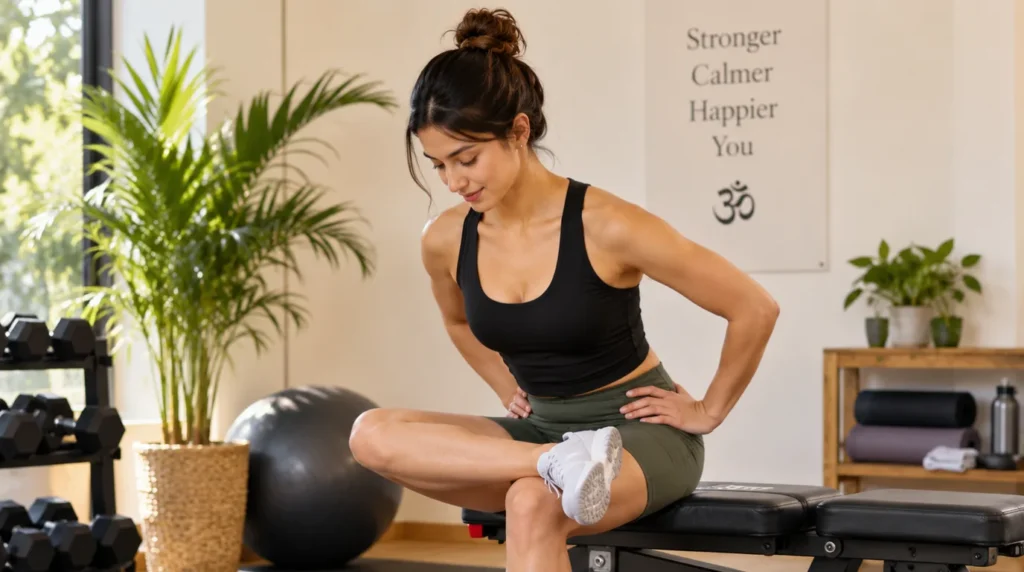
Cross your right ankle over your left knee, forming a “4” shape, and gently hinge forward from the hips until you feel a stretch through your right hip and glute. Hold for 5 breaths, then switch sides.
Why it helps: It directly targets the tight hip rotators and glutes that stay compressed all day in a seated position – one of the most overlooked contributors to lower back discomfort in desk workers.
Standing Poses for a Quick Reset (Near Your Desk or During a Break)
Standing Forward Fold
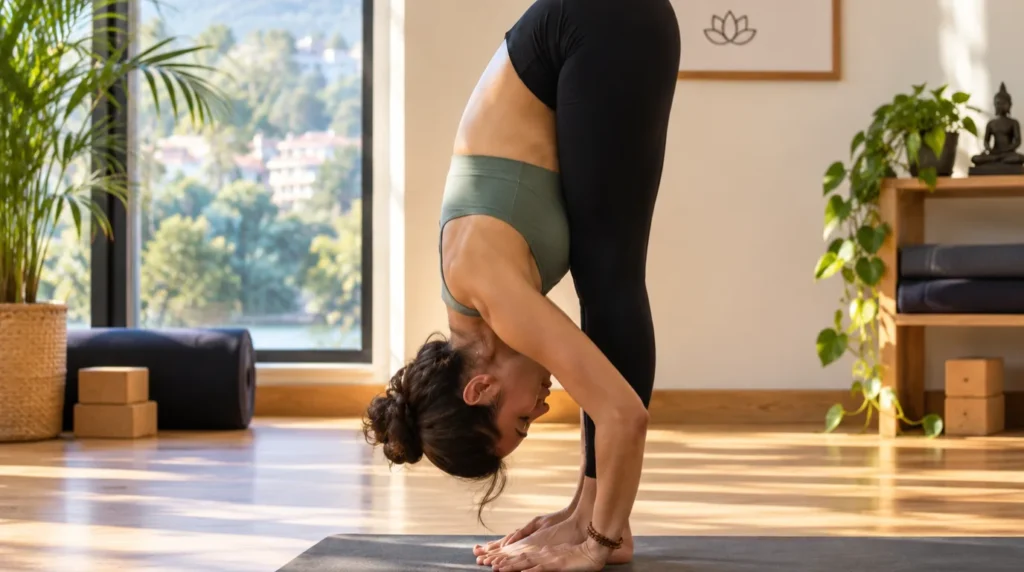
Stand up, feet hip-width apart, and slowly hinge forward from the hips, letting your head hang heavy and knees stay soft. Let your arms dangle or hold opposite elbows. Hold for 5–8 breaths.
Why it helps: It reverses the seated hip crease your body has held all day and releases tension through the hamstrings and lower back simultaneously.

Standing Backbend (Chair Pose Variation)

Stand tall, interlace your fingers behind your back, and gently open your chest while drawing your shoulder blades together, lifting your gaze slightly. Hold for 3–5 breaths.
Why it helps: It’s the direct opposite shape of hunching over a screen, opening the chest and stretching the exact muscles that spend all day shortened.
Crescent Moon Pose
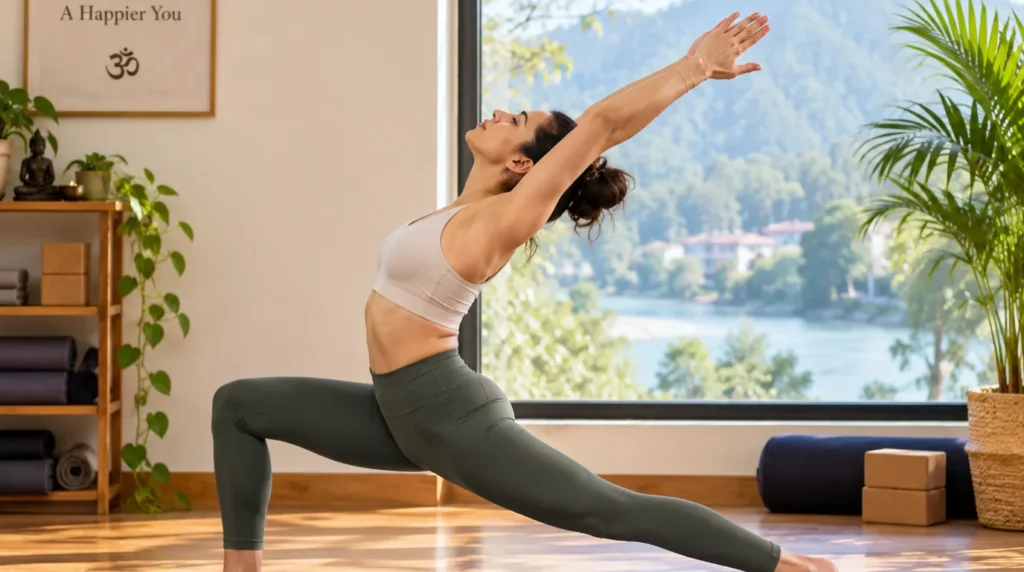
Stand with feet together, reach both arms overhead, palms together, and gently lean to one side, feeling a stretch along your side body. Hold for 3 breaths, then switch sides.
Why it helps: Side-body stretches are almost never triggered by ordinary desk movement, and this one lengthens the entire torso in a way a day of sitting simply doesn’t.
Standing Hip Flexor Stretch (Low Lunge)
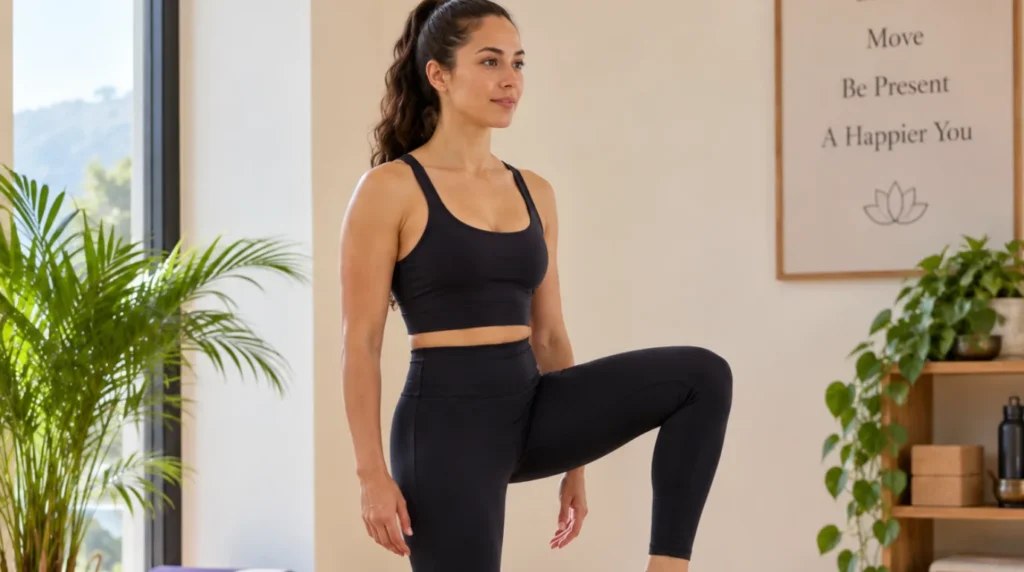
Step your right foot forward into a gentle lunge, back knee lowered toward the floor, and press your hips gently forward until you feel a stretch across the front of your back hip. Hold for 5 breaths, then switch sides.
Why it helps: This directly targets the hip flexors, the single most consistently tightened muscle group from sitting, and one that rarely gets stretched through normal daily movement.
Building It Into an Actual Workday
The real key isn’t doing all nine poses in one long session – it’s spreading a few of them across your day. A realistic rhythm might look like: two or three seated poses every hour or two right at your desk, and a quick standing sequence during your lunch break or any longer pause between meetings. Even 60–90 seconds of movement every hour meaningfully interrupts the pattern of prolonged stillness that causes most of this stiffness in the first place – you don’t need a 30-minute practice to feel the difference.
Frequently Asked Questions
Can I really do yoga poses without leaving my desk chair?
Yes – several of the poses here, including seated twists, Eagle Arms, and neck rolls, are designed specifically to be done seated, without needing a mat or any extra space.
How often should I stretch during a workday to prevent stiffness?
Aiming for a short stretch break every hour or two tends to work far better than one longer session at the end of the day, since it prevents stiffness from building up in the first place rather than trying to undo it afterward.
What is "tech neck," and can yoga help with it?
Tech neck refers to the forward head posture caused by looking down at screens for long periods, which places extra strain on the cervical spine. Neck rolls, Eagle Arms, and standing backbends all help counter it by realigning posture and releasing the muscles that tighten around it
Is desk yoga enough, or do I still need a full workout?
Desk yoga is excellent for undoing the specific stiffness and postural strain caused by sitting, but it isn’t a full substitute for regular exercise. Think of it as damage control for your workday, alongside whatever broader fitness routine you already maintain.
Which pose helps most with lower back pain from sitting?
The Seated Figure-Four Stretch and Standing Hip Flexor Stretch both target the tight hips that are a leading contributor to sitting-related lower back discomfort – pair those with our full guide on yoga for lower back pain for a more complete approach.
From Desk Relief to a Deeper Practice
Simple poses like these are a genuinely effective daily habit, but they’re also just a small window into what a consistent yoga practice can do for the body over time. If sitting all day has made you curious about building a real, sustained practice – or even about one day teaching others how to undo the same damage in their own lives – our 200-Hour Yoga Teacher Training in Rishikesh is a genuine deep-end starting point.