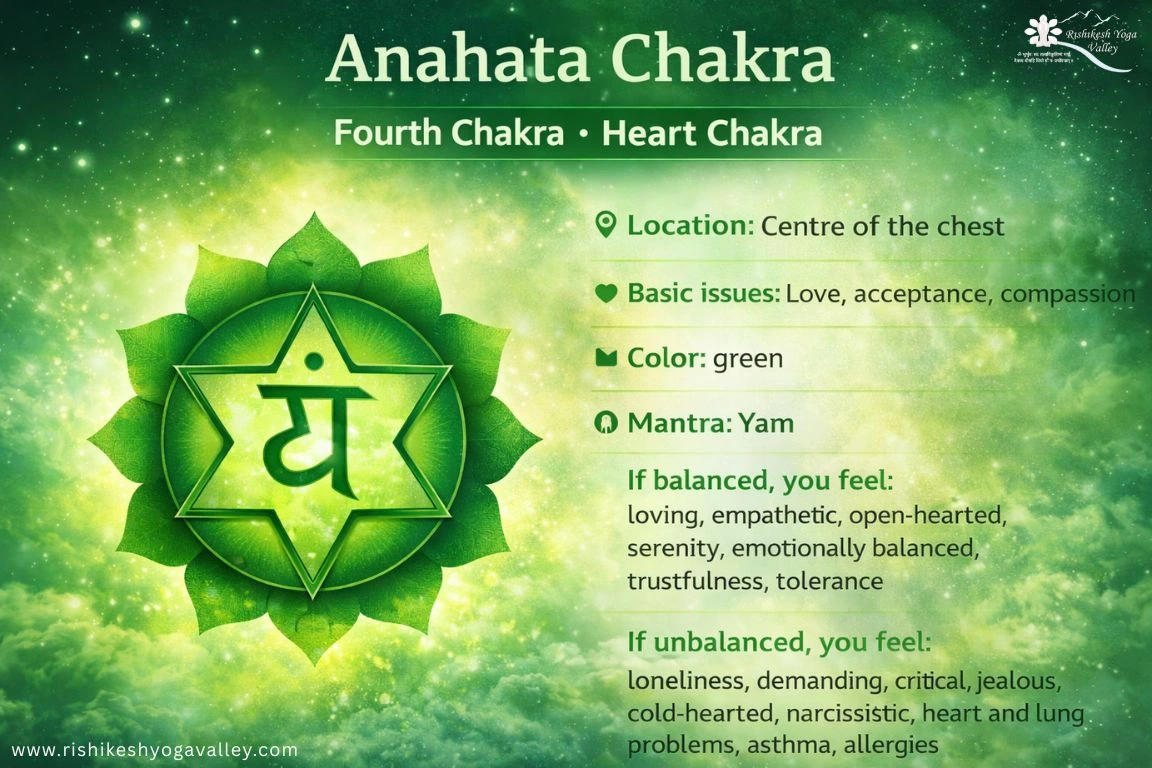
The heart chakra, also known as Anahata, is the emotional and spiritual center of your body. It governs love, compassion, relationships, and inner peace. When balanced, it allows you to give and receive love freely. When blocked, it can lead to emotional pain, loneliness, and disconnection.
In this complete guide, you’ll learn everything—from what the heart chakra is to how to heal and activate it effectively.
What Is the Heart Chakra?
The heart chakra (Anahata) is the fourth energy center in the chakra system, located in the center of your chest.
In simple terms:
It’s the place where your emotions, love, and connection to others are processed and expressed.
- Sanskrit meaning: Anahata = “unstruck” or “unhurt”
- Element: Air
- Color: Green
- Location: Center of the chest
- Function: Love, compassion, empathy, forgiveness
👉 It acts as a bridge between the physical and spiritual chakras, connecting your body and mind with higher consciousness.
Why the Heart Chakra Is So Important
Unlike other chakras, the heart chakra is not just about physical energy—it’s about emotional intelligence and connection.
Here’s what it controls:
- Your ability to love yourself and others
- Emotional balance
- Relationships and trust
- Compassion and empathy
- Forgiveness and letting go
Think of it like this:
If your heart chakra is balanced, life feels open and connected.
If it’s blocked, everything feels heavy and emotionally draining.
Heart Chakra Symbolism & Meaning
The heart chakra is deeply symbolic and represents growth, healing, and connection.
Key symbolic elements:
- Color (Green): Growth, renewal, healing
- Element (Air): Freedom, expansion, openness
- Position: Middle of the chakra system (balance point)
Green Aura Energy is like nature—it heals, restores, and connects everything.
Signs of a Balanced Heart Chakra
When your heart chakra is open and aligned, you experience emotional harmony.
Common signs:
- You feel unconditional love
- Strong and healthy relationships
- Deep empathy and compassion
- Emotional stability and inner peace
- Ability to forgive easily
- Feeling connected to people and life
👉 In simple terms:
You feel light, open, and emotionally secure.
Symptoms of a Blocked Heart Chakra
When the heart chakra is blocked, both emotional and physical issues can arise.
Emotional signs:
- Loneliness or isolation
- Difficulty trusting others
- Jealousy or insecurity
- Holding grudges
- Fear of intimacy
- Lack of self-love
Physical signs:
- Chest tightness
- Poor circulation
- High or low blood pressure
- Respiratory issues
👉 A blocked heart chakra can affect your relationships, mental health, and overall well-being.
What Causes Heart Chakra Imbalance?
Heart chakra blockages don’t happen randomly—they usually develop over time.
Common causes:
- Emotional trauma (breakups, loss, betrayal)
- Chronic stress and anxiety
- Lack of self-worth
- Suppressed emotions
- Negative relationship patterns
Simple explanation:
When you repeatedly experience emotional pain without healing, your heart chakra “closes” as a defense mechanism.
Heart Chakra Aura Color Connection
The Heart Chakra (Anahata) is primarily connected to the Green Aura, which represents love, compassion, and emotional healing.
The Green Aura reflects the balance, empathy, and healing energy of the Heart Chakra, making it the only strong and direct aura color connection.
How to Open and Heal the Heart Chakra
Healing the heart chakra requires consistent, mindful practices. The goal is to create emotional openness and balance.
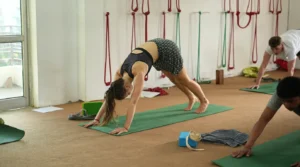
1. Practice Heart-Opening Yoga
Yoga is one of the most effective ways to activate the heart chakra.
Best poses:
- Cobra Pose (Bhujangasana)
Cobra Pose (Bhujangasana) is a beginner-friendly yoga backbend that strengthens the spine and improves flexibility. This yoga pose helps open the chest and relieve lower back tension. - Bridge Pose
Bridge Pose is an effective yoga pose for strengthening the back, glutes, and legs. It also improves spinal flexibility and supports better posture. - Camel Pose
Camel Pose is a deep backbend yoga pose that stretches the chest and improves spine flexibility. This pose helps boost energy and enhance posture. - Fish Pose
Fish Pose is a chest-opening yoga pose that improves breathing and lung capacity. It helps stretch the neck, chest, and abdominal muscles. - Upward-Facing Dog
Upward-Facing Dog is a powerful yoga backbend that strengthens the arms and spine. This pose also improves posture and opens the chest.
These poses stretch the chest and improve energy flow.
👉 This connects with poses like Cobra Pose (Bhujangasana), which specifically open the chest and improve emotional release.
2. Meditation & Visualization
Meditation helps reprogram your emotional patterns.
Simple technique:
- Sit comfortably
- Focus on your breath
- Visualize a green light in your chest
- Imagine it expanding with each breath
Powerful affirmations:
- “I am open to love.”
- “I forgive myself and others.”
- “I am worthy of love.”
3. Gratitude Practice
Gratitude directly activates heart energy.
Easy method:
Write down 3 things daily you’re grateful for.
👉 This shifts your focus from lack → love.
4. Use Healing Crystals
Crystals can amplify emotional healing.
Best crystals for heart chakra:
- Rose Quartz (love & healing)
- Green Aventurine (growth & balance)
- Jade (harmony & protection)
Use them during meditation or wear them.
5. Essential Oils for Emotional Balance
Certain scents can calm your nervous system.
Recommended oils:
- Rose
- Lavender
- Bergamot
Use in diffusers or apply lightly on wrists.
6. Practice Forgiveness
This is one of the most powerful healing tools.
Holding onto anger = blocking energy
Letting go = restoring flow
👉 Forgiveness doesn’t mean approval—it means freeing yourself.
Connection Between Heart Chakra and Other Chakras
The heart chakra connects the lower and upper chakras.
Lower chakras (physical):
- Root Chakra → survival
- Sacral Chakra→ emotions
- Solar plexus Chakra→ confidence
Upper chakras (spiritual):
- Throat Chakra → communication
- Third eye Chakra → intuition
- Crown Chakra→ higher consciousness
👉 The heart chakra acts as the bridge between body and spirit.
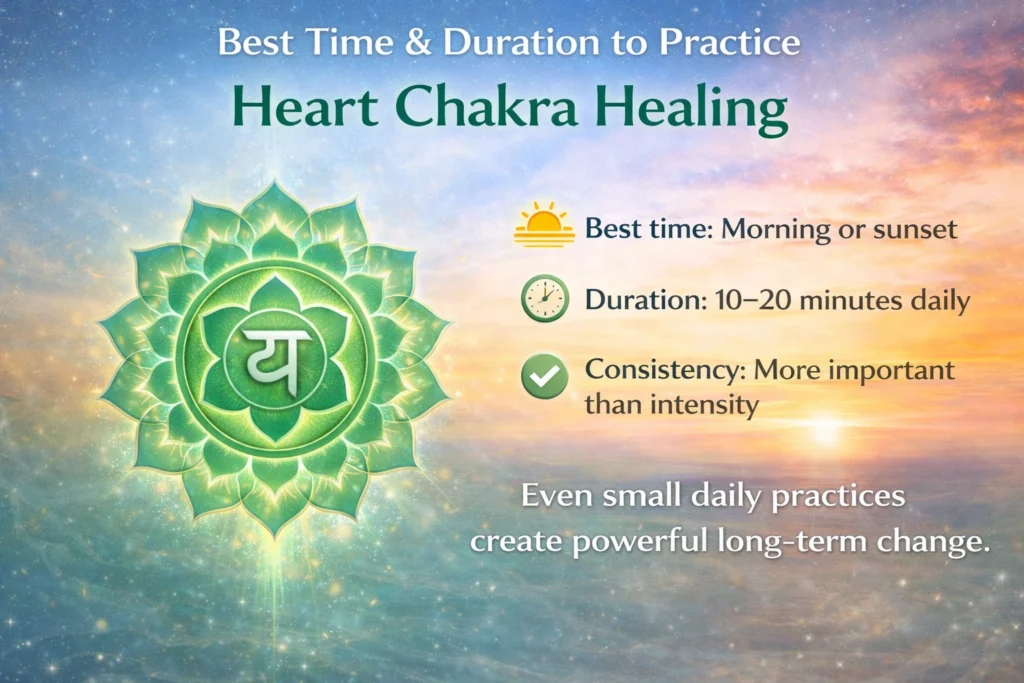
Best Time & Duration to Practice Heart Chakra Healing
- Best time: Morning or sunset
- Duration: 10–20 minutes daily
- Consistency: More important than intensity
Even small daily practices create powerful long-term change.
FAQs
What is the heart chakra responsible for?
The heart chakra controls love, compassion, emotional balance, and relationships. It helps you connect deeply with yourself and others.
How do I know if my heart chakra is blocked?
Signs include loneliness, trust issues, jealousy, emotional pain, and chest discomfort.
How can I open my heart chakra quickly?
Practice heart-opening yoga, meditation, affirmations, and gratitude daily. Consistency is key.
What color represents the heart chakra?
The heart chakra is associated with the color green, symbolizing healing, growth, and love.
Which yoga pose is best for the heart chakra?
Cobra Pose (Bhujangasana) is one of the best poses as it opens the chest and improves energy flow.
Can meditation heal the heart chakra?
Yes, meditation combined with affirmations and visualization is one of the most effective healing methods.
Final Thoughts
The heart chakra (Anahata) is the center of everything that makes us human—love, connection, and emotional depth.
When it’s balanced:
- You feel peaceful
- You build stronger relationships
- You live with openness and compassion
When it’s blocked:
- Life feels heavy
- Relationships struggle
- Emotions feel overwhelming
The good news?
You can heal and balance it naturally with simple daily practices.