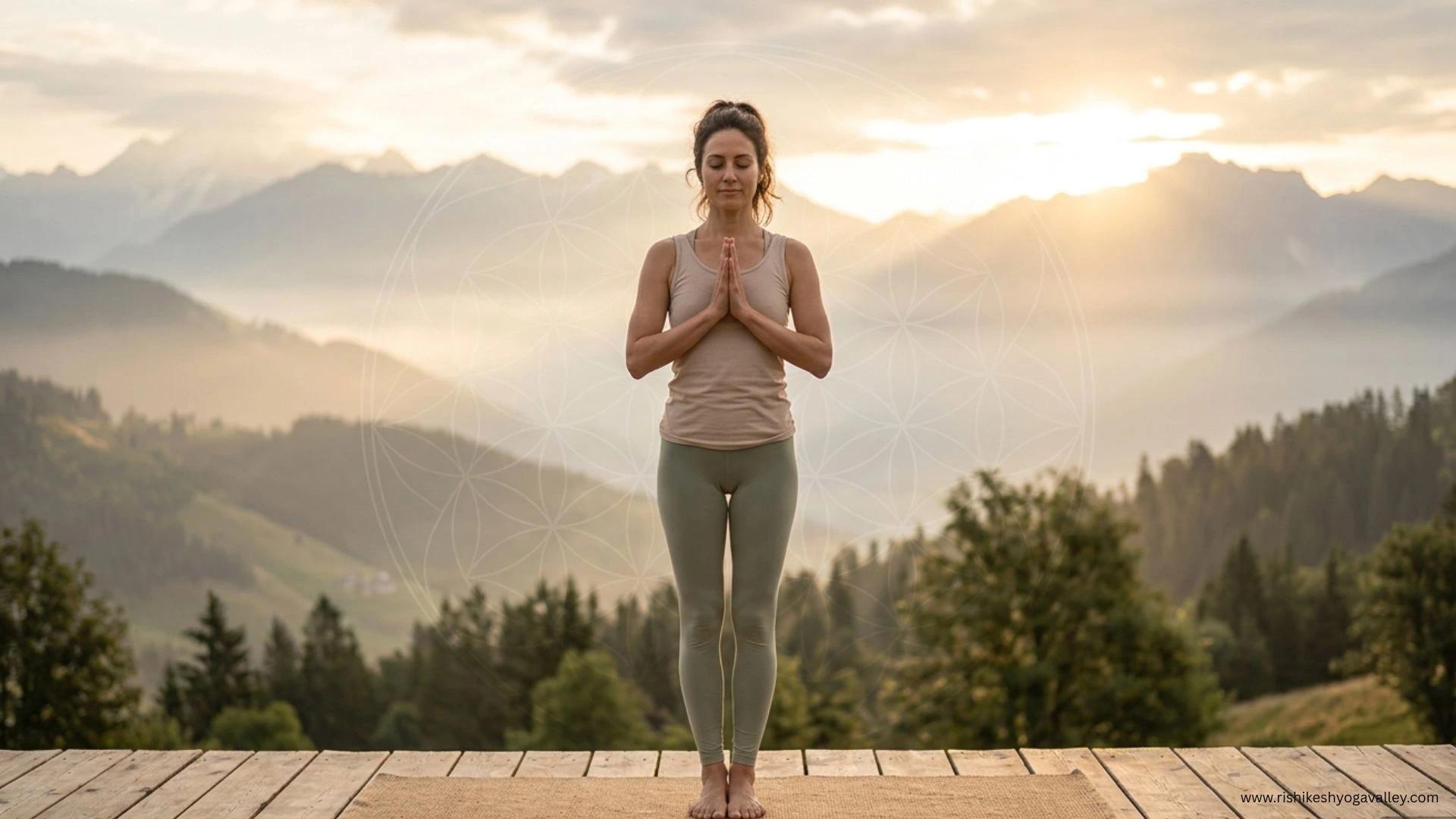
Pranamasana, also known as Prayer Pose, looks simple at first glance. You stand tall, bring your palms together at the heart, and breathe. But in yoga, simple does not mean shallow. This foundational pose teaches alignment, steadiness, breath awareness, intention, and inner focus.
It is often the first posture in Surya Namaskar (Sun Salutation) and is also commonly used at the beginning or end of yoga practice. That is not accidental. Pranamasana helps you pause, center yourself, and shift from outer activity to inner awareness.
In this complete guide, you’ll learn what Pranamasana is, how to do it correctly, its benefits, variations, common mistakes, precautions, and how it fits into a deeper yoga practice.
What Is Pranamasana?
Pranamasana is a standing yoga posture in which the palms are joined together at the heart center in Anjali Mudra while the spine remains upright, steady, and relaxed.
In Sanskrit:
- Pranam means respect, reverence, greeting, or bowing
- Asana means posture or pose
So, Pranamasana can be understood as the Prayer Pose or Gesture of Respect Pose.
Here’s what this means in simple terms:
This pose is not just about putting your hands together. It is about bringing the body into balance, the breath into rhythm, and the mind into the present moment.
Why Pranamasana Matters More Than It Looks
Many beginners assume Prayer Pose is only a transition posture. It is actually much more important than that.
Pranamasana teaches the essentials of yoga:
- how to stand with awareness
- how to distribute body weight evenly
- how to lengthen the spine without stiffness
- how to calm the mind through breath
- how to begin practice with humility and focus
In a way, it is the standing version of a reset button.
Pranamasana at a Glance
Sanskrit Name: Pranamasana
English Name: Prayer Pose
Pose Type: Standing, grounding, centering
Level: Beginner
Best Time to Practice: Morning, before yoga practice, during Surya Namaskar, or at sunset
Duration: A few breaths to 5–10 minutes
Main Focus: Posture, awareness, grounding, breath, calmness
How to Do Pranamasana Step by Step
Step 1: Stand Tall
Stand on your yoga mat with your feet together or hip-width apart if that feels more stable.
Step 2: Ground the Feet
Press evenly through all four corners of the feet. Do not lean only into the heels or toes.
Step 3: Engage the Legs Gently
Lift the kneecaps slightly and keep the thighs active without hard tension.
Step 4: Lengthen the Spine
Draw the lower belly in softly, lift through the chest, and keep the spine tall.
Step 5: Relax the Shoulders
Roll the shoulders slightly back and down so the chest feels open, not rigid.
Step 6: Bring the Palms Together
Join the palms at the center of the chest in Anjali Mudra. The thumbs may lightly touch the sternum.
Step 7: Soften the Face and Jaw
Keep the neck long, chin neutral, and face relaxed.
Step 8: Breathe with Awareness
Close your eyes if comfortable and take slow, even breaths.
Step 9: Hold the Pose
Stay for several breaths or longer if using it for meditation or intention-setting.
To learn yoga in depth, explore our courses below.
What Are the Benefits of Pranamasana?
Although Prayer Pose is gentle, its benefits are real and layered.
1. Helps Calm the Nervous System
When you stand still and focus on breathing, the body shifts away from mental noise and into a calmer state. This can reduce stress and support emotional regulation.
2. Improves Posture
Pranamasana encourages upright alignment of the spine, chest, shoulders, neck, and hips. Over time, this can help correct slouching and poor standing habits.
3. Builds Mind-Body Awareness
Because the pose looks simple, it invites subtle attention. You start noticing how your feet connect to the ground, how your breath moves, and where you hold tension.
4. Encourages Balance and Stability
Standing evenly on both feet improves grounding and teaches better weight distribution. This supports balance, especially for people who tend to collapse into one side.
5. Supports Focus and Concentration
Pranamasana is often practiced before other poses because it centers attention. It prepares the mind for deeper movement, pranayama, or meditation.
6. Opens the Heart Center Symbolically
With the palms joined at the chest, this pose is often associated with humility, gratitude, and the Anahata or heart center. In yogic practice, that makes it emotionally centering as well as physically grounding.
7. Creates a Strong Beginning and Ending for Practice
This pose helps mark a mental shift: from daily distraction into practice, and from practice back into daily life with more awareness.
Does Pranamasana Help with Digestion?
Yes, but with context.
Standard standing Pranamasana is mainly a grounding and centering pose. Some seated or squatting variations of Pranamasana may help stimulate the abdominal area and support digestion more directly.
Here’s what this means in simple terms:
Standing Prayer Pose helps the nervous system settle, and a calmer nervous system supports better digestion overall. More active digestive support comes from its kneeling or squatting variations.
Is Pranamasana a Good Pose for Beginners?
Yes. It is one of the best yoga poses for beginners because it teaches the foundations of alignment, breath awareness, and stillness without complicated movement.
That said, beginners often underestimate it. Doing Pranamasana well means being alert, grounded, and relaxed at the same time.
Common Mistakes in Pranamasana
Even this pose can be done poorly if awareness is missing.
Rounded shoulders
Many people bring the hands together but let the chest collapse. Keep the chest gently lifted.
Locked knees
Do not jam the knees backward. Keep the legs active but soft.
Uneven weight in the feet
Avoid leaning more on one leg or into the heels only.
Raised shoulders
The shoulders should not creep upward toward the ears.
Mechanical breathing
Do not rush. Slow breathing is part of the pose, not an extra step.
Pranamasana Breathing Tips
Breath is what turns this from a shape into a yoga practice.
Try this simple pattern:
- inhale slowly through the nose
- feel the chest expand gently into the thumbs
- exhale slowly through the nose
- soften the shoulders and jaw
For a more meditative experience, make the exhale slightly longer than the inhale.
Best Time to Practice Pranamasana
Pranamasana is versatile and can be practiced at different times.
Before yoga practice
This is the most common use. It helps center the body and mind before movement.
At the start of Surya Namaskar
Prayer Pose traditionally opens the Sun Salutation sequence.
At the end of a session
It brings the practice to a calm, intentional close.
In the morning
A few minutes of Pranamasana in the morning can help you start the day with steadiness and clarity.
At sunset or evening
It can also be a grounding ritual to unwind.
How Long Should You Hold Pranamasana?
For general yoga practice:
- 3 to 5 breaths is enough
For grounding or mindfulness:
- 1 to 3 minutes works well
For meditative stillness:
- 5 to 10 minutes can be practiced if comfortable
Variations of Pranamasana
One weakness in competitor content is that they list variations without clearly explaining who they help. Here is the practical version.
Seated Pranamasana
Sit cross-legged or with legs extended and bring the palms together at the chest. Good for meditation and people who cannot stand for long.
Kneeling Prayer Pose
Practice the pose while kneeling in Vajrasana. Helpful for breathwork and grounding.
Reverse Prayer Pose
Bring the palms together behind the back. This is more advanced and gives a deeper shoulder and chest stretch.
Single-Leg Prayer Pose
Stand on one leg and bring the other foot to the inner leg, like a Tree Pose variation with prayer hands. Good for balance training.
Squatting Prayer Pose
A squat variation with hands at the chest may support hip opening and digestion.
Pranamasana in Surya Namaskar
Pranamasana is traditionally the opening and closing gesture of Surya Namaskar.
Why?
Because before movement begins, yoga asks for awareness. And after movement ends, yoga asks for integration. Prayer Pose holds both.
It is the doorway into the sequence and the seal at the end.
Precautions and Contraindications
Pranamasana is generally safe, but some people should practice carefully.
Avoid or modify if you have:
- balance issues
- vertigo
- weak ankles or knees
- severe arthritis
- recent injuries in the legs, spine, shoulders, or neck
If standing is difficult, practice a seated version instead.
Also, some stronger variations should be avoided or modified in cases of:
- high blood pressure
- neck conditions
- dizziness
- pregnancy-related balance issues
Looking for short yoga program?
Check out below our:
Pranamasana for Mental Wellness
This is an area many competitor articles mention briefly but do not explain well.
Prayer Pose supports mental wellness because it combines three things that calm the system:
- stillness
- symmetrical posture
- conscious breathing
That combination can reduce internal restlessness and create a feeling of emotional steadiness. It is not a cure for anxiety or depression, but it can be a helpful supportive practice.
Spiritual Meaning of Pranamasana
In yoga, Prayer Pose is not just physical. It is symbolic.
The hands at the heart center represent:
- respect
- gratitude
- humility
- connection
- inward focus
You do not need to approach it religiously to benefit from it. Even in a secular practice, it can be a meaningful pause that reminds you to become present.
Pranamasana vs Tadasana: What’s the Difference?
This is a useful comparison competitors often blur.
Tadasana
Mountain Pose with arms by the sides or in another neutral variation. It is the base standing posture.
Pranamasana
A prayer-hand variation of the standing base posture, with extra emphasis on focus, breath, and intention.
In simple terms:
Tadasana teaches you how to stand.
Pranamasana teaches you how to stand with presence.
Can You Practice Pranamasana Every Day?
Yes. Daily practice is ideal because the pose is simple, low-impact, and easy to integrate into a routine.
You can use it:
- before yoga
- after yoga
- before meditation
- during stressful moments
- in the morning as a centering ritual
4. FAQ Section
What is Pranamasana in yoga?
Pranamasana is a standing Prayer Pose in which the palms are joined at the heart center while the body remains upright, grounded, and steady. It is commonly used at the beginning and end of yoga practice.
What are the main benefits of Pranamasana?
Pranamasana helps improve posture, reduce stress, enhance focus, support breath awareness, and create mind-body balance. It is also a grounding pose used to center the mind before movement.
How do you do Pranamasana correctly?
Stand tall, ground both feet evenly, lengthen the spine, relax the shoulders, and bring the palms together at the chest in Anjali Mudra. Breathe slowly and stay present.
When should you practice Pranamasana?
You can practice Pranamasana before yoga, during Surya Namaskar, after practice, in the morning, or at sunset. It works well anytime you want to feel centered and calm.
Is Pranamasana good for beginners?
Yes. It is one of the best beginner yoga poses because it teaches posture, balance, stillness, and breath awareness without requiring complex flexibility.
Can Pranamasana be done after eating?
It is better to practice Pranamasana a couple of hours after a meal, especially if you are using seated, kneeling, or squatting variations. A gentle standing version is easier, but yoga is generally more comfortable on a lighter stomach.
What is the difference between Pranamasana and Namaste?
Pranamasana is the physical yoga posture or hand-to-heart prayer pose. Namaste is the greeting or expression often associated with the same gesture.
How long should I hold Pranamasana?
You can hold it for 3 to 5 breaths in a yoga sequence, or for 1 to 10 minutes if using it for centering, meditation, or breath awareness.
Check out our Retreats in Rishikesh for Beginners and intermediates: