

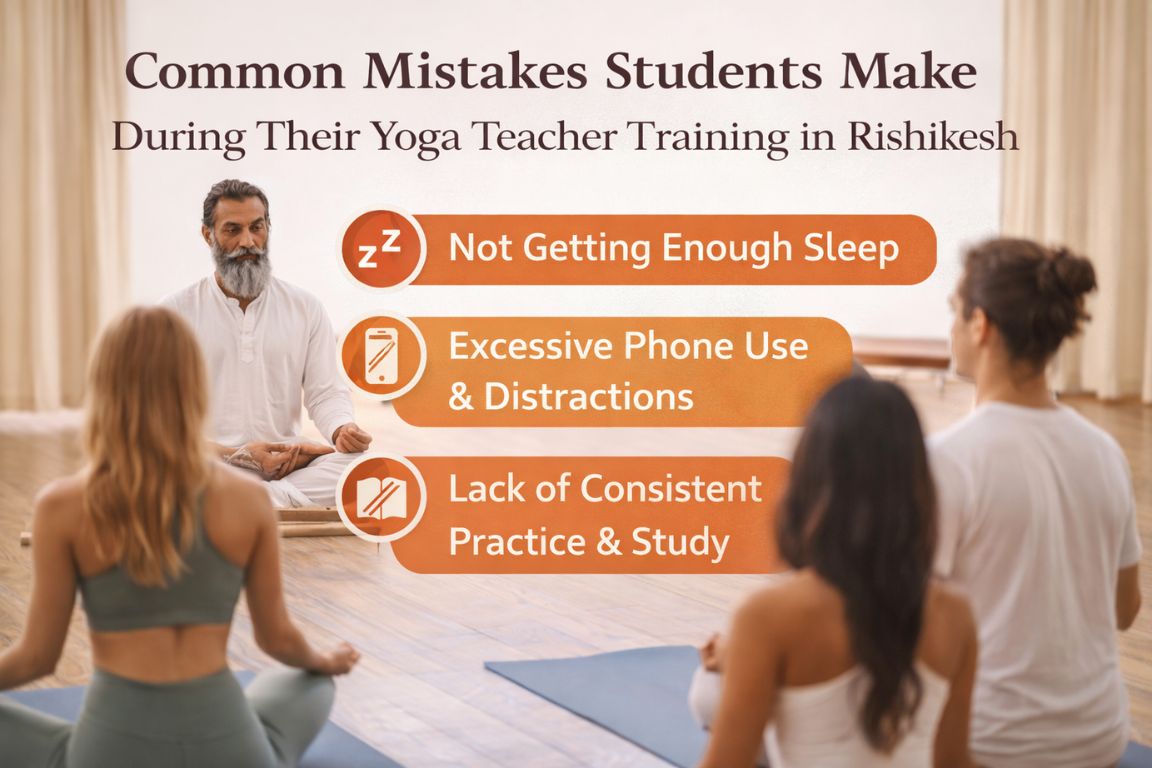
Common Mistakes Students Make During Yoga Teacher Training (And How to Avoid Them)

Joining a yoga teacher training program is one of the most transformative steps a yoga practitioner can take.
Students from around the world travel to destinations such as Rishikesh, often called the Yoga Capital of the World, to deepen their understanding of asana practice, meditation, pranayama, yoga philosophy, and yogic lifestyle.
However, yoga teacher training is not simply a longer yoga class. It is an immersive experience that combines physical discipline, philosophical study, and personal reflection.
Because the experience can be intense, many students unknowingly make mistakes that limit their learning or create unnecessary challenges during training.
Understanding these common mistakes can help you approach the journey with greater awareness and get the most out of your training.
This guide explores the most common mistakes students make during yoga teacher training and how to avoid them, based on the experiences of teachers and international students who have studied yoga in places like Rishikesh and the Himalayan region.

Quick Summary: Common Yoga Training Mistakes
Students often struggle during training because of a few avoidable habits.
Most Common Mistakes
- Expecting yoga teacher training to feel like a retreat
- Focusing only on physical yoga postures
- Comparing yourself to other students
- Ignoring the importance of yoga philosophy
- Overtraining and not allowing recovery
- Being afraid to ask teachers questions
- Not embracing the yogic lifestyle
- Trying to become a perfect teacher immediately
Understanding these patterns can help students approach training with patience and openness.
What Yoga Teacher Training Really Involves
Many people assume yoga teacher training is mostly about practicing yoga poses.
In reality, a comprehensive program includes multiple areas of study:
Core Component | What Students Learn |
Asana Practice | Alignment, sequencing, posture techniques |
Pranayama | Breathing methods that regulate energy |

Meditation | Mindfulness and concentration practices |
Yoga Philosophy | Study of classical yogic texts |
Anatomy | Understanding the body and injury prevention |
Teaching Skills | How to guide safe and effective classes |
Programs often follow standards inspired by organizations such as Yoga Alliance, ensuring that students receive a balanced education in both theory and practice.
1. Expecting Yoga Teacher Training to Feel Like a Vacation
One of the most common misconceptions is that yoga teacher training will feel like a relaxing retreat.
In reality, most programs involve:
- early morning meditation
- several hours of daily practice
- lectures on yoga philosophy and anatomy
- teaching practice sessions
While the experience is rewarding, it can also be physically and mentally demanding.
Students who arrive expecting a holiday sometimes feel overwhelmed by the structured schedule.
Teacher Insight
Many experienced teachers remind students:
“Yoga teacher training is not a retreat. It is a period of dedicated study and self-discovery.”
Understanding this difference helps students mentally prepare for the intensity of the program.
2. Focusing Only on Physical Yoga Practice
Many students begin training with strong interest in asana practice but little awareness of the broader philosophy of yoga.
However, traditional yoga includes much more than postures.
Classical teachings emphasize:
- pranayama (breath control)
- meditation
- ethical principles
- mental discipline
Studying these elements helps students understand yoga as a complete system of personal development, not just a physical activity.
3. Comparing Yourself to Other Students
Yoga teacher training groups often include students with different levels of experience.
Some may have practiced yoga for many years, while others are newer to the practice.
Comparing yourself to others can create unnecessary pressure.
Instead, teachers often encourage students to focus on:
- personal progress
- listening to the body
- practicing with awareness
Yoga philosophy teaches that self-observation is more important than competition.
4. Ignoring Yoga Philosophy
One of the most valuable aspects of yoga teacher training is the opportunity to study classical philosophy.
Many programs explore texts such as:
- Yoga Sutras of Patanjali
- Bhagavad Gita
- traditional meditation teachings
Students sometimes underestimate these sessions, assuming they are less important than physical practice.
However, philosophy provides the foundation that gives yoga its deeper meaning.
Understanding concepts such as mindfulness, non-attachment, and compassion can influence both teaching style and personal life.
5. Overtraining the Body
Daily yoga practice can be physically intense.
Students often feel excited and push themselves too hard during the first week.
Common issues include:
- muscle soreness
- fatigue
- minor injuries
Learning to practice with awareness is essential.
Yoga teachers often remind students that rest and recovery are part of the practice.
Listening to your body helps maintain energy throughout the training period.
6. Being Afraid to Ask Questions
Some students hesitate to ask questions during lectures or practice sessions.
However, yoga teacher training is designed to be interactive.
Teachers expect students to be curious about topics such as:
- alignment adjustments
- breathing techniques
- teaching methods
- philosophy concepts
Asking questions helps deepen understanding and creates meaningful discussion within the group.
7. Resisting the Yogic Lifestyle
Yoga training often introduces elements of a traditional yoga lifestyle.
This may include:
- vegetarian meals
- early mornings
- daily meditation
- reduced screen time
Students who embrace these habits often find the experience more rewarding.
The routine supports clarity of mind and creates space for deeper reflection.
In places such as Rishikesh, the peaceful surroundings of the Himalayas and the sacred Ganges River naturally encourage this lifestyle.
8. Trying to Become a Perfect Teacher Immediately
Many students feel pressure to become confident teachers by the end of the program.
However, teaching yoga is a skill that develops gradually through experience.
The purpose of yoga teacher training is to provide:
- foundational knowledge
- safe teaching techniques
- understanding of yoga philosophy
Confidence grows with continued practice and teaching after the course.
Patience is an important part of the journey.
Looking for short yoga program?
Check out below our:
What a Typical Day During Yoga Training Looks Like
Understanding the daily routine helps students prepare for the intensity of training.
Example Schedule
- Early morning meditation
- Pranayama breathing practice
- Morning asana class
- Breakfast
- Anatomy or philosophy lecture
- Teaching methodology workshop
- Afternoon yoga practice
- Evening meditation
This structure helps students experience yoga as a complete lifestyle practice, not just an exercise routine.
Real Experiences Students Often Share
Students who complete yoga teacher training often describe the experience as transformative.
Common reflections include:
- gaining deeper understanding of breath and body
- developing discipline and self-awareness
- forming meaningful friendships with international students
- discovering new perspectives through yoga philosophy
Many students say that the experience changed how they approach both yoga and everyday life.
To learn yoga in depth, explore our courses below.
People Also Ask
Can beginners join yoga teacher training?
Yes. Many yoga teacher training programs welcome beginners. Students do not need to be advanced practitioners, but they should be open to daily practice, learning yoga philosophy, and participating in an intensive learning environment.
Is yoga teacher training difficult?
Yoga teacher training can be physically and mentally demanding because it includes daily practice, lectures, and teaching exercises. However, most programs are designed to support students of different experience levels.
What should I prepare before yoga teacher training?
Students should prepare by practicing yoga regularly, learning basic yoga terminology, maintaining physical health, and approaching the experience with an open mind.
Why do people go to Rishikesh for yoga training?
Rishikesh is known as the Yoga Capital of the World. Its spiritual atmosphere, experienced teachers, and peaceful Himalayan setting make it one of the most respected destinations for yoga study.
Do you have to teach after yoga teacher training?
No. Many students join yoga teacher training simply to deepen their personal practice and understanding of yoga philosophy.
How long does yoga teacher training last?
Most foundational programs require around 200 hours of study, which usually takes about three to four weeks depending on the schedule.
What is the hardest part of yoga teacher training?
Many students say the most challenging part is balancing physical practice with academic study of anatomy and philosophy.
Is yoga teacher training life changing?
For many people, yes. Living in a yogic environment and practicing daily meditation and self-reflection can create lasting personal growth.
Key Takeaways
- Yoga teacher training is an intensive learning experience, not just a retreat.
- Students should focus on both physical practice and yoga philosophy.
- Avoid comparing yourself to others during training.
- Listening to the body helps prevent injuries during daily practice.
- Embracing the yogic lifestyle enhances the overall experience.
Final Thoughts
Yoga teacher training is often the beginning of a deeper journey into self-awareness, mindfulness, and holistic wellbeing.
The experience challenges students physically, mentally, and emotionally. Yet these challenges are also what make the journey meaningful.
By approaching training with patience, curiosity, and openness, students can gain far more than a teaching certification.
For many international students, studying yoga in Rishikesh, surrounded by the spiritual atmosphere of the Himalayas, becomes a powerful opportunity to experience yoga in its traditional setting.
Schools such as Rishikesh Yoga Valley offer structured training programs and retreat experiences that allow students to explore yoga in a supportive and authentic environment.
The most important step is simply to begin the journey with sincerity and an open heart.
FAQs
What are common mistakes during yoga teacher training?
Students often expect training to feel like a retreat, focus only on physical yoga, compare themselves with others, and underestimate the importance of yoga philosophy.
Is yoga teacher training hard for beginners?
It can be challenging, but most programs support beginners with gradual learning and structured guidance.
What should I know before yoga teacher training?
Students should understand that yoga training involves physical practice, philosophy study, meditation, and teaching practice.
Why do people travel to Rishikesh for yoga training?
Rishikesh offers traditional yoga teachings, experienced instructors, and a peaceful environment in the Himalayan foothills.
Check out our Retreats in Rishikesh for Beginners and intermediates: