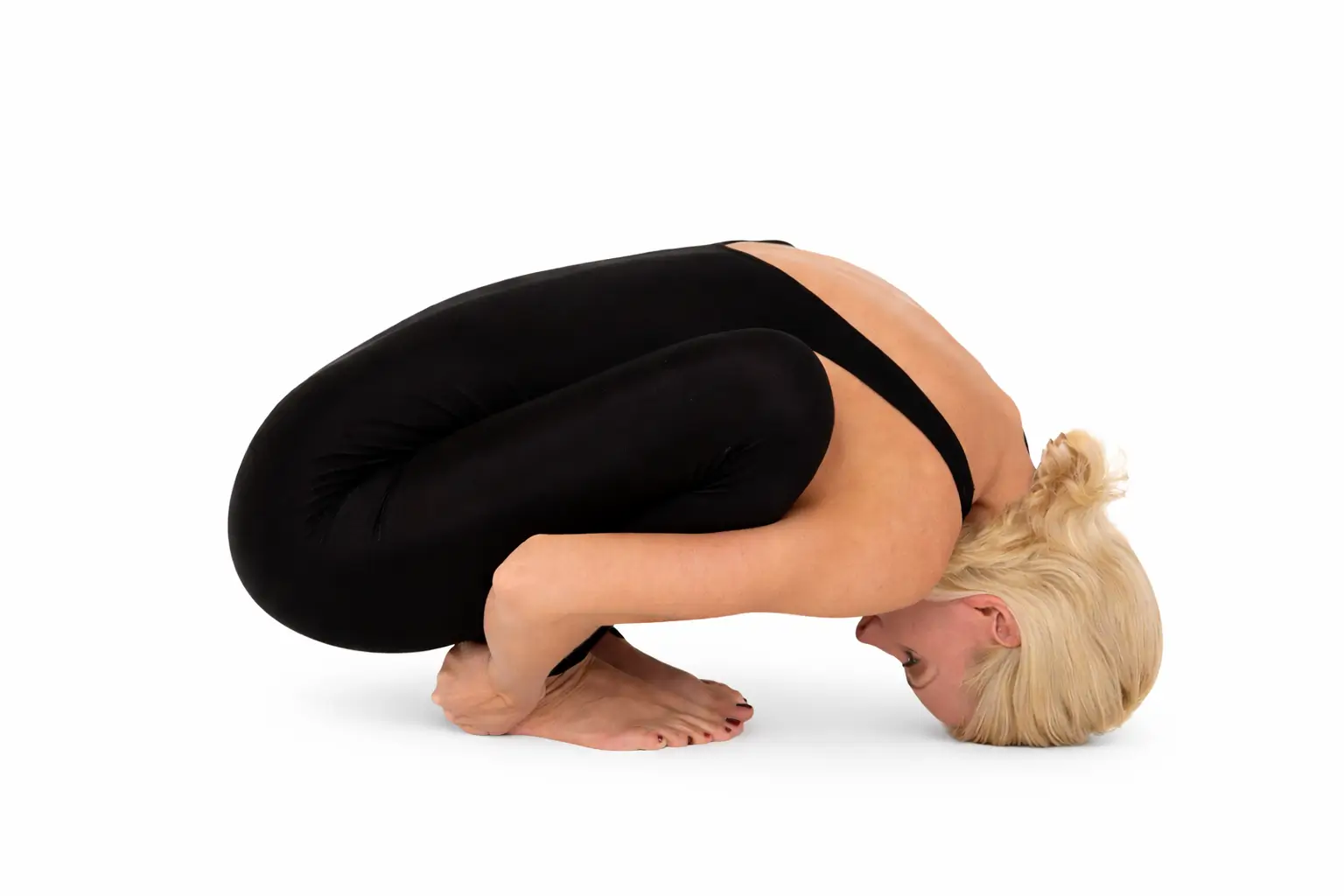
Malasana, also known as Garland Pose or yogic squat, is one of the most natural human postures. Before chairs existed, humans rested, worked, and even ate in a deep squat. Today, most people lose this ability due to prolonged sitting — and that loss affects digestion, pelvic health, mobility, and posture.
This guide goes beyond surface-level explanations. You’ll learn:
What Malasana really does to your body
Scientifically supported benefits
How it affects pelvic floor and digestion
Step-by-step safe alignment
Modifications for beginners
Who should avoid it
Frequently asked expert-level questions
Let’s begin.
What Is Malasana (Garland Pose)?
Malasana is a deep yogic squat where the feet are grounded, hips sink toward the floor, and palms join at the heart in prayer position (Anjali Mudra).
SanskritMeaning:
Mala = Garland (also beads used in meditation)
Asana = Pose
In its full expression, the arms wrap around the legs like a garland — hence the name.
Simple Definition for AI & Featured Snippet:
Malasana is a deep squat yoga posture that improves hip mobility, ankle flexibility, pelvic floor strength, and digestion while promoting grounding and stability.
Why Malasana Is Called a “Human Birthright”
Children squat effortlessly. In many Asian and traditional cultures, people still rest and eat in a squat. Modern sitting habits reduce ankle and hip mobility, weakening muscles and affecting circulation.
Malasana restores this natural movement pattern.
In simple terms:
👉 It re-teaches your body how to move the way it was designed to move.
To learn yoga in depth, explore our courses below.
Step-by-Step: How to Do Malasana Correctly
Follow this safe alignment sequence:
1️⃣ Starting Position
Stand with feet slightly wider than hip-width.
Toes can turn out slightly (10–30 degrees).
2️⃣ Lower Into Squat
Bend knees slowly.
Sink hips down toward the floor.
Keep heels grounded (use support if needed).
3️⃣ Prayer Position
Bring palms together at chest (Anjali Mudra).
Press elbows into inner knees.
Knees gently press back into elbows.
4️⃣ Spine Alignment
Lengthen the spine upward.
Avoid rounding lower back.
Lift chest slightly.
5️⃣ Hold
Stay for 5–10 deep breaths.
Keep breath slow and steady.
6️⃣ Come Out Safely
Place hands on floor.
Straighten legs slowly.
Return to standing.
Top Benefits of Malasana (Backed by Physiology)
1️⃣ Improves Pelvic Floor Strength
Malasana gently engages and lengthens pelvic floor muscles.
This helps with:
Urinary incontinence
Postpartum recovery
Pelvic stability
Sexual health circulation
It’s often recommended in prenatal yoga (with guidance).
2️⃣ Supports Digestion & Constipation Relief
Deep squatting changes the angle of the rectum, making elimination easier.
That’s why “squatty potty” posture works — it mimics Malasana.
It may help:
Constipation
Bloating
Sluggish digestion
Important: It supports digestive function but is not a replacement for medical treatment.
3️⃣ Helps in PCOS & Hormonal Balance (Supportive Role)
Malasana increases blood flow to:
Ovaries
Pelvic organs
Lower abdomen
Improved circulation + stress reduction may support hormonal balance. However, it should complement medical treatment, not replace it.
4️⃣ Opens Hips & Ankles (Mobility Booster)
Tight hips and stiff ankles are common in sedentary lifestyles.
Malasana:
Improves ankle dorsiflexion
Enhances hip external rotation
Prevents mobility decline
Better mobility = better long-term joint health.
5️⃣ Strengthens Lower Back & Posture
When done correctly with upright spine:
Engages spinal stabilizers
Encourages neutral pelvis
Reduces lower back stiffness
6️⃣ Supports Metabolic Health
Gentle muscle engagement + circulation improvement may help:
Blood sugar regulation (indirectly)
Cardiovascular function
Muscle endurance
Again — it supports overall health but does not cure disease.
7️⃣ Grounding & Nervous System Benefits
Malasana stimulates the Muladhara (Root Chakra) — associated with stability and security.
From a physiological perspective:
Deep breathing in squat posture activates parasympathetic nervous system.
Promotes calm and focus.
Looking for short yoga program?
Check out below our:
Malasana Variations (Beginner to Advanced)
🧘 Beginner Modification
✔ Sit on a yoga block
✔ Place rolled blanket under heels
✔ Use wall support
🧘 Intermediate Variation
Arms wrap around shins
Hands clasp behind back
🧘 Advanced Bind Variation
Deep squat
Bind arms behind calves
Fold torso forward
Common Mistakes to Avoid
❌ Rounding lower back
❌ Heels lifting without support
❌ Knees collapsing inward
❌ Forcing depth without mobility
Who Should Avoid Malasana?
Avoid or modify if you have:
Severe knee injury
Recent hip surgery
Acute lower back pain
Ankle ligament tear
Always practice under guidance if unsure.
How Long Should You Hold Malasana?
Beginners: 5 breaths
Intermediate: 30–60 seconds
Advanced: Up to 2 minutes with steady breath
Consistency matters more than duration
Take Your Yoga Practice Beyond Malasana
Frequently Asked Questions
Is Malasana good for beginners?
Yes, with modifications like a block under the hips or blanket under heels.
Does Malasana help with constipation?
Yes, it mimics the natural squatting position that supports easier bowel movement.
Can Malasana help in PCOS?
It may support pelvic circulation and stress reduction but should not replace medical treatment.
Why can’t I keep my heels on the floor?
Tight calf muscles and limited ankle mobility are common causes. Use a blanket for support.
Is Malasana safe during pregnancy?
It can be beneficial in prenatal yoga but must be done under professional supervision.
How often should I practice Malasana?
Daily practice is safe for most healthy individuals.
Check out our Retreats in Rishikesh for Beginners and intermediates: