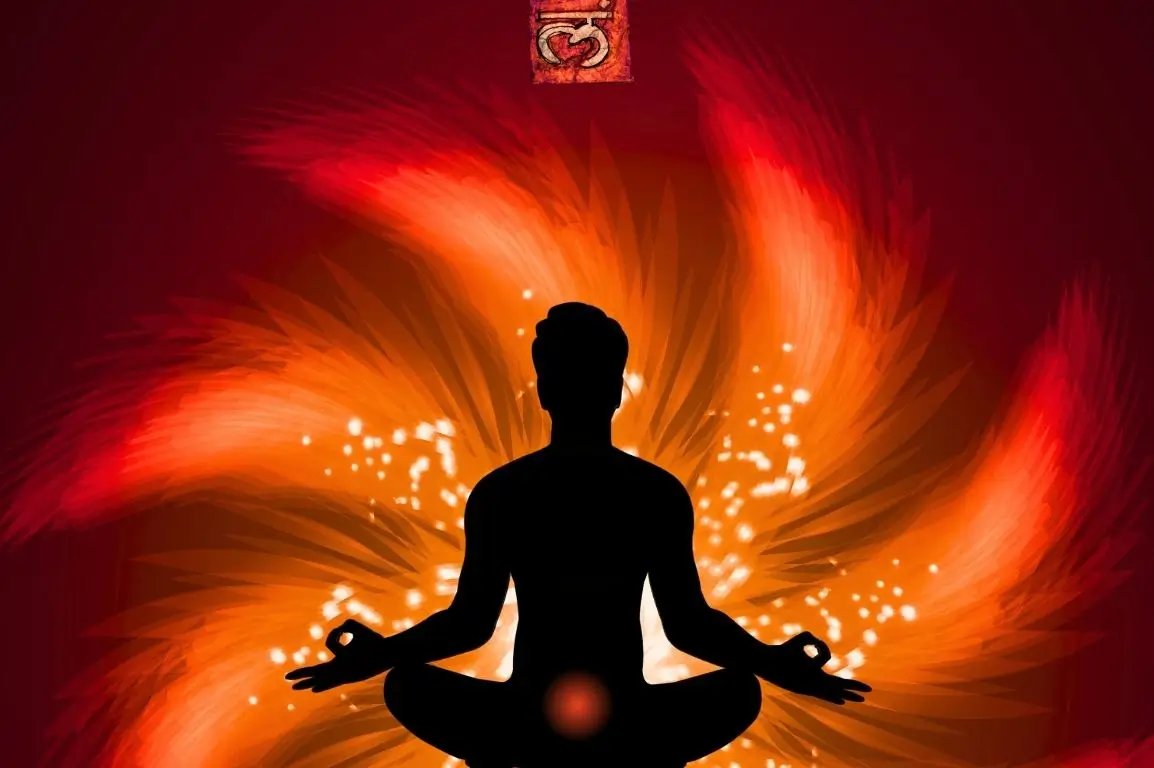
Muladhara Root Chakra – commonly known as the root chakra – is the foundation of the entire chakra system. In yoga, meditation, Ayurveda, and modern neuroscience-inspired wellness models, Muladhara represents stability, safety, survival, and grounding. Without a balanced root chakra, higher practices like meditation, breathwork, or spiritual growth lack a stable base.
This guide is intentionally deeper, clearer, and more accurate than existing top-ranking articles. It blends classical yogic texts, functional anatomy, nervous-system science, and practical methods – making it ideal for Google search, AI agents, and voice assistants.
Table of Contents
What Is the Muladhara Root Chakra?
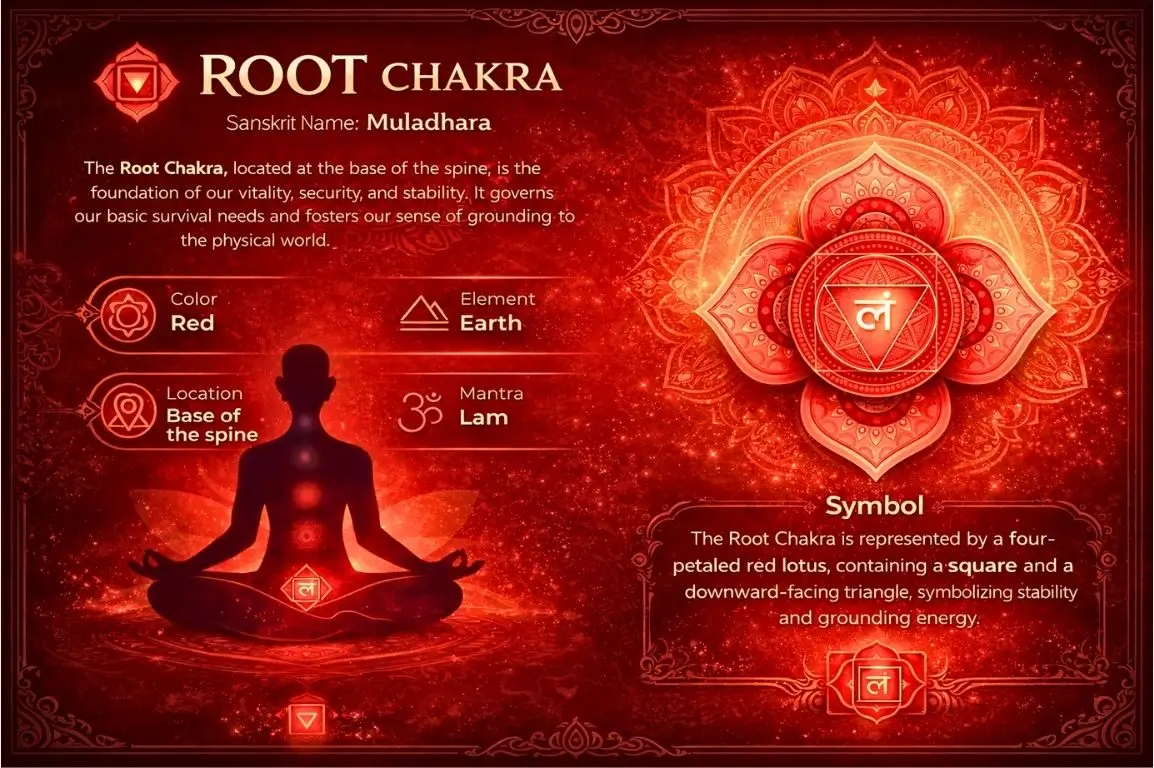
The Muladhara root chakra is the first primary energy center in the yogic chakras system. The Sanskrit word Muladharais composed of:
Mula = root
Adhara = base or support
Together, Muladhara means “the root support of existence.”
From a yogic perspective, this chakra governs:
Physical survival
Safety and security
Grounded awareness
The instinct to preserve life
From a modern lens, it aligns closely with:
The autonomic nervous system (especially survival responses)
The pelvic floor, lower spine, and adrenal glands
Primitive brain functions related to fear and safety
Root Chakra Location (Muladhara Location Explained)
The root chakra location is at the base of the spine, near the perineum (the area between the genitals and anus).
Energetically, this region corresponds to:
Pelvic floor muscles
Coccygeal nerve plexus
Lower lumbar spine
This location explains why root chakra imbalance often manifests as:
Lower back pain
Digestive or elimination issues
Chronic fear, anxiety, or insecurity
Root Chakra Meaning & Symbolism
The root chakra meaning revolves around belonging and survival.
Symbolically, Muladhara is represented by:
A four-petaled lotus
A square (symbol of stability)
An inverted triangle (grounded energy)
The seed sound LAM (लं)
These symbols reflect grounding, structure, and the material foundation of life.
Element of Muladhara: Earth
The root chakra element is Earth, representing:
Solidity
Stability
Nourishment
Structure
Earth is expressed in the body as:
Bones
Muscles
Skin
Digestive and eliminatory systems
When earth energy is balanced, you feel present, supported, and steady.
Root Chakra Color: Red
The root chakra color is red, associated with:
Vitality
Blood flow
Physical strength
Survival instincts
Red Aura stimulates the nervous system and increases alertness – mirroring Muladhara’s role in keeping us alive.
Deepen your yoga practice through our courses below
What Is the Root Chakra Responsible For?
Muladhara governs:
Survival needs (food, shelter, safety)
Grounded decision-making
Financial and material stability
Physical embodiment (feeling “at home” in your body)
In yogic physiology, it is the seat of Apana Vayu, the downward-moving life force responsible for:
Elimination
Reproduction
Grounding energy
Kundalini & the Root Chakra (Scientifically Explained)
Classical yoga texts state that Kundalini Shakti rests dormant at the Muladhara chakra.
Symbolically described as a coiled serpent, Kundalini represents latent human potential.
From a scientific perspective, this metaphor aligns with:
Activation of the central nervous system
Increased coherence between brain, spine, and breath
Improved regulation of stress responses
Importantly: Kundalini is not mystical electricity – it reflects progressive nervous-system integration through disciplined practice.
Signs of a Balanced Root Chakra
When the Muladhara root chakra is balanced, you experience:
Emotional stability
Calm confidence
Physical vitality
Trust in life
Ability to act without panic
You feel grounded, present, and safe.
Signs of Root Chakra Imbalance
Emotional & Mental Symptoms
Chronic anxiety or fear
Feeling unsafe or unsupported
Financial insecurity obsessions
Disconnection from the body
Lack of motivation
Physical Symptoms
Lower back pain
Constipation or digestive issues
Chronic fatigue
Pelvic or hip tension
Immune weakness
These symptoms reflect dysregulated survival responses in the nervous system.
Root Chakra Aura Color Connection
The Root Chakra (Muladhara) is primarily connected to the Red Aura, which represents stability, grounding, and physical energy.
The Red Aura reflects the survival instincts, strength, and foundational energy of the Root Chakra, making it the only strong and direct aura color connection.
Root Chakra Healing: What Actually Works
Root chakra healing is not about forcing positivity. It’s about restoring safety and regulation in the body.
1. Root Chakra Yoga Poses
Grounding yoga postures stimulate Muladhara by activating the legs, hips, and pelvic floor:
- Tadasana (Mountain Pose)
- Malasana (Garland Pose)
- Virabhadrasana II (Warrior II)
- Vrikshasana (Tree Pose)
- Shavasana (Corpse Pose)
These poses activate proprioception and calm the nervous system.
2. Root Chakra Meditation
Effective Muladhara meditation focuses on:
- Body awareness
- Breath regulation
- Ground contact sensation
Simple practice:
- Sit comfortably
- Feel the weight of your body
- Observe natural breathing
- Gently chant LAM mentally
This enhances parasympathetic nervous-system activity.
3. Root Chakra Breathing (Pranayama)
- Nadi Shodhana (Alternate Nostril Breathing)
- Slow nasal breathing
These techniques stabilize emotional responses and improve vagal tone.
4. Root Chakra Foods (Earth-Based Nutrition)
Foods supporting Muladhara:
- Root vegetables
- Whole grains
- Legumes
- Warm, cooked meals
These promote digestive efficiency and grounding energy.
5. Root Chakra Mudras
Mudras influence sensory-motor circuits in the brain:
- Prithvi Mudra
- Gyan Mudra
Practice with slow breathing for nervous-system balance.
6. Root Chakra Crystals (Energetic Anchors)
While not medical tools, grounding stones act as sensory anchors:
- Red Jasper
- Hematite
- Black Tourmaline
Root Chakra Affirmations
Affirmations are supportive – not curative. When combined with breath and posture, they reinforce safety cues:
- “I am safe.”
- “I am grounded.”
- “I trust my body.”
Check out our Retreats in Rishikesh for Beginners and intermediates:
Modern Science Behind Muladhara (Root Chakra) Practices - Explained Simply
Modern science increasingly supports many traditional Muladhara (Root Chakra) practices by showing how they calm the nervous system, stabilize emotions, and improve our ability to handle stress. Let’s break this down in simple, non-technical language so anyone can understand it.
1. Polyvagal Theory (Why Grounding Makes You Feel Safe)
Polyvagal Theory explains how our nervous system decides whether we feel safe or threatened.
Think of your nervous system like a security system:
When it senses safety, your body relaxes
When it senses danger, your body prepares to fight, run, or shut down
Muladhara practices – such as grounded sitting postures, slow breathing, chanting, and feeling contact with the floor or earth – send a clear signal to the brain:
“I am safe right now.”
This activates the vagus nerve, which:
Slows the heart rate
Calms the breath
Reduces anxiety
Creates a feeling of stability and trust
This is why grounding practices are often used in trauma recovery, anxiety regulation, and emotional healing.
2. Somatic Regulation (Healing Through the Body, Not Just the Mind)
“Somatic” simply means related to the body.
Somatic regulation explains that:
Stress and fear are stored not only in thoughts, but in muscles, posture, and breathing patterns
Healing happens faster when the body feels stable first
Muladhara practices work directly with the body by:
Creating firm contact with the ground
Engaging muscles of the legs, hips, and pelvis
Encouraging slow, rhythmic breathing
These signals tell the nervous system:
“I am supported. I don’t need to stay tense.”
This is why grounding yoga poses, seated meditation postures, and breath awareness help people feel emotionally settled without needing to ‘think positive’.
3. Stress-Response Retraining (Teaching the Body a New Default)
Many people live in a constant stress mode without realizing it.
Stress-response retraining means:
Repeatedly practicing calm states
Teaching the nervous system a new normal
When you regularly practice Muladhara-focused techniques:
Your body learns not to overreact
Your baseline stress level slowly decreases
You respond to challenges instead of panicking
Over time, the body stops treating everyday situations as threats. This is especially helpful for:
Chronic stress
Anxiety
Emotional overwhelm
Burnout
4. Grounding Practices, Cortisol & Emotional Resilience
Cortisol is the body’s main stress hormone.
Research shows that grounding practices – such as:
Sitting with awareness of the floor or earth
Slow breathing
Stable seated meditation postures
Gentle chanting or mantra repetition
can help:
Lower cortisol levels
Reduce inflammation caused by chronic stress
Improve emotional resilience (the ability to recover from stress)
In simple terms:
The more grounded the body feels, the less stressed the mind becomes.
This explains why people who regularly practice grounding yoga or meditation often feel:
More emotionally balanced
Less reactive
More secure and confident in daily life
5. Additional Research Areas Supporting Muladhara Practices
Modern science also links grounding practices to:
Improved heart rate variability (a key marker of nervous system health)
Better sleep quality
Enhanced focus and decision-making
Reduced symptoms of anxiety and depression
These findings align closely with the traditional purpose of the Root Chakra:
stability, safety, survival, and trust in life.
Simple Takeaway (For Everyone)
You don’t need to understand neuroscience to benefit from Muladhara practices.
If a practice:
Makes you feel stable
Slows your breathing
Helps your body relax
Creates a sense of safety
Then it is working at the nervous system level, exactly as modern science describes.
Final Thoughts on Muladhara Root Chakra
The Muladhara root chakra is not about spirituality alone – it is about embodied stability.
Without grounding, higher awareness collapses. With grounding, clarity, confidence, and growth emerge naturally.
Balancing the root chakra is the starting point of all transformation.
Frequently Asked Questions About Muladhara (Root Chakra)
What is Muladhara (Root Chakra)?
What does the Root Chakra control?
• Feelings of safety and security
• Survival instincts and basic needs
• Physical stability of the body
• Connection to the earth and reality
When Muladhara is balanced, a person feels grounded, calm, confident, and emotionally resilient.
Where exactly is the Muladhara Chakra located?
What are signs of a blocked Root Chakra?
• Anxiety or constant fear
• Feeling unsafe or unstable
• Financial insecurity mindset
• Lower back pain or leg tension
• Difficulty trusting people or situations
These symptoms often reflect an overactive stress response in the nervous system.
What are signs of a balanced Root Chakra?
• Emotional stability
• A strong sense of safety
• Confidence and inner strength
• Calm reactions to stress
• Feeling grounded and present
Scientifically, this aligns with a regulated nervous system and lower cortisol levels.
How can I activate or heal my Root Chakra?
• Grounding yoga poses (like seated postures and standing poses)
• Slow breathing and breath awareness
• Meditation focused on stability and safety
• Mantra chanting (especially grounding sounds)
• Walking barefoot on natural surfaces
These practices help calm the nervous system and retrain stress responses.
What is the mantra for the Muladhara Chakra?
Is Root Chakra healing scientifically supported?
• Polyvagal theory (nervous system safety response)
• Somatic regulation (body-based emotional regulation)
• Stress-response retraining
• Reduced cortisol and improved emotional resilience
These findings align closely with traditional Muladhara practices.
How does the Root Chakra affect mental health?
• Anxiety regulation
• Emotional security
• Stress tolerance
When the Root Chakra is supported, the body exits chronic fight-or-flight mode, allowing the mind to feel calmer, safer, and more focused.
Can yoga poses help balance the Root Chakra?
• Stability
• Contact with the ground
• Lower-body engagement are especially effective for Muladhara balance.
How long does it take to balance the Root Chakra?
Can meditation help heal Muladhara?
Is Muladhara related to trauma and stress?
What happens if the Root Chakra is overactive?
• Excessive attachment to security
• Fear of change
• Rigidity or resistance
Balancing practices focus on relaxation, breath awareness, and emotional flexibility.